Pompeii · Italy
Pompeii Tours, Tickets & Things to Do
Discover the best Pompeii tours and step back two thousand years: explore the hauntingly preserved ruins of the ancient Roman city frozen in time by the eruption of Mount Vesuvius, climb to the smouldering crater of the volcano that buried it, wander the lesser-known streets of Herculaneum, and combine your visit with the Amalfi Coast, Sorrento or a day trip from Rome. Compare top-rated experiences and plan your perfect archaeological adventure.
719 experiences Free cancellation Top-rated tours Instant booking
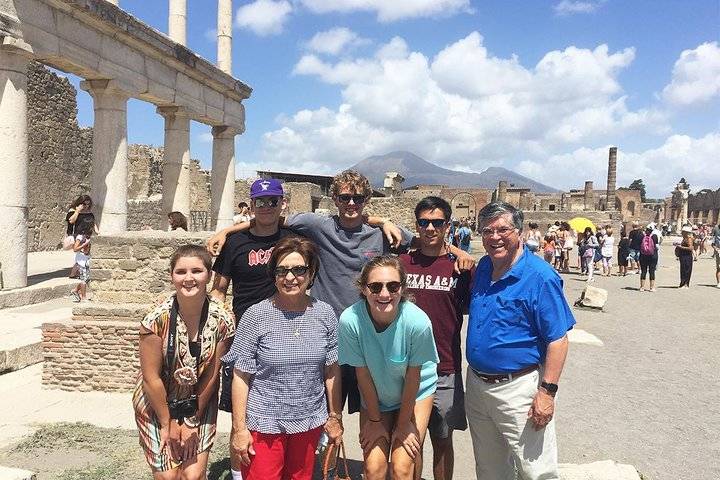

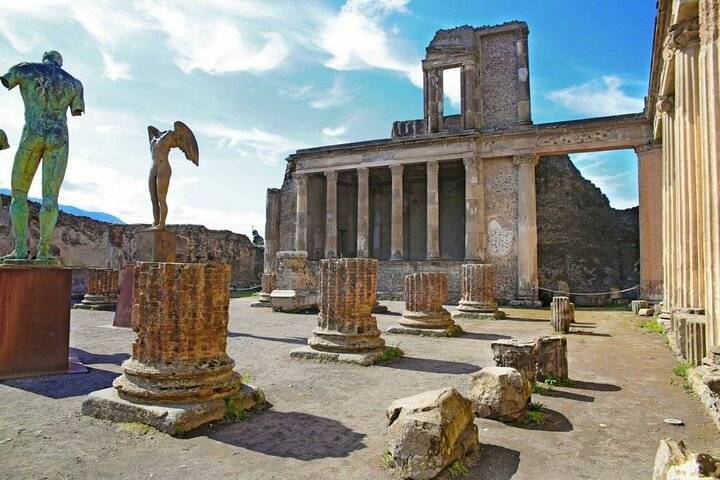
Sunset tours in Pompeii
Departures that are under way when the sun sets in the coming weeks — start times checked against the local sunset.
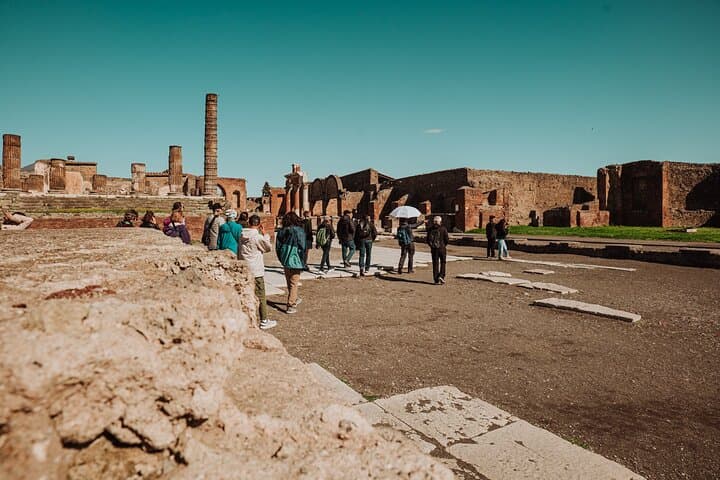
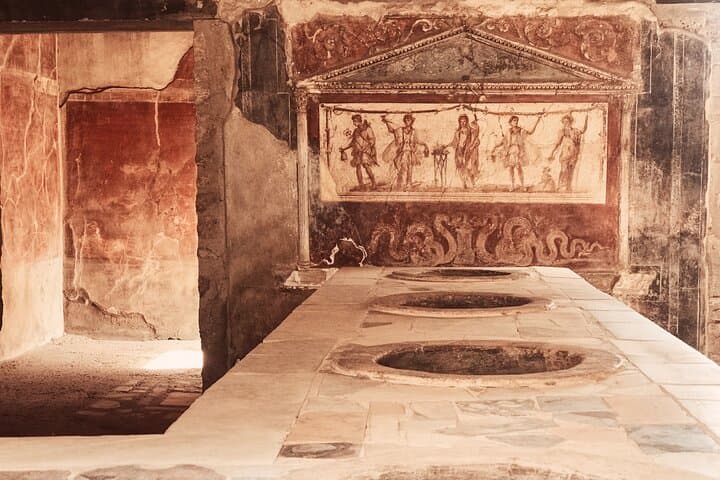
Good for families in Pompeii
Children can join from a young age and pay less than adults — taken from each operator’s price list.
















Browse
Explore Pompeii by interest
Whatever brings you to Pompeii — world-class museums, the river, or a long lunch — start with the experiences travellers love most.
What to see
Top attractions in Pompeii
The landmarks that define the city — and the tickets and tours that get you in, often skipping the line.

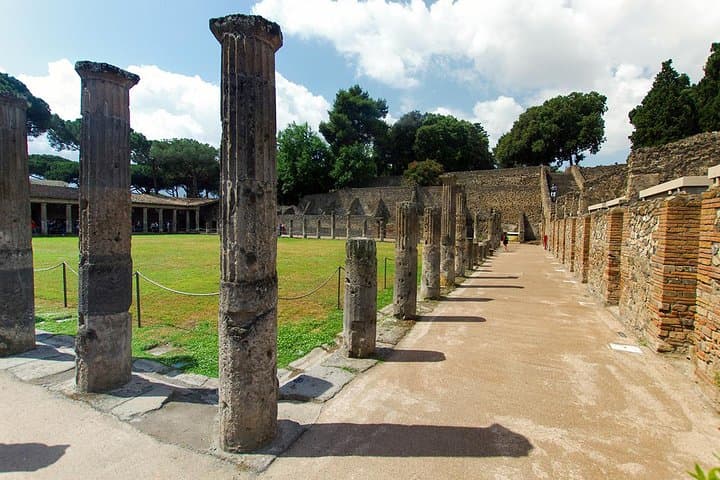
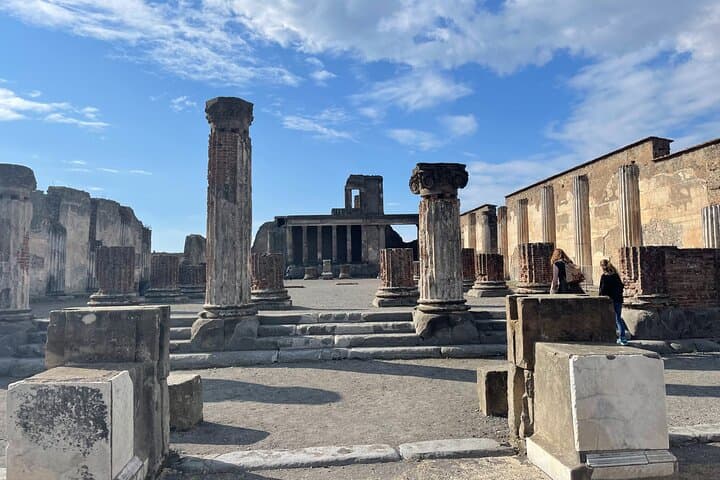
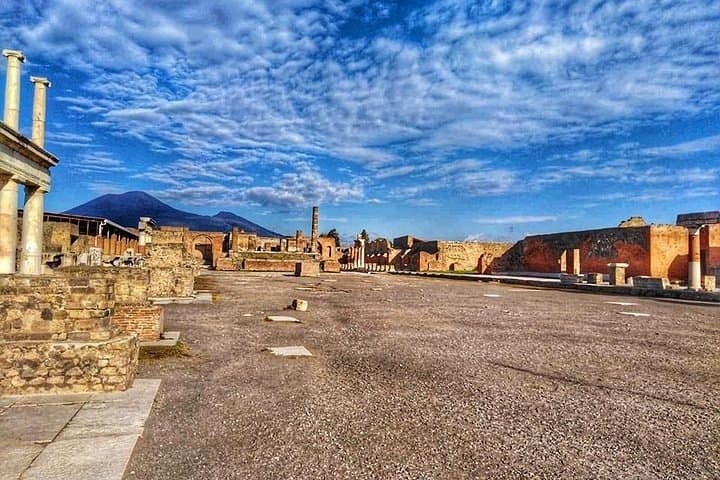
Pompeii Ruins
Roman city frozen.
300+ toursView tours

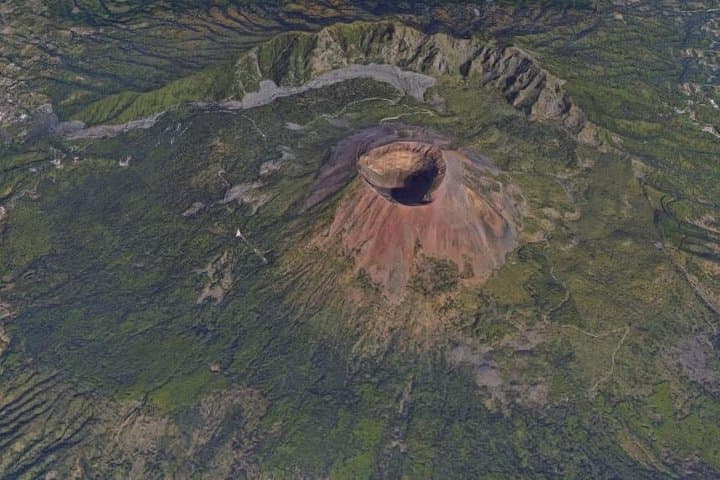
Mount Vesuvius
The crater rim.
120 toursView tours
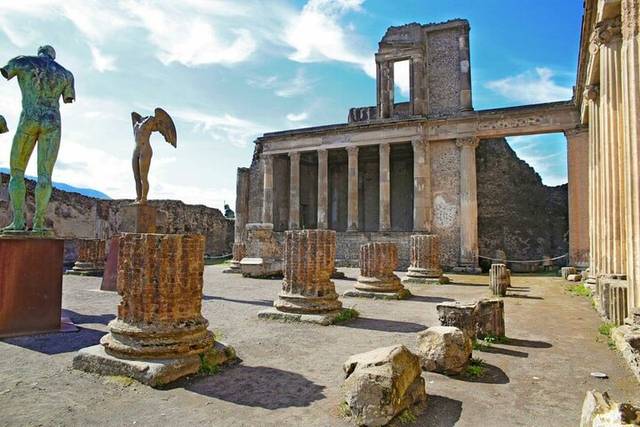
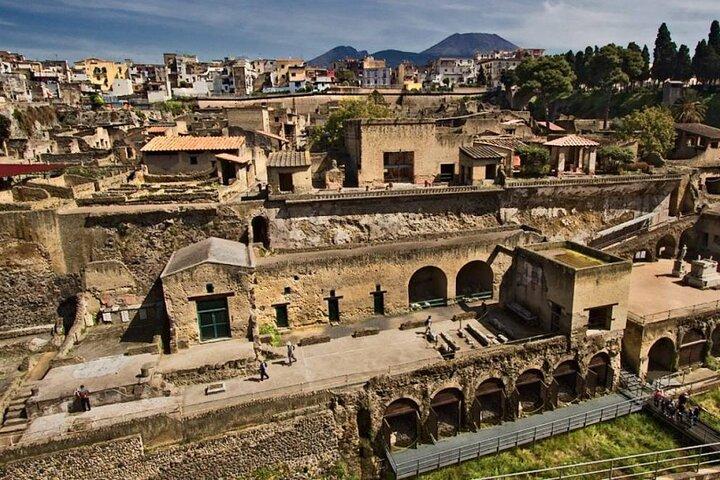
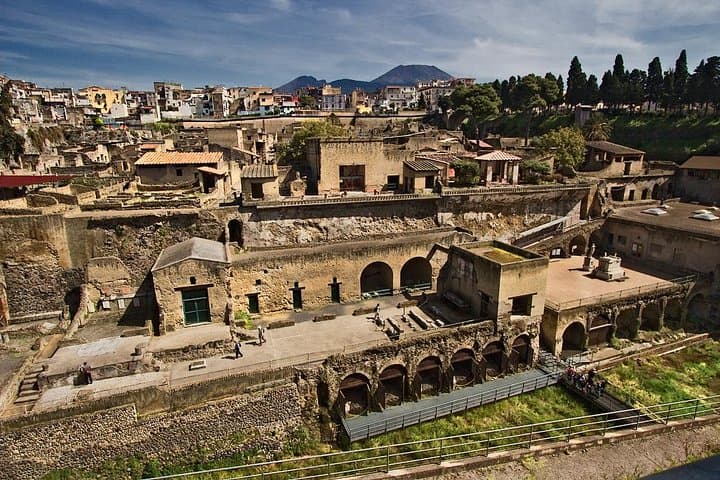
Herculaneum
Best preserved.
90 toursView tours
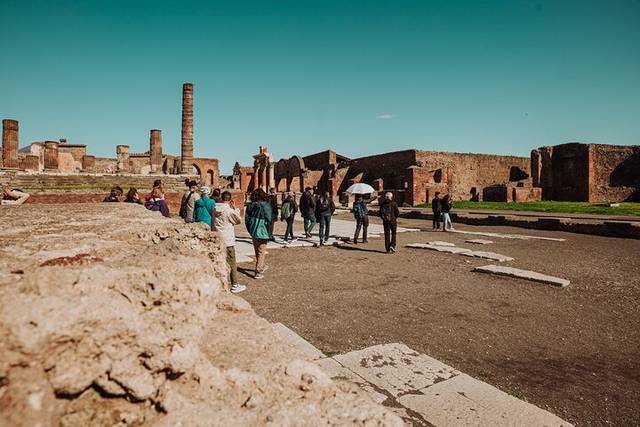
Villa of Mysteries
Vivid frescoes.
80 toursView tours

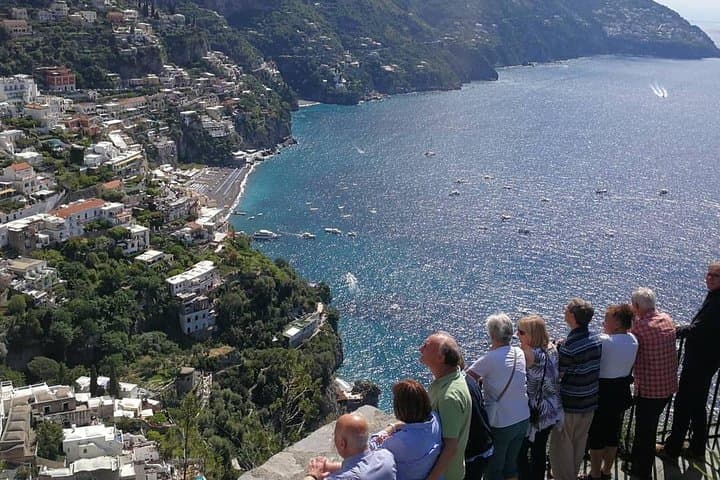
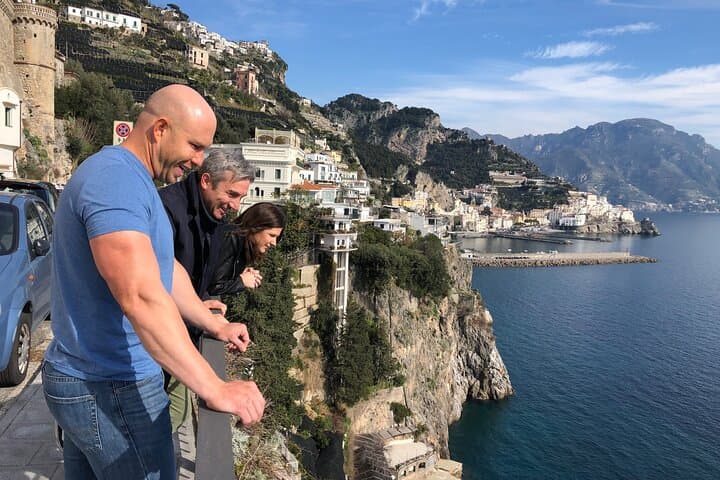
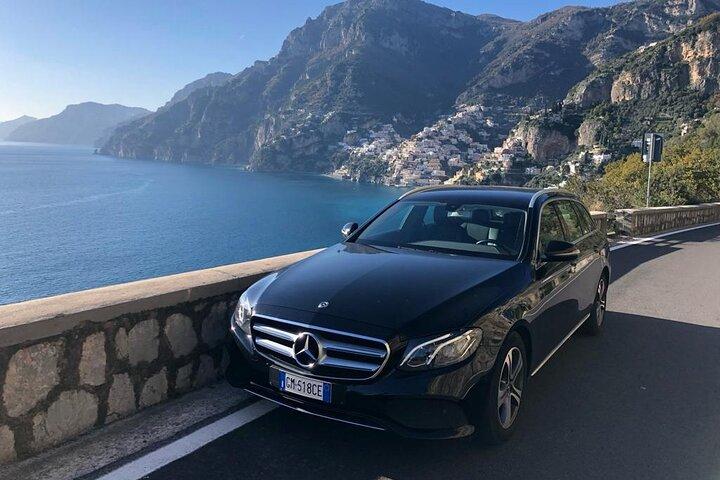
Amalfi Coast
Cliffside villages.
110 toursView tours

From Naples
Easy half day.
80 toursView tours
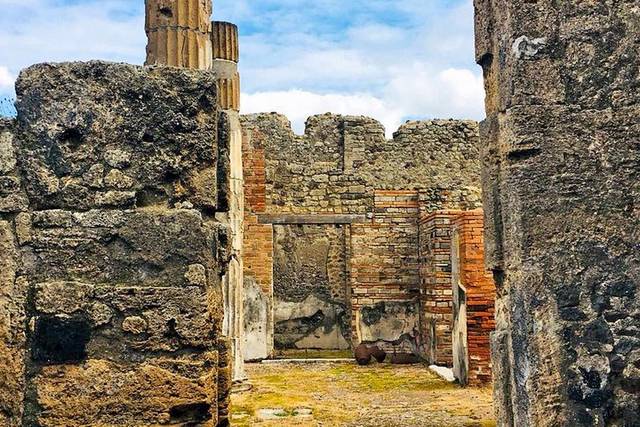
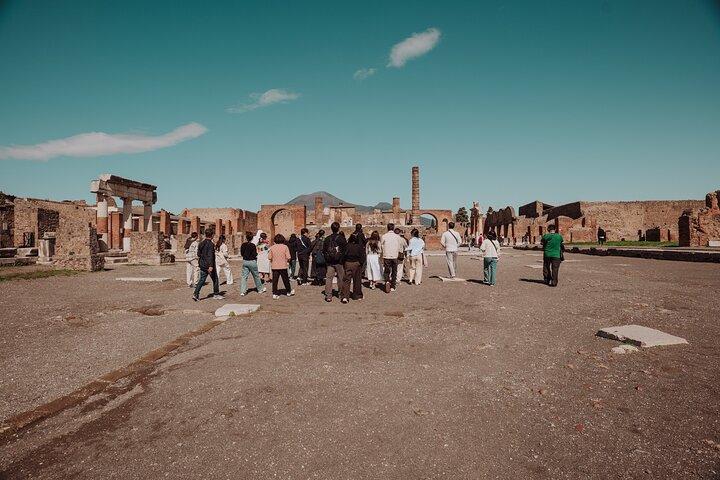
Ancient Forum
Heart of the city.
150 toursView tours
Sorrento
Coastal gateway.
80 toursView tours
From Rome
Pompeii from Rome
- 1Fast train south
- 2Guided ruins tour
- 3Lunch in Sorrento
- 4Return to Rome
With kids
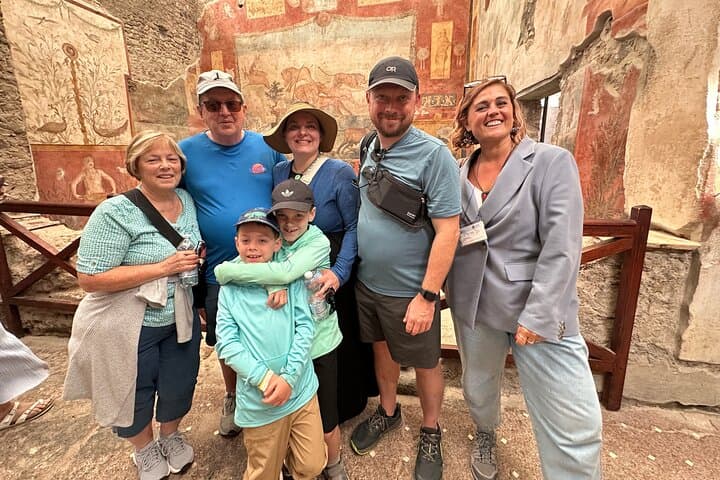
Pompeii with kids
- 1Family ruins tour
- 2Plaster casts
- 3Vesuvius crater
- 4Gelato in Sorrento
In town awayPompeii Ruins
Roman city frozen.
from €15View trips
30 min awayMount Vesuvius
The crater rim.
from €25View trips
 20 min away
Herculaneum
Best preserved.
from €20View trips
 1 hr away
Amalfi Coast
Cliffside villages.
from €70View trips
35 min awayNaples
Bay city.
from €30View trips
30 min awaySorrento
Coastal gateway.
from €35View trips
Practical guide
Know before you go
Short, straight answers to the questions every Pompeii visitor asks before booking.
The sweet-spot months
April–June and September–October bring pleasant warmth and thinner crowds, ideal for exploring the open ruins.
Spring (Apr–Jun)
Mild, green and comfortable — one of the best times to walk the site and climb Vesuvius.
Summer (Jul–Aug)
Hot, busy and with little shade; visit early morning and bring water, a hat and sunscreen.
Autumn (Sep–Oct)
Warm, golden and quieter — excellent for both ruins and coastal combos.
Winter (Nov–Mar)
Cool and quiet with the lowest crowds; some Vesuvius access may close in bad weather.
Beat the heat & crowds
Whatever the season, arrive at opening to enjoy the ruins before the tour groups and midday sun.
Half day
A guided highlights tour of the ruins.
One day
The ruins plus Mount Vesuvius.
Two days
Add Herculaneum and the coast.
History lovers
Add extra time to explore the vast site.
Coast lovers
Add the Amalfi Coast or Capri.
With kids
A shorter, story-led ruins tour.
Guided tours
Tours from Naples, Sorrento, Rome and the Amalfi Coast include transport and an expert guide — the easiest option.
Circumvesuviana train
The local Circumvesuviana line links Naples and Sorrento to Pompeii Scavi station, right by the ruins.
On foot in the ruins
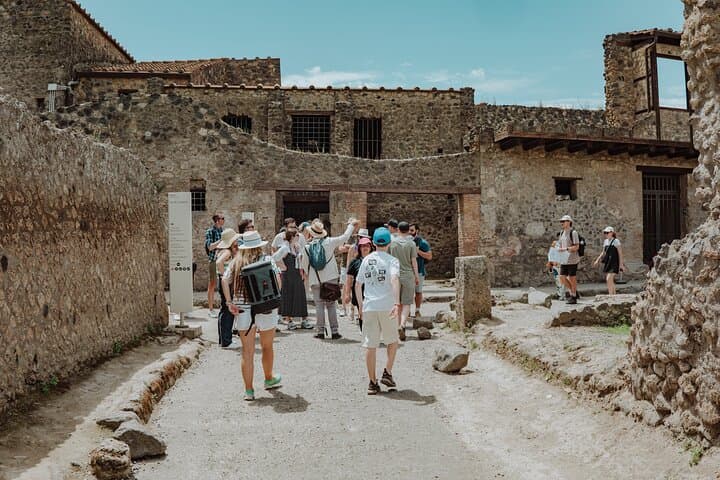
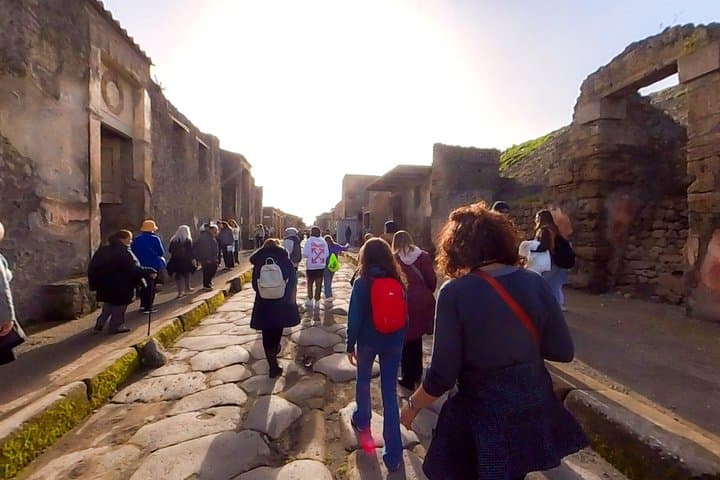
The site is large and paved with ancient stones — wear sturdy, comfortable shoes.
To Vesuvius
Shuttle buses and tours run from Pompeii and Ercolano up to the Vesuvius trailhead.
Two entrances
Pompeii has main entrances at Porta Marina and Piazza Anfiteatro — guided tours start at the right one.
Bring essentials
There is little shade or water inside, so carry water, sun protection and snacks.
Euro & cards
Italy uses the euro; cards are widely accepted, but carry some cash for small cafés and buses.
Skip-the-line tickets
Pre-booked or guided-tour tickets save queueing at the entrance in peak season.
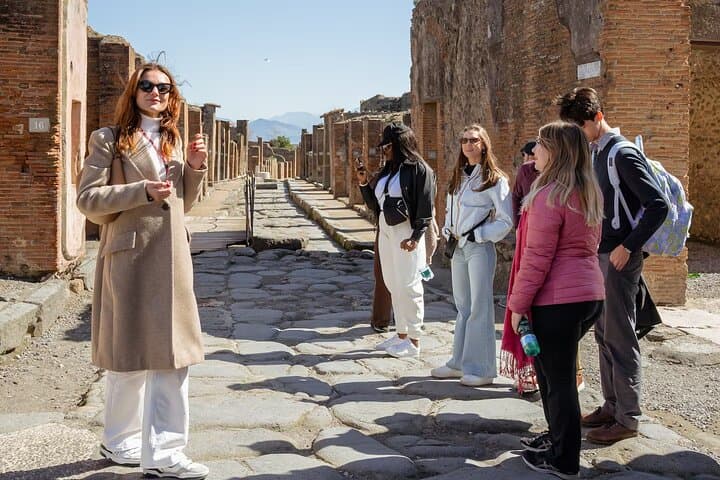
Go with a guide
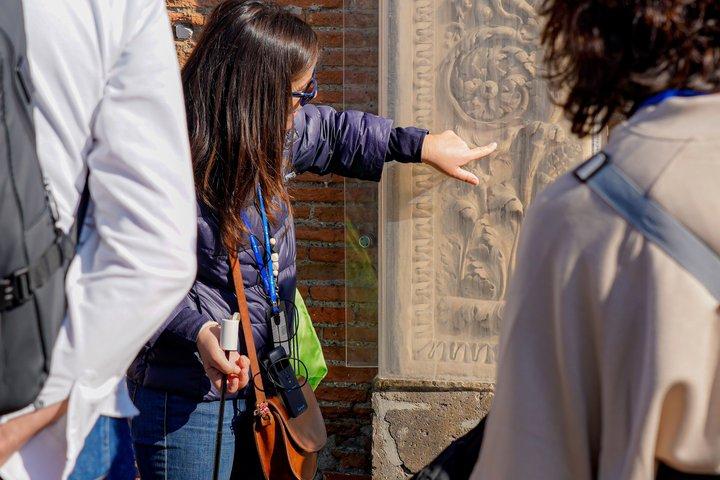
With little signage, an archaeologist or expert guide is the best way to understand the ruins.
Wear good shoes
The ancient streets are uneven — sturdy, comfortable footwear is essential.
Start early
Arrive at opening to beat the crowds and the heat on the shadeless site.
Combine wisely
Pair Pompeii with Vesuvius in one day; save the Amalfi Coast or Capri for another.
Archaeologist tours
Small-group expert-led tours sell out — book ahead.
Vesuvius access
Crater entry has timed slots and tours — reserve early.
Rome day trips
Popular full-day train tours fill up — book ahead.
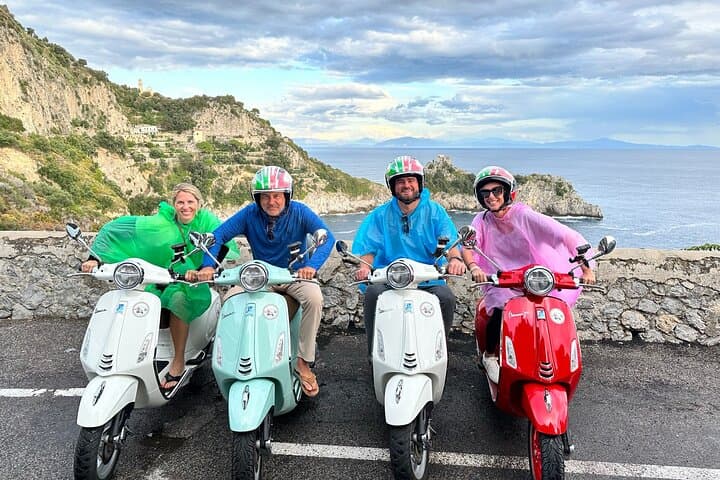
Amalfi & Capri combos
Coastal combo tours are in high demand — reserve early.
Skip-the-line entry
Pre-book tickets to avoid long queues in summer.
Summer peaks
July and August are extremely busy — plan ahead.
Pompeii guided tour
Around €15–50 for a skip-the-line archaeologist-led ruins tour.
Vesuvius tour
About €25–60 for a crater hike with transport from Pompeii.
Pompeii & Herculaneum
Roughly €60–120 for a combined two-site day tour.
Day trip from Rome
Around €120–220 for a full-day train tour with a guide.
Amalfi combo
About €90–180 for Pompeii with the Amalfi Coast.
How to save
Combine Pompeii and Vesuvius in one tour and book from nearby Naples or Sorrento.
When to visit
Pompeii through the seasons
What's best, how busy it gets, and one booking tip for each time of year.
Spring (Mar–May)
Mar–May
- Best for
- Mild, green, comfy.
- Crowds
- Booking tip
- Great for the ruins.
Summer (Jun–Aug)
Jun–Aug
- Best for
- Long days, coast.
- Crowds
- Booking tip
- Hot, little shade.
Autumn (Sep–Nov)
Sep–Nov
- Best for
- Warm, golden, quieter.
- Crowds
- Booking tip
- Ideal all-round.
Winter (Dec–Feb)
Dec–Feb
- Best for
- Quiet ruins.
- Crowds
- Booking tip
- Cool; Vesuvius may close.
People also ask
Pompeii travel FAQ
What are the best tours in Pompeii?
The highest-rated experiences are a guided ruins tour with an archaeologist, a Mount Vesuvius crater hike, a visit to Herculaneum, and combos with the Amalfi Coast or a day trip from Rome.
What should I book in advance in Pompeii?
Reserve archaeologist-led ruins tours, Vesuvius crater access, Rome day trips and Amalfi Coast combos ahead, as they sell out in peak season.
How much time do I need at Pompeii?
A guided highlights tour takes two to three hours; a full day lets you add Mount Vesuvius, and two days allow Herculaneum and the coast.
Is Pompeii worth visiting?
Yes — Pompeii is one of the world’s most extraordinary archaeological sites, a Roman city frozen in time by Vesuvius, where you can walk ancient streets, see vivid frescoes and the haunting plaster casts, and climb the very volcano that buried it.
Should you visit Pompeii or Herculaneum?
Both are rewarding — Pompeii is vast and dramatic, Herculaneum smaller and better preserved; if you have time, a combined tour visits both.
Can you visit Pompeii from Rome?
Yes — full-day tours from Rome reach Pompeii by high-speed train or minivan in around two hours each way, with a guided tour of the ruins.
When is the best time to visit Pompeii?
April–June and September–October offer pleasant weather and thinner crowds; whatever the season, arrive early to beat the heat and tour groups.
719 Pompeii experiencesfrom €15 · free cancellation
Explore tours