Travel guide · Japan
Kyoto Travel Guide 2026: temple fees, the new hotel tax, bus passes and real costs
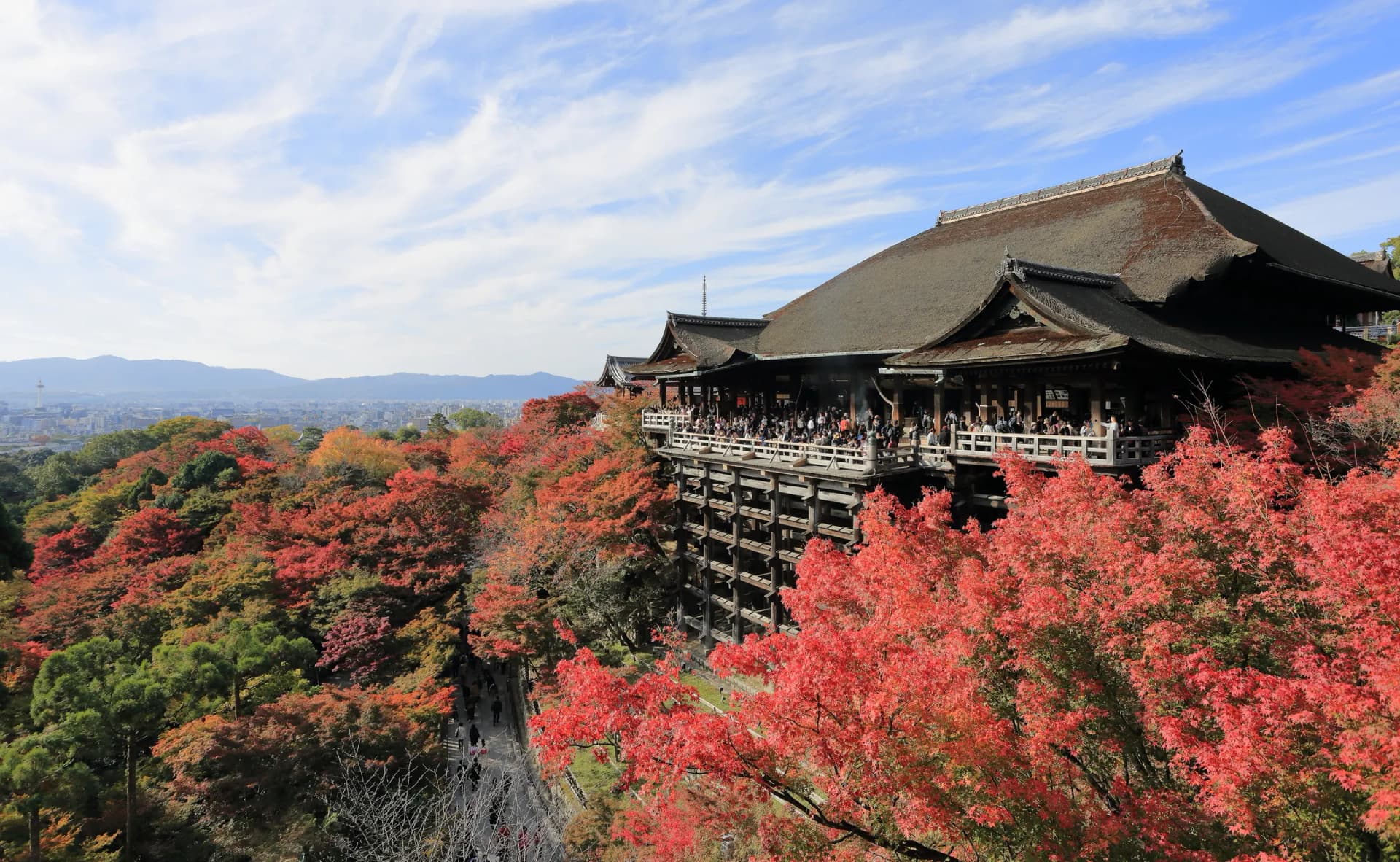
Kiyomizu-dera and its stage in November Photo: Martin Falbisoner, CC BY-SA 4.0
Kyoto, Japan's former imperial capital, is a city of 1.4 million people where the great temples cost ¥500 to ¥1,000 and Fushimi Inari costs nothing, so the real decisions are about timing, transport and where to sleep. Several numbers changed recently: the accommodation tax jumped on 1 March 2026, the bus-only day pass is gone, Ginkaku-ji now charges ¥1,000, and the city plans higher bus fares and Nijo Castle prices for visitors from 2027. This guide gives the current official prices and rules, clear answers on passes, seasons and day trips, and live prices from 1,440 bookable tours.
Kyoto at a glance
Kyoto City has about 1.43 million inhabitants, and Kiyomizu-dera and its fellow temples, shrines and castle form a UNESCO World Heritage listing from 1994. Fushimi Inari, said to date from 711, predates the city's time as capital. The sights are spread around a basin ringed by hills: Higashiyama in the east, Kinkaku-ji in the north-west, Arashiyama in the west and Fushimi in the south.
For visitors the money goes on transport, a handful of ¥500–¥1,300 tickets and, increasingly, on hotels: since March 2026 Kyoto charges the highest accommodation tax in Japan. The rest of this guide answers the questions travellers actually ask, in the order you need to decide them. For tours by category, see our Kyoto tours page.
| Population | About 1.43 million (October 2025 estimate) |
|---|---|
| Main airport | Kansai International, about 75 minutes by HARUKA train; Itami is closer for domestic flights |
| From Tokyo | About 140 minutes by Nozomi shinkansen |
| Getting around | Two subway lines, JR and private railways, city buses at ¥230 flat |
| Day pass | Subway & Bus 1-Day Pass ¥1,100 (calendar day, not 24 hours) |
| Typical temple fee | ¥500 (Kinkaku-ji, Kiyomizu-dera, Tenryu-ji gardens) to ¥1,000 (Ginkaku-ji) |
| Hotel tax | ¥200–¥10,000 per person per night since 1 March 2026 |
| Tipping | Not expected |
Kyoto in pictures
Tap a photo to enlarge it. Photos: Reginald Pentinlo, Marco Almbauer, Basile Morin, Naokijp, MichaelMaggs — Wikimedia Commons.
What do you need to book ahead in Kyoto?
Almost nothing — the main temples are walk-in
Unlike Tokyo, Kyoto has no blockbuster ticket that sells out weeks ahead. Kinkaku-ji, Ginkaku-ji, Kiyomizu-dera, Sanjusangendo, Tenryu-ji and the Nijo Castle grounds all sell tickets at the gate, and Fushimi Inari has no gate at all. What needs planning is a short list of places run by reservation only.
| Place | Price (adult) | How to get in | Notes |
|---|---|---|---|
| Saiho-ji (moss temple) | ¥4,000 | Online reservation, paid by card | Age 13+, up to two per booking; free cancellation to 4 days before |
| Katsura Imperial Villa | Check when booking | Imperial Household Agency reservation | Guided tour of about 40 minutes; passport ID |
| Shugakuin Imperial Villa | Free | Online several days ahead; a few same-day tickets from 8:40 | Tour about 1 h 20 min; no tours on Mondays |
| Nijo Castle Honmaru Palace | ¥1,000 on top of the castle ticket | Advance reservation | Closed the third Monday of each month |
| Byodo-in Phoenix Hall interior | ¥300 on top of ¥700 | Timed entry on the day | Every 20 minutes, up to 35 people |
| Kinkaku-ji, Kiyomizu-dera, Ginkaku-ji | ¥500 / ¥500 / ¥1,000 | Ticket at the gate | No reservation |
Saiho-ji is the one that needs real planning. Visits are by reservation only, for people aged 13 and over, with at most two people per booking. Online booking charges the ¥4,000 fee to a card in advance (one guide mentions an extra ¥110 service fee) and allows free cancellation until four days before.
Nijo Castle's Honmaru Palace interior reopened in September 2024 and costs ¥1,000 on top of the ¥1,300 castle and Ninomaru Palace ticket; it needs a reservation and closes on the third Monday of each month. The imperial villas at Katsura and Shugakuin are seen only on guided tours booked through the Imperial Household Agency, with passport ID.
Verdict: Book Saiho-ji or Katsura only if gardens are why you are going; both take effort and fixed times. Everyone else can plan Kyoto day by day and spend the energy on starting early instead.
Kyoto City plans to charge visitors from outside the city ¥2,000 for Nijo Castle and Ninomaru Palace (residents ¥1,000) from fiscal 2027; the ordinance goes to the city assembly in November 2026. Trips in 2026 and early 2027 pay today's ¥1,300.
Is there a Kyoto bus pass, and which ticket should you buy?
The ¥1,100 Subway & Bus 1-Day Pass is the only day pass left
The old bus-only day pass for ¥700, still recommended in many guides, stopped being sold on 30 September 2023 because tourists were filling buses that locals needed. Its replacement is the Subway & Bus 1-Day Pass at ¥1,100 (children ¥550), which covers both subway lines, every Kyoto City Bus route and some Kyoto Bus, Keihan Bus and JR Bus routes.
| Ticket | Price | Covers | Worth it when |
|---|---|---|---|
| Single city bus ride | ¥230 (flat in central Kyoto) | One ride, pay as you leave | You ride the bus three times or fewer |
| Subway & Bus 1-Day Pass | ¥1,100 | Both subway lines, all city buses, some other buses | Five or more bus or subway rides in one calendar day |
| Subway One Day Card | ¥800 | The two subway lines only | Rarely: the subway misses most temples |
| EX100 / EX101 express bus | ¥500 (free with the 1-Day Pass) | Kyoto Station to Kiyomizu-dera, Gion, Heian-jingu, Ginkaku-ji | Weekends and holidays only |
| ICOCA card | Pay as you go | Almost all trains and buses | Always: no discount, but no queues for tickets |
The arithmetic is simple: five bus rides at ¥230 come to ¥1,150, so the pass only pays off on a bus-heavy day. It is valid on the calendar day it is first used, not for 24 hours, so buying it at 15:00 wastes most of it. The JR trains you need for Fushimi Inari and Arashiyama are not included; they cost ¥150 and ¥240 from Kyoto Station on an ICOCA card.
Verdict: Buy an ICOCA card on arrival and use trains wherever they reach (Fushimi Inari, Arashiyama, Nijo Castle by subway). Add the ¥1,100 pass only on the day you do Higashiyama and Kinkaku-ji by bus. Skip the Japan Rail Pass for a Kyoto-only stay: 7 days cost ¥50,000, far more than any week of local fares.
Kyoto's mayor has proposed bus fares of ¥200 for residents and ¥360 for non-residents from April 2027 (earlier reports said ¥350–400). It is not law yet; 2026 trips pay ¥230.
When is the best time to visit Kyoto?
Late March to early April and late November for colour; May and October for comfort
Kyoto's two famous seasons are short and crowded. In 2026 the Kyoto meteorological office recorded first cherry blossom on 23 March and full bloom on 30 March, using a sample tree in Nijo Castle. For autumn 2026, Japan Meteorological Corporation forecasts yellow leaves around 27 November and red maples around 11 December, and Weathernews expects Arashiyama to peak around 24 November, later than usual.
| Month | High °C | Low °C | Rain mm | What to expect |
|---|---|---|---|---|
| January | 9.1 | 1.5 | 53 | Coldest month; quiet |
| February | 10.0 | 1.6 | 65 | Cold; nights near 2 °C |
| March | 14.1 | 4.3 | 106 | Cherry blossom from late March (23 March in 2026) |
| April | 20.1 | 9.2 | 117 | Blossom into early April; crowded |
| May | 25.1 | 14.5 | 151 | Warm days; Golden Week holidays 29 April–5 May |
| June | 28.1 | 19.2 | 200 | Wet: about 200 mm of rain |
| July | 32.0 | 23.6 | 224 | Wettest month; Gion Matsuri processions 17 and 24 July |
| August | 33.7 | 24.7 | 154 | Hottest month; typhoons most frequent |
| September | 29.2 | 20.7 | 179 | Still hot; most damaging typhoons |
| October | 23.4 | 14.4 | 143 | Comfortable days around 23 °C |
| November | 17.3 | 8.4 | 74 | Maples from late November; Kiyomizu-dera night openings 21–30 November 2026 |
| December | 11.6 | 3.5 | 57 | Red maples forecast around 11 December in 2026 |
The Japan Meteorological Agency's 1991–2020 normals put August highs at 33.7 °C, the hottest month, with July the wettest at 224 mm. Typhoons near Japan are most numerous in August and most damaging in September, so leave slack in a late-summer itinerary.
Crowds follow the calendar as much as the weather. Golden Week, the run of national holidays from Showa Day on 29 April to Children's Day on 5 May, adds holiday crowds to the spring season. Gion Matsuri fills central Kyoto in July: the evening Yoiyama festivities run on 14–16 and 21–23 July, the float processions on 17 July from 9:00 and 24 July from 9:30.
Verdict: If you want blossom or maples, accept the crowds and plan early mornings. For the best balance of weather and space, choose May (outside Golden Week) or October to mid-November. Avoid July and August unless Gion Matsuri is the point of the trip.
How do you get to Kyoto and around the city?
HARUKA from Kansai Airport, the shinkansen from Tokyo, trains over buses in town
The JR HARUKA limited express is the only train running directly from Kansai International to Kyoto Station, in about 75 minutes. Foreign passport holders can buy the HARUKA One-way Ticket for ¥2,200; the regular reserved fare is around ¥3,070. The old ICOCA & HARUKA combo ended on 30 September 2023, so buy an ICOCA card separately.
| Route | Time | Price | Notes |
|---|---|---|---|
| Kansai Airport – Kyoto (HARUKA) | About 75 min | ¥2,200 visitor one-way ticket; around ¥3,070 regular | Only direct train |
| Kansai Airport – Kyoto (KATE limousine bus) | About 85–90 min | ¥2,800 | Easier with heavy bags |
| Kansai Airport – Kyoto (taxi) | 90–150 min | Around ¥35,000 | Rarely worth it |
| Tokyo – Kyoto (Nozomi) | About 140 min | About ¥13,500 unreserved, ¥14,500 reserved | JR Pass needs a ¥4,960 supplement on Nozomi |
| Osaka – Kyoto (JR special rapid) | About 30 min | ¥580 | JR Pass valid |
| Osaka-Umeda – central Kyoto (Hankyu) | About 40 min | ¥410 | Arrives at Kawaramachi, not Kyoto Station |
| Kyoto Station – Fushimi Inari (JR Nara Line) | 5 min | ¥150 | Shrine is in front of JR Inari Station |
| Kyoto Station – Arashiyama (JR Sagano Line) | 15 min | ¥240 | Saga-Arashiyama Station |
| Kyoto Station – Nijo Castle (subway) | About 15 min | ¥260 | Change at Karasuma-Oike |
From Tokyo the Nozomi takes about 140 minutes and the Hikari about 160. Sources disagree slightly on the 2026 reserved Nozomi fare (¥14,170–14,500), so check on the day.
Inside the city, city buses charge ¥230 a ride in the central zone and are where Kyoto's crowding is worst. Trains are faster and more predictable for the big three outlying sights: Fushimi Inari is five minutes from Kyoto Station on the JR Nara Line, Arashiyama 15 minutes on the JR Sagano Line, and Nijo Castle sits on the Tozai subway line. Buses are unavoidable for Kinkaku-ji (12, 59, 205 or M1) and Ginkaku-ji (5 or 17 from Kyoto Station, 35–40 minutes).
Verdict: Arriving at Kansai, take the HARUKA with the ¥2,200 visitor ticket. Coming from Tokyo, take the Nozomi. Once in Kyoto, use trains first and buses only where there is no rail line.
What are the best things to do in Kyoto?
Fushimi Inari Taisha, early or late Must do· Open 24 hours, free
Thousands of red torii, about 10,000 across the mountain by the national tourism organisation's count, climb 233 m Mt Inari behind a shrine said to date from 711. The shrine never closes and charges nothing. The full loop to the summit and back takes two to three hours; most people turn round at Yotsutsuji, 30–45 minutes up, so the gates beyond are much quieter.
32 Top-rated Fushimi Inari tours tours on Excurgo · from $11, typical $65 per person · rated 5.0 across 2,803 reviews



Kiyomizu-dera and the Higashiyama lanes Must do· 6:00–18:00; night openings 21–30 November 2026
Kiyomizu-dera, founded more than 1,250 years ago, is known for its wooden stage jutting about 13 m above the hillside, built without nails. Entry is ¥500 and the temple opens at 6:00. Walk down afterwards through Sannenzaka and Yasaka-dori towards Gion. In autumn 2026 the temple opens at night from 21 to 30 November, until 21:30.
Kinkaku-ji, the Golden Pavilion Must do· 9:00–17:00, ¥500
The gold-covered pavilion reflected in its pond is the picture most people have of Kyoto. Admission is ¥500 (some older guides list less), and the gates open at 9:00 and close at 17:00. It is in the north-west, reached by city buses 12, 59, 205 or M1 to Kinkakuji-michi.
10 Kinkaku-ji tours tours on Excurgo · from $43, typical $91 per person · rated 5.0 across 107 reviews


Arashiyama: the bamboo grove before 8:00 Must do· Grove free and always open
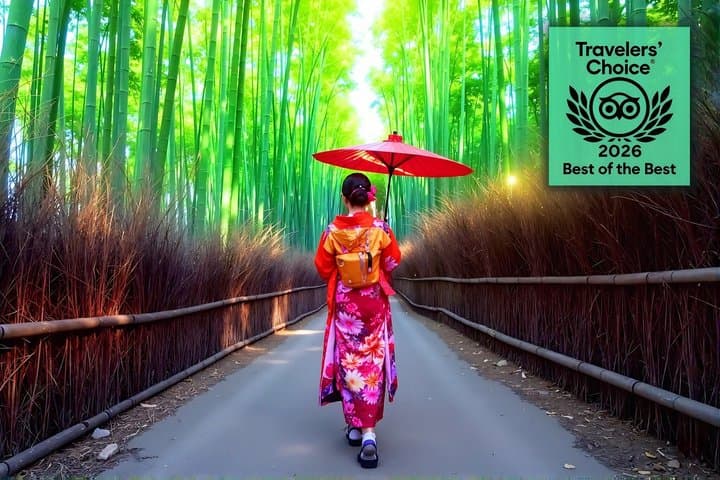
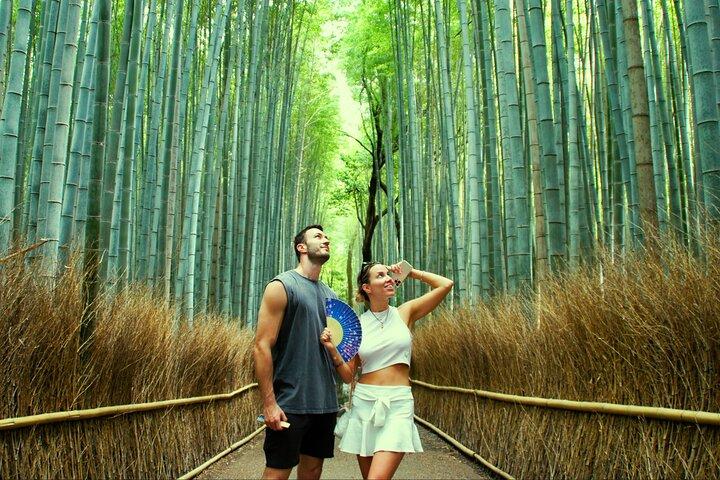
The Sagano bamboo grove is free and, according to travel guides, open around the clock; go before about 8:00 on a weekday, before groups arrive. Nearby, Tenryu-ji's garden costs ¥500 (¥300 more for the buildings). Okochi Sanso villa charges ¥1,000 including matcha and a snack, and the Iwatayama Monkey Park ¥800. The JR Sagano Line gets you there from Kyoto Station in 15 minutes for ¥240.
59 Top-rated Arashiyama tours tours on Excurgo · from $17, typical $97 per person · rated 4.9 across 6,790 reviews

Nijo Castle Must do· 8:45–17:00, last entry 16:00
The shogun's residence costs ¥800 for the grounds and ¥500 more for Ninomaru Palace, so ¥1,300 for the usual visit; the Honmaru Palace interior, reopened in 2024, is another ¥1,000 with reservation. Ninomaru Palace closes on Tuesdays in January, July, August and December. Nijojo-mae subway station is a few steps from the gate.
19 Top-rated Nijo Castle tours tours on Excurgo · from $38, typical $86 per person · rated 4.8 across 1,414 reviews


Gion and Shirakawa in the evening — on public streets Must do· Evenings; Gion Corner shows 18:00 and 19:00
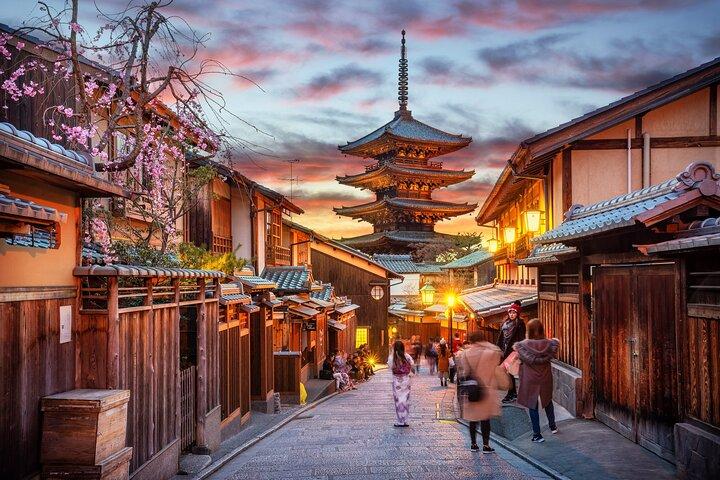
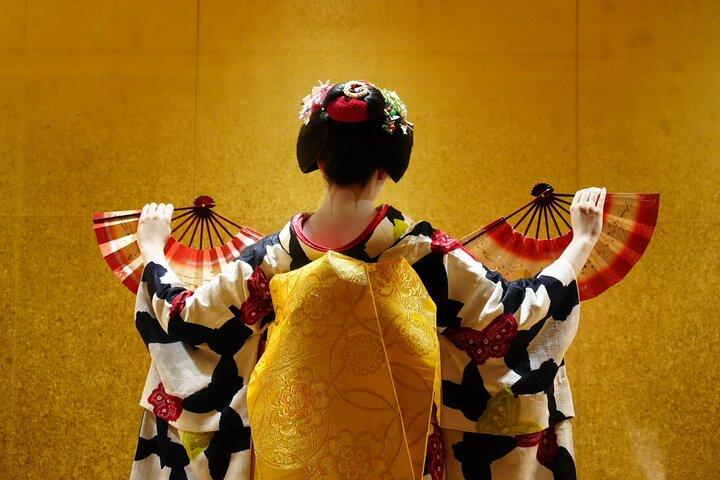
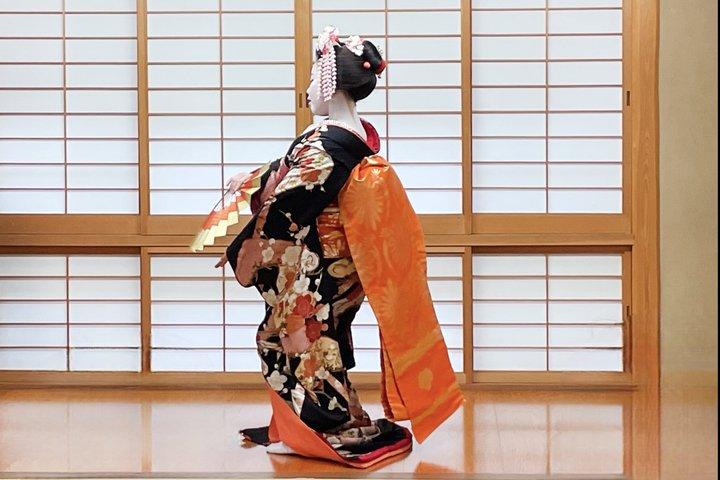
Geiko and maiko are usually seen in the evening on their way to or from teahouse engagements. Stay on public roads such as Hanami-koji and Shirakawa-dori: since 2019 residents' groups have banned photography on Gion's private alleys under threat of a ¥10,000 'fine', and since April 2024 signs warn the same penalty for entering private streets. For a guaranteed performance, Gion Corner's show with maiko dance runs at 18:00 and 19:00 for ¥5,500, and the Miyako Odori dances take place in April.
85 Top-rated Gion walking tours tours on Excurgo · from $13, typical $71 per person · rated 4.9 across 14,802 reviews


29 Geisha and maiko shows tours on Excurgo · from $25, typical $149 per person · rated 4.9 across 3,866 reviews

Ginkaku-ji and the Philosopher's Path Worth it· 8:30–17:00 March–November
The Silver Pavilion now charges ¥1,000, more than many older guides list, and opens 8:30–17:00 from March to November, 9:00–16:30 in winter. Pair it with the canal-side Philosopher's Path, a 30–45 minute walk south to Nanzen-ji, lined with cherry trees.
Sanjusangendo's 1,001 Kannon statues Worth it· 8:30–17:00 (to 16:00 in winter)
A 120 m hall, Japan's longest wooden structure, holding 1,001 statues of Kannon. Admission is ¥600, and because the visit is indoors it is the best use of a rainy morning.
Nishiki Market, eaten at the counter Worth it· Mornings to late afternoon
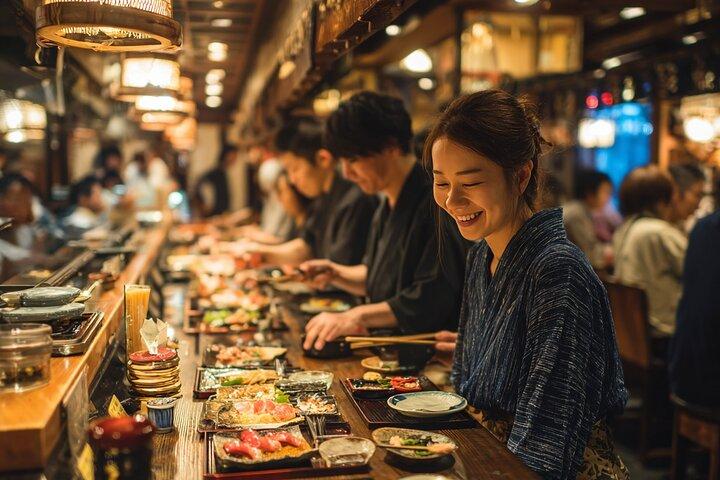
'Kyoto's kitchen' runs for 400 m between Teramachi and Takakura, selling seafood, dried goods, tofu skin (yuba) and Kyoto vegetables. Since 2018 the market association has asked visitors not to eat while walking; eat at the shop where you bought the food. A guided food tour is the easiest way to taste widely.
76 Top-rated food tours tours on Excurgo · from $19, typical $109 per person · rated 4.9 across 6,452 reviews


Sake in Fushimi Worth it· Gekkeikan museum 9:30–16:30
The Gekkeikan Okura Sake Museum in Fushimi charges ¥600 for visitors aged 20 and over (¥100 for 13–19) and opens 9:30–16:30. Sake tours in Fushimi usually combine brewery visits with tastings.
49 Top-rated sake tastings tours on Excurgo · from $16, typical $110 per person · rated 4.9 across 4,505 reviews



A class or a ceremony Worth it· Any day; book a day or two ahead
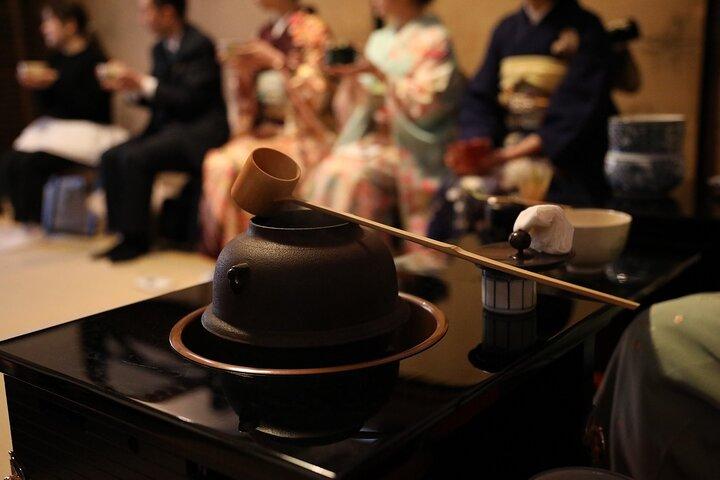
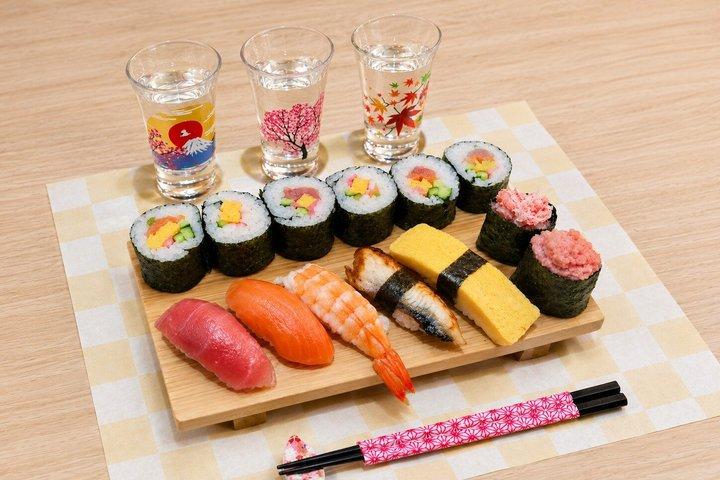
Our catalogue lists 72 tea ceremonies, 74 sushi, ramen and cooking classes and 82 craft workshops such as kintsugi and chopstick making in Kyoto. Typical prices are $62 for a tea ceremony and $94 for a cooking class; craft workshops start from $6.
72 Top-rated tea ceremonies tours on Excurgo · from $19, typical $62 per person · rated 4.9 across 3,276 reviews

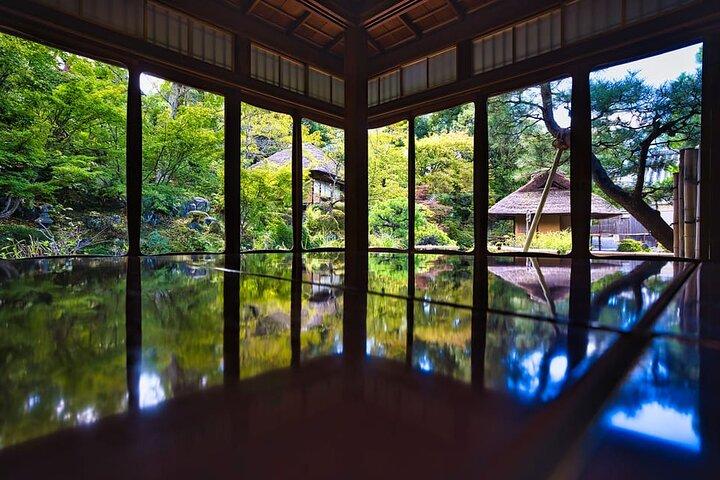
74 Top-rated cooking classes tours on Excurgo · from $26, typical $94 per person · rated 5.0 across 7,531 reviews


Worth skipping Worth it
- The Arashiyama bamboo grove at midday. It is a short path; in crowds there is little to see. Go before 8:00 or not at all.
- Photographing geiko or maiko in private alleys. It breaks local rules and carries a ¥10,000 penalty warning.
- The Japan Rail Pass for a Kyoto-and-Osaka trip. At ¥50,000 for 7 days it only pays off with long shinkansen journeys.
- A bus day without the pass math. Fewer than five rides? Pay ¥230 each and skip the ¥1,100 pass.
What are the best day trips from Kyoto?
Nara first; Himeji if you like castles; Hiroshima only with a full day
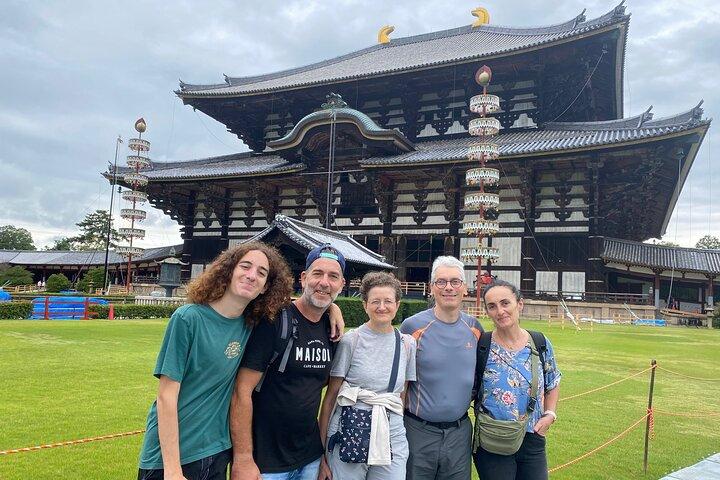
Kyoto sits in the middle of the Kansai rail network, so most classic day trips take under an hour each way. Nara is the obvious first choice: the Kintetsu limited express takes about 35 minutes, and Todai-ji's Great Buddha Hall costs ¥800.
| Destination | Train time | Fare (one way) | Main ticket |
|---|---|---|---|
| Nara | 35 min (Kintetsu limited express) / 45 min (JR or Kintetsu express) | ¥1,280 / ¥720–760 | Todai-ji Great Buddha Hall ¥800 |
| Uji | Short JR or Keihan ride south | Check on the day | Byodo-in ¥700, Phoenix Hall interior ¥300 more |
| Osaka | About 30 min (JR special rapid) | ¥580 | — |
| Himeji | About 43 min (shinkansen) | ¥4,740 unreserved | Himeji Castle ¥2,500 since 1 March 2026 |
| Hiroshima and Miyajima | About 1 h 36–40 min (Nozomi) | ¥10,770 unreserved | — |
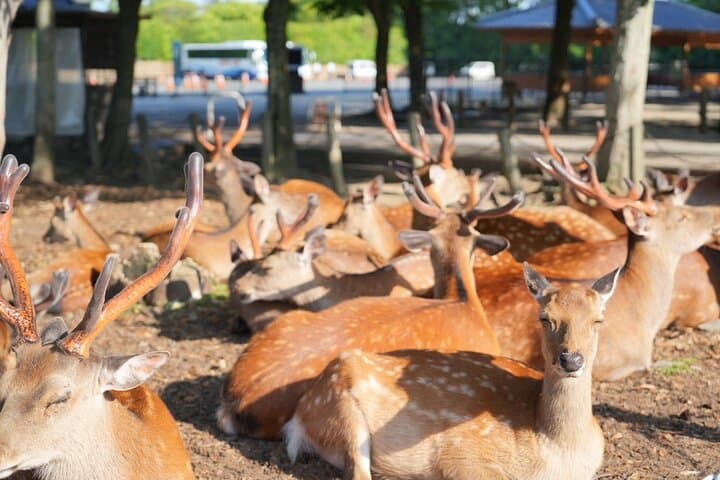
Nara. Choose the Kintetsu line from Kyoto Station: the limited express takes about 35 minutes for ¥1,280, the direct express about 45 minutes for ¥760; the JR Nara Line's Miyakoji rapid takes about 45 minutes for ¥720 and is covered by the JR Pass. Todai-ji's Great Buddha Hall costs ¥800 (raised from ¥600 in April 2024) and opens 7:30–17:30 from April to October. Deer crackers sell for around ¥200.
68 Top-rated Nara day trips tours on Excurgo · from $54, typical $311 per person · rated 4.8 across 7,718 reviews
Uji. The draw is Byodo-in and its Phoenix Hall. The garden and Hoshokan museum cost ¥700; the hall's interior is ¥300 more, by timed entry every 20 minutes for up to 35 people between 9:30 and 16:10. It fits into half a day.
17 Uji and matcha tours tours on Excurgo · from $52, typical $110 per person · rated 4.9 across 181 reviews


Himeji. The castle raised its adult price to ¥2,500 on 1 March 2026 for anyone not living in Himeji (residents pay ¥1,000, under-18s nothing). The fastest shinkansen takes about 43 minutes from Kyoto for ¥4,740 unreserved, so a round trip with the castle costs about ¥12,000 a head.
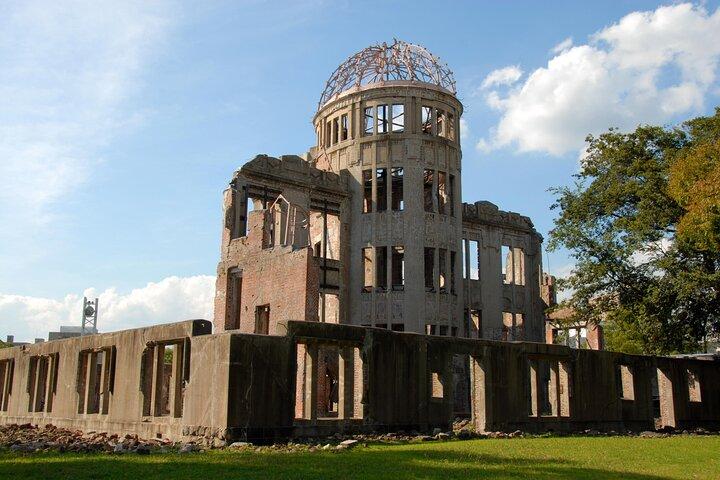
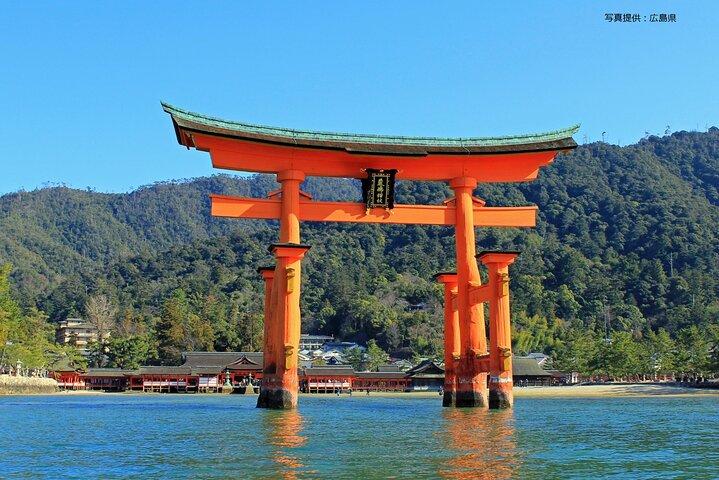
Hiroshima and Miyajima. The Nozomi reaches Hiroshima in about 1 h 36–40 min for ¥10,770 unreserved; Hikari and Sakura trains, covered by the JR Pass, take about two hours. It is a long day, and the only one in this list where a guided tour saves real effort.
12 Hiroshima and Miyajima day trips tours on Excurgo · from $95, typical $343 per person · rated 4.8 across 986 reviews
Verdict: With one spare day, go to Nara by Kintetsu on your own; a tour adds little. With two, add Himeji or Uji. Do Hiroshima only if you have a JR Pass or will not reach western Japan otherwise.
How many days do you need in Kyoto?
Three full days cover the main sights at a reasonable pace, because each area (Higashiyama, Arashiyama, the north-west, Fushimi) takes most of a morning. Plan around fixed hours: Kinkaku-ji opens at 9:00, Nijo Castle's last entry is 16:00, and the Imperial Palace grounds close on Mondays.
1 day
Fushimi Inari at dawn, then Kiyomizu-dera, Sannenzaka and Yasaka-dori on foot to Gion for the evening. Trains and walking only.
Tickets ≈ ¥500 (Kiyomizu-dera) + ¥150 train · tours ≈ $71
3 days
Day 1 as above. Day 2: Arashiyama before 8:00, Tenryu-ji, then Kinkaku-ji by bus. Day 3: Nijo Castle, Nishiki Market, Ginkaku-ji and the Philosopher's Path.
Tickets ≈ ¥4,900 (temples, castle, one ¥1,100 pass) · tours ≈ $109
5 days
Three city days plus a Nara day and an Uji or Himeji day, with a tea ceremony or cooking class one afternoon.
Tickets ≈ ¥4,900 + Nara ¥800 + Byodo-in ¥700 or Himeji ¥2,500, plus fares · tours ≈ $62
How much do tours in Kyoto cost?
Our catalogue lists 1,440 bookable tours and activities in Kyoto. Craft workshops and Gion walks are the cheapest way in, from $6 and $13; Nara and Hiroshima day trips are the most expensive because many are private tours. The table shows the typical (median) price and the range for each type.
| Activity | Tours | From | Typical | Top end |
|---|---|---|---|---|
| Fushimi Inari tours | 32 | $11 | $65 | $115 |
| Arashiyama and bamboo forest tours | 59 | $17 | $97 | $260 |
| Gion and geisha walking tours | 85 | $13 | $71 | $273 |
| Geisha and maiko shows and dinners | 29 | $25 | $149 | $730 |
| Nijo Castle and Imperial Palace tours | 19 | $38 | $86 | $182 |
| Kinkaku-ji tours | 10 | $43 | $91 | $149 |
| Food tours and Nishiki Market | 76 | $19 | $109 | $221 |
| Sushi, ramen and cooking classes | 74 | $26 | $94 | $227 |
| Tea ceremonies | 72 | $19 | $62 | $162 |
| Sake tastings and Fushimi brewery tours | 49 | $16 | $110 | $234 |
| Bike and e-bike tours | 60 | $42 | $99 | $175 |
| Samurai and ninja experiences | 42 | $19 | $104 | $224 |
| Kintsugi and craft workshops | 82 | $6 | $71 | $182 |
| Nara day trips | 68 | $54 | $311 | $545 |
| Uji and matcha tours | 17 | $52 | $110 | $278 |
| Hiroshima and Miyajima day trips | 12 | $95 | $343 | $944 |
90% of Kyoto tours in our catalogue offer free cancellation. Tour prices are refreshed from the catalogue; official ticket prices in this guide are in yen as published by each venue.
60 Top-rated bike tours tours on Excurgo · from $42, typical $99 per person · rated 5.0 across 7,988 reviews


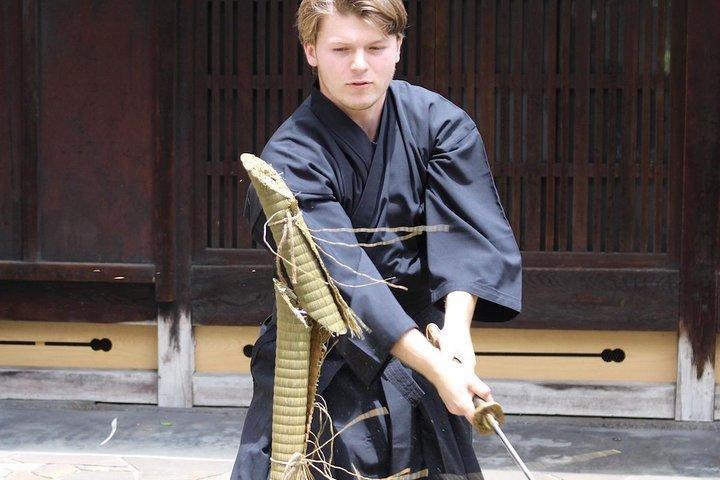
42 Samurai and ninja experiences tours on Excurgo · from $19, typical $104 per person · rated 4.9 across 5,655 reviews

Where should you stay in Kyoto?
Downtown Shijo-Kawaramachi for most visitors; Kyoto Station for short stays and day trips
Kyoto is compact, but where you sleep decides how much time you spend on buses. Three areas suit visitors, and the choice is mostly between atmosphere and transport.
| Area | Best for | Transport | Drawback |
|---|---|---|---|
| Kyoto Station | Short stays, day trips, early trains | JR, shinkansen, subway, airport HARUKA and buses | Least atmospheric |
| Downtown (Shijo-Kawaramachi, Sanjo) | Restaurants, shopping, first visits | Buses, trains, direct trains to Osaka | No JR station |
| Higashiyama (Gion, Kiyomizu) | Evenings in old Kyoto, ryokan | Keihan line, 10–15 min walk | Further from day-trip trains |
Budget for the accommodation tax, which since 1 March 2026 rises with the room price and is charged per person per night, usually at check-in. The room price used excludes meals and consumption tax.
| Room price per night | Tax per person per night |
|---|---|
| Under ¥6,000 | ¥200 |
| ¥6,000–¥19,999 | ¥400 |
| ¥20,000–¥49,999 | ¥1,000 |
| ¥50,000–¥99,999 | ¥4,000 |
| ¥100,000 and over | ¥10,000 |
Verdict: Stay downtown if this is your first visit and you want to walk out to dinner. Choose Kyoto Station if you are doing two or more day trips or arriving late from Kansai. Higashiyama is the romantic choice, worth it for a night or two in a ryokan.
What should you know about money, rules and manners in Kyoto?
| Tipping | Not expected in restaurants, bars, taxis or hotels |
|---|---|
| Cash | Foreign cards work in 7-Eleven and post office ATMs, rarely in bank ATMs |
| Hotel tax | ¥200–¥10,000 per person per night since 1 March 2026 |
| Departure tax | ¥3,000 since 1 July 2026, usually in the air fare |
| Tax-free shopping | From 1 November 2026: pay tax, claim the refund at customs when you leave; goods out within 90 days |
| Gion private alleys | No entry, no photography; ¥10,000 penalty signs |
| Nishiki Market | Do not eat while walking; eat at the shop |
| Future entry rule | JESTA online pre-authorisation due by fiscal 2028 |
Tipping is not part of the culture: the national tourism organisation says it is not common in bars, restaurants, taxis or hotels. Carry some cash for small shops and temple gates; most foreign-issued cards are refused by Japanese bank ATMs but work at 7-Eleven and post office machines.
The biggest money change of late 2026 lands on 1 November. Tax-free shopping stops being a discount at the till: you pay the full price, show your passport, and claim the refund at customs when you leave Japan, with 90 days to take the goods out. The departure tax, normally built into the air fare, tripled to ¥3,000 on 1 July 2026.
Kyoto's manners rules are set locally and mostly enforced by residents. Gion's private-alley rules date from 2019, and the Kyoto Shimbun has reported they are not legally binding, but the signs, cameras and ¥10,000 warnings are real, and main streets such as Hanami-koji remain open. Nishiki Market's no-eating-while-walking rule is a request, not a law, and shopkeepers expect it to be followed.
Japan plans an online pre-travel authorisation, JESTA, for visa-exempt visitors by fiscal 2028. Nothing changes yet for 2026 trips, but check your own government's advice before booking.
What mistakes do visitors to Kyoto regret?
- Starting late. Fushimi Inari never closes and Kiyomizu-dera opens at 6:00, so the quiet hours are early ones. The bamboo grove is only worth it before about 8:00.
- Planning around the old bus pass. The ¥700 bus-only pass ended in 2023. The ¥1,100 Subway & Bus pass is valid for the calendar day, not 24 hours.
- Taking the bus where a train goes. Fushimi Inari (¥150) and Arashiyama (¥240) are 5 and 15 minutes from Kyoto Station by JR.
- Budgeting with old prices. Ginkaku-ji is now ¥1,000, Kinkaku-ji ¥500, Todai-ji in Nara ¥800 and Himeji Castle ¥2,500.
- Forgetting the hotel tax. In the ¥20,000–¥49,999 band it is ¥1,000 per person per night, so ¥2,000 a night for a couple; in the ¥50,000–¥99,999 band, ¥8,000.
- Walking into Gion's private lanes for photos. Stay on Hanami-koji and Shirakawa-dori.
- Eating on the move in Nishiki Market. Eat at the counter where you bought the food.
- Arriving in late November expecting quiet. Peak maples in 2026 are forecast for late November to mid-December, the busiest weeks of autumn.
Kyoto FAQ
How many days do you need in Kyoto?
Three full days cover Fushimi Inari, Higashiyama, Arashiyama, Kinkaku-ji and Nijo Castle at a sensible pace. Add a fourth day for Nara (about 35 minutes by Kintetsu limited express) and a fifth for Uji or Himeji.
Is there still a Kyoto bus pass?
Not a bus-only one: sales of the ¥700 bus pass ended on 30 September 2023. The Subway & Bus 1-Day Pass costs ¥1,100 and covers all city buses and both subway lines on the calendar day of first use. A single bus ride in central Kyoto is ¥230.
Do I need to book Kinkaku-ji or Fushimi Inari in advance?
No. Kinkaku-ji sells ¥500 tickets at the gate from 9:00, and Fushimi Inari is free and open 24 hours. Reservations are needed only for places such as Saiho-ji, the imperial villas and Nijo Castle's Honmaru Palace.
What time should I go to Fushimi Inari to avoid crowds?
As early as you can, or in the evening, since the shrine never closes. Most visitors turn back at Yotsutsuji, 30–45 minutes up, so climbing beyond it also leaves the crowds behind; the full loop takes two to three hours.
How much is the Kyoto hotel tax in 2026?
Since 1 March 2026 it is charged per person per night by room price: ¥200 under ¥6,000, ¥400 up to ¥19,999, ¥1,000 up to ¥49,999, ¥4,000 up to ¥99,999 and ¥10,000 from ¥100,000. It is usually collected at check-in.
How do I get from Kansai Airport to Kyoto?
Take the JR HARUKA, the only direct train, in about 75 minutes. Foreign passport holders can buy the HARUKA One-way Ticket for ¥2,200. The KATE limousine bus takes 85–90 minutes for ¥2,800.
Can you take photos of geisha in Gion?
Not on Gion's private alleys, where residents banned photography in 2019 and signs warn of a ¥10,000 penalty; since 2024 entering those lanes is also discouraged. Public streets such as Hanami-koji and Shirakawa-dori are open, but asking geiko or maiko to pose is unwelcome.
Is the JR Pass worth it for Kyoto?
Not for Kyoto, Osaka and Nara alone: a 7-day pass costs ¥50,000, while Kyoto–Osaka is ¥580 and Kyoto–Nara ¥720 on JR. It can pay off if the same week includes Tokyo–Kyoto and Hiroshima by shinkansen.
Is Nara worth a day trip from Kyoto?
Yes, it is the easiest classic day trip. The Kintetsu limited express takes about 35 minutes for ¥1,280, Todai-ji's Great Buddha Hall costs ¥800, and the deer in Nara Park can be fed crackers that sell for around ¥200.
Will tourists pay more for buses in Kyoto?
Possibly from April 2027. The mayor has proposed ¥360 for non-residents and ¥200 for residents, and a ¥2,000 visitor price for Nijo Castle; the ordinance goes to the city assembly in November 2026. In 2026 everyone pays ¥230.
Sources and how this guide is made
Written by the Excurgo editorial team with AI assistance. We are a tour comparison site, not a tour operator, and we have not personally tested every tour. Every fact was researched in official and specialist sources and checked against them before publication; prices, ratings and tour counts come from our live catalogue of 1,440 Kyoto tours. Ratings and review counts are collected by Viator and Tripadvisor. Tours are picked by rating weighted by number of reviews (at least 20); we earn a commission from Viator when you book, and it does not affect the order.
- Japan Meteorological Agency — Kyoto climate normals 1991–2020 (Oct 2026)
- Shokoku-ji — Kinkaku-ji admission, hours and buses (Oct 2026)
- Shokoku-ji — Ginkaku-ji admission and seasonal hours (Oct 2026)
- Japan National Tourism Organization — Fushimi Inari (Oct 2026)
- Kyoto City Transportation Bureau — Subway & Bus 1-Day Pass (Oct 2026)
- Kyoto City Official Travel Guide — EX100/EX101 express buses (May 2024)
- Kyoto City Official Travel Guide — Nishiki Market (Oct 2026)
- Saiho-ji reservation site — booking rules (Oct 2026)
- Todai-ji — admission fees (Oct 2026)
- Byodo-in — admission and Phoenix Hall interior (Oct 2026)
- Himeji Castle — 2026 admission fees (Feb 2026)
- Japan National Tourism Organization — tax-free shopping changes (Aug 2026)
- Japan National Tourism Organization — departure tax (2026)
- Time Out — Kyoto accommodation tax from 1 March 2026 (Mar 2026)
- The Nation / Jiji Press — planned visitor bus fares and Nijo Castle fees (Oct 2026)
- japan-guide.com — Kiyomizu-dera, Nijo Castle, Arashiyama, transport (Feb 2026)
Photos come from Wikimedia Commons under free licences (CC BY, CC BY-SA, CC0 or public domain); the author and licence are shown under each one. They show the places described, not the exact tours listed.
Changelog. 27 October 2026: guide published.
Browse every tour: Kyoto