Travel guide · Japan
Tokyo Travel Guide 2026: what to book, the 2026 price changes and real costs
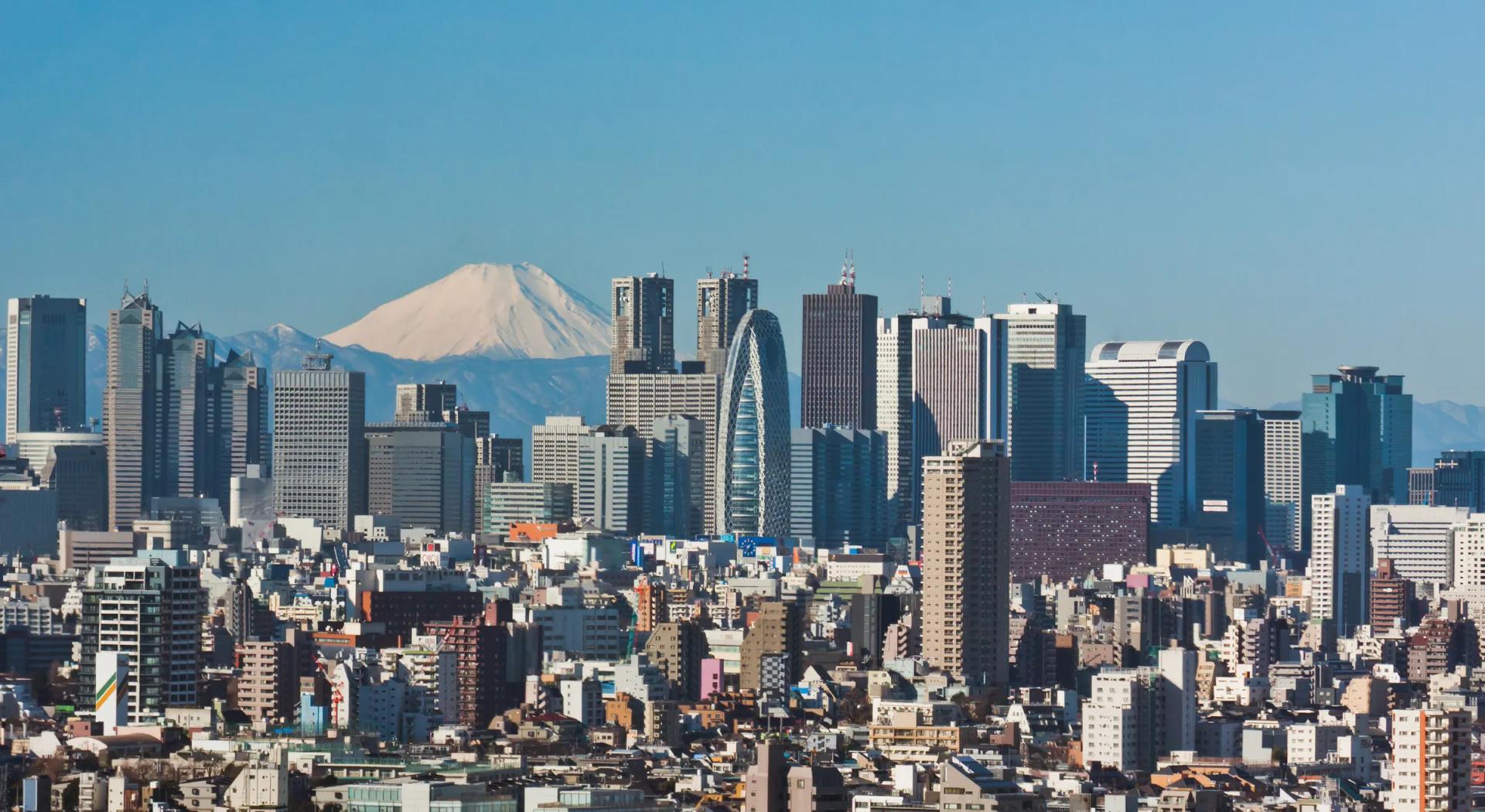
Shinjuku's skyscrapers with Mount Fuji on the horizon, January Photo: Morio, CC BY-SA 3.0
Tokyo is a metropolis of 14 million people where the best-known temples and shrines cost nothing, and the money goes on views, transport and a handful of tickets that sell out. 2026 changed several numbers older guides still quote: the Tokyo Subway Ticket, JR fares, taxis, the departure tax and, from 1 November, the way tax-free shopping works. This guide gives the current official prices and rules, clear answers on which passes and decks are worth paying for, and live prices from 1,440 bookable tours.
Tokyo at a glance
Tokyo Metropolis had about 14.25 million residents in May 2025 and the wider Greater Tokyo Area around 33 million. The city proper is split into 23 special wards and covers 2,194 km², so plan by neighbourhood rather than by the map as a whole. The name itself is relatively new: Edo became Tokyo in 1868.
Unlike Paris or Rome, the headline sights here mostly have no ticket at all. Senso-ji lists no admission fee, Meiji Jingu is open free every day from sunrise to sunset, and the Imperial Palace East Gardens are free on the days they open. What you pay for is height (Skytree, Shibuya Sky), a few museums and the trains that link everything.
| Population | About 14.25 million (Tokyo Metropolis, May 2025); about 33 million in Greater Tokyo |
|---|---|
| Oldest temple | Senso-ji, Asakusa: tradition dates it to 628; free entry |
| Main shrine | Meiji Jingu, founded 1920, 70 ha of forest; free |
| Tallest view | Tokyo Skytree, 634 m; decks at 350 m and 450 m, from ¥1,800 online |
| Subway day pass | Tokyo Subway Ticket ¥1,000 for 24 hours (since 14 March 2026) |
| Hottest month | August: average high 31.3 °C, low 23.5 °C |
| Tipping | Not expected in restaurants, taxis or hotels |
Tokyo in pictures
Tap a photo to enlarge it. Photos: Guilhem Vellut from Annecy, France, Nightcrafter, Syced, Basile Morin, Alexkom000 — Wikimedia Commons.
What do you need to book ahead in Tokyo?
Only a few things sell out — but those really do
Most of Tokyo can be done on the day. The exceptions are the Ghibli Museum, the lottery for the Toyosu tuna auction deck, the free Imperial Palace grounds tour and, on clear afternoons, Shibuya Sky. Plan these four first and build the rest of the trip around them.
| Ticket | Price (adult) | When it opens | Notes |
|---|---|---|---|
| Ghibli Museum, Mitaka | ¥1,000 | 10:00 JST on the 10th of the previous month | Lawson Ticket only; nothing sold at the museum; fixed date and entry time |
| Toyosu tuna auction deck | Free | Online lottery in the month before your visit | 100 places a day; meet 5:30 with photo ID |
| Imperial Palace grounds tour | Free | 5:00 JST on the 1st of the previous month | Same-day numbered tickets at Kikyo-mon from 9:00 / 12:30; no afternoon tours in July–September |
| Shibuya Sky | ¥2,700 before 15:00, ¥3,400 after (online) | Online in advance | Counter ¥3,000 / ¥3,700 only if online is not sold out |
| Tokyo Skytree | From ¥1,800 deck, ¥3,000 combo (online) | Online; price varies by day | ¥500 extra per ticket at the counter |
The Ghibli rule catches people out every month: tickets for, say, December go on sale at 10:00 Japan time on 10 November through Lawson Ticket, and the museum itself will neither sell nor reserve at the door. Each ticket is valid only for its date and entry time, so set an alarm in Japan time, not your own.
At Toyosu you do not need to win the lottery to see the auction: anyone can watch from the second-floor windows of the Fisheries Wholesale Market Building from 5:00, without a reservation. The lottery only gets you onto the lower deck, closer to the floor. The auction runs from around 5:30 to 6:30, and the market is shut on Sundays, holidays and extra days each month (in November 2026, the 11th and 18th).
Verdict: Book the Ghibli Museum the moment sales open if it matters to you, and enter the Toyosu lottery only if you are already awake at 5:00. Everything else (temples, shrines, gardens, Tsukiji) needs no ticket at all.
teamLab Planets in Toyosu also uses timed tickets with prices that change by date (secondary sources quote roughly ¥3,600–4,200); popular slots are reported to go 2–3 weeks ahead. Check the official site before you go.
Skytree or Shibuya Sky: which observation deck is better?
Shibuya Sky for the open-air roof, Skytree for height and the cheaper ticket
The two decks answer different questions. Tokyo Skytree is the tallest structure in the city at 634 m, with an enclosed deck at 350 m and the Tembo Galleria ramp at 450 m. Shibuya Sky sits much lower, 229 m above the street, but it is an open rooftop directly above Shibuya Station and the Scramble Crossing.
| Tokyo Skytree | Shibuya Sky | |
|---|---|---|
| Height | 350 m deck, 450 m Galleria | 229 m open rooftop |
| Adult price online | From ¥1,800 (deck), ¥3,000 (deck + Galleria) | ¥2,700 before 15:00, ¥3,400 from 15:00 |
| Buying on the day | +¥500 per ticket at the counter | ¥3,000 / ¥3,700, only if online is not sold out |
| Hours | 10:00–22:00, last entry 21:00 | 10:00–22:30, last admission 21:20 |
| Rules | — | No luggage, tripods, selfie sticks or loose hats on the roof; lockers on floor 46 |
| Best for | Asakusa day, highest view, rainy days | Sunset over Shibuya, open air |
Price shapes the choice more than height. A Skytree deck ticket bought online starts at ¥1,800, while a Shibuya Sky sunset slot costs ¥3,400 online because everything from 15:00 is charged at the higher rate. Shibuya Sky can also close in bad weather, which an enclosed deck does not.
Verdict: Pick one deck, not both. On a clear day, Shibuya Sky's roof is worth the higher price; book a slot just before 15:00 if you want to save ¥700. If it is cloudy, or you are spending the day in Asakusa, take the Skytree deck ticket online and skip the Galleria upgrade.
When is the best time to visit Tokyo?
Late March to May and October to November are the best months
Spring and late autumn give highs between about 14 °C and 24 °C. In 2026 the Japan Meteorological Agency declared the cherry blossoms open on 19 March and in full bloom on 28 March, a few days earlier than average, so late March and the first days of April are the target for blossom, with crowds to match.
| Month | Avg high | Avg low | Rain | What to expect |
|---|---|---|---|---|
| January | 9.8 °C | 1.2 °C | 60 mm | Cold and dry |
| February | 10.9 °C | 2.1 °C | 57 mm | Coldest stretch ends; few crowds |
| March | 14.2 °C | 5.0 °C | 116 mm | Blossom from mid-late March |
| April | 19.4 °C | 9.8 °C | 134 mm | Blossom tail; Showa Day 29 April |
| May | 23.6 °C | 14.6 °C | 140 mm | Golden Week 3–5 May is busy |
| June | 26.1 °C | 18.5 °C | 168 mm | Rainy season usually starts |
| July | 29.9 °C | 22.4 °C | 156 mm | Rains end around 20 July; humid |
| August | 31.3 °C | 23.5 °C | 155 mm | Hottest month; typhoon peak |
| September | 27.5 °C | 20.3 °C | 225 mm | Wet; most damaging typhoons |
| October | 22.0 °C | 14.8 °C | 235 mm | Wettest month, but mild |
| November | 16.7 °C | 8.8 °C | 96 mm | Dry and mild |
| December | 12.0 °C | 3.8 °C | 58 mm | Dry and cool |
The rainy season (tsuyu) in the Kanto region normally begins around 8 June and ends around 20 July, though the dates move by weeks: in 2024 it started 14 days later than usual. After it comes the heat: August averages 31.3 °C by day and 23.5 °C at night.
Rainfall figures alone mislead. September and October are statistically the wettest months, with around 225–235 mm each, largely because of typhoons; storms near Japan peak in number in August, and the most damaging ones tend to come in September. November is far drier at 96 mm.
Japan's own holidays shape the crowds. Showa Day on 29 April and the 3–5 May public holidays form Golden Week, when domestic travel peaks and day-trip trains and hotels fill; the same dates apply in 2027.
Verdict: Go in November if you want the best balance: dry (96 mm), mild (16.7 °C highs) and outside the blossom rush. Go in late March for cherry blossom and accept the crowds. Avoid August unless you are fine with 31 °C and humid nights.
How do you get around Tokyo and from the airports?
Haneda is closer; from Narita take the Skyliner or Narita Express
Haneda lies roughly 14 km from the centre and Narita roughly 60 km. From Haneda the Keikyu line reaches Shinagawa in about 13 minutes, and the Tokyo Monorail runs to Hamamatsucho. From Narita the Keisei Skyliner reaches Ueno in as little as 41 minutes and the Narita Express reaches Tokyo Station in about 55–60 minutes.
| Route | Time | Fare (adult, approx.) | Notes |
|---|---|---|---|
| Narita → Ueno, Keisei Skyliner | From 41 min | Around ¥2,580 | Quoted fares vary slightly; check before travel |
| Narita → Tokyo Station, Narita Express | About 55–60 min | Check JR East (fares rose March 2026) | All seats reserved; covered by the JR Pass |
| Haneda → Shinagawa, Keikyu | About 13 min | Around ¥310–330 | Fastest link to the JR network |
| Haneda → Hamamatsucho, Monorail | About 13–25 min | Check on the day | Only Haneda rail link the JR Pass covers |
| Taxi in the 23 wards | — | ¥500 for the first 1.0 km, then ¥100 per 232 m | New tariff since late April 2026 |
The Tokyo Subway Ticket still pays off, but less than before
Since 14 March 2026 the Tokyo Subway Ticket costs ¥1,000 for 24 hours, ¥1,500 for 48 hours and ¥2,000 for 72 hours, up from the ¥800, ¥1,200 and ¥1,500 still printed in many guides. It covers every Tokyo Metro and Toei subway line, counts in hours from first use, and is sold to visitors from overseas or from outside the Tokyo area, who show a passport to buy.
It does not cover JR lines such as the Yamanote loop, whose fares also rose by about 7.1% on average on the same day. For those, a Suica or PASMO card works: ordinary unregistered cards went back on sale on 1 March 2025, and the Welcome Suica Mobile app needs no deposit and stays valid for 180 days, though its balance is not refundable.
| Option | Price | Best for |
|---|---|---|
| Tokyo Subway Ticket 24 h | ¥1,000 | A day of hopping between subway-served sights |
| Tokyo Subway Ticket 72 h | ¥2,000 | Three busy sightseeing days |
| Metro & Toei One-Day Pass | ¥1,100 | Residents and visitors who cannot buy the visitor ticket |
| Suica / PASMO (pay as you go) | Fare per ride | JR lines, light days, airport buses and shops |
| Japan Rail Pass, 7 days | ¥50,000 online (¥53,000 via overseas agents) | Only if you also travel to Kyoto, Osaka or further |
Verdict: Carry a Suica (card or mobile) for everything, and add a 72-hour Subway Ticket only for the days you will ride the subway four or more times. Do not buy a JR Pass for a Tokyo-only trip: at ¥50,000 for seven days it only makes sense with a long-distance shinkansen journey.
What are the best things to do in Tokyo?
Senso-ji and Asakusa, early in the morning Must do· From 6:00 (6:30 October–March)
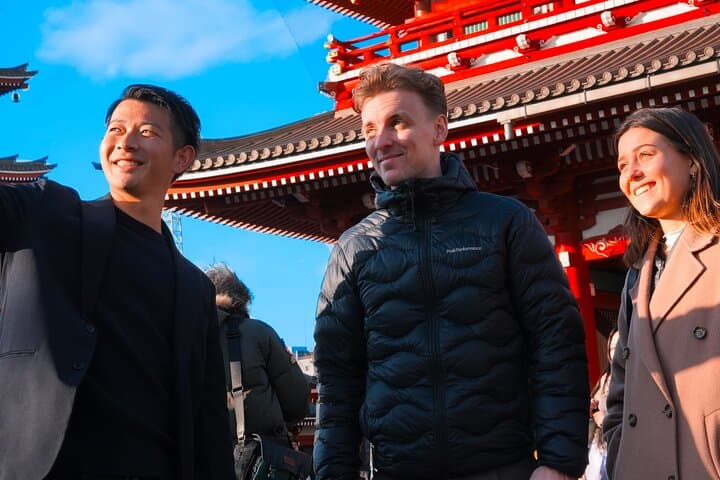
Tokyo's oldest temple traces its story to a Kannon image found in 628. The main hall opens at 6:00 (6:30 from October to March) and closes at 17:00, and the temple lists no entry fee. Arrive before the Nakamise shopping street, about 250 m of some 80–90 stalls between Kaminarimon gate and the temple, fills up. The present Kaminarimon dates from 1960.
59 Top-rated Asakusa and Senso-ji tours tours on Excurgo · from $12, typical $58 per person · rated 4.8 across 9,349 reviews


Meiji Jingu and its forest Must do· Sunrise to sunset, free
Founded in 1920 for Emperor Meiji and Empress Shoken, the shrine sits in about 70 hectares of forest The gates follow the sun: in October, 5:40 to 16:40; in December, 6:40 to 16:00. Entry is free every day of the year.
Imperial Palace East Gardens and the palace tour Must do· Closed Mondays and Fridays
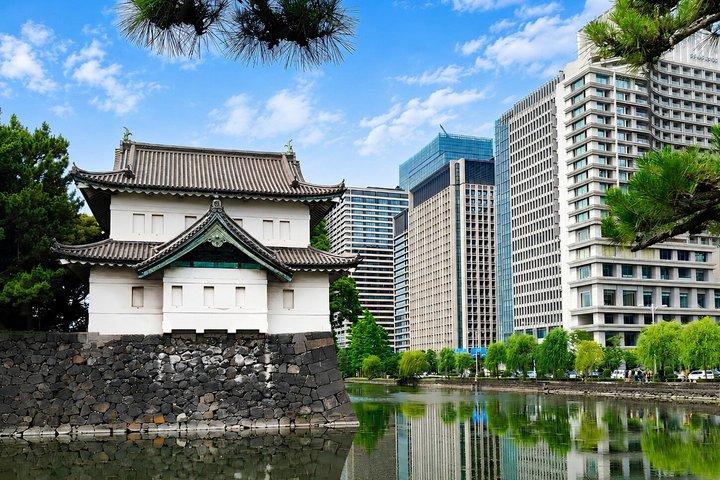
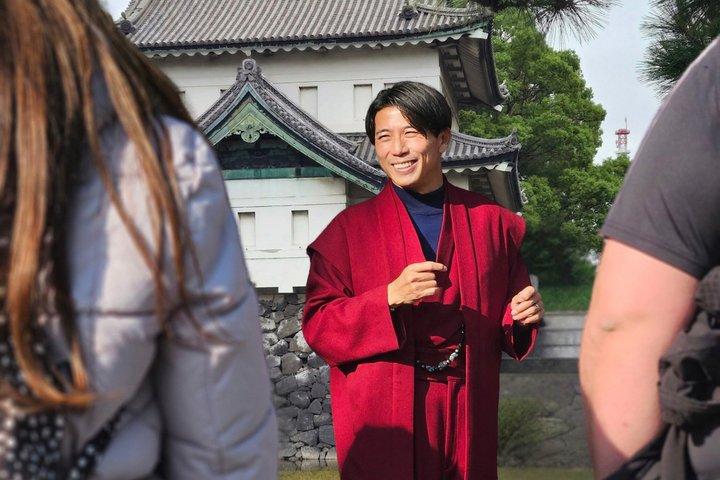
The East Gardens, on the site of the old Edo Castle, are free and open from 9:00, closing between 16:00 and 18:00 depending on the season. They shut every Monday and Friday and from 28 December to 3 January. The inner palace grounds can only be seen on the free guided walk, about 2.2 km in an hour, booked online or with same-day tickets at Kikyo-mon; bring a passport, as photocopies are refused.
25 Top-rated Imperial Palace walks tours on Excurgo · from $9, typical $39 per person · rated 4.9 across 7,699 reviews

Tsukiji Outer Market for breakfast Must do· 9:00–13:00; many shops shut Wednesdays and Sundays
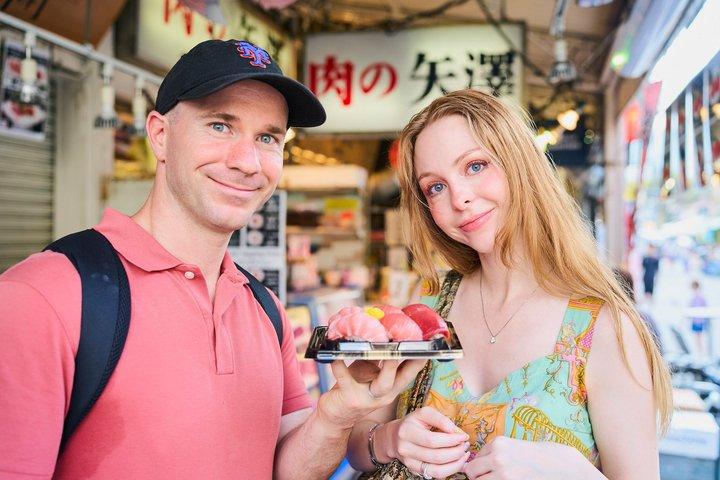
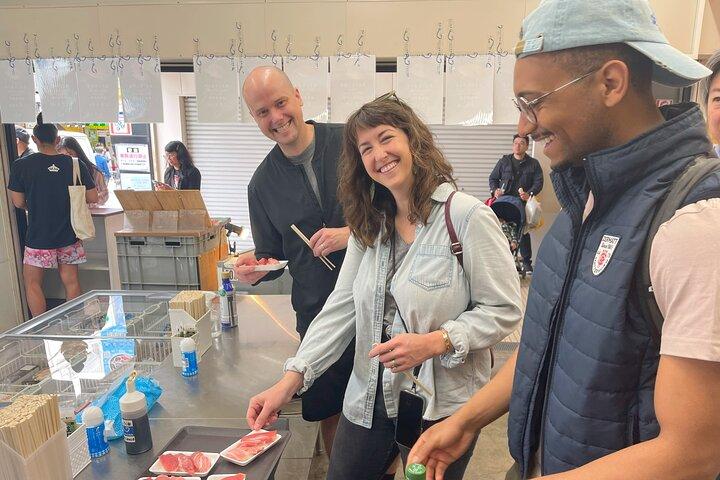
The wholesale fish market left for Toyosu in 2018, but the outer market's roughly 460 shops stayed. The best window is 9:00 to 13:00; many shops close on Wednesdays, Sundays and holidays. Eating while walking is not allowed, so eat at the stall or inside, and bring cash, as most stores take nothing else.
48 Top-rated Tsukiji market tours tours on Excurgo · from $13, typical $89 per person · rated 4.9 across 12,757 reviews

Shibuya Crossing and the view from above Worth it· Late afternoon to evening
The Scramble Crossing costs nothing to walk; the paid view is Shibuya Sky, 229 m up on the same block. Note that drinking on the street around the station, the crossing, Center Gai and Miyashita Park is banned from 18:00 to 5:00 every day since October 2024.
Tokyo National Museum in Ueno Worth it· Closed most Mondays
The museum costs ¥1,000 for adults and is free for under-18s and over-70s. It opens 9:30 to 17:00, staying open until 20:00 on Fridays and Saturdays, and usually closes on Mondays.
Shinjuku Gyoen for a garden break Worth it· Closed Mondays
Entry is ¥500 for adults, ¥250 for over-65s and students, and free for children up to junior-high age. The garden closes every Monday (the next weekday when Monday is a holiday); in 2026 it also had free days on 29 April, 4–5 May and 6–7 June.
An izakaya night in Shinjuku or Shibuya Worth it· Evenings
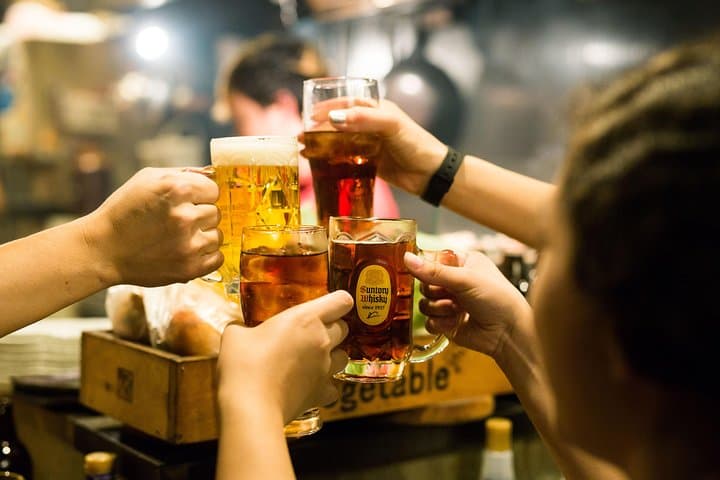
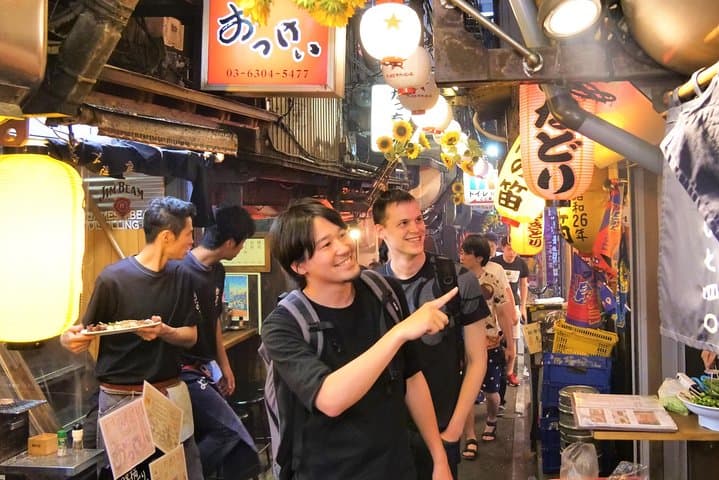
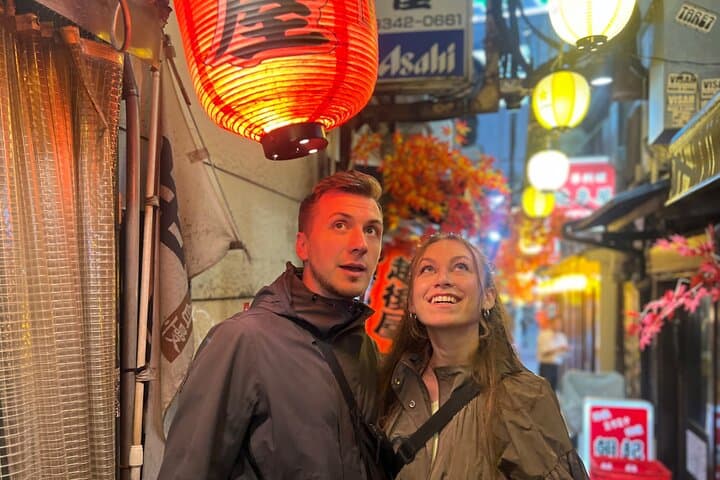
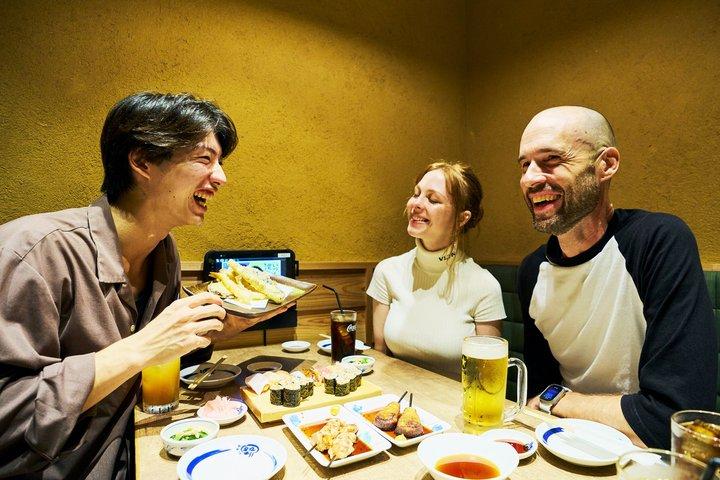
Bar-hopping through Shinjuku's lanes, Golden Gai included, is among the most popular experiences in our catalogue, with 40 izakaya and bar tours in our catalogue at a typical $104. A food tour without the drinking focus runs at about $129.
40 Top-rated izakaya and bar tours tours on Excurgo · from $25, typical $104 per person · rated 4.9 across 12,921 reviews

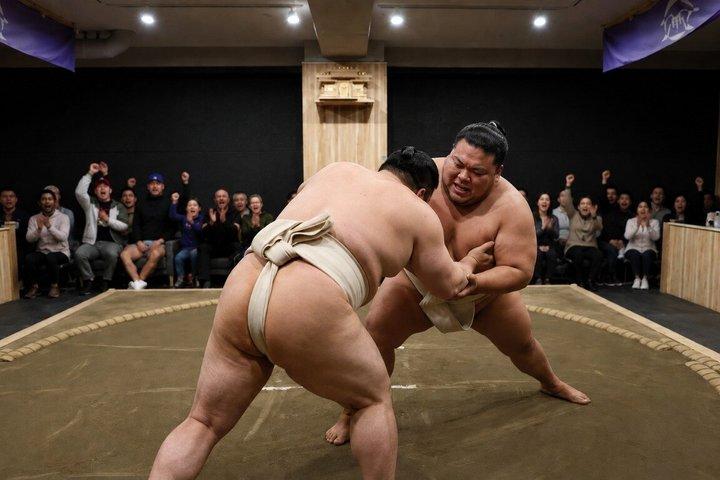
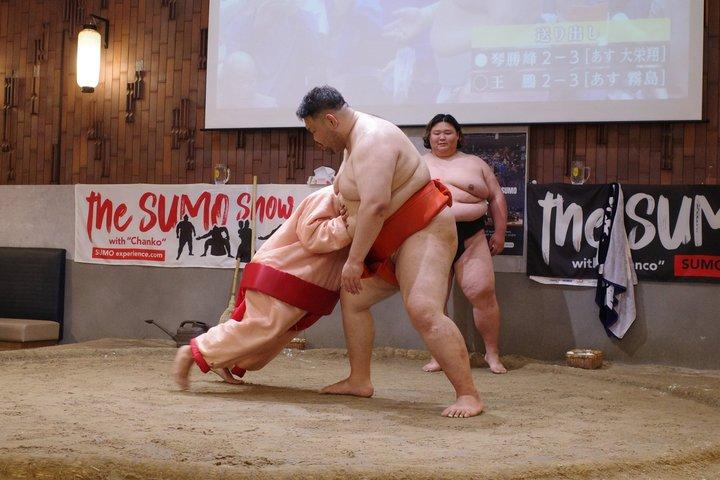
Sumo: a tournament if your dates match, a show if not Worth it· Tournaments in January, May and September
Japan holds six 15-day grand tournaments a year, and the three in Tokyo take place at Ryogoku Kokugikan in January, May and September; the next runs 9–24 January 2027, with tickets on sale from 5 December 2026. Outside those weeks, sumo shows with a meal fill the gap, typically $101.
39 Top-rated sumo shows tours on Excurgo · from $38, typical $101 per person · rated 4.9 across 13,435 reviews

A sushi or ramen class Worth it· Any day; good for rainy days
Cooking classes are the best rain plan in a city with 235 mm of rain in October. There are 73 sushi, ramen and home-cooking classes in our catalogue, typically $97.
73 Top-rated cooking classes tours on Excurgo · from $29, typical $97 per person · rated 5.0 across 13,858 reviews


Worth skipping
- Both observation decks in one trip. Skytree and Shibuya Sky show the same city; one is enough (see which deck).
- Buying deck tickets at the counter. Skytree adds ¥500 per ticket, and Shibuya Sky's counter only sells if online is not sold out.
- The Skytree Galleria upgrade on a hazy day. The extra 100 m adds little when you cannot see Fuji.
- Tsukiji on a Wednesday or Sunday. Many shops are shut; go another day.
- The Toyosu lottery if you are not an early riser. The free second-floor windows show the same auction.
What are the best day trips from Tokyo?
Mt Fuji and Kawaguchiko first; Nikko for temples; Kamakura for an easy half day
Four day trips cover most interests. Lake Kawaguchi, at the foot of Mt Fuji, is about 1 hour 45 minutes by highway bus from Shinjuku. Hakone is 80 minutes by Romancecar. Nikko, a UNESCO World Heritage Site since 1999, is about 1 hour 50 minutes from Asakusa. Kamakura is about an hour from Tokyo Station on JR.
| Day trip | How to get there | Time each way | Fare / key ticket | Tours from |
|---|---|---|---|---|
| Mt Fuji & Lake Kawaguchi | Highway bus from Busta Shinjuku, or Fuji Excursion train | About 1 h 45 min bus; just under 2 h train | About ¥2,100–2,200 bus; ¥4,130–4,200 train | $47 |
| Hakone | Odakyu Romancecar from Shinjuku | About 80 min | ¥1,200 Romancecar fee + fare; 2-day Freepass ¥7,100 | $55 |
| Nikko | Tobu SPACIA X from Asakusa | About 1 h 50 min | Toshogu about ¥1,300 (check) | $68 |
| Kamakura | JR Yokosuka line from Tokyo Station | About 55–60 min | About ¥920–950; Great Buddha ¥300 | $58 |
For Mt Fuji itself, a summit climb is a different trip: the Yoshida trail is open only from 1 July to 10 September, charges ¥4,000 per person, and closes its 5th-station gate from 14:00 to 3:00 and once 4,000 climbers have passed in a day. A day trip to Kawaguchiko is about the view, and winter (57–60 mm of rain a month in Tokyo from December to February) is the driest season.
84 Top-rated Mt Fuji day trips tours on Excurgo · from $47, typical $311 per person · rated 4.8 across 12,345 reviews


Hakone works without a tour: the Romancecar from Shinjuku takes about 80 minutes for a ¥1,200 limited-express fee on top of the fare, and the 2-day Hakone Freepass from Shinjuku costs ¥7,100 before that fee. Combined Fuji and Hakone bus tours are popular, typically $388, though private cars push that figure up.
50 Top-rated Fuji and Hakone tours tours on Excurgo · from $55, typical $388 per person · rated 4.7 across 49,090 reviews


Nikko's shrines and temples, 103 buildings in all, were inscribed by UNESCO in 1999. Toshogu admission is most often quoted at ¥1,300 for adults, but one source gives ¥1,600, so check on arrival.
Kamakura is the simplest trip: JR from Tokyo Station in about an hour, then the Enoden line to Hase and a 7-minute walk to the Great Buddha of Kotoku-in, ¥300 for adults plus ¥50 to step inside the statue.
Verdict: Go to Kawaguchiko by public bus if you want Fuji on a budget, and book a tour only for Nikko, where the train-plus-shrine logistics are fiddlier. For a trip built around a view, avoid the wettest stretches: the June–July rainy season and the typhoon months of September and October.
How many days do you need in Tokyo?
Four days covers the city's main areas at a reasonable pace; five or six adds day trips. Plan around closures: the East Gardens shut on Mondays and Fridays, the National Museum and Shinjuku Gyoen on Mondays, Tsukiji shops often on Wednesdays and Sundays.
2 days
Day 1: Senso-ji at opening, Asakusa, Skytree deck, Ueno and the National Museum. Day 2: Tsukiji breakfast, the East Gardens, Meiji Jingu, Shibuya Crossing and an izakaya evening in Shinjuku.
Tickets ≈ ¥2,800 (Skytree ¥1,800 + museum ¥1,000) · tours ≈ $104
4 days
The two days above, plus Shibuya Sky at sunset, Shinjuku Gyoen, a cooking class, and either the Ghibli Museum or the Imperial Palace grounds tour.
Tickets ≈ ¥7,700 (adds Shibuya Sky after 15:00, Gyoen and Ghibli) · tours ≈ $97
6 days
Four days in the city plus a Kawaguchiko or Hakone day and a Nikko or Kamakura day. A 72-hour Subway Ticket (¥2,000) covers the city days.
Tickets ≈ ¥9,700 with a 72-hour Subway Ticket, plus day-trip fares · tours ≈ $311
How much do tours in Tokyo cost?
Our catalogue lists 1,440 bookable tours and activities in Tokyo. Walking tours are the cheapest way in, starting at $12; day trips to Fuji, Hakone and Nikko are the most expensive because so many run as private car tours. The table shows the typical (median) price and the range for each type.
| Activity | Tours | From | Typical | Top end |
|---|---|---|---|---|
| Walking tours | 132 | $12 | $60 | $151 |
| Asakusa and Senso-ji tours | 59 | $12 | $58 | $142 |
| Imperial Palace tours | 25 | $9 | $39 | $100 |
| Tsukiji and Toyosu market tours | 48 | $13 | $89 | $162 |
| Food tours | 95 | $23 | $129 | $261 |
| Izakaya and bar-hopping tours | 40 | $25 | $104 | $230 |
| Sushi, ramen and cooking classes | 73 | $29 | $97 | $150 |
| Tea ceremonies | 25 | $23 | $63 | $160 |
| Sumo shows and experiences | 39 | $38 | $101 | $205 |
| Samurai and ninja experiences | 45 | $23 | $84 | $215 |
| Street go-kart tours | 32 | $52 | $94 | $128 |
| JDM and Daikoku car tours | 32 | $71 | $155 | $368 |
| Mount Fuji day trips | 84 | $47 | $311 | $699 |
| Mount Fuji and Hakone day trips | 50 | $55 | $388 | $958 |
| Nikko day trips | 24 | $68 | $388 | $647 |
| Kamakura and Enoshima day trips | 17 | $58 | $151 | $582 |
93% of Tokyo tours in our catalogue offer free cancellation. Prices are refreshed from the catalogue; official ticket prices in this guide are in yen as published by each venue.
95 Top-rated food tours tours on Excurgo · from $23, typical $129 per person · rated 4.9 across 21,647 reviews

Where should you stay in Tokyo?
Pick your base by the trains you will use most
Tokyo is too large to walk, so the right neighbourhood is the one on top of your most-used line. The departure points of the airport trains and day-trip services settle most choices.
| Area | Good for | Trains that start here |
|---|---|---|
| Shinjuku | Izakaya nights, Golden Gai, Shinjuku Gyoen, day trips west | Romancecar to Hakone; highway buses to Kawaguchiko from Busta Shinjuku |
| Ueno | Museums, Narita arrivals | Keisei Skyliner from Narita (from 41 min) |
| Asakusa | Senso-ji at dawn, Skytree | Tobu SPACIA X to Nikko |
| Tokyo Station / Ginza | Imperial Palace, Tsukiji, JR connections | Narita Express; JR Yokosuka line to Kamakura |
| Shibuya | Shibuya Sky, the Scramble Crossing | — |
Tokyo's accommodation tax is small for now: nothing under ¥10,000 per person per night, ¥100 between ¥10,000 and ¥14,999, and ¥200 above. From 1 April 2027 it becomes 3% of the rate above a ¥13,000 threshold and will apply to private rentals too.
Verdict: First-timers should stay in Shinjuku for the day-trip departures and evenings, or near Ueno if they land at Narita and want museums. Choose Asakusa only if early-morning temples matter more than nightlife.
What should you know about money, rules and safety in Tokyo?
| Tipping | Not expected in bars, restaurants, taxis or hotels |
|---|---|
| Cash | Most Tsukiji stalls are cash only; foreign cards work at 7-Eleven and post office ATMs |
| Tax-free shopping | From 1 November 2026: pay tax, claim the refund at customs before check-in; goods out within 90 days |
| Departure tax | ¥3,000 per departure since 1 July 2026, usually in the air fare |
| Hotel tax | ¥0 / ¥100 / ¥200 per person per night; 3% from April 2027 |
| Street drinking | Banned 18:00–5:00 around Shibuya Station and the crossing |
| Street smoking | ¥2,000 on-the-spot fine in Chiyoda ward; rules vary by ward |
| Future entry rule | JESTA online pre-authorisation due by fiscal 2028 |
Tipping is not part of the culture: the national tourism organisation says it is not common in bars, restaurants, taxis or hotels, and where a gift of money is given, it goes in an envelope. Cash still matters in markets; foreign-issued cards are generally accepted at ATMs in 7-Eleven stores and post offices rather than at banks.
The biggest money change of 2026 lands on 1 November. Tax-free shopping stops being a discount at the till: you pay the tax-inclusive price, show your passport, and claim the refund at customs when you leave Japan, before checking in. The time allowed to take goods out of the country grows from 30 to 90 days. Anything bought until 31 October follows the old rules.
Local rules are set ward by ward. Shibuya bans street drinking from 18:00 to 5:00 every day around the station, the crossing, Center Gai and Miyashita Park; there is no fine, but patrols can take your drink. Chiyoda, the Imperial Palace and Tokyo Station ward, issues ¥2,000 on-the-spot fines for smoking on the street outside designated areas.
Entry rules are also moving: Japan plans an online pre-travel authorisation, JESTA, for visa-exempt visitors by fiscal 2028. Nothing changes yet for 2026 trips, but check your own government's advice before booking.
What mistakes do visitors to Tokyo regret?
- Trusting old transport prices. The Subway Ticket is ¥1,000 / ¥1,500 / ¥2,000 since March 2026, not ¥800 / ¥1,200 / ¥1,500, and JR fares rose about 7.1%.
- Missing the Ghibli sale. Tickets go on the 10th of the previous month at 10:00 Japan time, through Lawson Ticket only.
- Turning up at the East Gardens on a Monday or Friday. They are closed both days.
- Going to Tsukiji for the tuna auction. The wholesale market moved to Toyosu in 2018; the auction runs about 5:30–6:30 there.
- Buying a JR Pass for Tokyo alone. At ¥50,000 for seven days it only pays off with long shinkansen trips.
- Booking a Shibuya Sky slot after 15:00 without meaning to. The same ticket is ¥700 cheaper before 15:00.
- Eating while walking in Tsukiji. It is not allowed; eat at the stall.
- Expecting tax to come off at the till after 1 November 2026. You now claim it back at customs on departure.
- Planning a Fuji summit climb outside 1 July–10 September. The Yoshida trail season is short and the gate closes at 14:00.
Tokyo FAQ
Is the Tokyo Subway Ticket still worth it after the 2026 price rise?
Usually yes for busy sightseeing days. Since 14 March 2026 it costs ¥1,000 for 24 hours, ¥1,500 for 48 hours and ¥2,000 for 72 hours, covering all Tokyo Metro and Toei subway lines. It does not cover JR lines such as the Yamanote loop.
Do I need a JR Pass if I only stay in Tokyo?
No. A 7-day Ordinary pass costs ¥50,000 on the official site (¥53,000 via overseas agents), which only pays off with long-distance shinkansen trips. Inside Tokyo, a Suica card and the Subway Ticket are cheaper.
Can I still buy a physical Suica card?
Yes. Sales of ordinary unregistered Suica and PASMO cards resumed on 1 March 2025 after a chip shortage. iPhone users can also use the Welcome Suica Mobile app, which needs no deposit and is valid for 180 days.
Skytree or Shibuya Sky — which is better?
Shibuya Sky for an open-air roof at 229 m over the Scramble Crossing (¥2,700 online before 15:00, ¥3,400 after). Skytree for the highest view, 350–450 m, and a cheaper ticket from ¥1,800 online. One is enough.
How do I get Ghibli Museum tickets?
Through Lawson Ticket, from 10:00 Japan time on the 10th of the month before your visit. Adult tickets cost ¥1,000, are valid only for the booked date and entry time, and cannot be bought at the museum.
Can tourists see the tuna auction at Toyosu?
Yes. Anyone can watch from second-floor windows in the Fisheries Wholesale Market Building from 5:00 without booking; the auction runs about 5:30–6:30. The closer observation deck takes 100 people a day by online lottery in the previous month.
When is cherry blossom season in Tokyo?
Late March to early April. In 2026 the Japan Meteorological Agency declared blooming on 19 March and full bloom on 28 March, a few days earlier than average.
Do you tip in Tokyo?
No. Tipping is not common in bars, restaurants, taxis or hotels in Japan. If you do want to give money, the custom is to put it in an envelope.
How does tax-free shopping work from November 2026?
From 1 November 2026 you pay the tax-inclusive price, show your passport at the shop and claim the refund at customs when leaving Japan, before check-in. Goods must leave Japan within 90 days.
Is the Imperial Palace open to visitors?
The East Gardens are free and open except Mondays, Fridays and 28 December–3 January. The inner grounds are seen on a free one-hour guided walk, booked online from the 1st of the previous month or with same-day tickets at Kikyo-mon; bring photo ID.
Sources and how this guide is made
Written by the Excurgo editorial team with AI assistance. We are a tour comparison site, not a tour operator, and we have not personally tested every tour. Every fact was researched in official and specialist sources and checked against them before publication; prices, ratings and tour counts come from our live catalogue of 1,440 Tokyo tours. Ratings and review counts are collected by Viator and Tripadvisor. Tours are picked by rating weighted by number of reviews (at least 20); we earn a commission from Viator when you book, and it does not affect the order.
- Senso-ji — history and main hall hours (Oct 2026)
- Meiji Jingu — opening hours, free entry (Oct 2026)
- Meiji Jingu — founding and forest (Oct 2026)
- Imperial Household Agency — East Gardens hours and closures (Oct 2026)
- Imperial Household Agency — Imperial Palace guided tour (Oct 2026)
- Tokyo Skytree — ticket prices and heights (Oct 2026)
- GO TOKYO — Shibuya Sky prices, hours and rules (Apr 2026)
- GO TOKYO — Tsukiji Outer Market (Oct 2026)
- JNTO — Toyosu Market 2026 visitor sheet (Dec 2025)
- Ghibli Museum — ticket information (Oct 2026)
- Tokyo National Museum — admission and hours (Oct 2026)
- Japan Meteorological Agency — Tokyo climate normals 1991–2020 (Oct 2026)
- Japan Rail Pass — official prices (Oct 2026)
- JNTO — tax-free shopping changes from 1 November 2026 (Aug 2026)
- JNTO — International Tourist Tax rises to ¥3,000 (2026)
- Official Mt. Fuji Climbing site — Yoshida trail 2026 rules (2026)
- Odakyu — Romancecar and Hakone Freepass (Oct 2026)
- TRAICY — Tokyo Subway Ticket prices from 14 March 2026 (Jan 2026)
Photos come from Wikimedia Commons under free licences (CC BY, CC BY-SA, CC0 or public domain); the author and licence are shown under each one. They show the places described, not the exact tours listed.
Changelog. 14 October 2026: guide published.
Browse every tour: Tokyo