Senso-ji Temple45 min
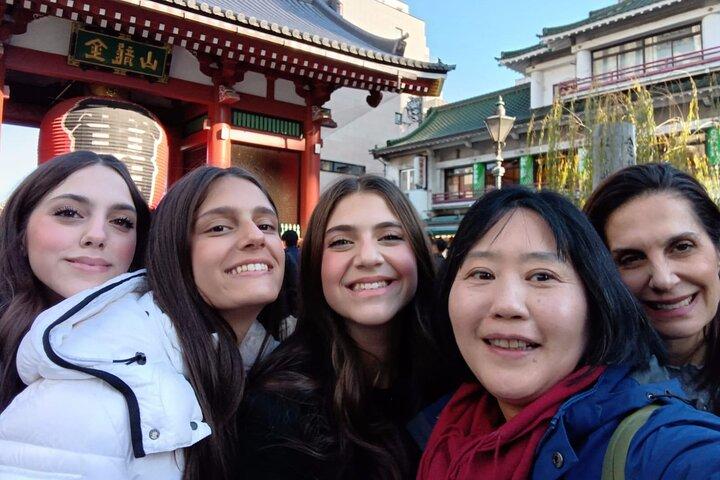
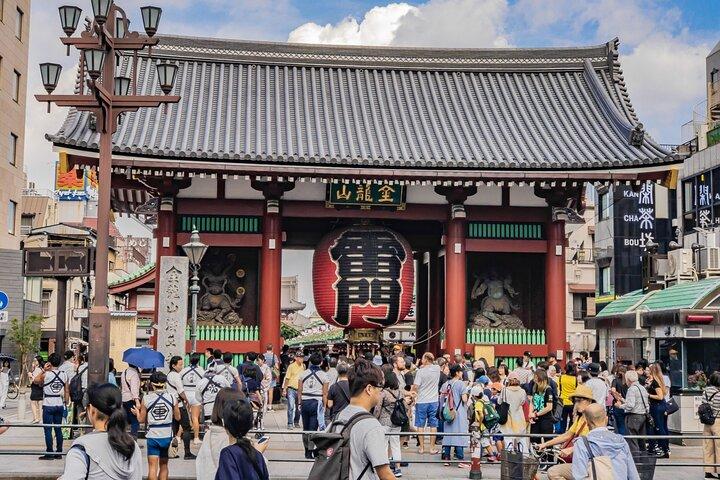
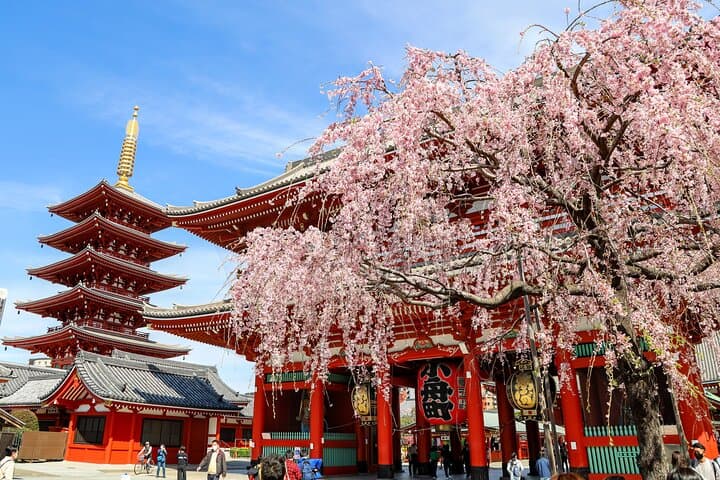
Tokyo's oldest temple, and still a working one. You'll come in under the Kaminarimon gate and its giant paper lantern, wash at the purification fountain, and watch people waft incense smoke toward whatever they'd like fixed. Your guide explains what's happening at each step so you can join in rather than just photograph it — including how to draw a paper fortune, and what you're supposed to do if you pull a bad one.
Nakamise Shopping Street (Kaminarimon)20 min
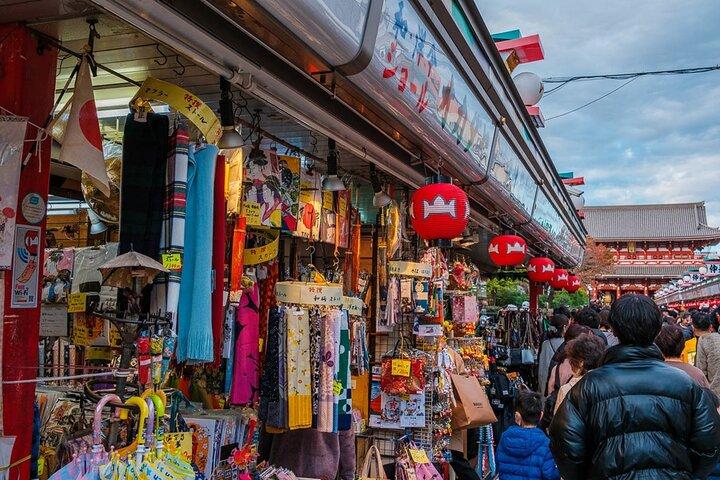
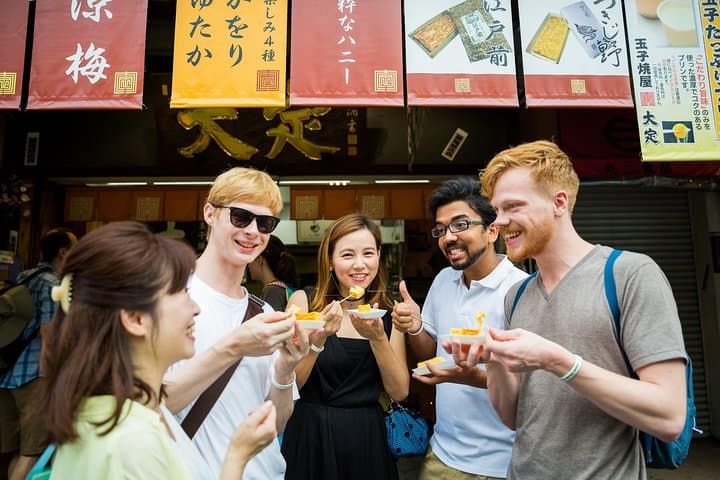
The approach to Senso-ji has been lined with stalls for centuries. It's crowded and it's touristy, and it's also where you'll find snacks that are genuinely local — ningyo-yaki baked in front of you, warm age-manju, rice crackers grilled over coals. Your guide will point out which stalls are worth stopping at and order for you where nobody behind the counter speaks English.
Ueno Park30 min
A wide public park holding several of Tokyo's major museums, a zoo, a shrine and a large pond, all within walking distance of each other. What you do here is your call — a slow walk under the trees, the quieter shrine paths away from the crowds, or a museum if you'd like to add one. Your guide will help you choose based on how much time you have left and what you've already seen that day.
Ameyoko Shopping Street30 min
A market street packed in under and alongside the railway tracks, left over from the years when this was a post-war black market. Now it's dried seafood, cut fruit, cheap trainers, cosmetics, and standing bars where people are drinking at four in the afternoon. It is loud and it is not polished. Your guide can read the stalls for you and get you tasting things you would never have ordered on your own.
Akihabara40 min
Six or seven floors of anime figures, retro games, manga and secondhand electronics, stacked inside buildings you'd walk straight past without knowing. You'll see arcades where the regulars are genuinely good, shops organised by series in ways that only make sense once someone explains them, and duty-free counters worth knowing about. Tell your guide what you're into and you'll end up in the right building rather than the biggest one.
Shibuya Crossing30 min
Several hundred people crossing in every direction at once, every couple of minutes. Your guide takes you across it, then up to the vantage points locals actually use to watch it from above — generally free, and generally not the ones signposted for visitors. Worth seeing at any hour, better after dark when the screens are lit.
Hachiko10 min
A small bronze dog beside Shibuya Station, and the most-used meeting point in the city. Hachiko came here to meet his owner off the evening train, and carried on coming for years after the man died. Your guide will tell you the version Japanese people grow up with, which is sadder and more specific than the film. Expect a short queue for the photo.
Takeshita Street30 min
A narrow pedestrian street of teenage fashion, secondhand shops and food built to be photographed — crepes, oversized candy floss, whatever is currently going around online. It's chaotic and it's fun. Your guide can also walk you two minutes over to Omotesando, the wide, quiet, expensive avenue running parallel, which is a useful thing to see back to back.
Meiji Jingu Shrine40 min
A Shinto shrine set inside a forest of roughly a hundred thousand trees, every one planted by hand when the shrine was built. From the first torii gate it's a walk of about ten minutes under the canopy, and the city noise drops away as you go. You'll pass the wall of sake barrels, wash your hands at the fountain, and see people writing wishes onto wooden plaques. Your guide will show you how to make an offering properly if you'd like to.
Omoide Yokocho25 min
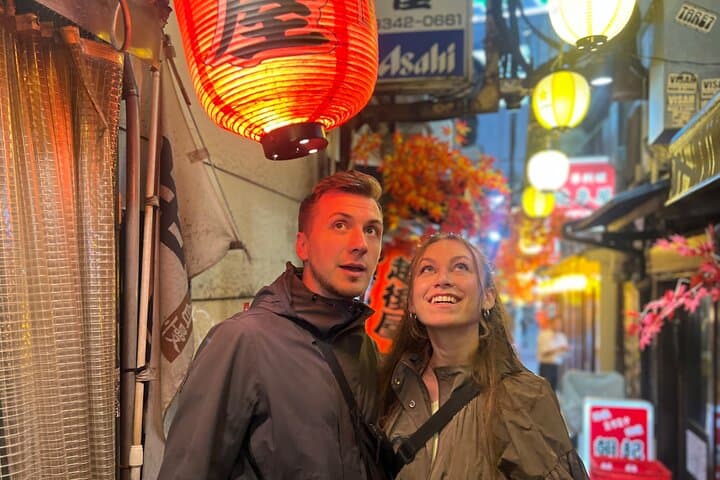
A handful of alleys on the west side of Shinjuku Station, lined with counters that seat six or seven people and grill over charcoal. It smells of smoke and it hasn't changed much since the 1950s. Your guide can get you a seat and order for you — the menus here are handwritten in Japanese, and having someone to translate is the difference between walking past and sitting down.
Shinjuku40 min
The busiest station in the world, and the districts stacked around it: department stores, neon, tiny bars, and government towers with free observation floors. What you see depends entirely on the hour — this is a different place at two in the afternoon and at nine at night. Your guide routes it around when you're actually there, and can get you through the station, which defeats most people on their first try.
Tsukiji Fish Market45 min
The wholesale market moved out to Toyosu in 2018, but the outer market stayed: rows of small shops selling grilled scallops, sea urchin, tamagoyaki straight off the pan, knives and dried goods. It's at its best in the morning and a fair number of stalls close by early afternoon, so this is one your guide plans around your start time. They'll order for you and tell you what you're eating.
Imperial Palace40 min
The former grounds of Edo Castle, now a public garden inside the palace walls. You can walk up onto the stone base where the castle keep once stood and see just how large the fortress was before it burned. It's quiet, it's free, and it closes on certain weekdays — so if you want it in your day, your guide will build the route around the calendar.
Ginza30 min
Tokyo's expensive district: flagship stores, old department stores with basement food halls worth walking through even if you buy nothing, and small galleries a few floors above street level. On weekend afternoons the main avenue closes to traffic and people walk down the middle of the road. Your guide can also steer you into the older backstreets, which are a good deal less polished than the frontage suggests.