Jvari Monastery60 min
Reach Jvari Monastery, translated as the "Monastery of the Cross". Jvari monastery stands on the rocky mountaintop at the confluence of the Mtkvari and the Aragvi rivers, overlooking the town of Mtskheta, which was formerly the capital of the Kingdom of Iberia.
Jvari Monastery is a sixth-century Georgian Orthodox monastery near Mtskheta. Along with other historic structures of Mtskheta, it is listed as a World Heritage site by UNESCO. The present building, or “Great Church of Jvari”, is generally held to have been built between 586-604.
Stalin MuseumAdmission not included70 min
Arrive at the Stalin Museum, or have free Time In Gori (Optional). Stalin Museum (Joseph Vissarionovich Stalin Museum) is a museum in Gori, Georgia. Dedicated to the life of Joseph Stalin, the leader of the Soviet Union, who was born in Gori. The Museum retains its Soviet-era characteristics, Stalin's Original house, and Stalin's railway carriage.
In Case Of Free Time In Gori (Optional)
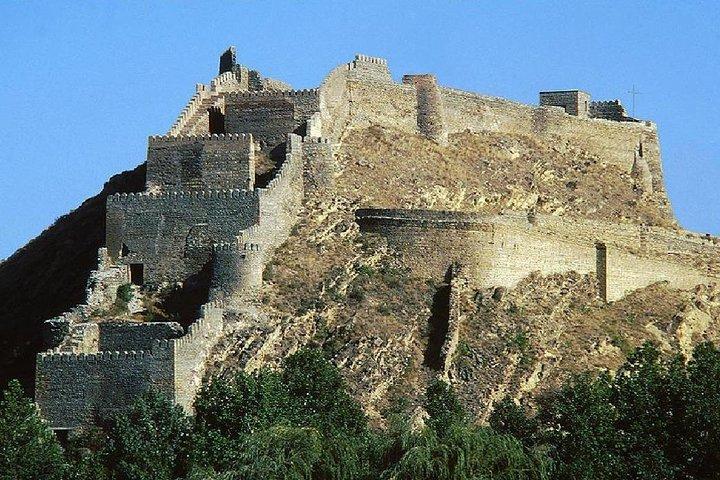
There have been fortifications on the hill dominating Gori since the first half of the first millennium BC. Discover The City Gori has been populated since the early Bronze Age. According to medieval Georgian chronicles, the town of Gori was founded by King David IV. The fortress of Gori (Goris-Tsikhe) appears to have been in use already in the 7th century, and archaeological evidence indicates the existence of an urban community in Classical Antiquity.
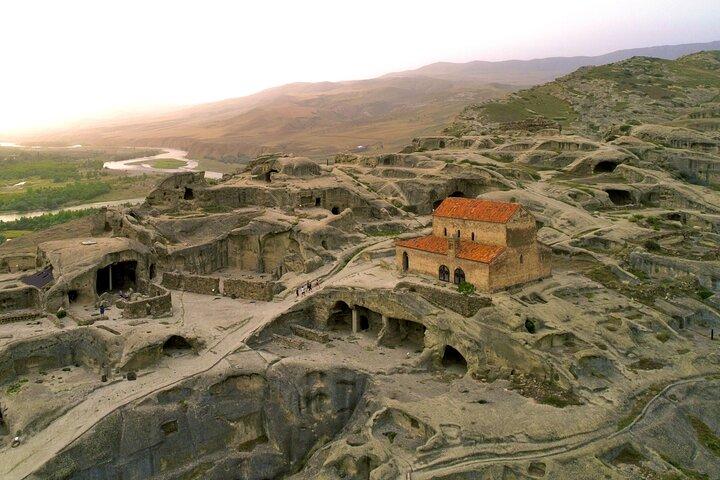
Uplistsiche Cave TownAdmission not included60 min
Arrive in Uplistsikhe Cavetown. Uplistsikhe is an ancient rock-hewn town in eastern Georgia. It is identified by archaeologists as one of the oldest urban settlements in Georgia. Built on a left bank of the Mtkvari River, it contains various structures dating from the Early Iron Age to the Late Middle Ages and is notable for the unique combination of various styles of rock-cut cultures from Anatolia and Iran, as well as the coexistence of pagan and Christian architecture. The tour of the ruins is only for the able (and requires gripping footwear), starting with steps, then scrambling up rocks and following an ancient pathway past grain pits to the remains of a theater built in the 2nd or 3rd century AD, complete with an orchestra pit.
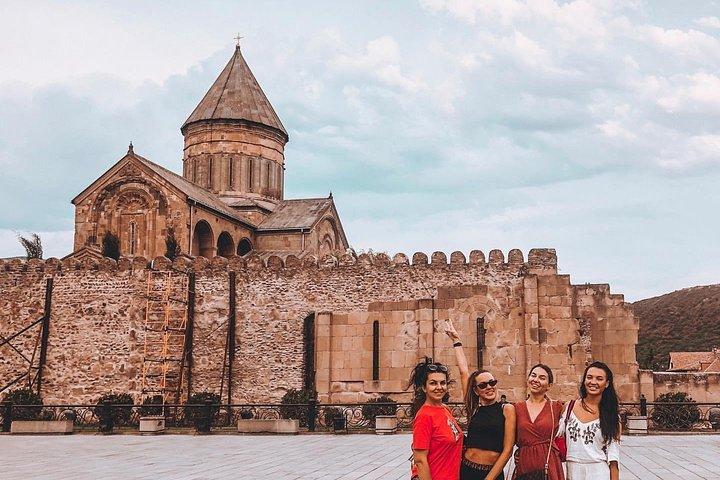
Svetitskhoveli Cathedral70 min
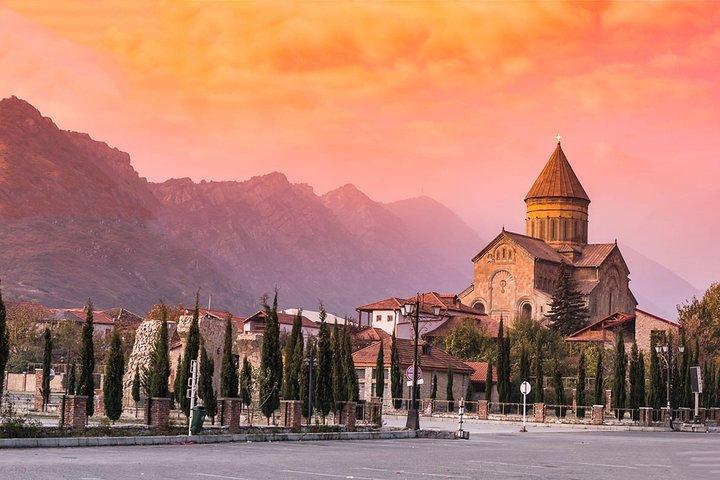
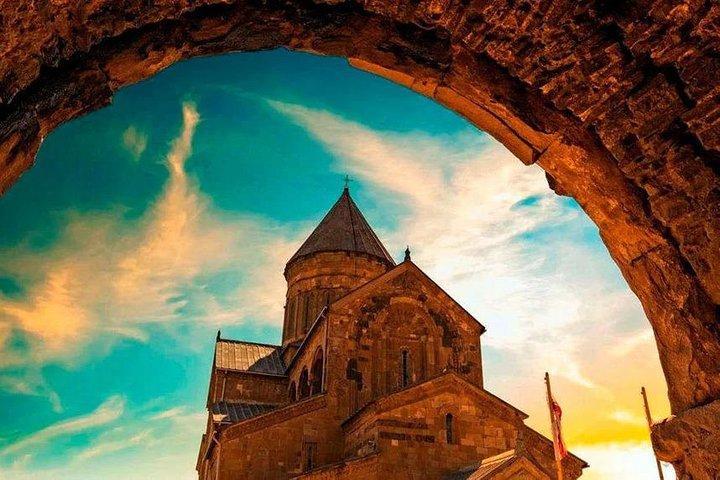
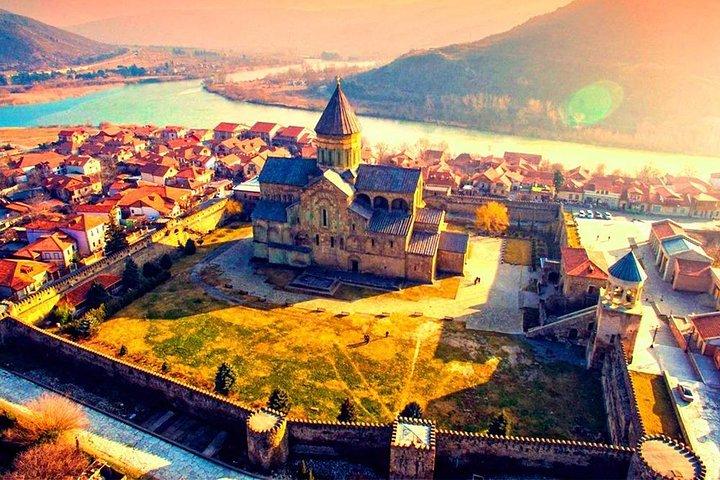
Arrive In Svetitskhoveli in Mtskheta. Due to its historical significance and several cultural monuments, it is recognized by UNESCO as a World Heritage Site. The Svetitskhoveli Cathedral (literally the Cathedral of the Living Pillar) It is currently the second-largest church building in Georgia, after the Holy Trinity Cathedral. As one poet writes about the Svetitskhoveli Cathedral when you look at it you believe God has been here. The patriarchal cathedral of Mtskheta occupies a central place among these monuments.
Svetitskhoveli is the most important monument of Georgian culture, art and architecture. Known as the burial site of Christ's mantle, Svetitskhoveli has long been one of the principal Georgian Orthodox churches and is among the most venerated places of worship in the region. Svetitskhoveli was not only the site of the coronation of the Georgian kings but also served as their burial place.