St. Simons Lighthouse MuseumPass by
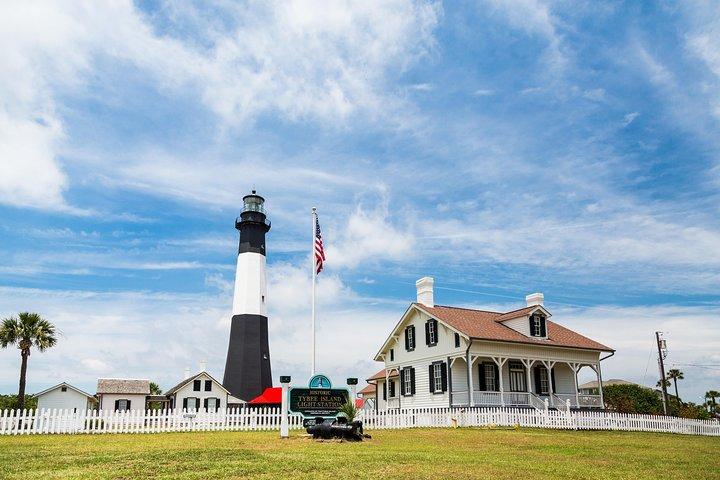
Gaze up at this elegant 1872 lighthouse rising 104 feet above the southern tip of the island, its white tower marking the spot where an earlier light was deliberately destroyed by Confederate forces retreating in 1862 — and where a Fresnel lens hidden somewhere on the island has never been recovered. Climb all 129 steps to the top for views stretching 22 miles out over the Atlantic, and look down at the coastline where German U-boats hunted American oil tankers close enough to shore that island residents could see the fires burning.
Pass by
Stop at this beloved community gathering place named for Neptune Small, a man born into slavery on Retreat Plantation who lived to own land on the island that had once owned him. Enjoy the easy atmosphere of a park whose very name carries one of St. Simons' most quietly powerful stories of perseverance, freedom, and the long arc of a life well lived.
World War II Home Front MuseumPass by
See the handsome 1936 WPA-built Coast Guard Station, now home to a museum that brings the island's extraordinary wartime role sharply into focus. Discover how St. Simons residents watched German submarine attacks unfold just offshore, how the Coast Guard patrolled these beaches on horseback, and how a barrier island of a few thousand people found itself on the front line of the Battle of the Atlantic.
Bloody MarshPass by
Walk the edge of this quiet tidal marsh where, in July 1742, a small force of British rangers and Highland soldiers ambushed a vastly larger Spanish force in the long grass and changed the course of colonial history. Stand in a landscape that looks much as it did that morning and consider how a skirmish lasting less than an hour secured British control of Georgia and, arguably, the future shape of the American colonies.
Fort Frederica National MonumentPass by
Explore the evocative ruins of the town and fort General James Oglethorpe built in 1736 to anchor Britain's southernmost colonial frontier, its tabby walls and excavated foundations emerging from a landscape of live oaks and Spanish moss. Learn how this small garrison of soldiers and settlers held off a Spanish invasion fleet in 1742, in a victory that secured the Georgia colony and ended Spain's ambitions north of Florida.
Pass by
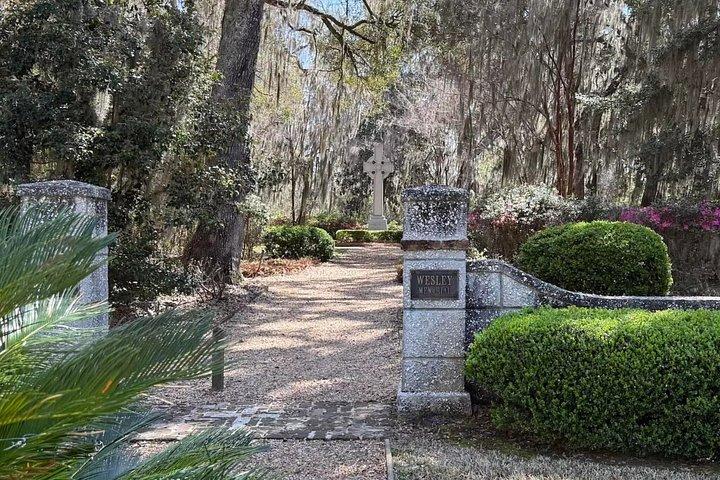
Pause at one of Georgia's oldest and most beautiful churches, a whitewashed Gothic Revival building nestled beneath ancient oaks on the site where John and Charles Wesley preached to Oglethorpe's settlers in the 1730s. Wander the storied churchyard where the graves of soldiers, planters, and island families trace three centuries of St. Simons life in mossy epitaphs beneath the trees.
Retreat Golf CoursePass by
Drive the oak-canopied entrance avenue that Anna Page King planted at Retreat Plantation, its cathedral arch of live oaks forming one of the most photographed stretches of road in coastal Georgia. Reflect on the cotton plantation that once occupied these fairways, worked by hundreds of enslaved people whose labour built the wealth that planted these very trees.
Pass by
Return to the lively heart of St. Simons Island, where the old fishing docks, waterfront restaurants, and weekend market carry the easy energy of a community that has always gathered by the water. Browse the stalls, watch the boats, and take in a scene that connects directly back to the steam ferry tourists in straw hats who first made St. Simons a destination more than a century ago.
Massengale ParkPass by
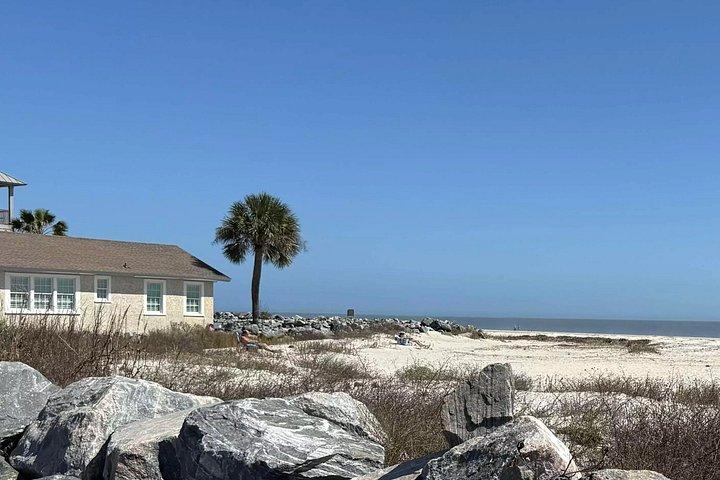
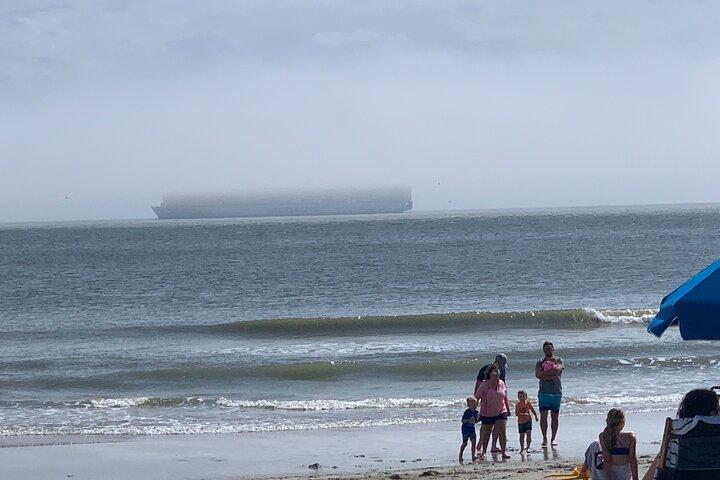
Finish at this breezy oceanfront park on the island's east shore, where a wide beach and a picnic grove of live oaks offer a natural full stop to a day of layered history. Kick off your shoes, walk down to the waterline, and look out over the same Atlantic that brought Indigenous settlers, colonial soldiers, enslaved Africans, and German submarines to this small but story-rich island.