Travel guide · Spain
Tenerife Travel Guide 2026: Teide Permits, Masca Rules, Best Time and What Tours Cost
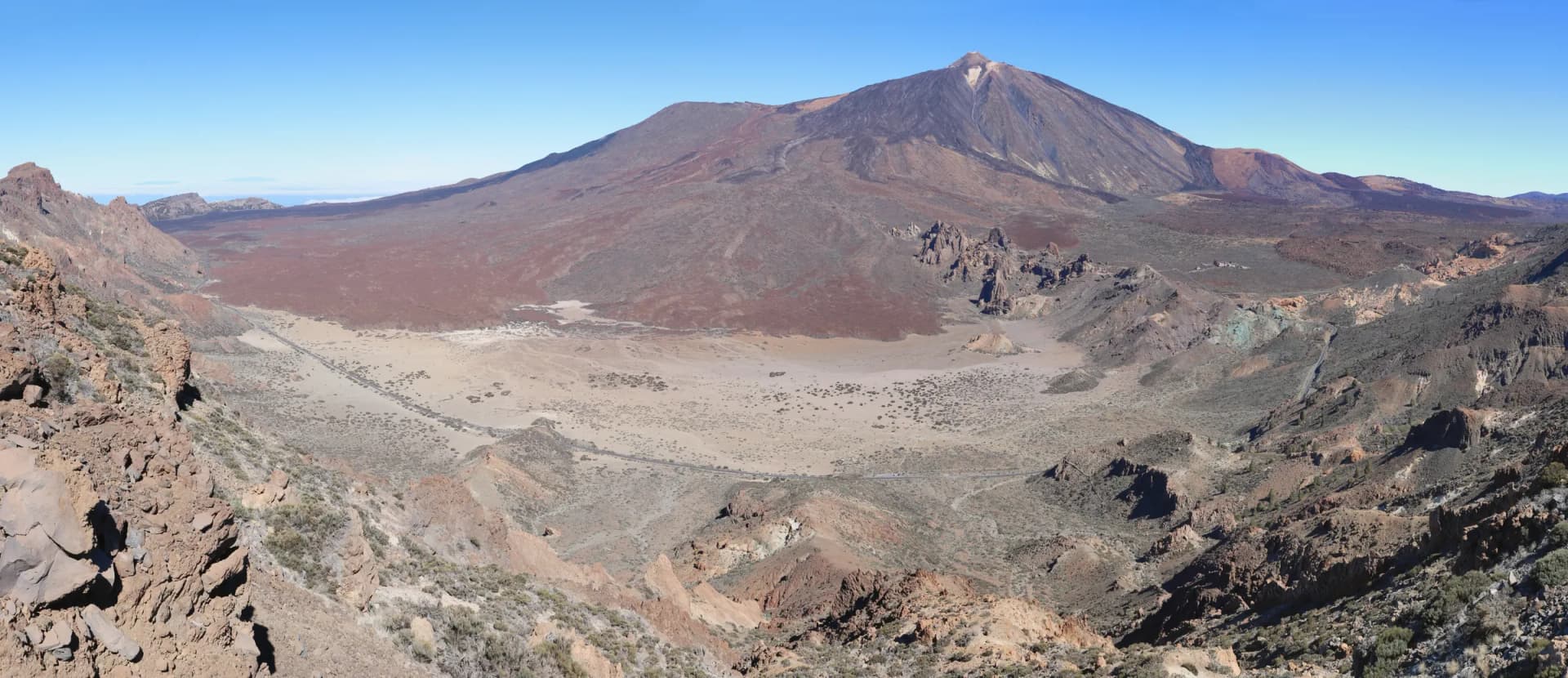
Mount Teide and the Las Cañadas caldera from the rim Photo: Ingo Mehling, CC BY-SA 4.0
Tenerife is the largest Canary Island, a year-round sun destination built around Mount Teide, Spain's highest peak and a UNESCO-listed national park. Three things changed recently and most guides have not caught up: the Teide summit trail now charges non-residents, the Masca ravine is reachable only with a booked ticket and shuttle, and the cable car costs more than the old €40 figure. This guide sets out the rules, the weather month by month, the day trips worth your time and what the 801 tours in our catalogue actually cost.
Tenerife at a glance
Tenerife is built around one volcano. Mount Teide rises to 3,715 m, the highest point in Spain, and the national park around it covers roughly 19,000 hectares at about 2,000 m above the sea. The park was created in 1954, became a UNESCO World Heritage Site in 2007 and receives about three million visitors a year.
Around that centre the island splits into two characters. The south coast, from Los Cristianos through Playa de las Américas to Costa Adeje, is the resort strip, close to Tenerife Sur airport and dry for most of the year. The north holds the old towns: La Laguna, founded in 1496–1497 and a UNESCO World Heritage Site since 1999, Puerto de la Cruz, Garachico, and the green ridges of the Anaga biosphere reserve.
| Highest point | Mount Teide, 3,715 m (the tourist board also gives 3,718 m) |
|---|---|
| UNESCO | Teide National Park 2007; La Laguna 1999; Anaga biosphere reserve 2015 |
| Airports | Tenerife Sur (TFS) for the resorts; Tenerife Norte (TFN) near La Laguna. Bus 343 links the two |
| Sales tax | IGIC, general rate 7% (not mainland VAT at 21%) |
| Emergency numbers | 112; Guardia Civil and mountain rescue 062 |
| Entry (UK) | Schengen rules: 90 days in any 180; EES fingerprints and photo at the border |
| Tours in our catalogue | 801, 96% with free cancellation |
Tenerife in pictures
Tap a photo to enlarge it. Photos: FrDr, Diego Delso, CARLOS TEIXIDOR CADENAS, H. Zell — Wikimedia Commons.
Do you need a permit to climb Mount Teide in 2026?
Yes for the summit, and non-residents now pay €15
The cable car stops at La Rambleta, 3,555 m. The last stretch to the crater, the Telesforo Bravo trail (PNT 10), takes about 40 minutes on foot, is graded difficult and needs a permit booked on Tenerife ON. What changed on 19 January 2026 is the price: Tenerife residents and under-14s go free, residents of the other Canary Islands pay €6 and every other visitor pays €15. The trail runs from 9:00 to 17:00.
The tourist board's own Teide page still calls the permit free and suggests applying one to two months ahead. Treat that as out of date for non-residents. At launch the trail fee reports gave a rolling 28-day booking window, with new dates released every Monday at 07:00 Canary time, for registered and verified users on the Tenerife ON website.
| Trail | Hours | Non-resident fee | Other Canary residents | Tenerife residents |
|---|---|---|---|---|
| PNT 10 Telesforo Bravo (cable car top to summit) | 9:00–17:00 | €15 | €6 | Free (also under-14s) |
| PNT 07 Montaña Blanca–La Rambleta, weekdays | 9:00–15:00 | €6 | €3 | Free |
| PNT 07 Montaña Blanca–La Rambleta, weekends and holidays | 9:00–15:00 | €10 | €5 | Free |
The fee is not flexible. Bookings cannot be changed or cancelled, and money comes back only if the trail closes for weather or the cable car is out of service. If rangers turn you away at a checkpoint for not having the required kit, which starts with proper mountain footwear, you lose the fee.
The cable car alone gets you to 3,555 m without a summit permit
Most visitors do not need the summit. The cable car ride from the base station at 2,356 m takes about 8 minutes, and the operator's 2026 comparison table lists tickets from €43 for adults and €21.50 for children aged 3–13. Its website also shows a headline 'from €24' without saying which ticket that is, so check the exact fare at checkout. The operator recommends buying online; the base car park has only 220 spaces.
Hikers who want to walk up rather than ride need a separate permit for PNT 07 from Montaña Blanca, in force since 30 November 2024. That permit covers the walk to La Rambleta and back on foot only. It does not include the summit, nor a ride down on the cable car. Another route to a sunrise on the peak is a night in the Altavista Refuge at 3,270 m (€10–20); the tourist board says guests may climb at dawn without the summit licence, but confirm this still applies after the 2026 changes when you book.
Verdict: For most people the right choice is the cable car plus the short marked walks at La Rambleta, booked online for a morning slot. Pay the €15 summit fee only if you want the crater itself, can commit to a fixed date, and have boots and warm layers. The altitude is real: GOV.UK names Tenerife's mountains as an altitude-sickness risk.
Can you still hike the Masca ravine?
Yes, but only with a booked ticket and the compulsory shuttle
Since 18 April 2025 the Masca ravine path is reached only by the Cabildo's shuttle from Santiago del Teide. You park near the cemetery, walk 8–10 minutes to the TITSA stop by the town hall and board one of four 18-seat minibuses that leave every 20 minutes between 7:00 and 14:00. Without a ticket stamped on the bus, you will not be let onto the trail.
Tickets are sold only through the official Masca ravine website. Official figures disagree: the tourist board lists €28 plus €10 transport for non-resident adults (€14 plus €5 for children), while Buenavista del Norte's tourism office lists an activity ticket of €40.66 for adults and €20.33 for children. The tourist board says the shuttle runs Friday to Sunday; Buenavista says bookings are available Wednesday to Saturday. Check the dates on sale before you plan around them.
- No children under 8 on the descent.
- Closed hiking boots and at least 1.5 litres of water per person; a helmet is lent at the start.
- The path ends at the sea. Book the boat or kayak from Masca pier to Los Gigantes separately and carry both tickets.
- Be at the Santiago del Teide stop at least an hour before your slot.
The village of Masca itself is free to visit with no booking. Parking there is limited to two hours between 8:00 and 14:00, so the buses (lines 355 and 365) are the calmer way in.
Verdict: Do the ravine if you are a confident hiker and can line up the trail slot, the shuttle and the boat on the same day. If that is too many moving parts, visit Masca village instead: it is free and needs no booking.
When is the best time to visit Tenerife?
Any month suits the south coast; May to October is driest and warmest
Figures from AEMET's Tenerife Sur airport station, close to the main resorts, show how narrow the range is. Average highs move only from 21.7 °C in January to 28.4 °C in August, and the nights stay mild. June and July average no measurable rain at all; November and December are the wettest months at 26–30 mm. Sunshine runs from about 193 hours a month in winter to 295 in July.
| Month | Avg high | Avg low | Rain | What it means |
|---|---|---|---|---|
| January | 21.7 °C | 15.2 °C | 17 mm | Coolest month on the coast; snow possible on Teide |
| February | 22.0 °C | 15.0 °C | 20 mm | Mild; Carnival season in Santa Cruz |
| March | 23.1 °C | 15.6 °C | 15 mm | Good walking weather |
| April | 23.1 °C | 16.0 °C | 7 mm | Dry and comfortable |
| May | 23.9 °C | 17.0 °C | 1 mm | One of the best all-round months |
| June | 25.4 °C | 18.8 °C | 0 mm | Warm and dry |
| July | 27.7 °C | 20.2 °C | 0 mm | Sunniest month; summer wildfire risk |
| August | 28.4 °C | 21.1 °C | 1 mm | Hottest month |
| September | 27.9 °C | 21.1 °C | 4 mm | Still summer-warm |
| October | 26.8 °C | 20.0 °C | 12 mm | Warm sea-and-sun weather, a little rain |
| November | 24.8 °C | 18.2 °C | 26 mm | Wetter, still warm by day |
| December | 22.8 °C | 16.5 °C | 30 mm | Wettest month; mild days |
AEMET normals for Tenerife Sur Aeropuerto (64 m), 1981–2010. The north coast and the mountains are not covered by these figures, and the Teide area is far colder: the tourist board advises warm clothing and a raincoat even on sunny days.
The calendar matters more than the weather for one event. Santa Cruz de Tenerife has moved its 2027 Carnival later than usual: the opening gala is on 22 January 2027 and the street carnival runs 19–28 February 2027. Plan and book early if you want to be there.
Verdict: For walking and Teide, aim for April to June or September to October: dry, warm on the coast and without the summer fire risk. For pure beach time any month works, but if you are coming for winter sun, accept that December is the wettest month even if 30 mm is little by northern European standards.
How do you get around Tenerife without a car?
TITSA, the island bus company, covers most of what a visitor needs. Its Ten+ card costs €2 to buy; a 7-day travel card costs €50 and a day card in the app €10, both valid for unlimited bus and tram rides across the island. Line numbers and fares change, so confirm them on titsa.com before you travel.
| Route | How | Time | Notes |
|---|---|---|---|
| Tenerife Sur ↔ Tenerife Norte airports | TITSA line 343 | About 50 min | Non-stop; other TITSA lines link TFS with Los Cristianos, Costa Adeje and Santa Cruz |
| Santa Cruz ↔ La Laguna | Tram Line 1 | About 40 min | 21 stops; buy at stop machines, validate on board |
| Costa Adeje ↔ Teide National Park | Bus line 342 | Check timetable | The main public link from the south |
| Puerto de la Cruz ↔ Teide National Park | Bus line 348 | Check timetable | The main public link from the north |
| Santiago del Teide ↔ Masca ravine | Compulsory shuttle | Every 20 min, 7:00–14:00 | Only with a ravine ticket |
| Los Cristianos ↔ La Gomera | Ferry (Fred. Olsen or Naviera Armas) | About 50 min | Some sailings up to 1 h 5 min |
| Island-wide | 7-day or day travel card | — | €50 or €10, buses and tram |
By car, the park is reached on the TF-21 from La Orotava or from the south, the TF-24 from La Laguna via El Portillo, or the TF-38 from the west. Car hire makes the north-west and Teide much easier to combine, but it comes with two caveats: GOV.UK warns that so-called highway pirates target hire cars, and in May 2026 the Cabildo announced plans to limit private cars in the national park. Check for new access rules before you drive up.
Night arrivals: the Tenerife Sur terminal is closed to the public between 23:00 and 04:00 when there are no flights, so do not plan to wait inside overnight for an early bus.
Verdict: Without a car, base yourself on the south coast or in Puerto de la Cruz, use buses 342 or 348 or a tour for Teide, and take the tram between Santa Cruz and La Laguna. Hire a car for two or three days if you want the north-west, Anaga and Teide at your own pace.
What are the best things to do in Tenerife?
Teide National Park and the Roques de García Must do· Morning, or late afternoon for sunset
The caldera floor and the eroded Roques de García are the reason most people come. Start at the El Portillo or Cañada Blanca visitor centres (9:00–16:00 daily, closed 25 December and 1 January). The park office also runs guided walks, including a 2–2.5 hour Roques de García route from Cañada Blanca at 9:15 and 13:30, booked by phone or email on weekdays. Taking volcanic stones home is strictly forbidden.
65 Well-rated small-group Teide tours tours on Excurgo · from $18, typical $96 per person · rated 4.4 across 3,313 reviews


Sunset and stargazing on Teide Must do· Evening
Tenerife holds the Starlight Destination certificate, and a regional Sky Law limits light pollution, and evening trips to the park are a large category in our catalogue: 26 options, typically $74. Bring real warm layers; the park sits around 2,000 m. The observatory facilities themselves can be visited on separate guided tours run by Volcano Life.
26 Popular Teide sunset and stargazing tours tours on Excurgo · from $29, typical $74 per person · rated 4.7 across 6,769 reviews


Whale and dolphin watching off the south-west coast Must do· Any month
Up to 21 cetacean species have been recorded around Tenerife, and pilot whales and dolphins are legally protected. The rules are strict on paper: boats stay at least 60 metres away and watch for no more than 30 minutes, and nobody may swim with, feed or touch the animals. The Canary Islands Government awards a blue flag to boats that meet the whale-watching rules, so look for it before you book. Our catalogue lists 71 trips, typically $66.
71 Top-rated whale-watching trips tours on Excurgo · from $28, typical $66 per person · rated 4.8 across 24,245 reviews


La Laguna, the UNESCO old town Must do· Half a day
Founded in 1496–1497 and on the UNESCO list since 1999, San Cristóbal de La Laguna is the island's UNESCO-listed old town and an easy trip: Tram Line 1 runs from Santa Cruz in about 40 minutes. Combine it with Anaga, which starts on the town's doorstep.
Hiking in the Anaga biosphere reserve Worth it· Morning
The Anaga massif, a UNESCO biosphere reserve since 2015 and 48,727 hectares in size, has the highest number of endemic species in Europe according to UNESCO's documentation. The Cabildo said in October 2026 that it plans shuttle buses from La Laguna and between Las Canteras and Cruz del Carmen. A guided walk with pickup is the simplest way in; our catalogue lists 24 Anaga options.
24 Well-reviewed Anaga hikes tours on Excurgo · from $32, typical $136 per person · rated 4.9 across 544 reviews


The Los Gigantes cliffs from the sea Worth it· Morning boat trip
On the west coast the Los Gigantes cliffs drop about 600 m into the Atlantic. They are best seen from the water, which is why many whale-watching boats head this way, and they are also where the Masca ravine boat lands.
Garachico and the dragon tree of Icod Worth it· Half a day, often combined with Masca
Garachico was partly buried by the 1706 eruption, which wiped out its old port but left the lava rock pools of El Caletón along the shore. Many tours pair it with the dragon tree of Icod de los Vinos and Masca on a north-west loop; 34 tours in our catalogue combine Masca with this side of the island.
34 North-west tours with Masca tours on Excurgo · from $64, typical $85 per person · rated 4.5 across 2,208 reviews


Tandem paragliding over Costa Adeje Worth it· Morning, weather permitting
Tandem flights are one of the biggest categories in our catalogue, 31 options, and prices are tight: from $114, typically $148. The difference between operators is mostly take-off height and whether photos and pickup are included.
31 Top-rated tandem flights tours on Excurgo · from $114, typical $148 per person · rated 4.9 across 2,305 reviews


Kayak and snorkel trips from the south coast Worth it· Morning
Guided kayak and snorkel outings from Los Cristianos and nearby bays are among the cheapest activities on the island: 35 options in our catalogue, typically $51. Go guided rather than alone; GOV.UK warns of strong undercurrents around Spain's islands.
35 Popular kayak and snorkel tours tours on Excurgo · from $22, typical $51 per person · rated 4.6 across 3,402 reviews


Siam Park and Loro Parque Worth it· Full day each
The island's two big parks suit families. A local news report from August 2026 puts Siam Park at €42 for adults and €30 for children up to 11, with under-2s free, and the Twin Ticket for Siam Park and Loro Parque at €74 for adults and €53 for children. Check the parks' own sites for the current fare.
Candelaria basilica Worth it· One hour, on the way north
The basilica in Candelaria is the main pilgrimage church of the Canary Islands and home to the Virgin of Candelaria, the archipelago's patron saint. Nine bronze statues of Guanche kings by José Abad stand on the seafront square beside it.
- Skip the Teide summit if you cannot commit to a date. The €15 fee is non-refundable unless the trail or cable car closes.
- Skip boats that promise swimming with whales or dolphins. It is against the whale-watching rules.
- Skip driving to Masca for the ravine. The trail only opens to shuttle passengers.
Which day trips from Tenerife are worth it?
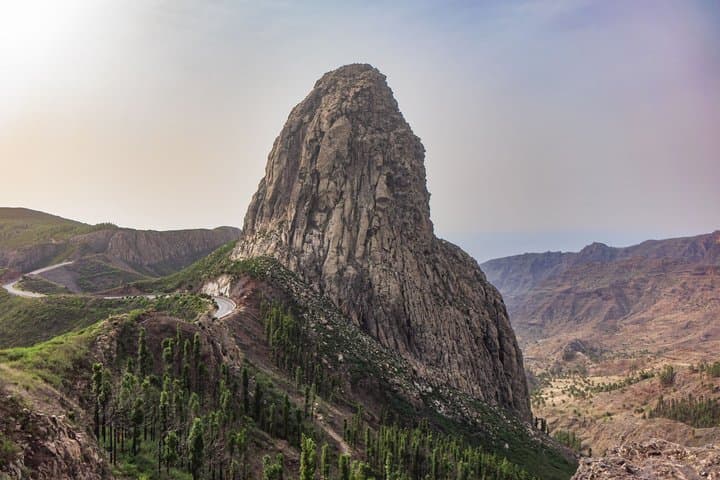
Most day trips stay on the island, because Tenerife is big and varied enough to fill a week on its own. The one classic sea crossing is La Gomera, about 50 minutes by ferry from Los Cristianos.
| Trip | How to get there | What to know | Verdict | Tours from |
|---|---|---|---|---|
| Teide National Park | Bus 342 or 348, car, or tour | Cable car from €43; summit €15 extra | Essential | $18 |
| Teide at sunset and night | Tour or car | Starlight Destination; cold at altitude | Best evening on the island | $29 |
| La Gomera | Ferry from Los Cristianos, about 50 min | Fred. Olsen and Naviera Armas | Worth it on a 5+ day stay | $125 |
| Masca and the north-west | Car or tour; ravine only by shuttle | Ravine closed to under-8s | Worth it | $64 |
| Anaga and La Laguna | Tram to La Laguna, then tour or car | Biosphere reserve; shuttles planned | Worth it for walkers | $32 |
11 La Gomera day trips from Tenerife tours on Excurgo · from $125, typical $142 per person · rated 4.1 across 964 reviews

Verdict: If you only do one day trip, make it Teide. Add the north-west second, and keep La Gomera for a stay of five days or more: with two crossings it is a full day out.
How many days do you need in Tenerife?
3 days
One day on Teide (cable car in the morning, Roques de García), one sea day (whales off the south-west coast), one day in La Laguna or a south-coast beach.
Cable car €43 · tours ≈ $66 + $74
5 days
Add the north-west (Masca from above or the ravine, Garachico, Icod) and an Anaga walk. Book the Masca ravine and its boat in advance if you want the descent.
Masca ticket €28 + €10 shuttle · tours ≈ $85 + $136
7 days
Add La Gomera, a Teide sunset and stargazing evening, and one activity such as paragliding or a kayak trip. Consider the Teide summit permit if you can fix a date.
Summit €15 · tours ≈ $142 + $148
How much do tours and tickets cost in Tenerife?
Official tickets first: the Teide cable car starts at €43 for adults (€21.50 for children aged 3–13), the summit trail costs non-residents €15, the Montaña Blanca trail €6 on weekdays and €10 at weekends, and the Masca ravine €28 plus €10 shuttle per the tourist board. A 7-day bus and tram card is €50.
| Activity | Tours | From | Typical | Top end |
|---|---|---|---|---|
| Whale and dolphin watching | 71 | $28 | $66 | $568 |
| Teide sunset and stargazing | 26 | $29 | $74 | $112 |
| Teide day tours | 65 | $18 | $96 | $539 |
| Teide hikes | 8 | $59 | $135 | $249 |
| Masca and north-west tours | 34 | $64 | $85 | $182 |
| La Gomera day trips | 11 | $125 | $142 | $191 |
| Anaga hikes | 24 | $32 | $136 | $345 |
| Tandem paragliding | 31 | $114 | $148 | $193 |
| Scuba diving and try-dives | 74 | $57 | $136 | $566 |
| Kayak and snorkel | 35 | $22 | $51 | $91 |
| Surf lessons | 26 | $18 | $51 | $119 |
| Quad and buggy safaris | 52 | $57 | $170 | $226 |
| Jet ski rides | 17 | $37 | $136 | $193 |
| Wine and food tastings | 29 | $22 | $82 | $681 |
| Airport and private transfers | 31 | $32 | $128 | $249 |
Prices come from the 801 tours in our catalogue and update automatically; 96% offer free cancellation. Whale-watching and kayak trips are the cheapest way onto the water; private Teide tours in a chauffeured van sit at the top of the range.
Where should you stay in Tenerife: north or south?
South for sun and beaches, north for towns and walking
The south coast (Los Cristianos, Playa de las Américas, Costa Adeje) is closest to Tenerife Sur airport and the ferry to La Gomera, has bus 342 to Teide, and is where most whale-watching and water-sports trips start. The climate figures in this guide come from the airport station on this side of the island: dry for most of the year.
The north suits travellers who want towns rather than resorts. Puerto de la Cruz has bus 348 straight up to the national park; La Laguna and Santa Cruz are linked by tram and sit near Tenerife Norte airport and the Anaga trails.
| Base | Best for | Getting to Teide | Watch out for |
|---|---|---|---|
| Costa Adeje / Playa de las Américas | Beaches, sea trips, families | Bus 342 or tour | Resort area; far from the northern towns |
| Los Cristianos | La Gomera ferry, kayak trips | Bus 342 or tour | Resort area; far from the north |
| Puerto de la Cruz | North coast, Teide by bus | Bus 348 | Further from the south airport |
| La Laguna / Santa Cruz | UNESCO town, Anaga, Carnival | Car or tour via TF-24 | Our south-coast climate figures do not apply here |
Verdict: First visit and mainly here for sun: Costa Adeje or Los Cristianos. Coming to walk, see towns and use public transport: Puerto de la Cruz. Splitting a week 4 + 3 between south and north is the best of both if you do not mind one hotel change.
Is Tenerife safe, and what rules should visitors know?
The hazards worth planning for in Tenerife are mostly natural. GOV.UK warns that some beaches around Spain's islands have strong undercurrents: a red flag means do not go in, and unguarded beaches need extra care. In the mountains conditions change quickly, and altitude can affect people on Teide.
- Emergencies: call 112; 062 reaches the Guardia Civil, including mountain rescue.
- Wildfires: they happen on the islands in summer, and causing one is a criminal offence even by accident. No barbecues, no cigarette ends.
- Crime: pickpockets work in teams with distraction tricks; hire cars are targeted, so stop only in public, lit places.
- Street drinking: illegal in some areas of Spain, with on-the-spot fines.
- Teide: no stones may be taken; trail permits are checked at trailheads and must be on paper or your phone.
- Wildlife: no swimming with, feeding or touching whales and dolphins, and boats keep 60 metres away.
Entry for UK visitors: Schengen rules plus EES
Spain applies Schengen rules: up to 90 days in any 180-day period, with a passport issued less than 10 years before arrival and valid at least 3 months after you leave. The EU Entry/Exit System records fingerprints and a photo at the border; the record lasts 3 years, but expect longer queues on arrival. Officers may also ask for your accommodation booking, proof of funds, a return ticket and travel insurance.
What mistakes do visitors to Tenerife regret?
- Going up the cable car expecting to walk to the summit. The crater trail needs a permit booked in advance, and since January 2026 it costs non-residents €15.
- Relying on old advice that the Teide permit is free. Even the tourist board page still says so.
- Booking the summit for a date you might change. Trail bookings cannot be changed or cancelled.
- Turning up at Teide trails in trainers. Rangers can refuse entry without proper mountain footwear, and the fee is not refunded.
- Driving to Masca to hike the ravine. Since April 2025 only shuttle passengers from Santiago del Teide get onto the trail.
- Forgetting the Masca boat. The ravine ends at the sea and the boat to Los Gigantes is a separate booking.
- Packing for the beach only. The Teide area sits at around 2,000 m and above; take warm layers and a raincoat.
- Pocketing a volcanic stone. It is completely forbidden in the national park.
- Choosing a boat that lets you swim with whales. It breaks the rules; look for the government's blue flag.
- Planning to sleep in Tenerife Sur terminal. It closes to the public between 23:00 and 04:00 when there are no flights.
- Assuming Carnival is at the usual time in 2027. The street carnival runs 19–28 February 2027.
Tenerife FAQ
Do I need a permit to climb Mount Teide?
Yes, to walk from the cable car top station to the summit on the PNT 10 Telesforo Bravo trail. Permits are booked on Tenerife ON and, since 19 January 2026, cost €15 for non-residents, €6 for other Canary Islands residents and nothing for Tenerife residents and under-14s. Bookings cannot be changed or cancelled.
How much is the Teide cable car in 2026?
The operator's 2026 comparison table lists cable car tickets from €43 for adults and €21.50 for children aged 3–13. The ride takes about 8 minutes from 2,356 m to 3,555 m. The operator recommends booking online because the base car park has only 220 spaces.
Can I go up Teide without a permit?
Yes, by cable car to La Rambleta at 3,555 m; only the final summit trail needs the PNT 10 permit. Walking up from Montaña Blanca needs its own PNT 07 permit, which since January 2026 costs non-residents €6 on weekdays and €10 at weekends.
Is the Masca ravine open and how do I book it?
Yes. Tickets are sold only on the official Masca ravine website and include a compulsory shuttle from Santiago del Teide; without it you cannot enter the trail. The tourist board lists €28 plus €10 for non-resident adults, while Buenavista's tourism office lists €40.66. Children under 8 are not allowed, and the boat from Masca pier to Los Gigantes is booked separately.
When is the best time to visit Tenerife?
The south coast is warm all year: average highs at Tenerife Sur run from 21.7 °C in January to 28.4 °C in August. May to October is driest. For walking and Teide, spring and early autumn avoid both the winter rain and the summer wildfire risk.
Is Tenerife warm in winter?
On the south coast, yes: AEMET's averages for January are 21.7 °C by day and 15.2 °C at night, with about 17 mm of rain. December is the wettest month at around 30 mm. The Teide area is much colder and can see snow.
Is whale watching in Tenerife ethical?
It can be, if the boat follows the rules: at least 60 metres from the animals, no more than 30 minutes of watching, no swimming, feeding or touching. The Canary Islands Government awards a blue flag to boats that meet the legal requirements, so check for it before booking.
Is a day trip to La Gomera worth it?
Yes on a stay of five days or more. The ferry from Los Cristianos to San Sebastián de La Gomera takes about 50 minutes, run by Fred. Olsen Express and Naviera Armas. On a short stay, Teide and the north-west are a better use of the day.
Is the sea in Tenerife safe for swimming?
On guarded beaches and when the flags allow it. GOV.UK warns that beaches around Spain's islands can have strong undercurrents; a red flag means you must not go in, and unguarded beaches need extra care. The emergency number is 112.
When is the Santa Cruz Carnival in 2027?
Later than usual. The opening gala is on 22 January 2027 (moved from 8 January) and the street carnival runs from 19 to 28 February 2027.
Sources and how this guide is made
Written by the Excurgo editorial team with AI assistance. We are a tour comparison site, not a tour operator, and we have not personally tested every tour. Every fact was researched in official and specialist sources and checked against them before publication; prices, ratings and tour counts come from our live catalogue of 801 Tenerife tours. Ratings and review counts are collected by Viator and Tripadvisor. Tours are picked by rating weighted by number of reviews (at least 20); we earn a commission from Viator when you book, and it does not affect the order.
- Turismo de Tenerife — Teide National Park: size, cable car, permits, visitor centres, buses (Oct 2026)
- Turismo de Tenerife — Teide footpath access regulation (November 2024) (Nov 2024)
- MITECO National Parks Network — Teide height and endemic species (Oct 2026)
- Volcano Teide (cable car operator) — 2026 ticket comparison table (2026)
- Turismo de Tenerife — Masca Gorge shuttle and prices (Oct 2026)
- Buenavista del Norte tourism — Masca village and ravine access (Oct 2026)
- Turismo de Tenerife — whale and dolphin watching rules (Oct 2026)
- AEMET — climate normals, Tenerife Sur airport 1981–2010 (Oct 2026)
- GOV.UK (FCDO) — Spain safety and security (Oct 2026)
- GOV.UK (FCDO) — Spain entry requirements and EES (Oct 2026)
- UNESCO — Anaga Biosphere Reserve documentation (2015)
- Turismo de Tenerife — Santa Cruz–La Laguna tram (Oct 2026)
- Canarian Weekly — Teide trail fees from 19 January 2026 (Jan 2026)
- RTVC — Santa Cruz Carnival 2027 dates (Mar 2026)
- Direct Ferries — Los Cristianos–La Gomera crossing times (Oct 2026)
Photos come from Wikimedia Commons under free licences (CC BY, CC BY-SA, CC0 or public domain); the author and licence are shown under each one. They show the places described, not the exact tours listed.
Changelog. 31 October 2026: guide published.
Browse every tour: Tenerife