Asia · 2 cities
Things to Do in Cambodia
Siem Reap and Phnom Penh in one place: how the Angkor pass works, what the temple circuits actually cover, and why the capital’s two hardest sites matter.
3,175 tours listed by Viator 2 cities we cover Free cancellation






Where to go
Cities of Cambodia
In the order Viator’s own catalogue puts them — most-booked first, not alphabetical.
Full list
All cities, by region
Grouped by region using Viator’s own map of the country. The first block is the places it files directly under Cambodia.


Practical info
Know before you book
The things that change a decision — not a retelling of the guidebook.
The Angkor pass is bought once, for a fixed number of days
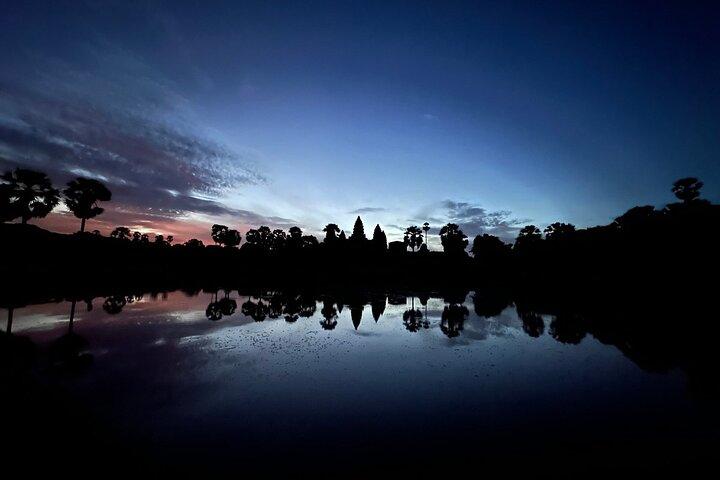
One, three or seven days, with your photograph printed on it, from the official ticket centre outside town or online in advance. It is checked at every temple. A pass bought after five in the afternoon also lets you in for that evening’s sunset.
Angkor is a landscape, not a building
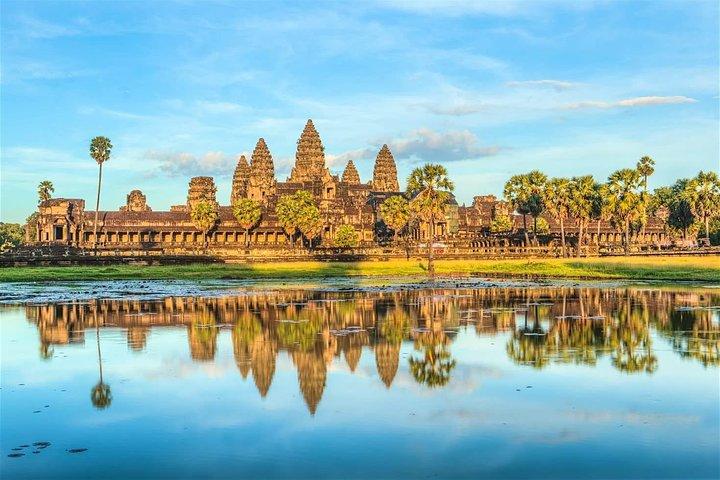
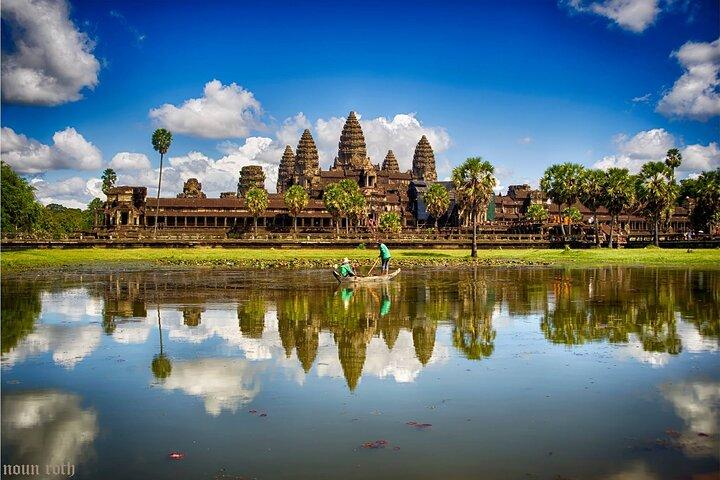
The park covers four hundred square kilometres. The small circuit takes in Angkor Wat, Bayon and Ta Prohm in a day; the grand circuit adds the outer temples; Banteay Srei is another forty minutes out. A tuk-tuk for the day is the normal way and costs very little.
Phnom Penh’s two hardest sites are the reason to go
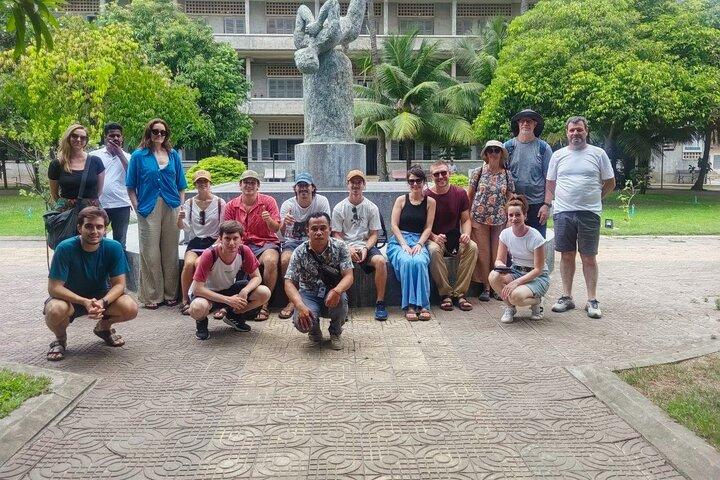
Tuol Sleng, the school turned prison, and Choeung Ek, the killing field outside the city, document the Khmer Rouge period directly and without softening. The audio guides are excellent. Give them a full morning and nothing demanding afterwards.
The wet season gives better reflections
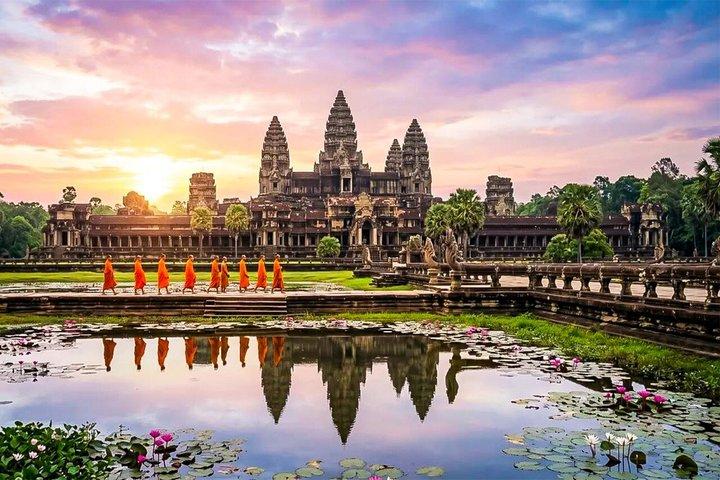
From August to October the moats and barays fill and Angkor Wat’s reflection in the northern pond is at its best, with the whole park green. It rains in the afternoon rather than all day, and the crowds are at their thinnest.
The US dollar is the working currency
Prices are quoted in dollars, ATMs dispense them, and the riel functions as small change below a dollar. Bring clean, untorn notes — damaged US bills are often refused.
The temple dress code is enforced
Shoulders and knees covered at Angkor, and strictly so for the upper level of Angkor Wat, where people are turned back daily. A light long-sleeved layer also helps with the sun, which is severe on the open causeways.
When to visit
Cambodia through the seasons
What is open, how busy it gets, and when to book ahead.
Cool & dry
Nov–Feb
- Best for
- The most comfortable temperatures of the year and reliable sunrise conditions.
- Crowds
- Booking tip
- Peak season — Angkor at sunrise is genuinely crowded from December to February.
Hot
Mar–May
- Best for
- Fewer visitors, lower prices, and long clear days.
- Crowds
- Booking tip
- April regularly exceeds 38°C — temple days have to start at dawn and stop by noon.
Early rains
Jun–Jul
- Best for
- Green countryside, cooler afternoons, prices at their lowest.
- Crowds
- Booking tip
- Rain arrives in short heavy bursts — it rarely costs you a whole day.
Wet peak
Aug–Oct
- Best for
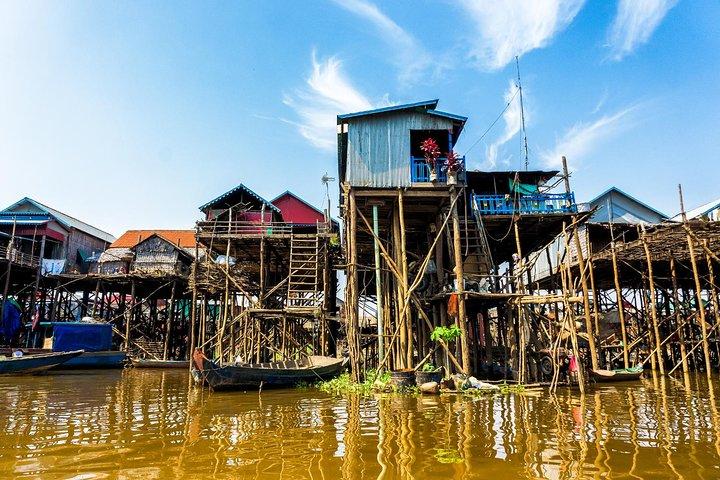
- Full moats and the classic Angkor reflection, Tonlé Sap at its highest.
- Crowds
- Booking tip
- The photographer’s season, and the quietest — some outer roads get muddy.
Frequently asked
Cambodia: common questions
How many days do you need in Cambodia?
Three days in Siem Reap — two of temples and one to recover — and two in Phnom Penh. A week covers both comfortably with a day on the Tonlé Sap or at Battambang in between.
What does a tour in Cambodia cost?
Cambodia is not in our fifty-city price index, so we avoid quoting a median. It is one of the cheapest countries in Southeast Asia for guiding: a licensed English-speaking Angkor guide for a full day costs a fraction of the equivalent in Thailand or Vietnam.
How many days do you need at Angkor?
Two is the sensible answer, and the three-day pass gives you the flexibility to take a morning off. One day covers Angkor Wat, Bayon and Ta Prohm and is enough for some people; it is also an exhausting day in the heat.
When is the best time to visit?
November to February for the coolest, driest weather and the biggest crowds. August to October for the green landscape, full moats and almost no one there. March to May is the season to avoid unless you can be at the temples by six in the morning.
Are tours run in English?
Routinely in both cities, and Angkor guides are licensed and examined. Hiring one for the first temple day makes an enormous difference to what the carvings mean — the site has almost no interpretation signage.