St. Peter's Square60 min
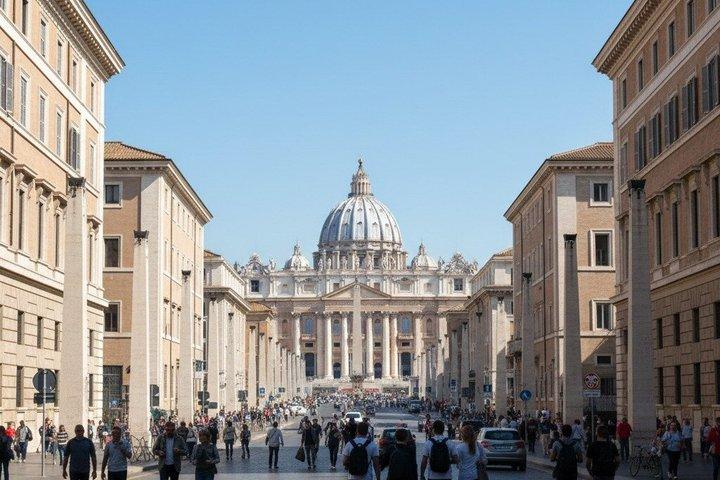
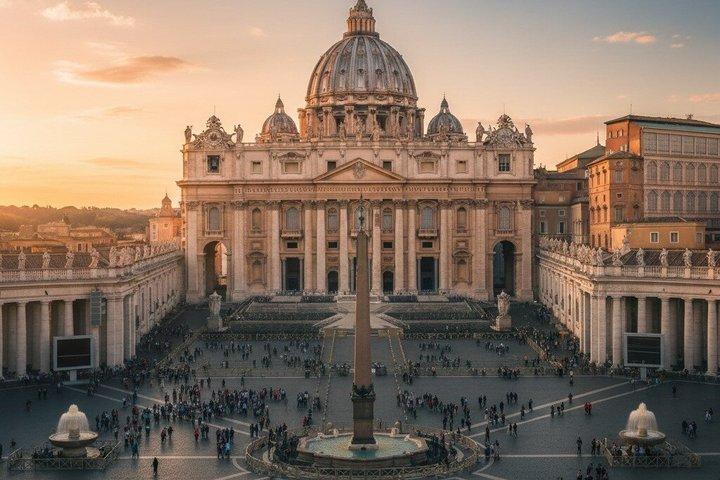
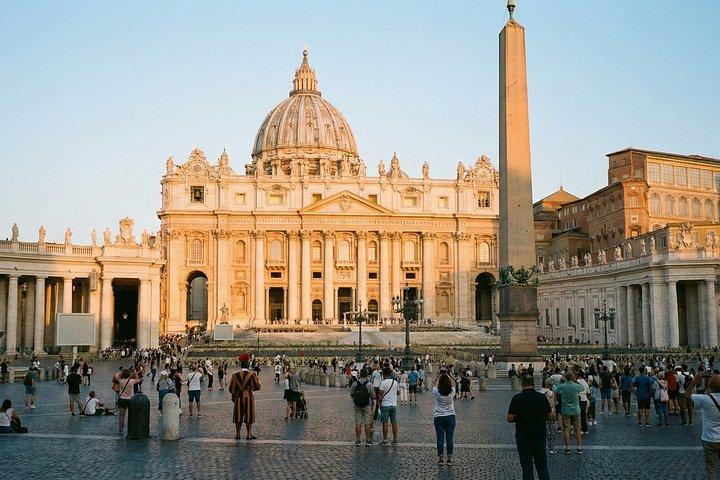
Bernini's masterpiece of urban design creates an elliptical embrace with 284 Doric columns arranged four rows deep, symbolizing the Church's welcome to all humanity while providing practical shelter for the crowds gathering for papal events. The Egyptian obelisk at the center—transported from Heliopolis by Caligula—and the twin fountains anchor a space that can accommodate 300,000 people during major celebrations. The approach through Mussolini's Via della Conciliazione has replaced the medieval streets that once provided dramatic surprise upon entering the square, but the scale and majesty remain overwhelming.
St. Peter's Basilica60 min
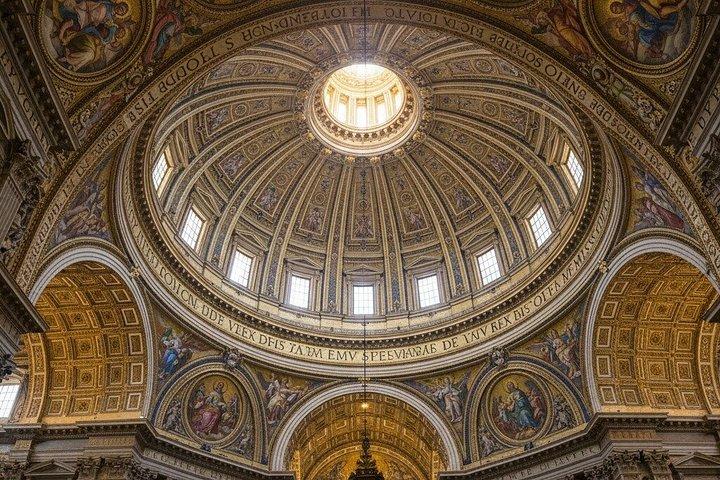
The world's largest church rises above the tomb of Saint Peter, its 136-meter length, 46-meter nave, and 119-meter dome representing 120 years of construction involving Bramante, Raphael, Michelangelo, and Bernini among others. Every surface displays artistic masterpieces—from the Pietà in its protective glass case to Bernini's Chair of St. Peter with its gilded sunburst—while the scale defies comprehension until cherubs reveal themselves as human-sized and the letters of the Latin inscription stretch 2 meters tall. The papal tombs beneath the basilica, the Treasury Museum, and the dome climb complete a visit that demands hours to properly absorb.
La Pieta30 min
The sculpture depicting Mary cradling the dead Christ represents the pinnacle of Renaissance mastery, its technical perfection and emotional power unchanged since Michelangelo completed it at age 24 in 1499. The only work Michelangelo ever signed—across Mary's sash, added after overhearing attribution to another sculptor—has been protected behind bulletproof glass since a hammer attack in 1972. The sculpture's position just inside the basilica entrance ensures every visitor encounters this masterpiece, though the glass and crowds make sustained contemplation challenging.
The Vatican Grottoes60 min
The network of chapels beneath St. Peter's Basilica contains the tombs of numerous popes from the 10th century through John Paul II, whose simple marble slab draws pilgrims who remember his 26-year pontificate. The grottoes occupy the space between the current basilica floor and Old St. Peter's, preserving fragments of the original 4th-century church and early Christian art. Access through the basilica is free, though the cramped spaces and steady flow of visitors limit lingering.
Pass by
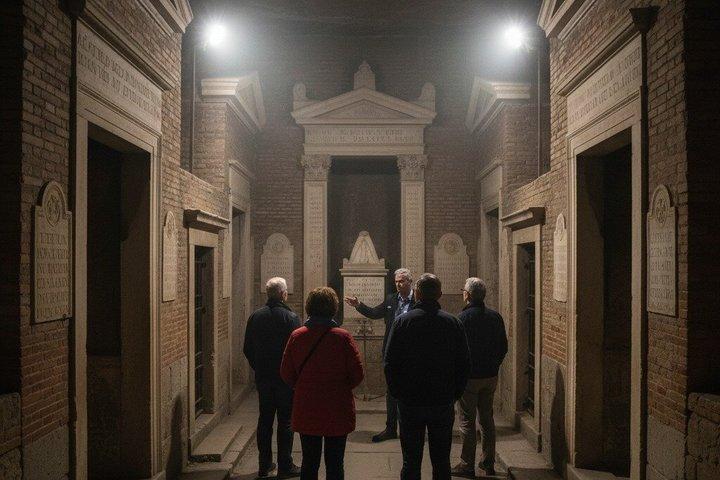
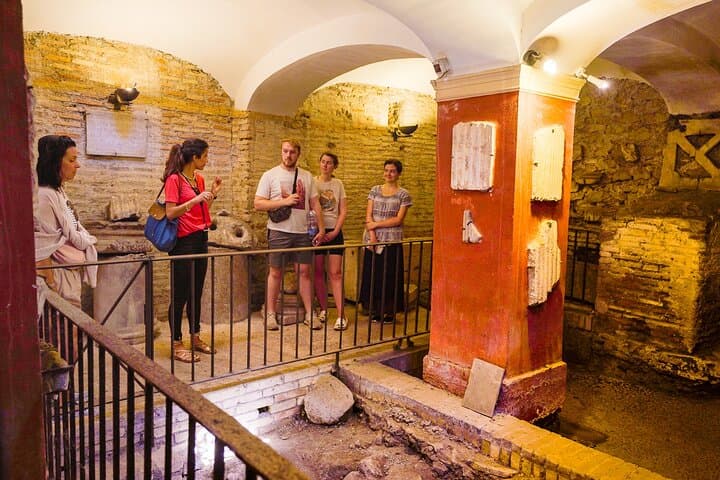
The excavations beneath the basilica—requiring separate advance reservations—reveal the necropolis where tradition holds Peter was buried after his martyrdom, with archaeological evidence supporting a 1st-century grave venerated as the apostle's from earliest times. The guided tour through the ancient cemetery streets, past pagan and Christian tombs, builds toward the aedicule marking Peter's grave directly beneath Bernini's baldachin. The discovery of bones wrapped in purple cloth and the graffiti invoking Peter convinced Pope Paul VI to announce in 1968 that Peter's remains had been identified.