Private Awesome Pompeii Family Tour + Guide, Transport & Tickets
Description
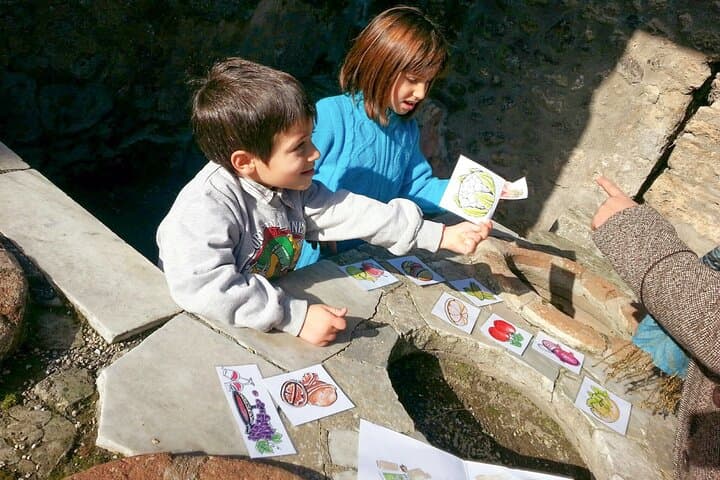
Bring the ancient city of Pompeii to life on a private guided tour designed for families and multigenerational groups. With a licensed guide and skip-the-line tickets, you’ll explore the Forum, theatres, bath houses, shops, and homes preserved by the eruption of AD 79. Private round-trip transport ensures a smooth, stress-free experience—ideal for cruise passengers and guests staying in Sorrento or Naples. Upgrade to add a light pizza lunch and our Pompeii4Kids activity program, perfect for children ages 6–11. • Private guided tour of Pompeii’s UNESCO-listed ruins • Licensed local guide specialized in families • Skip-the-line tickets included • Private round-trip transport for a hassle-free day • Comfortable pace for seniors & multigenerational families • Upgrade option with pizza lunch + Pompeii4Kids program • Ideal for cruise travelers and hotel guests in Sorrento & Naples
Tour Options
Itinerary
With your private, family-friendly guide, you’ll explore the vast archaeological city of Pompeii at a comfortable pace, visiting its ancient streets, homes, shops, bath houses, and public squares. As you walk, your guide brings the ruins to life through stories, insights, and fascinating details that reveal how Romans worked, ate, worshipped, and played before the eruption of AD 79. Having a private guide means you can focus on what interests your family most, ask questions freely, and enjoy a flexible, stress-free visit without having to navigate maps or busy group routes.
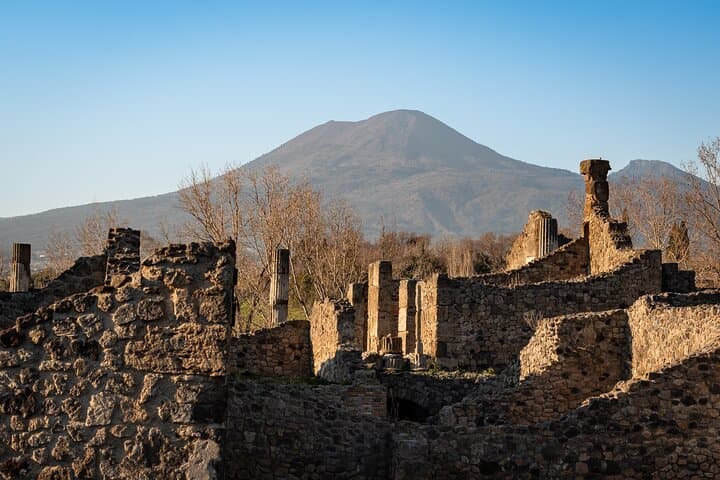
We will see the volcano from the bottom. You can take great pictures from Pompeii. We are not going to drive to the top of the volcano.
Your visit begins at Porta Marina, one of Pompeii’s main ancient gates and the point where many travelers entered the city two thousand years ago. Here, your private guide introduces the layout of Pompeii and its defensive walls, explaining how the city was organized, protected, and connected to the surrounding ports and trade routes. It’s an ideal starting point to understand the scale of Pompeii and to visualize how bustling daily life once flowed through its gates.
Inside Pompeii’s Basilica, your private guide explains how this impressive hall served as the city’s main center for law, business, and civic affairs. Here, merchants negotiated contracts, officials handled legal disputes, and political life took shape. With its tall columns and grand interior, the Basilica gives visitors a real sense of Pompeii’s social and economic importance before the eruption. It’s also a great spot to understand how Roman cities blended public architecture, commerce, and everyday life.
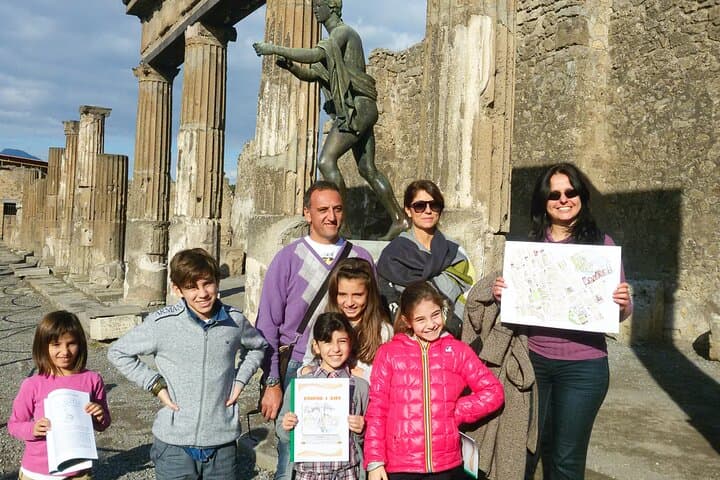
At the Temple of Apollo, your private guide introduces one of Pompeii’s most ancient and revered sanctuaries. Dedicated to the god of music, prophecy, and the arts, the temple once dominated the religious life of the city. From this vantage point you can appreciate the elegant columns, altar, and bronze sculptures that decorated the complex, while learning how religion, politics, and public rituals were intertwined in Roman society. It’s an atmospheric stop that helps visitors imagine the ceremonies and processions that once animated Pompeii’s sacred spaces.
The Forum was the heart of public life in Pompeii, and your private guide brings this vast square to life by explaining how politics, religion, and commerce all converged here. Surrounded by temples, administrative buildings, markets, and porticoes, the Forum was where citizens gathered to trade goods, seek justice, attend ceremonies, and exchange news. From this central vantage point it’s easy to imagine the energy of a thriving Roman city, and to understand how daily life functioned before the eruption.
At the Macellum, Pompeii’s main indoor market, your private guide shows how food and ingredients were purchased, traded, and displayed in Roman times. Stalls once offered fish, meat, produce, grains, and spices to local families and merchants, while storage rooms and counters reveal how the marketplace operated behind the scenes. It’s a fascinating stop that highlights the rhythms of everyday life and gives visitors a taste of what ancient shopping and dining habits really looked like.
At the Forum Baths, your private guide leads you through one of Pompeii’s best-preserved thermal bath complexes, where citizens once gathered not only to bathe but to socialize and discuss business. You’ll step through the heated rooms, admire the intact frescoes and stucco decorations, and see the original changing areas and marble basins. It’s an immersive look into Roman wellness and daily routines that brings the ancient spa culture vividly to life.
At the House of the Faun, your private guide introduces you to one of Pompeii’s grandest residences — a lavish mansion that once showcased immense wealth and refined taste. You’ll stroll through elegant courtyards, admire intricate mosaics including the famed “Alexander Mosaic,” and discover how elite Roman families lived, hosted banquets, and expressed their status through art and architecture. It’s a rare glimpse into luxury life in the ancient world.
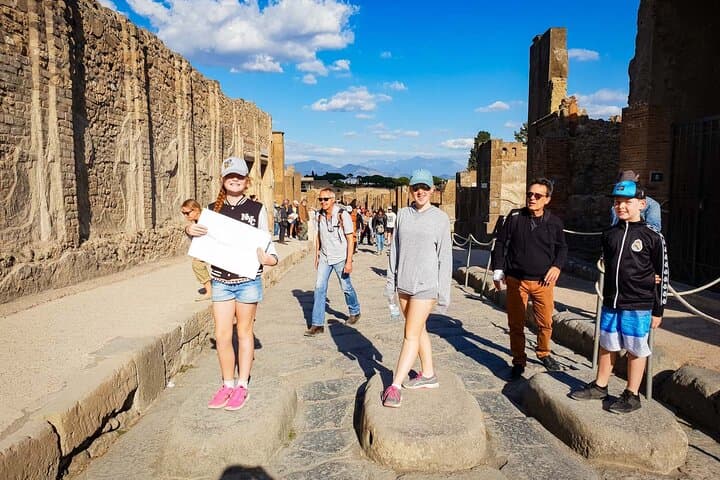
Walking along Via dell’Abbondanza, your private guide brings Pompeii’s busiest commercial street back to life. Lined with workshops, bakeries, taverns, and homes, this vibrant avenue once echoed with merchants calling out their goods and citizens running daily errands. As you explore, you’ll learn how trade, food, and social life played out here, and how the city’s infrastructure — from water fountains to raised stepping stones — kept Pompeii moving centuries before modern traffic systems.
At the Insula of the Chaste Lovers, your private guide gives you a privileged, elevated viewpoint over one of Pompeii’s most intriguing residential blocks. From above, you’ll clearly see the layout of ancient homes, private courtyards, bakeries, and working spaces, revealing how daily life unfolded room by room. This bird’s-eye perspective highlights both the intimacy of domestic life and the density of urban construction, making it easier to visualize families, workers, and servants moving through these spaces long before the eruption.
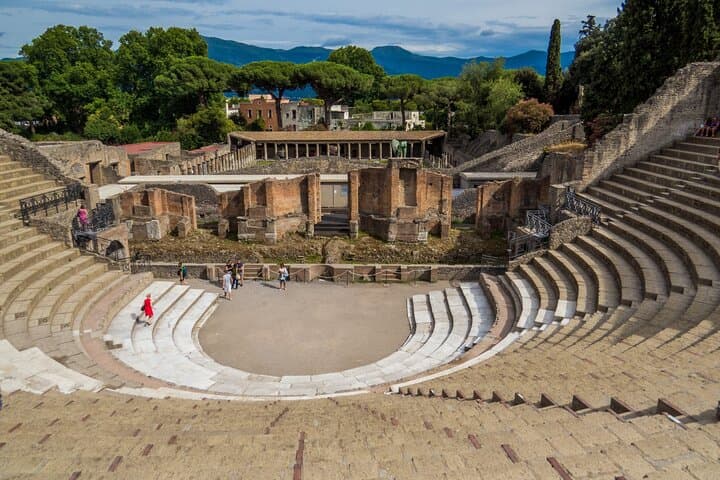
At the Grand Theatre, your private guide leads you into one of Pompeii’s most atmospheric spaces: the ancient open-air stage where comedies, tragedies, and political performances once entertained thousands. Sit on the original stone tiers and let your guide help you imagine the actors’ voices projecting across the acoustically perfect bowl. From the upper seats, you’ll enjoy wide views of the stage and surrounding ruins—an ideal moment to picture the vibrant cultural life of Pompeii before the eruption.
At the Antiquarium, your private guide helps you connect the ruins outside with the artifacts that once filled Pompeii’s homes, shops, and temples. This modern exhibit showcases statues, frescoes, daily objects, and powerful casts of the victims, offering context and emotion to the site’s story. Here you’ll get a deeper sense of how people really lived—and how the eruption suddenly froze their world in time—before heading back into the open archaeological area.
Highlights
What's included
Pickup Locations & Times
We are flexible: we can meet you anywhere within Naples and Sorrento area. Please specify the pick up place
Traveller Ratings
Important Information
- Service animals allowed
- Public transportation options are available nearby
- Specialized infant seats are available
- Not recommended for travelers with spinal injuries
- Not recommended for travelers with poor cardiovascular health
- Travelers should have at least a moderate level of physical fitness
- Wear appropriate walking shoes. Bring sun gears from May to September
- Please indicate all the participants full names which are required for the tickets