Full Valley Day Tour: Pisac, Ollantaytambo|Maras|Moray |Chinchero



Description
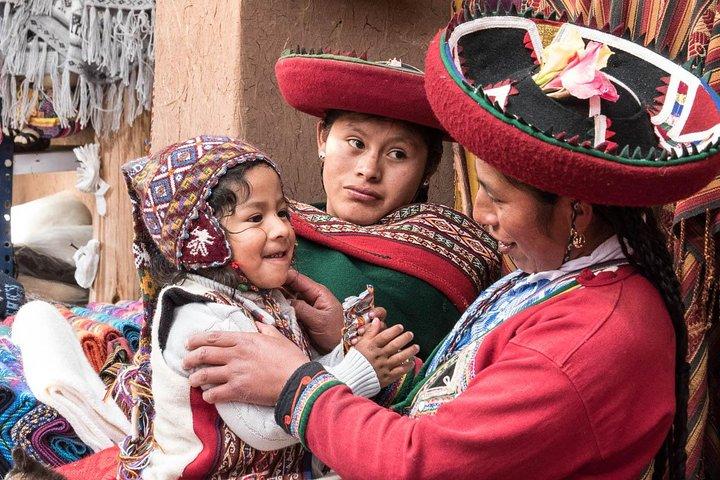
The Inca textile art is one of the oldest textile traditions of the Andes and it became one of the most developed during the Inca apogee, due to the use of different materials and techniques (result of its hybrid culture acquired thanks to the conquests of other Andean ethnic groups). The Incas managed to produce a wide variety of clothing and items for everyday use. Huaypo is one of the most beautiful lagoons of the Sacred Valley, Beautiful lagoon with crystal clear waters, Huaypo welcomes a wide variety of fish and birds (Local Trout, king Fish, Parihuana or Flamingos, local ducks, Andean Caracara, Hummingbird, and some more) around the perimeter and extension of the lagoon within its approximately 1.5km by 800m in length, fully recommended for bird watching and a great Picnic area surrounded by the great fields of agriculture use by the Local Quechuas.
Tour Options
Itinerary
The Inca textile art is one of the oldest textile traditions of the Andes and it became one of the most developed during the Inca apogee, due to the use of different materials and techniques (result of its hybrid culture acquired thanks to the conquests of other Andean ethnic groups). The Incas managed to produce a wide variety of clothing and items for everyday use. Huaypo is one of the most beautiful lagoons of the Sacred Valley, Beautiful lagoon with crystal clear waters, Huaypo welcomes a wide variety of fish and birds (Local Trout, king Fish, Parihuana or Flamingos, local ducks, Andean Caracara, Hummingbird, and some more) around the perimeter and extension of the lagoon within its approximately 1.5km by 800m in length, fully recommended for bird watching and a great Picnic area surrounded by the great fields of agriculture use by the Local Quechuas.
The Inca textile art is one of the oldest textile traditions of the Andes and it became one of the most developed during the Inca apogee, due to the use of different materials and techniques (result of its hybrid culture acquired thanks to the conquests of other Andean ethnic groups). The Incas managed to produce a wide variety of clothing and items for everyday use. Huaypo is one of the most beautiful lagoons of the Sacred Valley, Beautiful lagoon with crystal clear waters, Huaypo welcomes a wide variety of fish and birds (Local Trout, king Fish, Parihuana or Flamingos, local ducks, Andean Caracara, Hummingbird, and some more) around the perimeter and extension of the lagoon within its approximately 1.5km by 800m in length, fully recommended for bird watching and a great Picnic area surrounded by the great fields of agriculture use by the Local Quechuas.
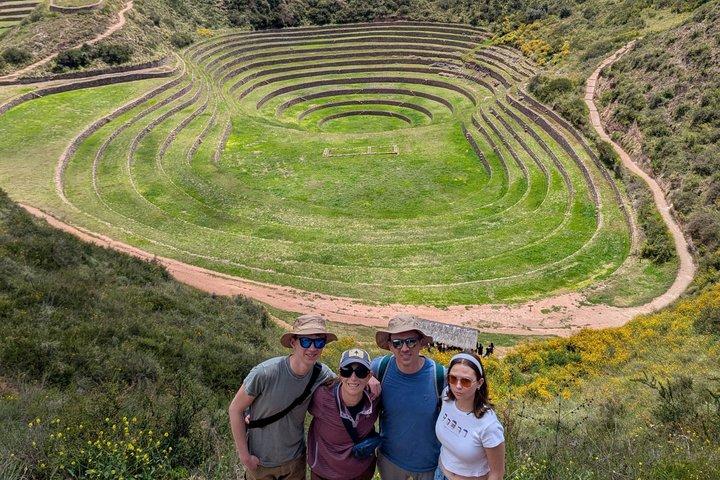
The Sacred Valley of the Incas is home to the archaeological site of Moray, a place with agricultural terraces that, at first glance, look like amphitheaters. These concentric terraces were built by the Incas as an agricultural laboratory. Each of its terraces has its own microclimate, according to the depth at which it is located.
The salt mines themselves are made up of a set of approximately 4,500 salt pools located in the form of stepped terraces on the middle slope of the Qaqawiñay hill with slopes of 20 degrees incline to the bottom of the ravine on the left bank of the Salineras stream, with dimensions that fluctuate around 5 linear meters, occupying a total area of approximately 1.5 to 2 hectares
Historical Significance: Ollantaytambo was a strategic military, religious, and agricultural center during the Inca Empire. Built by Inca emperor Pachacuti in the 15th century as a royal estate. Later used by Manco Inca Yupanqui as a stronghold during his resistance against the Spanish conquest (notably the Battle of Ollantaytambo in 1537 — a rare Inca victory). Today, it's considered one of the best-preserved examples of Inca city planning.
Immerse yourself in Peruvian culture with this unique hands-on experience! Visit a local community where you'll learn the art of traditional bracelet-making directly from skilled local artisans.
In the Sacred Valley, between Cusco and Ollantaytambo Altitude: ~2,871 m (9,419 ft) above sea level Sits along the Urubamba River, at the base of snow-capped mountains like Chicón
Agricultural Terraces (Andenes) Spectacularly engineered terraces built into the mountain for farming and erosion control. Still functional today — some are used by local farmers.
Highlights
What's included
Pickup Locations & Times
"What to bring: Weather-appropriate clothing and your passport (required). We recommend comfortable walking shoes and layers for changing mountain weather." You might also want to add: • "Sunscreen and hat recommended for high altitude" • "Small backpack for personal items" • "Camera for stunning photo opportunities"
Traveller Ratings
Important Information
- Suitable for all physical fitness levels
- Children must be accompanied by an adult
- Passport name, number, expiry and country is required at time of booking for all participants
- Operates in all weather conditions, please dress appropriately
- Please advise any specific dietary requirements at time of booking
Reviews(1)
This was a lovely day tour with Richard! We were picked up right on time in a nice clean car, and communication before the tour was great. The day was paced really nicely. We started learning about the weaving, and this was a great spot for picking up some textiles. Then learning about the agriculture. Some scenic photo stops, and then to the salt mines. Maras was very beautiful with it’s salt pools. The road to Moray was under construction, so I chose not to do the walk in the strong sun to the site. So off to the lake we went…. We did see some flamingos! It was a great private tour that we highly recommend!