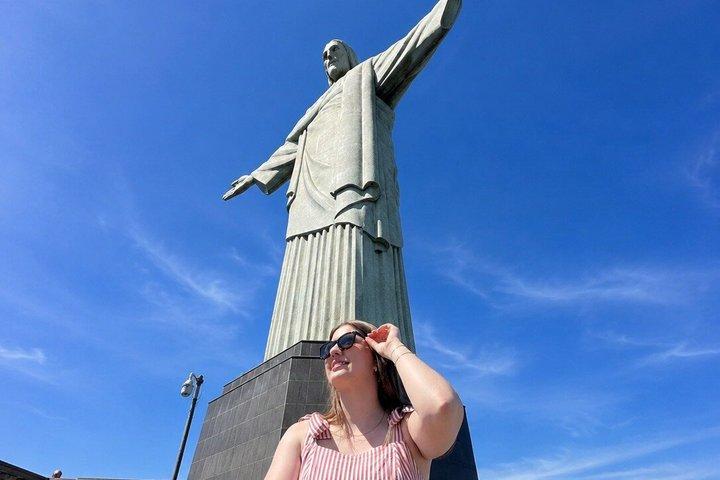
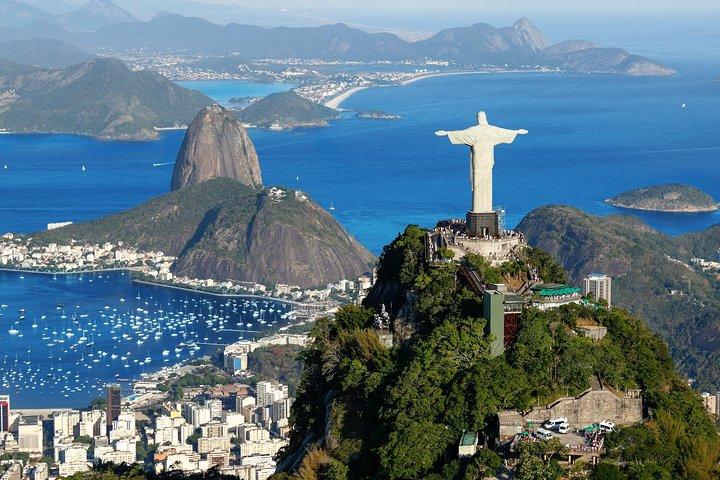
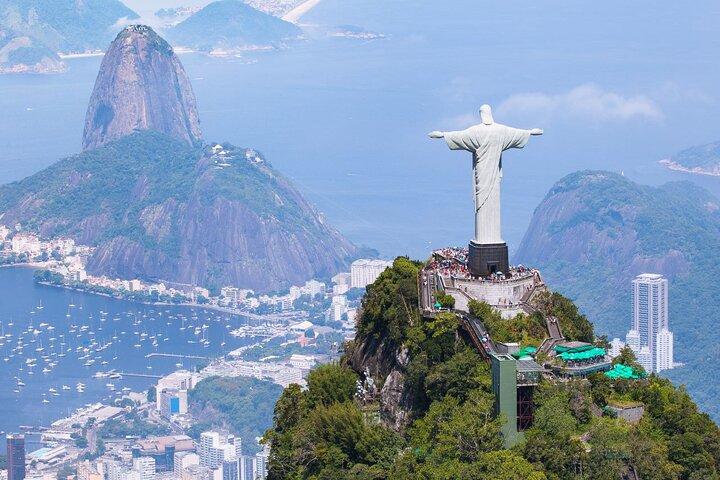
Santuario Cristo RedentorCorcovado is one of the hills of the city of Rio de Janeiro, famous in Brazil and in the world for its 38 meters high statue of Christ the Redeemer. Christ the Redeemer is one of the main symbols of the country and offers a privileged panoramic view of the city of Rio de Janeiro.
1 hour stop at the place with ticket included.
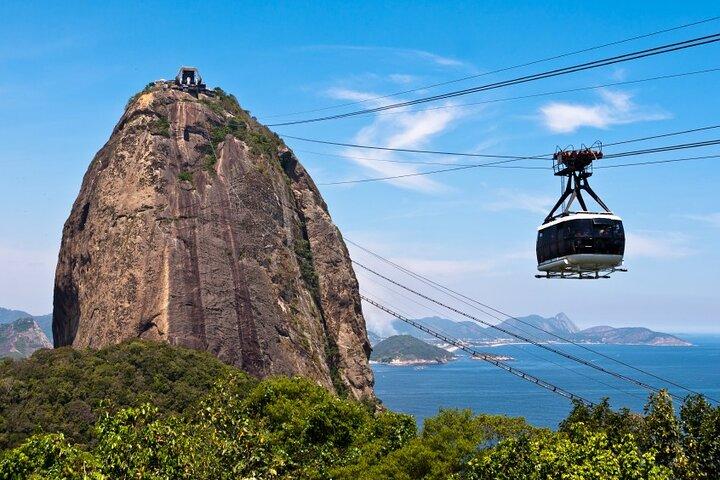
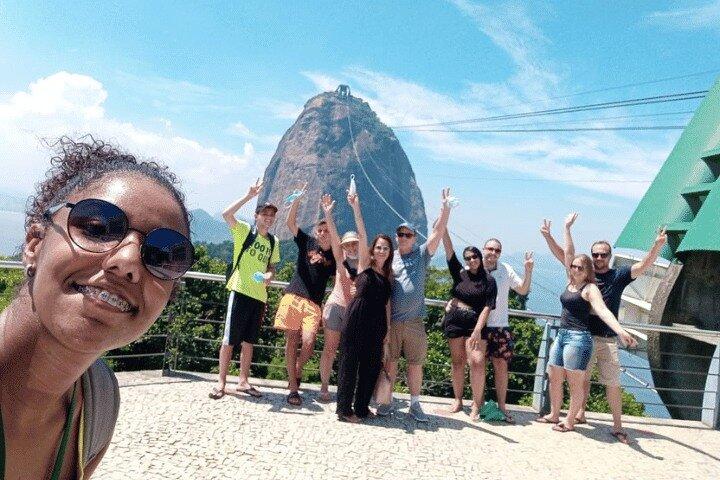
Sugarloaf MountainThe Pão de Açúcar cable car is a cable car located in the Urca neighborhood, in the municipality of Rio de Janeiro, in the state of Rio de Janeiro, in Brazil. It connects Praia Vermelha to Morro da Urca and to Morro do Pão de Açúcar. It is one of the main tourist attractions in the city.
Stop 1 hour and 20 on site with ticket included.
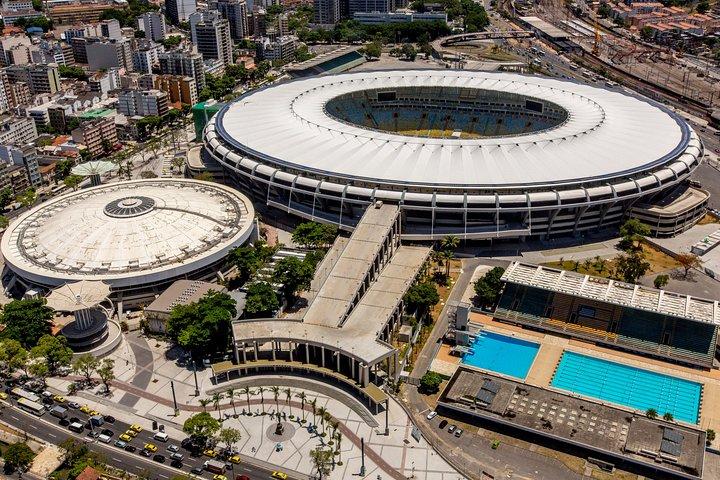
MaracanaAdmission not included30 min
Estádio Jornalista Mário Filho, better known as Maracanã, the popular Maraca ("similar to a rattle" in Tupi-Guarani, due to the sound of birds that lived there), is a football stadium located in the North Zone of Rio de Janeiro and inaugurated in 1950, during the term of the then General of Division and Mayor of the Federal District of Rio de Janeiro Marechal Ângelo Mendes de Moraes, having been used in the Soccer World Cup of that year.
Stop 30 minutes on site. External visit and for photos.
The Metropolitan Cathedral of Saint SebastianThe Cathedral of São Sebastião do Rio de Janeiro, also known as Metropolitan Cathedral of Rio de Janeiro, is a Catholic cathedral located in the city center of Rio de Janeiro, in Brazil. It was inaugurated in 1979, replacing, as the city's cathedral, the Church of Nossa Senhora do Carmo.
Sambodromo da Marques de SapucaiAdmission not included30 min
The Marquês de Sapucaí Sambadrome, also known as Rio de Janeiro's Sambadrome and officially named as Passarela Professor Darcy Ribeiro, is a sambadrome located on Avenida Marquês de Sapucaí, in the central area of the city of Rio de Janeiro, in Brazil.
Stop 30 minutes on site. External visit and for photos.
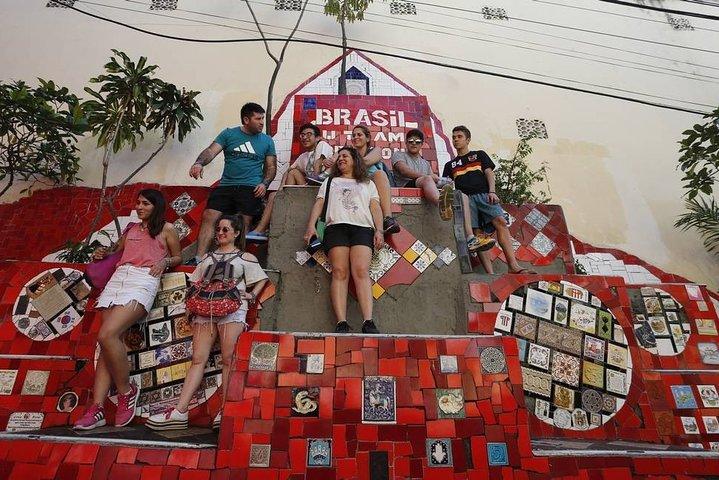
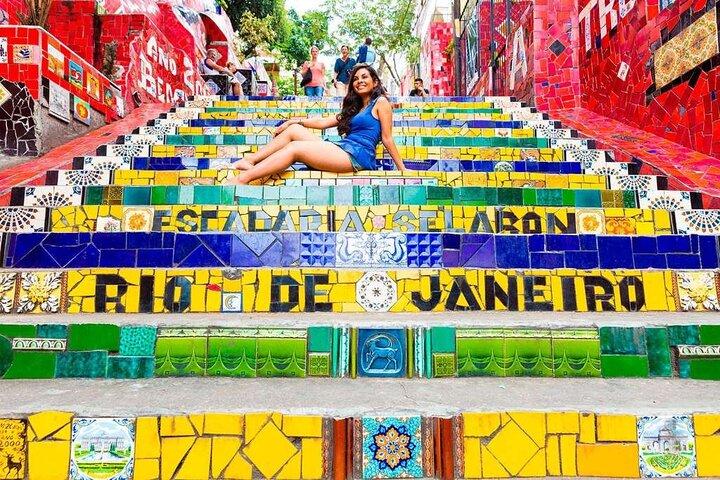
Escadaria Selaron30 min
The Selarón Staircase is an architectural work located between the neighborhoods of Santa Teresa and Lapa, in Rio de Janeiro, Brazil, decorated by long-standing Chilean artist Jorge Selarón, who declared it as a "tribute to the Brazilian people" .
Stop 30 minutes on site.
Arcos da Lapa20 min
Lapa is a bohemian and vibrant neighborhood, known for its traditional bars, nightclubs with live music, dance halls and open samba circles below Arcos da Lapa, a Roman-style aqueduct. Another concentration of nightlife is the area around the Selarón Staircase, a unique architectural work adorned by hand-painted tile mosaics.
Floresta da TijucaPass by
Tijuca National Park is a Brazilian conservation unit with integral protection of the Tijuca Forest. The Tijuca Forest was on the way to Lagoa da Tijuca, which is why it ended up acquiring the name of this lagoon.
Panoramic visit.