Museu do Amanha5 min
We take in the Museum of Tomorrow's striking architecture from the outside. It is Latin America's most visited museum since opening as the centrepiece of reforms during Rio's Olympics. It was designed by Spanish Architect Santiago Calatrava, and makes a spectacular backdrop to views of Guanabara Bay.
Orla Prefeito Luiz Paulo Conde10 min
This stretch of waterfront passes through the Brazilian Navy Headquarters as well as taking in the Candelaria Church and Olympic Pyre sculpture.
Marina da Gloria10 min
We travel back towards the centre of the city, taking in the Gloria marina, where some of Rio's most upmarket yachts and launches are parked. From here to the city there were many of Rio's most popular early beaches, but many were lost as the Castello Hill was demolished and used to extend the port area.
Aterro Do Flamengo30 min
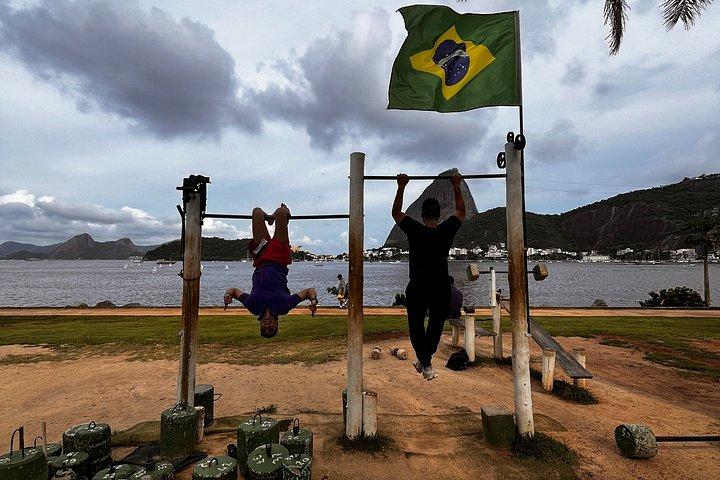
The Flamengo Park, or Aterro do Flamengo, is one of the biggest urban parks in Brazil, stretching along 7km of Guanabara Bay on land reclaimed by demolishing Saint Anthony's Hill in the 1950s and 60s. It has spectacular views of the Sugarloaf Mountain, Guanabara Bay, and beautiful landscaping by Brazil's most influential landscape architect, Roberto Burle Marx.
Botafogo Beach20 min
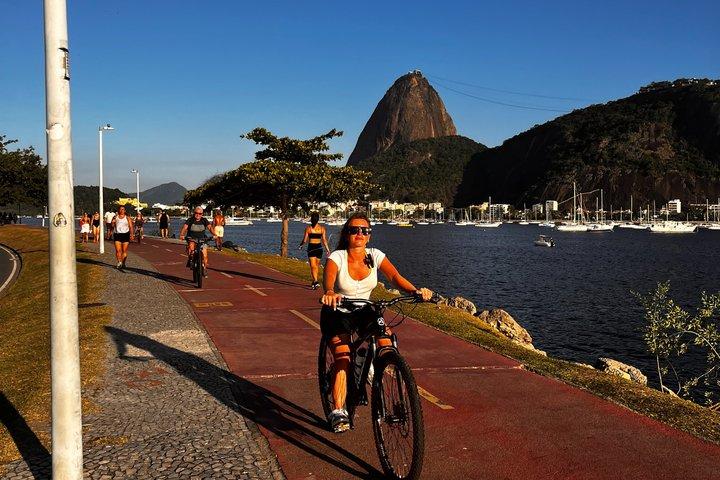
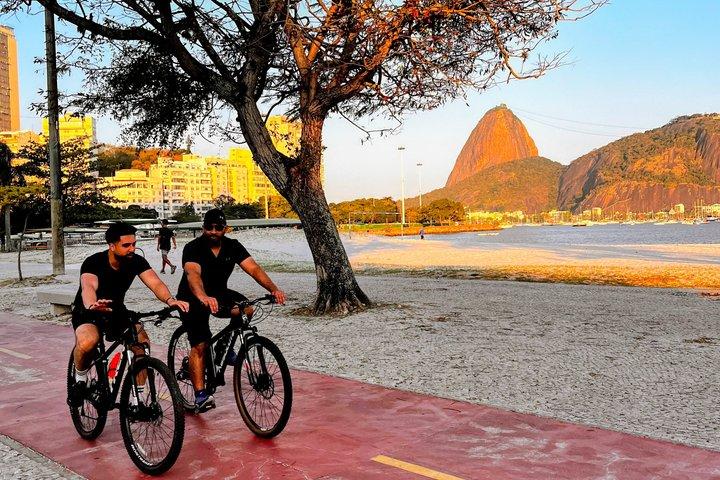
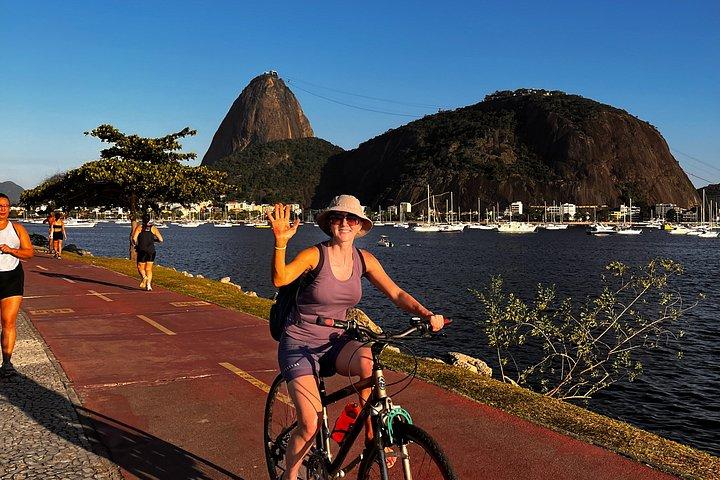
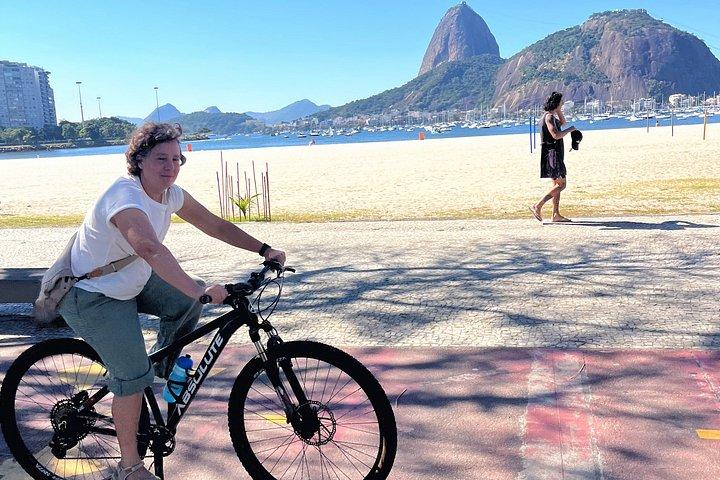
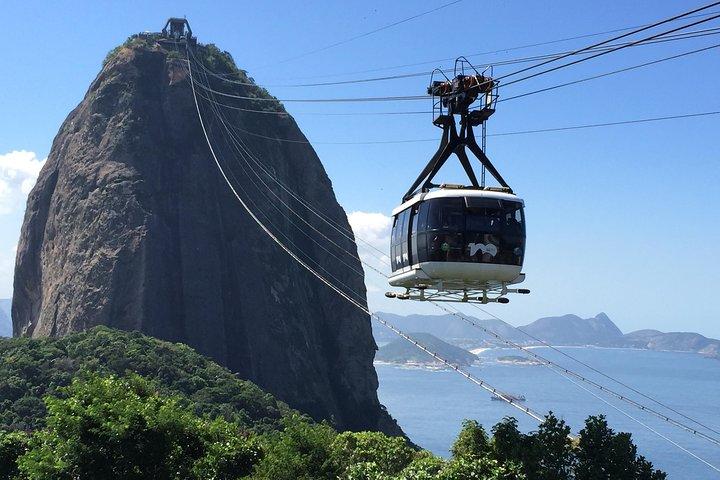
As you ride along the beachfront, Sugarloaf dominates the skyline, framed by the bay’s calm waters and the curve of the beach. It’s one of the most iconic perspectives in Rio.
You’ll see the bustling Botafogo neighbourhood on one side, with its shops and cafés, and the open bay on the other.
Here we have some of the best views of the Sugarloaf Mountain.
Praia Vermelha10 min
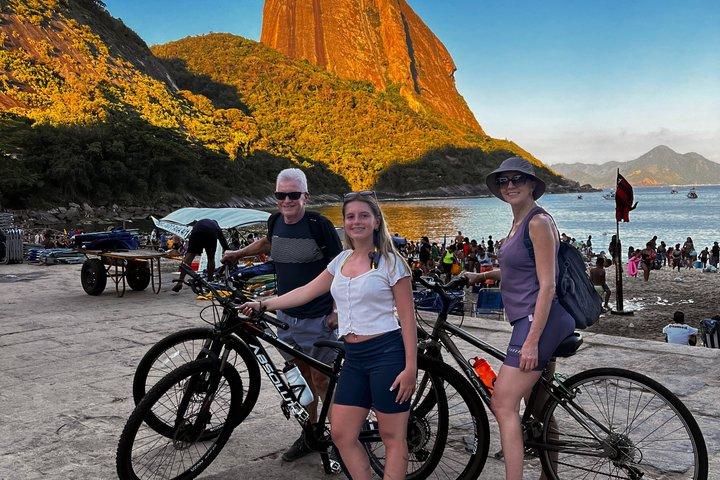
Framed by Granite Giants: On one side rises Sugarloaf, on the other the Morro da Urca, creating a dramatic natural amphitheater.
Island View: Looking out to sea, you catch sight of Ilha Rasa in the distance, perfectly framed between the two hills.
Calm Waters: The bay here is sheltered, so the waves are gentler than at Rio’s ocean-facing beaches—ideal for a peaceful stop on a ride.
Local Feel: It’s a less touristy beach, frequented by locals, which makes it feel more authentic and relaxed. It's also a good place to try a coconut water or popular snacks like corn on the cob or tapioca.
Urca25 min
Architectural Charm: The houses from the 1920s–1940s are beautifully preserved, giving the streets a nostalgic feel. Many are low-rise, pastel-colored, and surrounded by gardens, unlike the high-rises you see elsewhere in Rio.
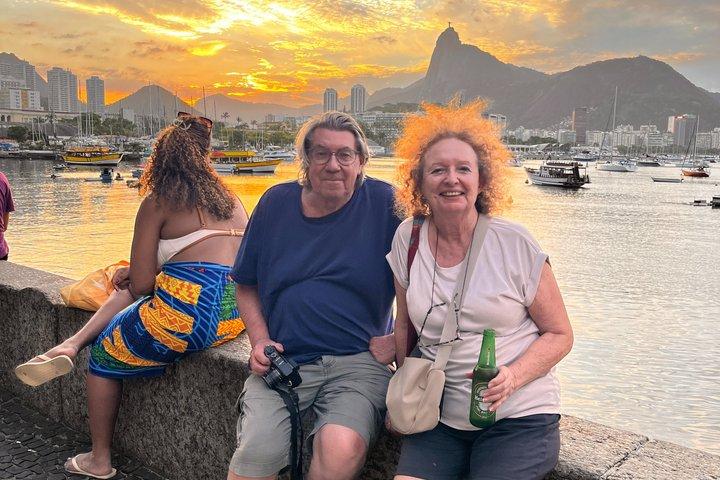
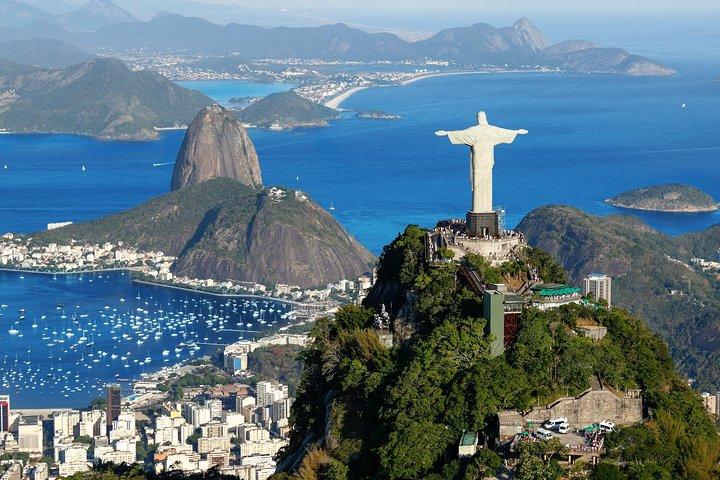
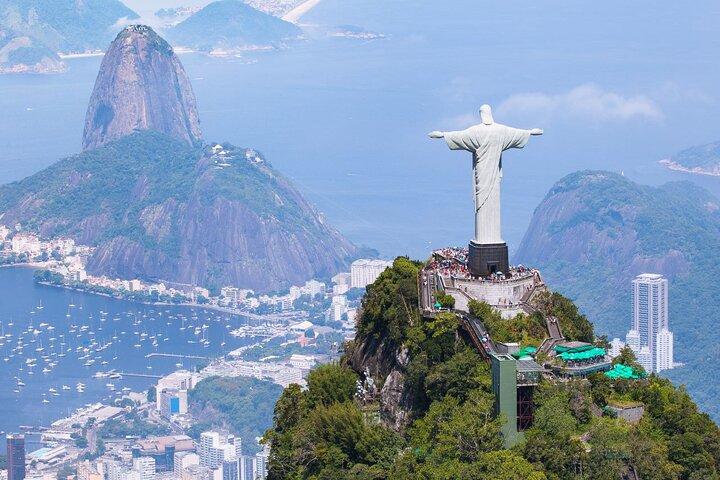
Seawall Promenade: The Mureta da Urca (Urca seawall) is a favorite spot for locals and visitors. People gather here to watch the sunset over Guanabara Bay, with Christ the Redeemer and Sugarloaf Mountain in view.
Community Vibe: Urca is quiet, residential, and safe, with a strong sense of neighborhood identity. It feels more like a seaside town than part of a bustling metropolis.
Cultural Touches: You’ll find small bars and eateries tucked into corners, like the famous Bar Urca, where people sit on the seawall with a cold beer and fried snacks, enjoying the view.