Travel guide · Thailand
Chiang Mai Travel Guide 2026: when to go, Yi Peng lantern rules, day trips and what things really cost
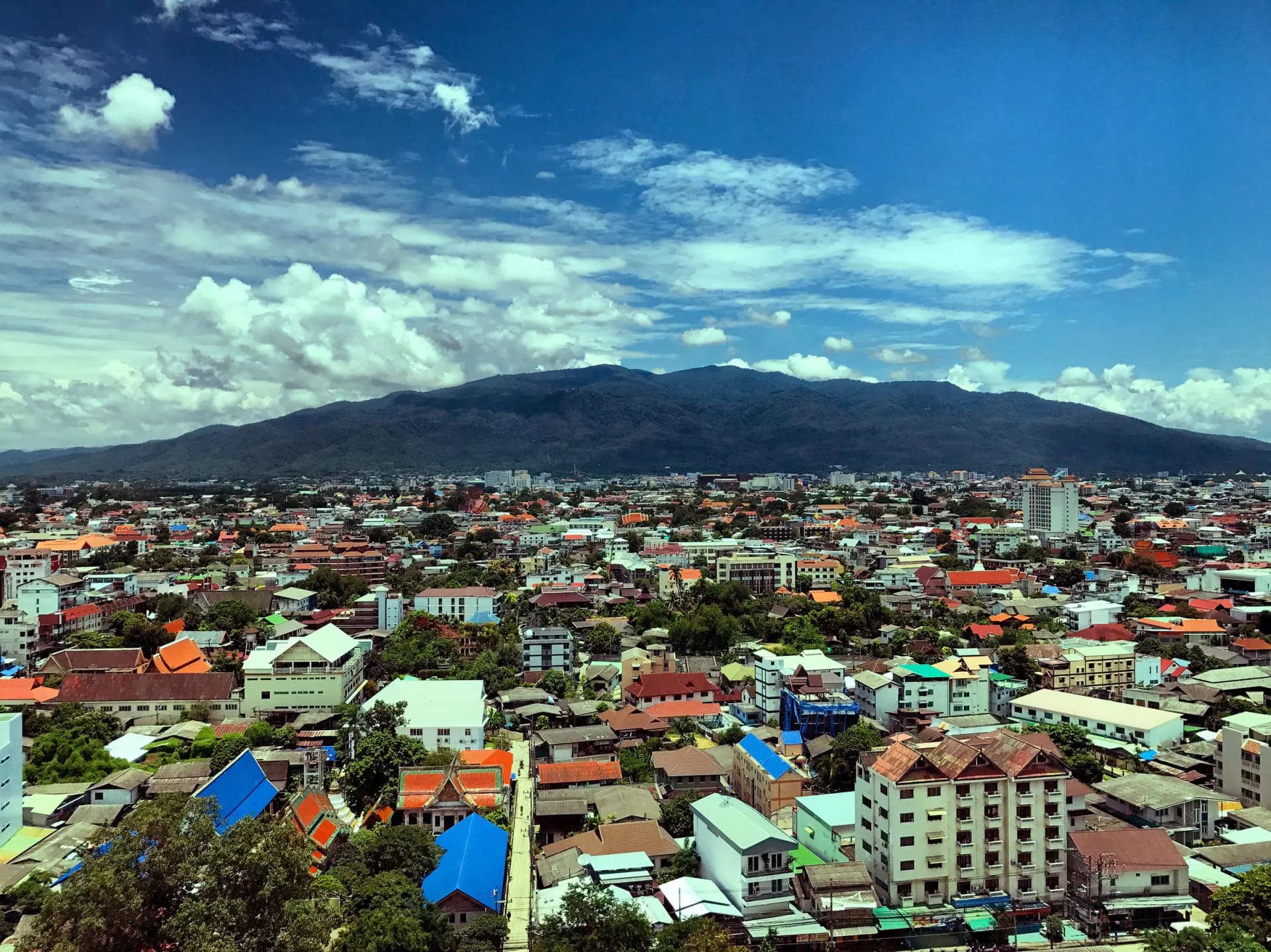
Chiang Mai and Doi Suthep mountain Photo: Blowing Puffer Fish, CC BY 2.0
Chiang Mai is the old Lanna capital of northern Thailand: a moated square of temples about 700 km north of Bangkok, and the base for Doi Suthep, Doi Inthanon, elephant venues and day trips to Chiang Rai. Three decisions matter more than your hotel: coming in the cool, dry months rather than the smoky spring, knowing that sky lanterns are banned in the city even during Yi Peng, and picking an elephant visit that is observation-only. This guide sets out the fees, seasons and rules checked against official and recent sources in November 2026, with clear verdicts and live prices from 1,372 bookable tours.
Chiang Mai at a glance
King Mangrai founded Chiang Mai in 1296 as the capital of the Lanna kingdom, and the plan he left still shapes a visit: a walled square of roughly 1.5 km a side, ringed by a moat, with only fragments of the red brick walls and gates surviving. The city sits at about 300 m in a river basin, with the forested mountain of Doi Suthep rising above it.
Most of what visitors come for lies either inside that square (the big temples, the Sunday market) or within two hours by road: Doi Suthep about 15 km away, Doi Inthanon about 100 km, Chiang Dao about 70 km and Chiang Rai 182 km. UNESCO listed Chiang Mai as a Creative City of Crafts and Folk Art in 2017, which explains the weight of silver, textiles and woodcarving in the markets.
| What it is | Former Lanna capital, about 700 km north of Bangkok |
|---|---|
| Best months | November to February (cool and dry) |
| Smoke season | March and April (smoke from burning) |
| Rainy season | May to October; August wettest (223 mm) |
| Yi Peng 2026 | 24–25 November; no sky lanterns in the city |
| Temple fees (foreigners) | Doi Suthep 30 baht; Wat Chedi Luang 40 baht |
| Emergency numbers | Tourist Police 1155, ambulance 1669, police 191 |
Chiang Mai in pictures
Tap a photo to enlarge it. Photos: ผู้สร้างสรรค์ผลงาน/ส่งข้อมูลเก็บในคลังข้อมูลเสรีวิกิมีเดียคอมมอนส์ - เทวประภาส ม, Vyacheslav Argenberg, Stefan Fussan, Chaiyuth boy, Chainwit. — Wikimedia Commons.
How much do Chiang Mai's temples and parks cost to enter?
Very little: most temples are free or under 50 baht, and only the national parks and the White Temple cost real money
Temple fees in Chiang Mai are small. Wat Chedi Luang has charged foreign visitors 40 baht since 2016 to pay for upkeep, and some recent guides quote 50 baht, so carry small notes. Thai nationals enter free at both Wat Chedi Luang and Doi Suthep.
Doi Suthep is the one temple where fees confuse people. The temple charges foreigners 30 baht and the cable car that saves you the 306-odd steps costs 20 baht; some guides roll the two together and quote 50 baht. Either way it is pocket change. The fees that add up are the national park at Doi Inthanon (300 baht per foreign adult, plus a separate 100 baht at the Twin Pagodas) and, since 1 January 2026, 200 baht at the White Temple in Chiang Rai.
| Place | Foreign adult | Hours | Notes |
|---|---|---|---|
| Wat Phra That Doi Suthep | 30 baht (+20 baht cable car) | About 06:00–17:00 | Some guides quote 50 baht; cover shoulders and knees |
| Wat Chedi Luang | 40 baht | Daytime | Thai nationals free; some guides say 50 baht |
| Doi Inthanon National Park | 300 baht (child 150) | Visitor centre 08:00–16:00 | Car 30 baht, motorbike 20 baht; fees last published 2022 |
| Twin Pagodas, Doi Inthanon | 100 baht | Daytime | Not run by the park, so paid separately |
| Kew Mae Pan trail | 220 baht guide | Closed June–October | Hmong guide compulsory, hired at the trailhead |
| Wat Rong Khun (White Temple) | 200 baht | 08:00–about 17:30 | Doubled from 100 baht on 1 January 2026 |
| Chiang Dao Cave | 40 baht | 07:00–17:00 | Lantern guide about 200 baht per group |
| Bua Tong Sticky Waterfall | Free | 08:00–17:00 | About 60 km north |
Verdict: Do not buy a temple tour to save on entry fees: they are tiny. Pay for a tour when it solves transport, as with Doi Inthanon and Chiang Rai, or adds a guide you would not otherwise have.
When is the best time to visit Chiang Mai?
November to February is the best time to visit Chiang Mai: dry, cool mornings and clear mountain views
The climate normals make the case plainly. December and January have highs around 29–30 °C, lows near 16–17 °C and almost no rain, and November and February are only slightly warmer. That is also when the Kew Mae Pan trail at Doi Inthanon reopens (from 1 November) and the Doi Luang Chiang Dao summit opens to climbers.
March and April are the months to think twice about. Heat peaks in April (mean highs of 36.7 °C), and the burning season fills the valley with smoke: in 2026 the haze hid the mountains for nearly four weeks and only cleared in late April, with officials expecting the season to end in early May. If you have asthma or are travelling with small children, this is the period to skip. May to October is the rainy season, wettest in August and September; it is green and quieter, but trails turn muddy and waterfalls and caves can flood quickly after heavy rain.
| Month | High °C | Low °C | Rain mm | Verdict |
|---|---|---|---|---|
| January | 30 | 16 | 11 | Best: cool and dry |
| February | 33 | 17 | 10 | Good: dry, warming up |
| March | 35 | 20 | 20 | Smoke season; hazy views |
| April | 37 | 23 | 54 | Hottest; smoke; Songkran 13–15 April |
| May | 35 | 24 | 168 | Rains start; smoke clears |
| June | 33 | 25 | 118 | Green season |
| July | 32 | 24 | 149 | Green season |
| August | 32 | 24 | 223 | Wettest month |
| September | 32 | 24 | 207 | Very wet |
| October | 32 | 23 | 124 | Rains easing |
| November | 31 | 20 | 41 | Best: Yi Peng and Loy Krathong |
| December | 29 | 17 | 14 | Best: coolest month |
Figures are 1991–2020 averages for Chiang Mai (World Meteorological Organization normals). Smoke varies year to year; check live air-quality readings before you book a spring trip.
Two festivals shape crowds. Songkran, the Thai New Year holiday on 13–15 April, turns the Old City moat into a citywide water fight, so plan to get soaked. Yi Peng and Loy Krathong fall on the November full moon and draw the biggest crowds of the year, with flight disruption on the lantern nights (see below).
Verdict: Book November to early February. If your dates are fixed in March or April, base yourself here for fewer days and spend the rest of the trip somewhere coastal.
When is Yi Peng 2026, and can you release a lantern in Chiang Mai?
Yi Peng 2026 falls on 24–25 November, and sky lanterns are banned inside the city
Yi Peng is the Lanna lantern festival held with Loy Krathong on the full moon of the twelfth lunar month. In 2026 the lantern nights are 24 and 25 November (the 24th is Loy Krathong itself); the city festival opens on 23 November and the Grand Krathong procession runs on the 25th.
The photos of thousands of lanterns rising over a crowd are not taken in the Old City. Releasing sky lanterns is banned inside Chiang Mai and within the airport safety zone, which covers most of the basin. Releases are allowed only on the two festival nights, from 19:00 to 01:00, at sites approved by the district; legal mass releases take place at licensed venues about 30 km outside town.
| Option | Where | Price | What to know |
|---|---|---|---|
| CNX Festival | Mae Taeng | From 3,500 baht | Ticketed mass release; non-refundable |
| CAD Khomloy | Mae On | 4,880–15,880 baht | Price depends on tier |
| Voyage of Light | Doi Saket, about 25 km out | Ticketed | 24–25 November, shuttles from town |
| Free in the city | Tha Phae Gate, Three Kings Monument, moat | Free | Candles, lanterns and stages; no sky lanterns |
| Krathong on the river | Ping River at Nawarat Bridge | Free | Evening of 24 November |
Air travel is the hidden cost. In 2025 the airport cancelled or rescheduled more than 160 flights around the lantern nights, and the 2026 schedule is expected only days before the festival. Arrive by the afternoon of 23 November and fly out after the 26th, and book a refundable hotel.
Verdict: For most visitors the free city celebrations, with krathong on the Ping River and the procession from Tha Phae Gate, are the better night. Pay for a ticketed release only if seeing a mass launch matters to you, and buy direct from the organiser.
How do you get to Chiang Mai and get around?
Fly from Bangkok if time matters; take the overnight train if you want the journey to be part of the trip
About 50 flights a day link Bangkok and Chiang Mai, taking around 1 hour 10 minutes, and the airport is only 3–4 km from most central hotels. Flat-fare taxis to the Old City cost about 150–200 baht, metered taxis add a 50 baht airport surcharge, and Grab usually costs a little less off-peak. The RTC city bus has run lines from the airport since December 2023.
The train is the slow alternative: Chiang Mai is the northern end of the line, trains leave from Krung Thep Aphiwat in Bangkok, and most run overnight, taking roughly 12–15 hours. A sleeper berth saves a hotel night.
| Route | How | Time | Cost |
|---|---|---|---|
| Bangkok to Chiang Mai | Flight | About 1 h 10 min | Varies by airline |
| Bangkok to Chiang Mai | Overnight train | About 12–15 h | Sleeper berths; check State Railway of Thailand |
| Airport to Old City | Flat-fare taxi | 10–15 min | About 150–200 baht |
| Airport to Old City | Grab | 10–15 min | About 120–160 baht off-peak |
| Around the city | Red songthaew (shared) | Varies | 30 baht per person |
| Short hops | Tuk-tuk | Varies | 50–60 baht |
| Chiang Mai to Chiang Rai | Green Bus | 3 h 20 – 3 h 45 | About 260–400 baht |
| Chiang Mai to Chiang Dao | Local bus | About 1.5 h | About 46–83 baht |
In town, the red songthaew trucks are the local system: flag one down, say where you are going, and pay a flat 30 baht per person within the city; agree a price first for anything further out. Tuk-tuks charge 50–60 baht for short trips, and Grab and Bolt both operate. The Old City itself is small enough to walk.
Scooters rent for 200–300 baht a day, but read the rules first. You need your home licence plus a 1968 international driving permit, helmets are compulsory, many rental bikes in tourist areas are unregistered, and riding without a valid licence can void your travel insurance. Never leave your passport as a deposit.
What are the best things to do in Chiang Mai?
The catalogue lists 102 cooking classes, 81 elephant visits and 124 Doi Suthep tours, which tells you what most visitors do. Here is what deserves your time, in order.
Wat Phra That Doi Suthep Must do· Early morning, before the tour buses
The mountain temple above the city, about 15 km from the centre, is the one sight nobody should skip. Tradition dates its first stupa to 1383, built where a white elephant carrying a relic is said to have died. Climb the naga staircase of roughly 306–309 steps or ride the cable car, pay the 30 baht foreigner fee, and dress with shoulders and knees covered; sarongs are rented at the entrance.
124 Doi Suthep tours with the best reviews tours on Excurgo · from $15, typical $73 per person · rated 4.8 across 4,265 reviews


Hike the Monk's Trail to Wat Pha Lat Must do· Start by 06:00, November to February
The forest path from the edge of the city climbs about 2 km (40–50 minutes) to Wat Pha Lat, a forest temple on the way up the mountain. Fit walkers can continue about 5 km more to Doi Suthep, around 7.5 km and 620 m of climb in total, roughly 3.5 hours. An entrance and parking fee was introduced at the trailhead in December 2025. Avoid it in the smoky spring and the slippery rainy months.
The Old City temples: Wat Chedi Luang and Wat Phra Singh Must do· Half a day, on foot
Wat Chedi Luang was founded in 1401, and its huge brick chedi still shows the damage of a 16th-century earthquake that left about two-thirds of it standing. Wat Phra Singh, dating from 1345, is the classic example of northern Thai temple architecture and houses the revered Phra Singh Buddha. Both sit inside the moat and can be walked in a morning.
65 Old City walks and tuk-tuk tours tours on Excurgo · from $4, typical $44 per person · rated 4.7 across 742 reviews


A Thai cooking class Must do· Half day, morning or evening
Cooking classes are the most-booked activity in Chiang Mai, and the top schools collect thousands of reviews. Many combine a market visit with the cooking, and several of the best-reviewed run on farms outside town. At a typical $42, this is one of the best-value half days in the city.
102 Cooking classes with the most reviews tours on Excurgo · from $12, typical $42 per person · rated 5.0 across 32,539 reviews


Doi Inthanon, Thailand's highest mountain Must do· Full day; clearest November to February
At 2,565 m, Doi Inthanon is the roof of Thailand, about 100 km from the city. A day here combines the summit, the Twin Pagodas (100 baht extra), Wachirathan waterfall and, from November, the 2.5 km Kew Mae Pan trail with a compulsory local Hmong guide. Winter nights in the park can approach freezing, so bring a jacket.
118 Doi Inthanon day trips tours on Excurgo · from $12, typical $80 per person · rated 4.7 across 6,447 reviews


Sunday Walking Street and the night markets Worth it· Sunday from about 16:00
Every Sunday about 1.1 km of Ratchadamnoen Road, from Tha Phae Gate to Wat Phra Singh, becomes a market from late afternoon until around 22:00–23:00; drinking on the street itself is banned. The Saturday market on Wualai Road is shorter and known for silver. The Night Bazaar runs every evening over several blocks and is more commercial.
A street food tour Worth it· Evening
If you only have a few nights, a guided food tour is the fastest way to work out northern dishes and where locals eat them. The catalogue has 40 options at a typical $61.
40 Food tours tours on Excurgo · from $25, typical $61 per person · rated 4.8 across 2,160 reviews


Bua Tong Sticky Waterfall Worth it· Half day; arrive early
About 60 km north of the city, this free waterfall lets you walk up the cascades because the rock is coated in porous mineral deposits that give a firm grip. It is open 08:00–17:00 and takes about 1.5 hours to reach by road, so most visitors join a half-day tour.
86 Sticky Waterfall trips tours on Excurgo · from $17, typical $73 per person · rated 4.9 across 2,271 reviews

A bike tour of the Old City or countryside Worth it· Morning or evening
The flat Old City and the rice fields around it suit guided bike tours, a good way to cover more temples than on foot without negotiating traffic alone. Typical price $70.
62 Bike tours tours on Excurgo · from $17, typical $70 per person · rated 4.8 across 1,839 reviews


Worth skipping
- Riding or bathing elephants: see the elephant section; observation-only visits are safer for you and better for the animals.
- Releasing a lantern in the Old City during Yi Peng: it is banned there and near the airport; use a licensed venue or watch the free events instead.
- Climbing Doi Suthep at midday in April: heat and smoke peak together; go at dawn or come in the cool season.
- A scooter without an international driving permit: it can void your insurance, and rental bikes are often unregistered.
How do you choose an ethical elephant sanctuary in Chiang Mai?
Choose an observation-only venue: no riding, no shows and no bathing
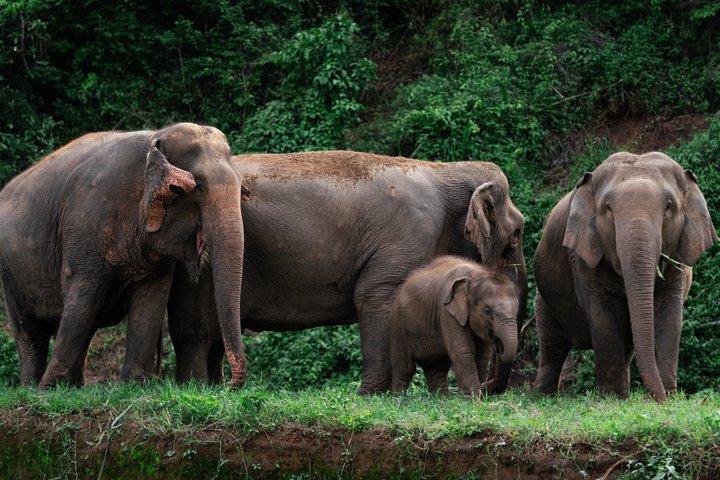
The word sanctuary is not regulated, and many Chiang Mai venues that use it still offer riding or bathing. World Animal Protection, which assesses venues, defines an elephant-friendly place as observation-only: the elephants roam, are not made to perform, and visitors watch rather than touch. It specifically advises against bathing elephants, because close contact raises the risk of serious injury.
Safety is not a theoretical point. UK travel advice warns that British visitors have been seriously injured or killed on elephant treks when handlers lost control, and recommends a reliable, licensed operator. Venues around Chiang Mai that have moved to observation-only include ChangChill, the first in the area, and Happy Elephant Care Valley, which also stopped tourist bathing and feeding.
- Read the full itinerary: words like bathing, mud spa, riding or show mean it is not observation-only.
- Prefer small groups and venues that describe walking with or watching the herd.
- Check the venue's current status before you book; World Animal Protection notes situations change fast.
- Many combination tours add rafting or waterfalls; that is fine, but the elephant part should still be hands-off.
Verdict: Pay a little more for an observation-only half or full day rather than a cheap package with bathing. The catalogue's typical elephant visit costs $70; use the list above to filter what you book.
81 Most-reviewed elephant tours (check the itinerary before booking) tours on Excurgo · from $5, typical $70 per person · rated 4.9 across 6,364 reviews

Which day trips from Chiang Mai are worth it?
Doi Inthanon first, Chiang Rai second; Chiang Dao for walkers and caves
Chiang Rai is the trip with the longest drive: 182 km, about three hours each way by car or minivan and a little longer by bus. A tour makes sense here because the White Temple, which now charges foreigners 200 baht, is not on the scheduled bus routes, and most itineraries add the free Blue Temple and the Black House.
Chiang Dao, about 70 km north on Highway 107, is the better choice if you prefer mountains to temples. The cave charges 40 baht, and its unlit chambers need a lantern guide at about 200 baht per group. From November to February the Doi Luang Chiang Dao summit opens to climbers with a compulsory local guide and capped daily numbers, which needs booking ahead through the wildlife sanctuary.
| Day trip | Distance | Time each way | Fees (foreign adult) | Tours from |
|---|---|---|---|---|
| Doi Inthanon | About 100 km | Full day | Park 300 baht + pagodas 100 baht | $12 |
| Chiang Rai temples | 182 km | About 3 h | White Temple 200 baht; Blue Temple free | $27 |
| Chiang Dao cave and mountains | About 70 km | About 1.5 h | Cave 40 baht + guide about 200 per group | $48 |
| Bua Tong Sticky Waterfall | About 60 km | About 1.5 h | Free | $17 |
| Doi Suthep and Wat Pha Lat | About 15 km | Under 1 h | 30 baht | $15 |
Tour prices are live catalogue minimums; distances are approximate road distances from the city.
108 Chiang Rai day trips tours on Excurgo · from $27, typical $76 per person · rated 4.6 across 3,620 reviews


27 Chiang Dao trips tours on Excurgo · from $48, typical $101 per person · rated 4.8 across 683 reviews


Verdict: With one spare day, do Doi Inthanon. With two, add Chiang Rai. Skip Chiang Rai as a day trip if you can stay a night there instead: six hours on the road is a lot for three temples.
How many days do you need in Chiang Mai?
Four days covers the essentials without rushing; the city rewards slower stays, and many visitors extend once they arrive.
2 days
Old City temples and the Sunday market (if it is Sunday) on day one; Doi Suthep at dawn and a cooking class on day two.
Fees ≈ 70 baht · cooking class ≈ $42
4 days
Add a full day at Doi Inthanon and an observation-only elephant visit or the Monk's Trail hike.
Park ≈ 400 baht · Inthanon tour ≈ $80 · elephants ≈ $70
6 days
Add Chiang Rai's temples and a slower day at Chiang Dao or the Sticky Waterfall, plus a food tour.
White Temple 200 baht · Chiang Rai tour ≈ $76 · food tour ≈ $61
How much do tours and tickets cost in Chiang Mai?
Entry fees are low, so tours are where the money goes. The table shows live prices for the main activities across 1,372 tours in our catalogue; official fees are in the fees section.
| Activity | Tours | From | Typical | Top end |
|---|---|---|---|---|
| Thai cooking classes | 102 | $12 | $42 | $85 |
| Elephant visits | 81 | $5 | $70 | $118 |
| Doi Suthep tours | 124 | $15 | $73 | $127 |
| Doi Inthanon day trips | 118 | $12 | $80 | $160 |
| Chiang Rai day trips | 108 | $27 | $76 | $175 |
| Sticky Waterfall trips | 86 | $17 | $73 | $115 |
| Street food tours | 40 | $25 | $61 | $88 |
| Old City walks and tuk-tuk tours | 65 | $4 | $44 | $119 |
| Bike tours | 62 | $17 | $70 | $106 |
| Whitewater rafting | 62 | $30 | $74 | $127 |
| Zipline parks | 53 | $14 | $72 | $118 |
| Chiang Dao trips | 27 | $48 | $101 | $251 |
| Multi-day treks | 55 | $71 | $257 | $953 |
| Thai massage and spa | 46 | $14 | $47 | $159 |
| Private car with driver | 15 | $38 | $150 | $215 |
92% of Chiang Mai tours in the catalogue offer free cancellation, useful in smoke season and around Yi Peng flight changes.
A private car with an English-speaking driver (typical $150 a day) is worth pricing against four shared-tour seats if you are a family or small group heading to Doi Inthanon or Chiang Rai.
Where should you stay in Chiang Mai: Old City or Nimman?
The Old City for a first visit; Nimman if evenings matter more than temples
The Old City puts the main temples, the Sunday market and plenty of cafés within walking distance. Nimmanhaemin (Nimman) is the café, bar and boutique district, better for nightlife and longer stays. Riverside, along the Ping, has quieter and more upscale hotels, and the Night Bazaar area suits shoppers. Santitham, just north of the Old City, is the budget choice with local eateries.
| Area | Best for | Trade-off |
|---|---|---|
| Old City | First-timers, temples, walking | Quieter at night |
| Nimmanhaemin | Cafés, nightlife, longer stays | A ride from the temples |
| Riverside | Upscale hotels, families, quiet | Further from the sights |
| Night Bazaar | Shopping, street food | Commercial, busy evenings |
| Santitham | Budget, local food | Less polished |
Verdict: Stay inside or just outside the moat on a first trip of four days or less. The time saved walking to temples beats any price difference.
What rules, money tips and safety advice should you know?
Entry. From 15 September 2026 visa-exempt stays are limited to 30 days, for tourism only. Every foreign arrival must complete the online Thailand Digital Arrival Card, up to three days before landing. Passports need six months' validity, and officers may ask to see 10,000 baht per person and an onward ticket.
Laws that catch tourists. Vapes and e-cigarettes are illegal to own or use, with fines typically 5,000–30,000 baht and no exception for visitors. Cannabis is medical-only with a Thai prescription. Criticising the monarchy is a serious crime, including online. Alcohol sales are restricted between midnight and 11:00 outside licensed venues.
Money. ATMs charge foreign cards 220–250 baht per withdrawal at most banks, so take out larger sums less often, and always choose to be charged in baht. Cards work at 7-Eleven and supermarkets, but songthaews, markets and temple fees need cash. Tipping is not compulsory; check for a service charge and tip guides and drivers on private tours.
Safety. Watch your drinks: spiking happens in tourist areas, and methanol-tainted spirits have killed people. In the rainy season, flash floods can hit waterfalls, rivers and caves, and landslides can close mountain roads. Emergency numbers are 1155 for the Tourist Police, 1669 for an ambulance and 191 for police.
| Visa-free stay | 30 days (from 15 September 2026) |
|---|---|
| Arrival card | Online Thailand Digital Arrival Card, up to 3 days before |
| Vapes | Illegal; fines typically 5,000–30,000 baht |
| ATM fee | 220–250 baht per withdrawal (AEON about 150) |
| Scooter | Home licence + 1968 IDP, helmet compulsory |
| Tourist Police | 1155 |
What mistakes do visitors to Chiang Mai regret?
- Booking March or April without checking the smoke. The 2026 haze lasted nearly four weeks and hid the mountains.
- Planning a lantern release in the Old City. It is banned in the city and the airport zone; the photos you have seen come from ticketed venues outside town.
- Flying in or out on 24–25 November. Lantern nights cancelled or moved more than 160 flights in 2025.
- Choosing an elephant visit by price alone. Bathing and riding packages are the riskiest for visitors and worst for the elephants.
- Quoting old prices. The White Temple now charges foreigners 200 baht, not 100, and the Monk's Trail trailhead has charged a fee since December 2025.
- Forgetting the arrival card. The online Thailand Digital Arrival Card has been required since May 2025.
- Bringing a vape. It is illegal, with heavy fines and no tourist exception.
- Renting a scooter without an international permit. Insurance may not pay out after an accident.
Chiang Mai FAQ
When is the best time to visit Chiang Mai?
November to February. Highs are around 29–31 °C, nights are cool and there is little rain. March and April bring peak heat and smoke from the burning season, and May to October is the rainy season.
How bad is the burning season in Chiang Mai?
Bad enough to plan around. In 2026 smoke covered the city for nearly four weeks before clearing in late April, and the season was expected to end in early May. March and April are the worst months for haze.
When is Yi Peng 2026 and can you release lanterns in the city?
The lantern nights are 24 and 25 November 2026. Releasing sky lanterns is banned inside Chiang Mai and near the airport; legal releases happen only at licensed, ticketed venues outside town, between 19:00 and 01:00.
How much does Doi Suthep cost?
Foreigners pay 30 baht to enter the temple, and the cable car alongside the staircase costs 20 baht; some guides quote a combined 50 baht. Thai nationals enter free.
Can you hike up to Doi Suthep?
Yes. The Monk's Trail climbs about 2 km to Wat Pha Lat, then about 5 km more to Doi Suthep, around 7.5 km and 3.5 hours in total. A trailhead fee was introduced in December 2025, and early starts in the cool season work best.
How do I choose an ethical elephant sanctuary?
Pick an observation-only venue with no riding, shows or bathing. World Animal Protection advises against bathing elephants because close contact risks serious injury, and UK travel advice warns of deaths on elephant treks.
Is Chiang Rai a good day trip from Chiang Mai?
It works but makes a long day: Chiang Rai is 182 km away, about three hours each way. The White Temple now charges foreigners 200 baht and the Blue Temple is free. Stay overnight if you can.
How much is Doi Inthanon National Park?
The park charges foreign adults 300 baht and children 150 baht, plus 30 baht per car or 20 baht per motorbike. The Twin Pagodas charge a separate 100 baht, and the Kew Mae Pan trail needs a 220 baht local guide.
How do I get from Chiang Mai airport to the Old City?
The airport is only 3–4 km from most central hotels. Flat-fare taxis cost about 150–200 baht, metered taxis add a 50 baht airport surcharge, and Grab is often a little cheaper off-peak.
Are vapes legal in Thailand?
No. Owning or using vapes, e-cigarettes or heat-not-burn devices is illegal, with fines typically 5,000–30,000 baht, possible detention and no exception for tourists.
Sources and how this guide is made
Written by the Excurgo editorial team with AI assistance. We are a tour comparison site, not a tour operator, and we have not personally tested every tour. Every fact was researched in official and specialist sources and checked against them before publication; prices, ratings and tour counts come from our live catalogue of 1,372 Chiang Mai tours. Ratings and review counts are collected by Viator and Tripadvisor. Tours are picked by rating weighted by number of reviews (at least 20); we earn a commission from Viator when you book, and it does not affect the order.
- GOV.UK (FCDO) — Thailand entry requirements: 30-day visa exemption, digital arrival card (Nov 2026)
- GOV.UK (FCDO) — Thailand safety: vapes, cannabis, scooters, elephant treks, flooding (Nov 2026)
- GOV.UK (FCDO) — Thailand emergency numbers (Nov 2026)
- Tourism Authority of Thailand (France) — Chiang Mai Voyage of Light 2026 (Oct 2026)
- Thai National Parks — Doi Inthanon fees, trails and seasons (Jun 2026)
- World Animal Protection — elephant bathing and observation-only venues (2025)
- World Animal Protection — Chiang Mai venues moving to observation-only (2025)
- Chiang Mai CityNews — 2026 smoke season clearing (Apr 2026)
- Chiang Mai CityNews — Wat Chedi Luang 40 baht fee (Jun 2016)
- Khaosod English — White Temple fee doubles to 200 baht (Nov 2025)
- Wikipedia — Chiang Mai history, climate normals, transport (Nov 2026)
- Wikipedia — Wat Phra That Doi Suthep (Nov 2026)
- Visit Thailand Today — Yi Peng 2026 dates, rules and tickets (Oct 2026)
- Visit Thailand Today — Chiang Mai to Chiang Rai (Oct 2026)
- CNX Magazine — Yi Peng 2026 lantern rules and flights (Aug 2026)
Photos come from Wikimedia Commons under free licences (CC BY, CC BY-SA, CC0 or public domain); the author and licence are shown under each one. They show the places described, not the exact tours listed.
Changelog. November 2026: guide published.
Browse every tour: Chiang Mai