Travel guide · Thailand
Bangkok Travel Guide 2026: temple tickets, dress rules, the 30-day visa limit, best months and real costs
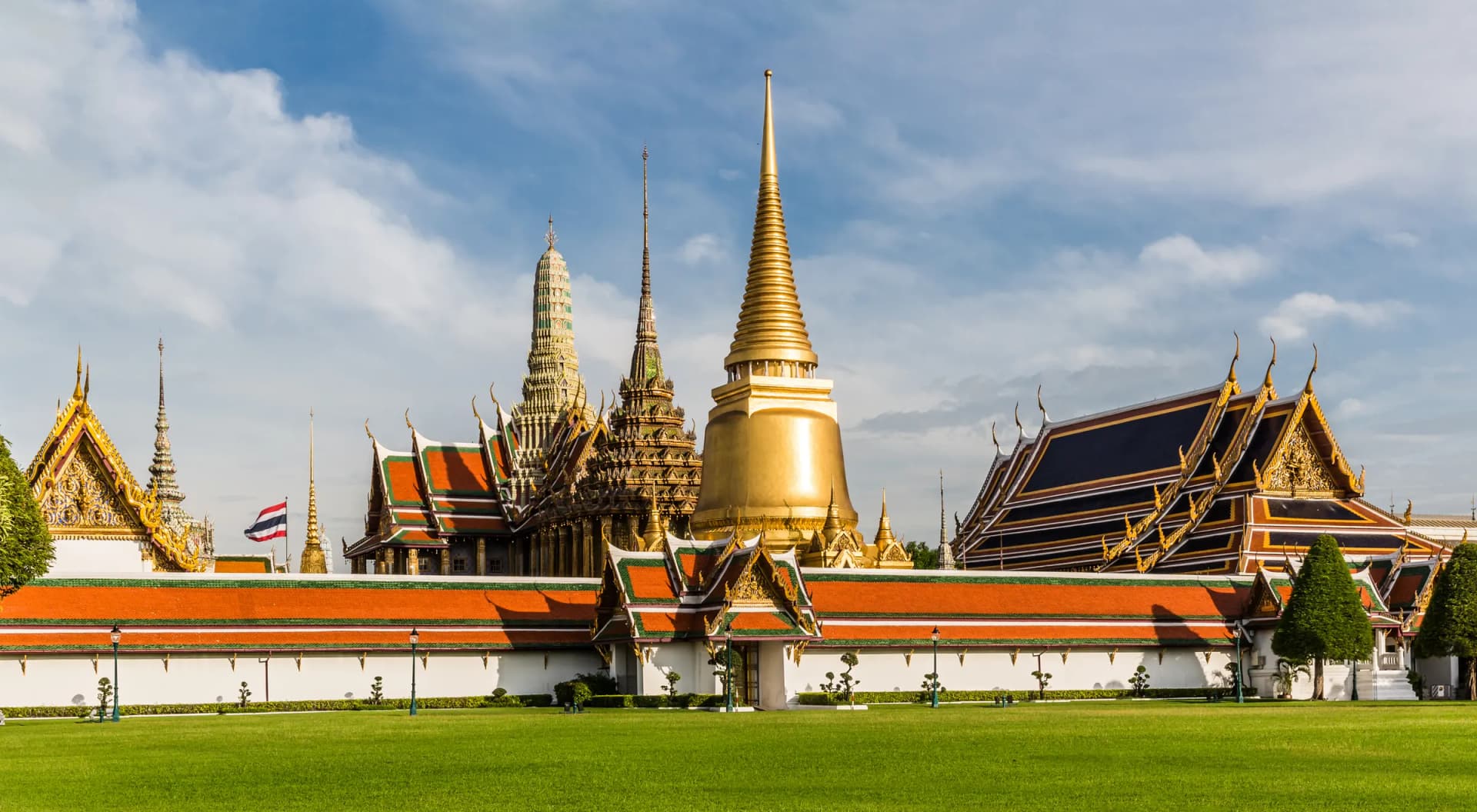
Wat Phra Kaew, the Temple of the Emerald Buddha, inside the Grand Palace Photo: Original image: Ninara from Helsinki, Finland. Edit: TSP, CC BY 4.0
Bangkok is a capital of about 9.1 million people where the three headline temples cost 200 to 500 baht each and the ruins of Ayutthaya, the old royal capital, lie an hour or so up the railway. The decisions that matter are how to handle the Grand Palace dress code and its early ticket cut-off, which month to come in a city that is hot all year but very wet from May to October, and which day trip is worth a long day out now that visa-free stays have been cut to 30 days. This guide sets out current official prices and rules, gives clear verdicts on seasons, transport and day trips, and shows live prices from 1,440 bookable tours.
Bangkok at a glance
Bangkok counted about 9.1 million residents in a 2024 estimate, and its metropolitan area about 17.4 million. For visitors, the city's historic heart is small: the Grand Palace, Wat Pho and Wat Arun sit within sight of each other on the two banks of the Chao Phraya River in the old Rattanakosin district. Almost everything else on a first trip — Chinatown, the Golden Mount, Jim Thompson House, the weekend market at Chatuchak — is a skytrain, metro, boat or taxi ride away.
Sights are cheap; the money goes on hotels, food, transport and tours. The three big temples together cost about 1,000 baht. What catches people out is not price but rules: palace ticket sales stop at 15:30, temples turn away shorts and bare shoulders, vaping is illegal even for tourists, and since 15 September 2026 visitors from the 60 visa-exempt countries can stay only 30 days without a visa.
| Population | About 9.1 million (2024 estimate); about 17.4 million in the metro area |
|---|---|
| Big three temples | Grand Palace 500 baht · Wat Pho 300 baht · Wat Arun about 200 baht |
| Grand Palace hours | 08:30–16:30, tickets sold 08:30–15:30; changes on royal ceremony days |
| Airports | Suvarnabhumi (Airport Rail Link) and Don Mueang (budget airlines, SRT Red Line) |
| Visa-free stay | Up to 30 days for tourism for 60 eligible nationalities since 15 September 2026 |
| Arrival card | Thailand Digital Arrival Card online, free, within 3 days before arrival |
| Wettest month | September, about 336 mm of rain on average |
| Tours on Excurgo | 1,440 bookable tours, typical food tour $68 |
Bangkok in pictures
Tap a photo to enlarge it. Photos: Diego Delso, Slyronit, Ninara from Helsinki, Finland, Vyacheslav Argenberg, Flickr user: Swaminathan Gurgaon, India https://www.flickr.com/people/araswami/ — Wikimedia Commons.
How much are the Grand Palace, Wat Pho and Wat Arun tickets?
Expect to pay about 1,000 baht for all three, and arrive at the palace before 15:30
The Grand Palace ticket costs 500 baht and covers Wat Phra Kaew, the Temple of the Emerald Buddha, inside the palace walls. The palace is open daily from 08:30 to 16:30, but tickets are only sold until 15:30, so a mid-afternoon arrival after a long lunch can leave you outside. Wat Pho next door charges 300 baht and stays open until 19:30, which makes it the natural second stop. Wat Arun, across the river, charges about 200 baht in cash.
| Sight | Price | Hours | Notes |
|---|---|---|---|
| Grand Palace & Wat Phra Kaew | 500 baht | 08:30–16:30, tickets until 15:30 | Hours cut on royal ceremony days |
| Wat Pho (reclining Buddha) | 300 baht; under 120 cm free | 08:00–19:30 | No shorts; massage 340 baht for 30 min |
| Wat Arun | About 200 baht, cash | About 08:00–18:00 (sources vary) | On the Thonburi bank |
| Golden Mount (Wat Saket) | About 100 baht | About 07:00–19:00 | Older listings say 50 baht |
| Wat Traimit (Golden Buddha) | 40 baht; museum 100 baht extra | About 08:00–17:00 | In Chinatown |
| Jim Thompson House | 250 baht; 10–21 years 150 baht | 10:00–17:00 | Guided visits only |
The Grand Palace is still a working ceremonial site, even though the king lives elsewhere, at Dusit Palace. On ceremony days the schedule can shrink with little warning: for a royal merit-making ceremony on 12 August 2026, tickets were sold only from 08:30 to noon and the security check in the pedestrian tunnel under Na Phra Lan Road closed at 11:00.
Dress for the strictest temple: shoulders covered, legs covered
Wat Pho's own rules say trousers are fine and shorts are not, shoes come off before you enter any religious building, and you must never step on a Buddha image. Women should not touch monks. The Grand Palace applies a dress code too, and on ceremony days it can be stricter: on 12 August 2026 men were told not to wear jeans and women had to wear a skirt or wraparound cloth. Dressing to the Wat Pho standard every temple day is the simplest approach.
Verdict: Do the Grand Palace first thing, Wat Pho straight after, and Wat Arun in the late afternoon. Buy tickets at the official gates rather than from anyone in the street, and ignore anyone who tells you the palace is closed today.
"The palace is closed today" is the start of a scam
The best-known Bangkok scam begins near the Grand Palace with a friendly stranger saying it is shut for a holiday. A cheap or free tuk-tuk ride then takes you to a quiet temple, where someone tells you about a one-day government gem offer, and finally to a jewellery shop that ships overpriced stones abroad so you cannot check them. Real closures are announced on the palace's own channels, so check there instead.
108 Guided Grand Palace and temple tours tours on Excurgo · from $13, typical $112 per person · rated 4.7 across 4,920 reviews
How do you see the Grand Palace, Wat Pho and Wat Arun in one day?
Palace in the morning, Wat Pho at lunchtime, Wat Arun before sunset
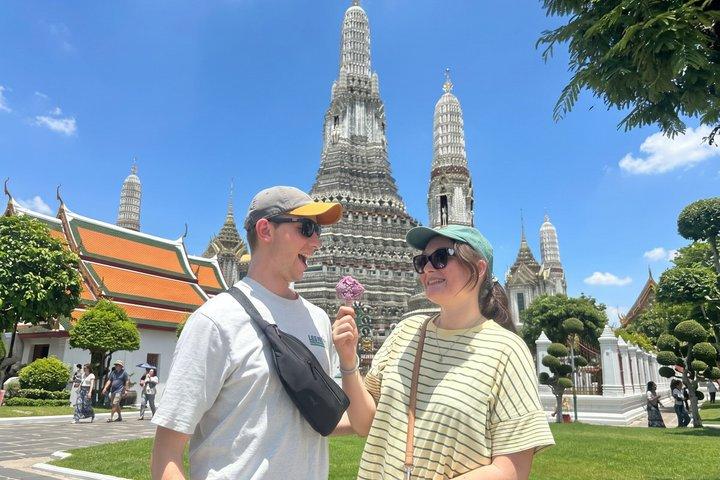
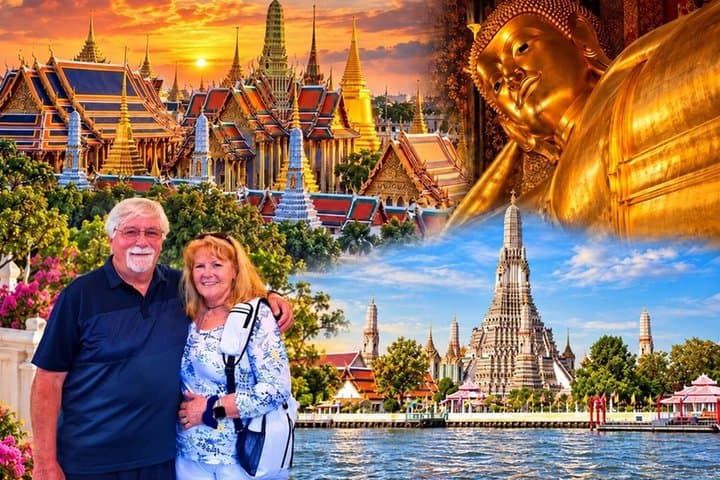
The palace's 15:30 ticket cut-off and Wat Pho's late closing at 19:30 decide the order. Start at the palace when it opens at 08:30 and allow a good part of the morning — the complex covers about 218,400 square metres. Walk south to Wat Pho, where the reclining Buddha is about 46 m long and 15 m high, then cross to Wat Arun on the west bank, whose porcelain-covered central prang is reported at between 66.8 m and 86 m tall.
Wat Pho is also home to a traditional massage school: a 30-minute Thai or foot massage costs 340 baht, an hour 520 baht. It is a sensible break after a morning on your feet in the heat. The temple's inscriptions are on UNESCO's Memory of the World register, and the grounds hold more than a thousand Buddha images, so it rewards more time than the reclining Buddha hall alone.
Verdict: One full day covers all three if you start at 08:30. A guide adds most at the Grand Palace, where the murals and buildings need explaining; Wat Pho and Wat Arun are easy to see on your own.
58 Wat Pho and Wat Arun tours tours on Excurgo · from $13, typical $89 per person · rated 4.7 across 8,255 reviews
When is the best time to visit Bangkok?
November to February is the best time: the same heat, far less rain
Bangkok is hot all year — average daily highs stay between about 32 °C and 36 °C in every month. The difference is rain. Thailand's official seasons put the hot season from mid-February to mid-May, the south-west monsoon rainy season from mid-May to mid-October, and the cool season from mid-October to mid-February. December averages about 12 mm of rain; September about 336 mm.
| Month | Avg high °C | Avg low °C | Rain mm | Verdict |
|---|---|---|---|---|
| January | 32.7 | 23.4 | 24 | Best: dry and least hot |
| February | 33.7 | 24.8 | 21 | Very good |
| March | 34.7 | 26.4 | 51 | Good, getting hotter |
| April | 35.7 | 27.2 | 93 | Hottest month; Songkran mid-month |
| May | 35.1 | 26.9 | 217 | Rains start |
| June | 34.1 | 26.4 | 199 | Wet, plan indoor backups |
| July | 33.5 | 26.1 | 190 | Wet |
| August | 33.3 | 25.9 | 227 | Wet |
| September | 33.2 | 25.4 | 336 | Wettest — avoid if you can |
| October | 33.3 | 25.2 | 289 | Very wet early, drying late |
| November | 33.1 | 24.7 | 45 | Very good; Loy Krathong |
| December | 32.3 | 23.2 | 12 | Best: driest month |
The seasons do not switch on a fixed date. The meteorological department declares the cool season only once cooler nights, a change of wind and less rain are established, and treats the first one to two weeks around mid-October as a transition. If your dates are flexible, aim for November onwards rather than early October.
Songkran in April and Loy Krathong in November change the city
Songkran, the Thai New Year, brought public holidays from 13 to 15 April in 2026, and the tourism authority's water festival in Benchakitti Park ran from 11 to 15 April with free entry. Expect to get wet in the street. Loy Krathong falls on the full moon of the twelfth lunar month; most sources give 24 November for 2026, a few 25 November, so check before planning around it.
Verdict: Come between November and February. If you can only travel in the rainy season, keep each afternoon loose for downpours and put temples and outdoor markets in the mornings.
How do you get from the airport and around Bangkok?
From Suvarnabhumi, take the Airport Rail Link unless you have heavy bags or are going far from a station
The Airport Rail Link City Line runs from Suvarnabhumi daily from 05:30 to midnight, every 10 to 13 minutes, and costs 15 to 45 baht depending on distance. It reaches Phaya Thai, where you change to the BTS skytrain, in about 27 minutes; at Makkasan you can change to the MRT metro at Phetchaburi. Since 8 November 2025 you can tap in with a contactless Visa, Mastercard, JCB or UnionPay card.
Public taxis leave from Floor 1 of the Suvarnabhumi terminal, between Gates 4 and 7, where you take a ticket from a machine. The meter applies, the driver adds a 50 baht airport charge, and you pay the expressway tolls. Meters in the city start at 35 baht, or 40 baht in larger cars; the Department of Land Transport complaints line is 1584.
Don Mueang is the budget-airline airport; the Red Line train is the cheap way in
From Don Mueang the SRT Red Line runs to Krung Thep Aphiwat Central Terminal in about 15 to 20 minutes for up to 33 baht, connecting there to the MRT Blue Line. Krung Thep Aphiwat is also now Bangkok's main long-distance station, with Hua Lamphong left mostly to slower local trains.
| Route or mode | Price | Time or hours | Best for |
|---|---|---|---|
| Airport Rail Link, Suvarnabhumi–Phaya Thai | 15–45 baht | About 27 min; 05:30–24:00 | Light luggage, hotels near BTS/MRT |
| Taxi from Suvarnabhumi | Meter + 50 baht + tolls | Depends on traffic | Heavy bags, groups |
| SRT Red Line, Don Mueang–Krung Thep Aphiwat | Up to 33 baht | About 15–20 min | Budget flights |
| BTS skytrain | 17–45 baht a trip (65 baht cap on extensions) | Distance fares since 1 Nov 2025 | Sukhumvit, Silom, Siam |
| Chao Phraya Express Boat, orange flag | About 19 baht flat | Operator lists Mon–Fri | Old town riverside piers |
| Metered taxi in town | From 35 baht | — | Short hops, late evenings |
Rail fares are in flux. The 20-baht flat fare promised for all lines was revoked by the cabinet on 23 June 2026, and a unified 17–45 baht fare is planned from 1 January 2027. River boat fares moved several times in 2026 with diesel prices. Carry small notes and check the fare at the gate rather than relying on old guidebook figures.
Verdict: Use the BTS and MRT for anything east of the old town, the river boats for the temples, and taxis for short evening trips. Skip renting a scooter: rental bikes are often unregistered, and you need an international driving permit plus your home licence to drive legally.
What are the best things to do in Bangkok?
Must do = don't leave without it · Worth it = worth it if it fits your plans. Tour prices are typical per-person prices across matching tours on Excurgo.
Grand Palace and Wat Phra Kaew Must do· 08:30 opening, half a day
Built from 1782 under King Rama I, the palace and its royal chapel, Wat Phra Kaew, draw over eight million visitors a year. The 500 baht ticket covers the chapel of the Emerald Buddha. A guided tour costs around $112, with walking tours from $13.
Wat Pho and its reclining Buddha Must do· Any time 08:00–19:30
Wat Pho's 46 m reclining Buddha is the headline, but the temple was rebuilt by Rama I from 1788 and its courtyards and inscriptions deserve an unhurried hour. Stay for a massage at the temple's school, from 340 baht for 30 minutes.
Wat Arun across the river Must do· Late afternoon
The Temple of Dawn's central prang is covered in coloured porcelain, and its riverside setting on the Thonburi bank is the reason to come late in the day. Entry is about 200 baht, paid in cash; check closing time locally, as published hours range from 17:30 to 18:00.
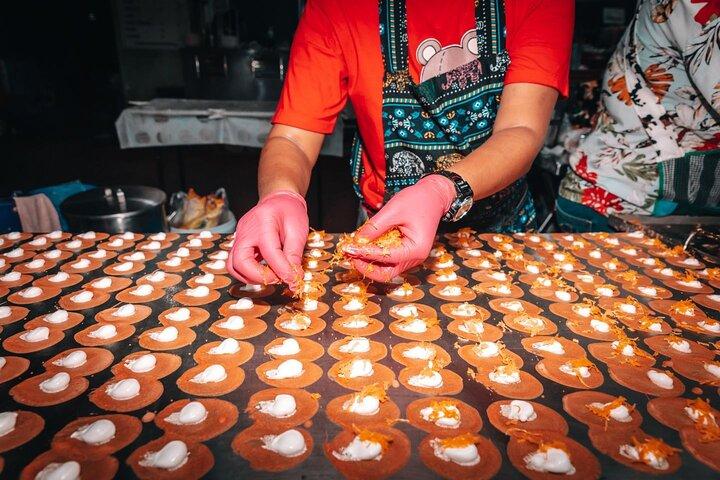
Street food in Chinatown Must do· Evenings
Yaowarat Road's neon-lit evenings are the easiest place to try Bangkok street food, and Wat Traimit's Golden Buddha (40 baht) sits at the Chinatown end if you arrive before 17:00. A guided food tour costs about $68, with 114 to choose from — useful if you want to know what you are eating and which stalls are safe bets.
114 Bangkok food tours tours on Excurgo · from $21, typical $68 per person · rated 4.9 across 18,095 reviews
A longtail boat through the Thonburi canals Worth it· 2–3 hours
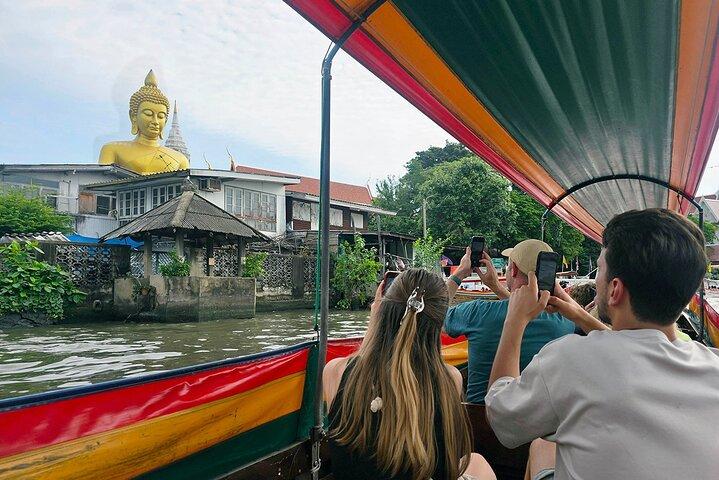
The khlongs (canals) on the Thonburi side of the river show a quieter side of the city than the main roads. Most trips use a private longtail boat, and canal tours typically cost $80.
73 Canal tours by longtail boat tours on Excurgo · from $15, typical $80 per person · rated 4.8 across 11,638 reviews
A Thai cooking class Worth it· Half a day
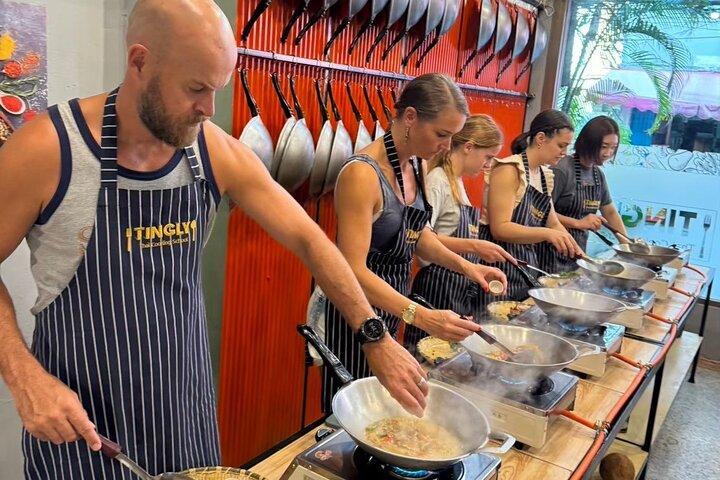
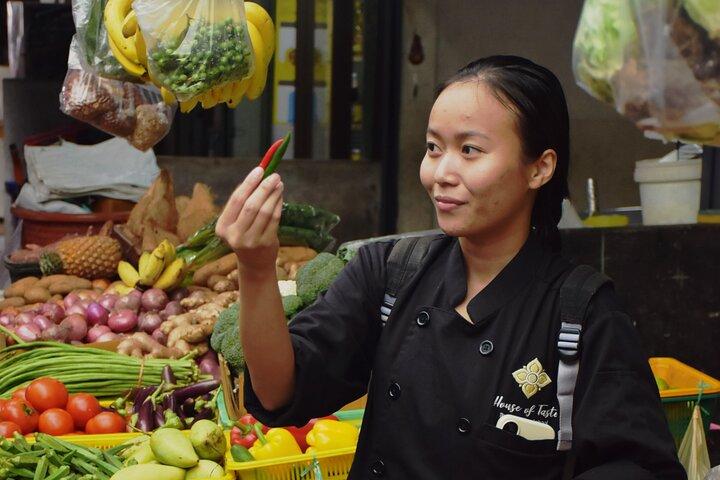
Many classes start with a market visit, and they are one of the better-value things to book in the city at a typical $48. Morning classes leave your afternoon free for sightseeing.
57 Cooking classes tours on Excurgo · from $21, typical $48 per person · rated 4.9 across 6,315 reviews
The Golden Mount at Wat Saket Worth it· Late afternoon
A climb to the golden chedi gives the best free-standing view over the old town. Most recent guides give a 100 baht fee and hours of about 07:00 to 19:00, though older listings say 50 baht, so carry small notes.
Jim Thompson House Worth it· 1–1.5 hours, 10:00–17:00
The teak houses of the American silk trader are seen only on guided visits, in Thai, English, French, Chinese or Japanese. Adults pay 250 baht, 10- to 21-year-olds 150 baht with ID. Online tickets went on sale on 8 September 2026; walk-in tours still run if online slots are full.
Chatuchak weekend market Worth it· Saturday or Sunday morning
The full market only opens on Saturday and Sunday, from 09:00 to 18:00. On Wednesday and Thursday only the plant section is open, and Friday evening is for wholesale buyers, so a weekday visit is a wasted trip.
A Chao Phraya dinner cruise Worth it· Evening
A dinner cruise passes the floodlit temples and riverside towers after dark. Most cost around $47; the cheapest start at $23, while luxury boats reach $136.
Muay Thai at Rajadamnern Stadium or a beginners' class Worth it· Evening fights
Watching a card of Thai boxing or taking a one-to-one lesson is a common evening plan. Tickets and classes on Excurgo typically cost $46.
A bike tour of Bang Krachao or the backstreets Worth it· Morning, before the heat
Guided bike rides use quiet lanes and the green Bang Krachao area, which is far easier to navigate with a guide than alone. Tours cost about $59.
Worth skipping
- Any "free" or very cheap tuk-tuk tour offered by a stranger — it is the classic route to the gem-shop scam.
- Chatuchak on a weekday — only the plant section or wholesale stalls are open.
- Damnoen Saduak as a stand-alone trip — about 100 km away and widely criticised as overpriced; combine it with Maeklong or skip it.
- Scooter rental — often unregistered, risky in traffic, and your insurance may not cover you without the right licence.
What are the best day trips from Bangkok?
Ayutthaya is the one day trip to choose if you only take one
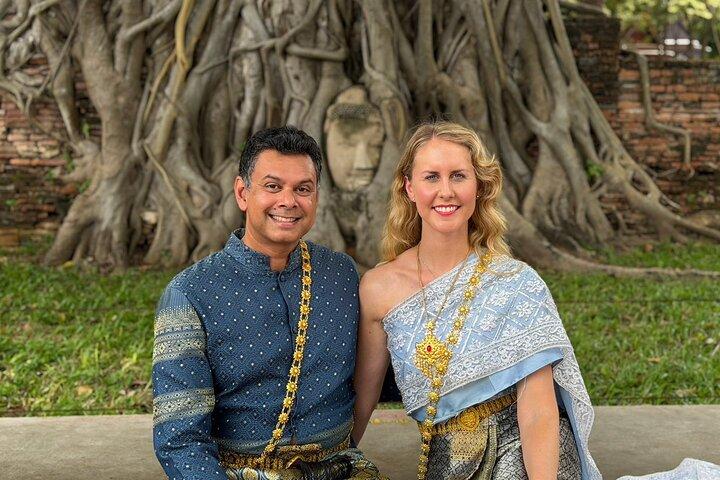
Founded in 1351 and destroyed by the Burmese army in 1767, Ayutthaya was the capital for four centuries, and part of its historical park has been a UNESCO World Heritage Site since 1991. Wat Mahathat holds the famous Buddha head wrapped in tree roots. Foreigners pay 80 baht per site or 300 baht for a combined ticket to seven sites, though some sources still quote 50 baht.
It is easy to do independently. Fast trains leave from Krung Thep Aphiwat and take roughly 45 minutes to 1 hour 20 minutes; third-class fan seats cost from about 20 baht. A guided day trip with transport costs about $100.
185 Ayutthaya day trips tours on Excurgo · from $5, typical $100 per person · rated 4.8 across 11,313 reviews
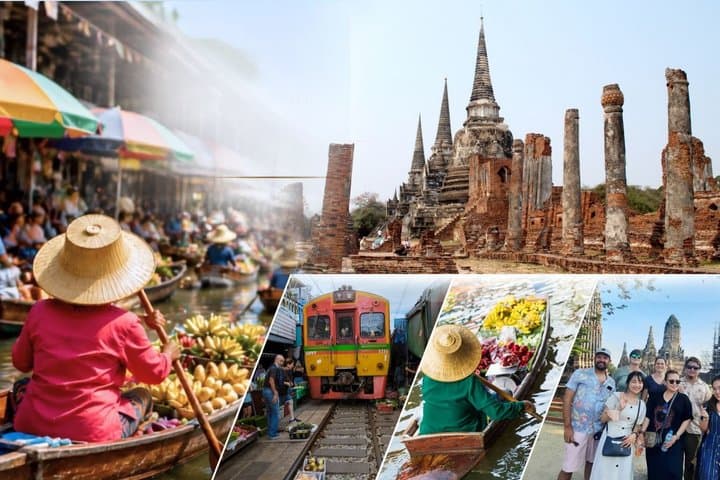
Maeklong Railway Market, at the Samut Songkhram end of the Maeklong Railway, is where stalls fold back as the train passes; trains arrive roughly at 08:30, 11:10, 14:30 and 17:40, but not to the minute. Damnoen Saduak floating market, about 100 km south-west of Bangkok in Ratchaburi, is busiest from about 07:00 to 09:00 and is often criticised as a tourist trap. Many tours pair the two for about $112.
Kanchanaburi, about 120 km west, is the place to understand the Burma or Death Railway: over 90,000 Asian labourers and about 12,000 Allied prisoners died building its 415 km. Its bridge, the war cemetery and the Thailand-Burma Railway Centre are in town, and about 130 km of line still runs to Nam Tok. Erawan National Park's waterfalls charge foreigners 300 baht.
| Day trip | Distance | Getting there | Entry fees | Typical tour |
|---|---|---|---|---|
| Ayutthaya | About 70–85 km north | Train from Krung Thep Aphiwat, 45 min–1 h 20 | 80 baht a site or 300 baht for seven | $100 |
| Maeklong & Damnoen Saduak | About 100 km south-west | Tour or car; trains at the market about 4 times a day | — | $112 |
| Kanchanaburi & River Kwai | About 120 km west | Tour or car; long day | Erawan National Park 300 baht | $152 |
| Khao Yai National Park | About 175–200 km north-east | 2.5–3 hours by car | About 400 baht (sources differ) | $102 |
Khao Yai is for wildlife, not a quick escape
Thailand's first national park, created in 1962 and part of a UNESCO-listed forest complex since 2005, covers about 2,166 km² of forest and grassland with elephants, gibbons and sambar deer. It sits 2.5 to 3 hours away by car, so it works far better as an overnight than a day trip. Entry for foreign adults is most often given as 400 baht.
Verdict: Choose Ayutthaya for history, Kanchanaburi for the Second World War story, and Maeklong for one memorable photo. Leave Khao Yai for a separate overnight.
How many days do you need in Bangkok?
Three full days covers the essentials without rushing in the heat. With the visa-free stay now 30 days for eligible nationalities, Bangkok is usually one stop on a longer Thailand trip rather than a long base.
2 days
Day 1: Grand Palace, Wat Pho, Wat Arun. Day 2: a canal trip in the morning, Golden Mount, Chinatown food tour in the evening.
Tickets ≈ 1,100 baht · tours ≈ $68
3 days
Add a morning cooking class and Jim Thompson House, or Chatuchak if one day falls on a weekend.
Tickets ≈ 1,350 baht · tours ≈ $48
5 days
Add Ayutthaya by train and a long day to Kanchanaburi, or the Maeklong train market on a half day.
Tickets ≈ 1,950 baht · tours ≈ $100
How much do Bangkok tours cost?
Entrance fees are low, so tours are where most of a Bangkok sightseeing budget goes. The table shows typical prices across all matching tours on Excurgo, updated from the live catalogue.
| Activity | Tours | From | Typical | Top end |
|---|---|---|---|---|
| Grand Palace & temple tours | 108 | $13 | $112 | $166 |
| Wat Pho & Wat Arun tours | 58 | $13 | $89 | $130 |
| Longtail canal tours | 73 | $15 | $80 | $151 |
| Street food tours | 114 | $21 | $68 | $112 |
| Cooking classes | 57 | $21 | $48 | $150 |
| Bike tours | 62 | $20 | $59 | $150 |
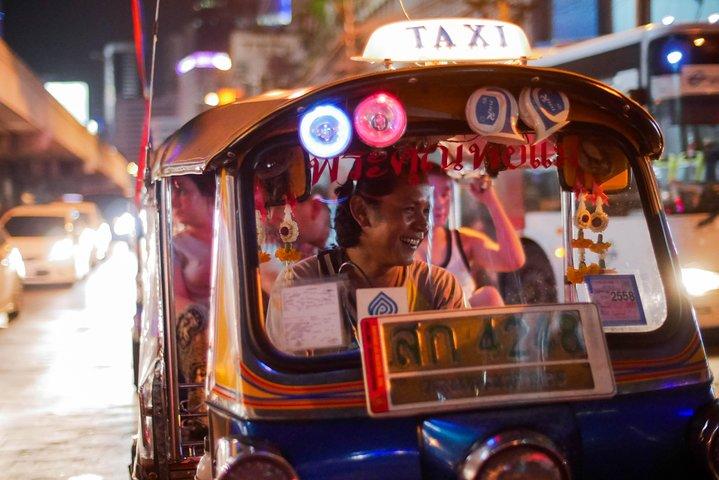
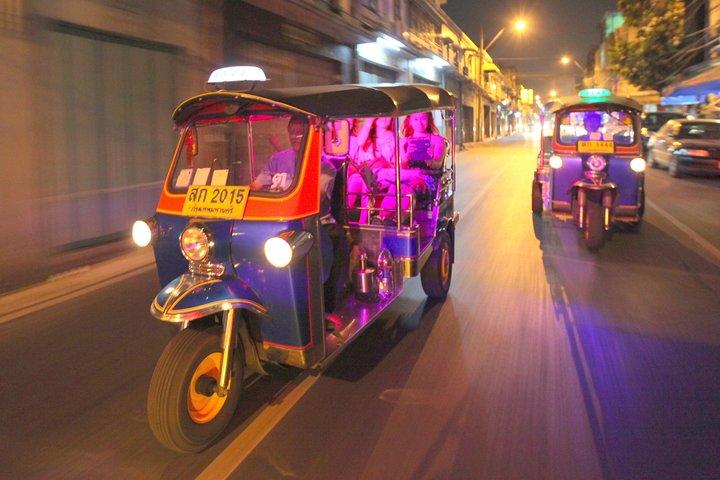
| Tuk-tuk tours | 101 | $21 | $76 | $112 |
| Dinner cruises | 87 | $23 | $47 | $136 |
| Muay Thai tickets & classes | 23 | $21 | $46 | $127 |
| Floating & railway market trips | 144 | $21 | $112 | $182 |
| Ayutthaya day trips | 185 | $5 | $100 | $197 |
| Kanchanaburi & River Kwai | 88 | $48 | $152 | $228 |
| Khao Yai day trips | 18 | $49 | $102 | $233 |
89% of Bangkok tours on Excurgo offer free cancellation — useful in the rainy season.
Verdict: Pay for a guide at the Grand Palace and for a food tour; do the other temples, the boats and Ayutthaya on your own if you are comfortable with trains.
Where should you stay in Bangkok?
Stay near a BTS or MRT station unless the old town is all you came for
Bangkok traffic makes the transit map more important than the street map. A hotel within a short walk of the BTS skytrain or the MRT metro puts the airport rail link, shopping districts and evening food within easy reach, and a ride costs 17 to 45 baht. Phaya Thai is especially handy, as the Airport Rail Link ends there.
- Riverside and the old town — closest to the Grand Palace, Wat Pho and the boats, but further from the skytrain.
- Chinatown — the street-food capital, on the MRT, with Wat Traimit on the doorstep.
- Siam and Sukhumvit — on the BTS, for shopping, restaurants and easy airport trips; furthest from the temples.
- Silom and Sathorn — on the BTS, close to Lumphini Park and the river piers.
Verdict: First-timers on a short stay: pick a riverside hotel if temples are the priority, Siam or lower Sukhumvit near the BTS if you want food, shopping and quick airport runs.
What rules, safety risks and money issues should you know?
Entry: 30 days visa-free and an online arrival card
Since 15 September 2026 nationals of 60 countries and territories can stay up to 30 days visa-free for tourism, down from 60 days; anyone admitted before that date keeps the stay they were given. Visa-exempt visitors entering by land are limited to two entries per calendar year. Every foreign visitor must complete the Thailand Digital Arrival Card online within 3 days before arrival; the official site, tdac.immigration.go.th, is free, while copycat sites charge.
UK advice also asks for a passport valid for six months from arrival with one blank page; officers may ask to see onward travel and 10,000 baht per person or 20,000 baht per family. The long-planned 300 baht tourist entry fee was still not being collected in mid-2026.
Laws that catch tourists out
| Rule | What it means |
|---|---|
| Vapes and e-cigarettes | Illegal, no exception for tourists |
| Smoking in public places | Fines up to 5,000 baht |
| Cannabis | Medical use only, with a Thai prescription |
| Alcohol sales | Restricted from midnight to 11:00 outside licensed hotels and venues |
| Criticising the monarchy | A crime with long prison sentences |
| Drones | Register with the NBTC within 30 days; 100,000 baht fine otherwise |
| Passport | Carry a copy; the original may be demanded within 24 hours |
Since 28 August 2026 foreigners can also be deported without a criminal conviction if their behaviour is judged against public order or morals — a reason to take the rules above seriously.
Safety: low overall risk, with a few specific traps
The US State Department rates Thailand at Level 1, its lowest, with extra caution only near the Cambodian border. The UK warns about drink spiking in tourist areas, deaths from methanol-contaminated drinks, motorcycle bag snatchers, and care in open vehicles such as tuk-tuks. Do not leave your passport as a deposit for a scooter or jet ski.
Money: each ATM withdrawal costs 250 baht or more
Thai ATMs charge foreign cards a flat fee every time: long quoted at 220 baht, now 250 baht for Visa and 350 baht for Mastercard at Krungsri since March 2026, and 150 baht at AEON machines. Withdraw larger sums less often, use machines inside banks to avoid skimming, and keep cash for temple gates, boats and street food.
What mistakes do Bangkok visitors regret?
- Arriving at the Grand Palace after 15:30 — ticket sales stop then, even though the grounds stay open until 16:30.
- Wearing shorts on temple day — Wat Pho refuses shorts, and the palace dress code can tighten on ceremony days.
- Believing the palace is closed — it is the opening line of the gem scam.
- Bringing a vape — all vapes are illegal in Thailand, tourists included.
- Counting on 60 days visa-free — the limit has been 30 days since 15 September 2026.
- Filling in the arrival card on a paid site or too early — the official TDAC is free and opens 3 days before arrival.
- Going to Chatuchak on a weekday — the full market opens only on Saturday and Sunday.
- Withdrawing small amounts again and again — every foreign-card ATM withdrawal costs 250 baht or more.
- Booking a September trip without a rain plan — it averages about 336 mm of rain.
Bangkok FAQ
How much is the Grand Palace ticket in 2026?
The Grand Palace ticket costs 500 baht and includes Wat Phra Kaew, the Temple of the Emerald Buddha. The palace is open 08:30–16:30, but tickets are sold only until 15:30, and hours are cut on royal ceremony days.
What should I wear to the Grand Palace and Wat Pho?
Cover your shoulders and wear long trousers or a long skirt. Wat Pho says trousers are fine but shorts are not, and shoes come off in every temple building. On ceremony days the palace has asked men not to wear jeans and women to wear skirts.
How long can I stay in Thailand without a visa?
Since 15 September 2026, nationals of 60 eligible countries and territories can stay up to 30 days for tourism without a visa, down from 60 days. Check your nationality before travelling, and note that land entries are limited to two a year.
Do I need the Thailand Digital Arrival Card?
Yes. Since 1 May 2025 every foreign national arriving by air, land or sea must complete the TDAC online within the 3 days before arrival. The official site, tdac.immigration.go.th, is free.
What is the best month to visit Bangkok?
December and January are the best: the driest months, with about 12–24 mm of rain and highs around 32–33 °C. November and February are also good. September is the wettest month, with about 336 mm.
How do I get from Suvarnabhumi Airport to central Bangkok?
The Airport Rail Link runs 05:30–24:00 and reaches Phaya Thai in about 27 minutes for 15–45 baht. A taxi from Floor 1 costs the meter plus a 50 baht airport charge and the tolls.
Is Damnoen Saduak floating market worth it?
Only as part of a combined trip. It is about 100 km from Bangkok, busiest early in the morning, and widely criticised as overpriced. Pairing it with the Maeklong Railway Market makes the drive worthwhile.
Can I visit Ayutthaya on my own?
Yes. Fast trains from Krung Thep Aphiwat take roughly 45 minutes to 1 hour 20 minutes, and the main temples charge foreigners 80 baht each or 300 baht for a seven-site ticket.
Can I vape or use cannabis in Bangkok?
No. All vapes and e-cigarettes are illegal, with no exception for tourists. Cannabis is allowed only for medical use with a Thai prescription.
When is Chatuchak market open?
The whole market opens on Saturday and Sunday from 09:00 to 18:00. On Wednesday and Thursday only the plant section is open, and Friday evening is for wholesale buyers.
Sources and how this guide is made
Written by the Excurgo editorial team with AI assistance. We are a tour comparison site, not a tour operator, and we have not personally tested every tour. Every fact was researched in official and specialist sources and checked against them before publication; prices, ratings and tour counts come from our live catalogue of 1,440 Bangkok tours. Ratings and review counts are collected by Viator and Tripadvisor. Tours are picked by rating weighted by number of reviews (at least 20); we earn a commission from Viator when you book, and it does not affect the order.
- Bureau of the Royal Household (Royal Grand Palace) — hours and ticket price (Nov 2026)
- Wat Pho — hours, admission, dress rules, massage prices (Nov 2026)
- Jim Thompson House — hours, fees, guided visits (Nov 2026)
- Chatuchak Market — opening days and hours (Nov 2026)
- Airports of Thailand, Suvarnabhumi — public taxi rules (Nov 2026)
- UK FCDO — Thailand entry requirements, 30-day stay, TDAC (Nov 2026)
- UK FCDO — Thailand safety, laws and scams (Nov 2026)
- US Department of State — Thailand travel advisory (Aug 2026)
- National Statistical Office of Thailand — official seasons (2024)
- Chao Phraya Express Boat — river boat fares (Nov 2026)
- NOAA 1991–2020 normals via Wikipedia — Bangkok climate (Nov 2026)
- The Nation Thailand — BTS distance fares from 1 November 2025 (Nov 2025)
- TTG Asia — visa-free stay cut to 30 days (Sep 2026)
- Ayutthaya Historical Research — temple fees for foreigners (2026)
- Wikipedia — Burma Railway history and figures (Nov 2026)
Photos come from Wikimedia Commons under free licences (CC BY, CC BY-SA, CC0 or public domain); the author and licence are shown under each one. They show the places described, not the exact tours listed.
Changelog. 16 November 2026: guide published.
Browse every tour: Bangkok