Asia · 2 cities
Things to Do in Georgia
Tbilisi and Kutaisi in one place: the wine tradition that predates everyone else’s, the mountain road that makes the country’s best day trip, and how long you can stay without a visa.
1,822 tours listed by Viator 2 cities we cover Free cancellation





Practical info
Know before you book
The things that change a decision — not a retelling of the guidebook.
The wine here is eight thousand years old
Georgia has the oldest continuous winemaking tradition known, fermented in buried clay qvevri — a method on the UNESCO intangible heritage list. Kakheti, an hour and a half east of Tbilisi, is where the wineries are and the standard full-day trip goes.
Kazbegi is the day trip
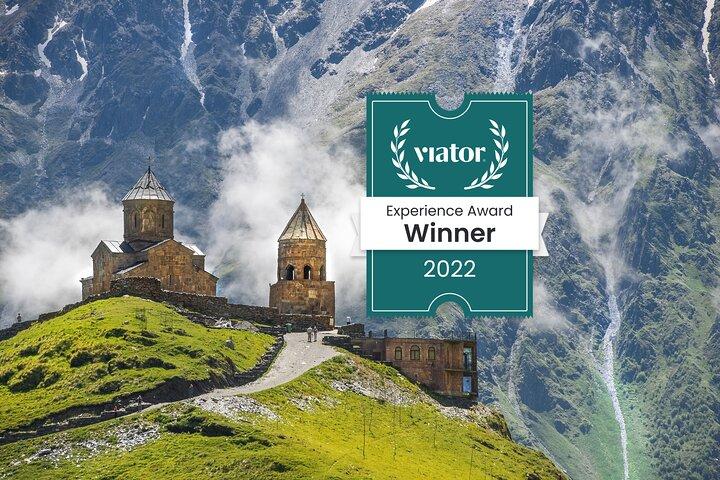
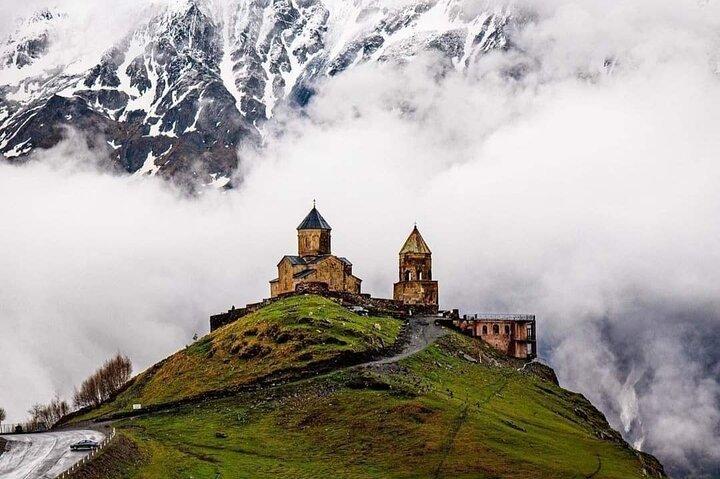
Three hours north of Tbilisi up the Georgian Military Highway to Stepantsminda, with the Gergeti Trinity church on a ridge beneath a 5,000-metre peak. It is the country’s signature image and a long but entirely doable day.
The high mountain regions are summer-only
Tusheti is reached by one of the most dangerous roads in the world and is open roughly June to September. Parts of Svaneti are accessible longer but the passes still close. Anything above the main valleys needs a summer date.
Visa-free for a full year, and very cheap
Citizens of around a hundred countries can stay for 365 days without a visa, which is unusually generous and is why Tbilisi has a large long-stay community. The lari goes a long way: food, guiding and accommodation are all inexpensive.
The supra is a formal institution
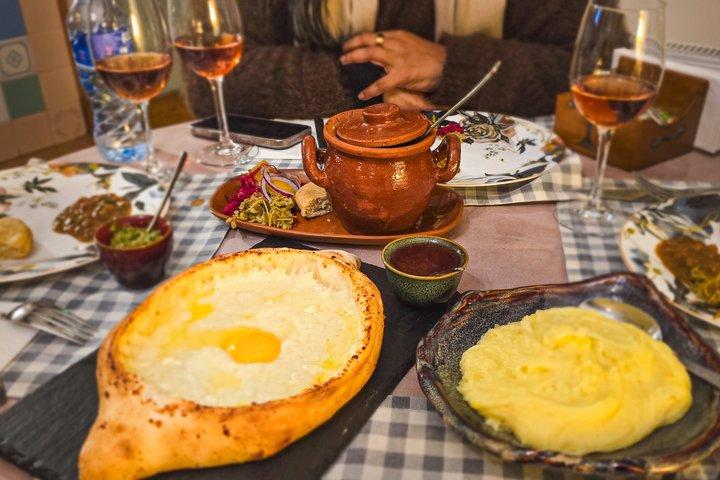
A Georgian feast is run by a tamada, a toastmaster, and the toasts are structured, lengthy and not optional. Portions are enormous. If you are invited to one, arrive hungry and pace yourself on the wine — refusing a toast is the awkward move.
The alphabet is unique to the language
Georgian script is unrelated to Latin or Cyrillic and looks like nothing else. Tbilisi transliterates most signage; outside the capital much less of it does. Russian remains widely understood by older generations, English by younger ones.
When to visit
Georgia through the seasons
What is open, how busy it gets, and when to book ahead.
Spring
Apr–May
- Best for
- Green valleys, Tbilisi at its most pleasant, wine country before the heat.
- Crowds
- Booking tip
- The high mountain roads are still closed — stay with Kakheti and Kazbegi.
Summer
Jun–Aug
- Best for
- Svaneti and Tusheti open, hiking in the Caucasus, the Black Sea coast.
- Crowds
- Booking tip
- Tbilisi gets very hot — the mountains are where the summer is worth having.
Autumn
Sep–Oct
- Best for
- The wine harvest in Kakheti, colour in the mountains, warm clear days.
- Crowds
- Booking tip
- September is the best month of the Georgian year, harvest included.
Winter
Nov–Mar
- Best for
- Skiing at Gudauri, sulphur baths in Tbilisi, very low prices.
- Crowds
- Booking tip
- The mountain regions are inaccessible but Gudauri is two hours from the capital.
Frequently asked
Georgia: common questions
How many days do you need in Georgia?
Five days for Tbilisi with day trips to Kakheti and Kazbegi. A week or ten days to add Svaneti or the Black Sea coast, both of which need internal travel and are worth the time if you have it.
What does a tour in Georgia cost?
Georgia is not in our fifty-city price index, so we avoid a median figure. It is among the cheapest destinations in the wider region: a private driver and guide for a full day to Kazbegi costs less than a group coach seat in western Europe.
When is the best time to visit?
May, June and September. September adds the wine harvest in Kakheti. July and August are hot in Tbilisi and the only window for the high mountain regions. Winter is for skiing and the sulphur baths.
Do you need a visa?
Most nationalities do not — citizens of around a hundred countries can stay for a full year visa-free, which is among the most open entry policies anywhere. Check the current list against your own passport before travelling.
Are tours run in English?
In Tbilisi and on the main day-trip routes, yes, and increasingly well. Outside the capital the guiding is thinner in English — for Svaneti or Tusheti, arrange it in Tbilisi rather than on arrival.