Americas · 5 cities
Things to Do in Dominican Republic
Five Dominican destinations in one place: how far the resorts are from the oldest city in the Americas, when the whales are in Samaná, and what the north coast does differently.
5,284 tours listed by Viator 5 cities we cover Free cancellation









Where to go
Cities of Dominican Republic
In the order Viator’s own catalogue puts them — most-booked first, not alphabetical.


Full list
All cities, by region
Grouped by region using Viator’s own map of the country. The first block is the places it files directly under Dominican Republic.


Practical info
Know before you book
The things that change a decision — not a retelling of the guidebook.
Santo Domingo is the oldest European city in the Americas
The Zona Colonial has the first cathedral, the first university and the first paved street in the hemisphere, all from the early 1500s. It is two and a half hours from Punta Cana, which makes a long day trip, and it is the only real history on the island.
Humpback whales come to Samaná from January to March
Several thousand of them breed in the bay and it is one of the most reliable whale sites in the world. The season is tight, boats are regulated and trips sell out — this is a reason to choose the dates rather than fit it in.
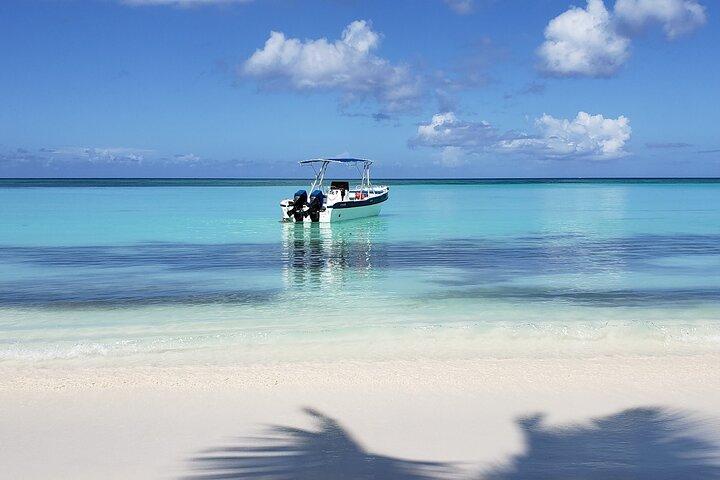
Saona Island is the standard Punta Cana day
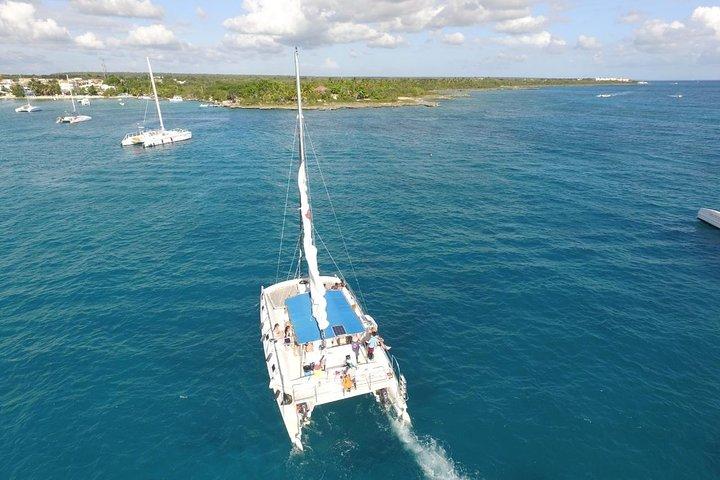
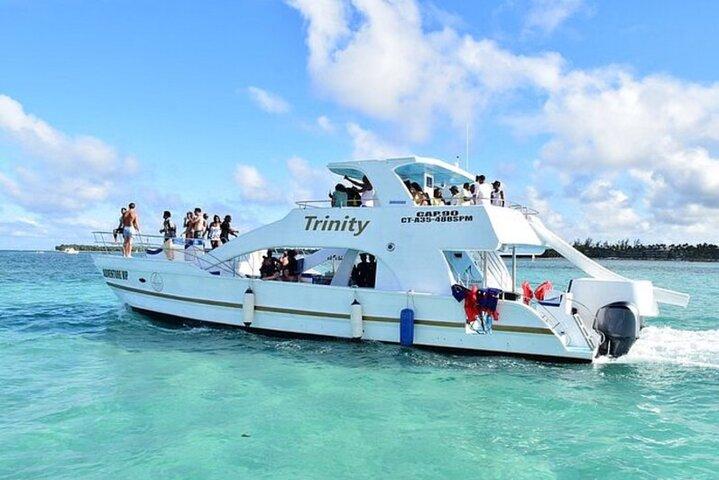
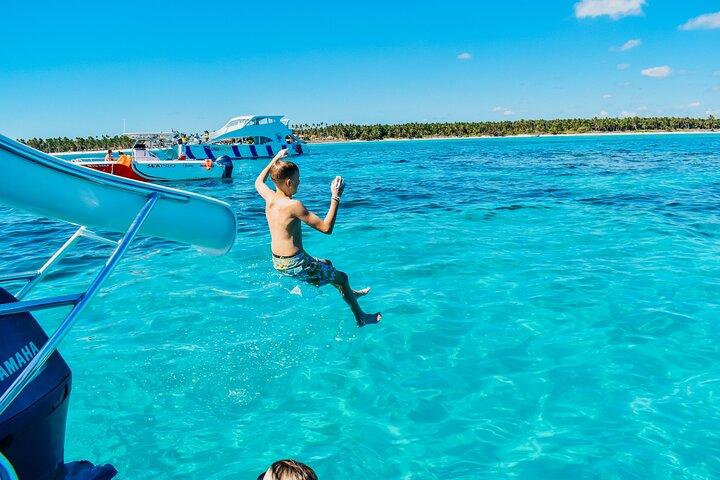
Catamaran out, speedboat back, a natural pool stop and a beach lunch. It is genuinely beautiful and it is also the busiest excursion in the country — the early departures see a different island from the late ones.
The north coast is windier, and that is the point
Cabarete is one of the world’s kitesurfing capitals because the trade winds blow across it reliably every afternoon. The same wind makes the north a poorer choice for flat calm swimming than Punta Cana in the east.
The resort areas are far apart
Punta Cana in the east, Puerto Plata and Cabarete on the north coast, La Romana in the south — each has its own airport and four to five hours of road between them. Pick one region per trip.
All-inclusive shapes the excursion market
Most visitors are on a full-board package, so tours are sold as resort excursions in US dollars rather than as an independent market. Booking the same trip directly with a local operator is usually cheaper and the group is smaller.
When to visit
Dominican Republic through the seasons
What is open, how busy it gets, and when to book ahead.
Dry season
Dec–Apr
- Best for
- The best weather, calm eastern sea, and the Samaná whale season from January.
- Crowds
- Booking tip
- Christmas to March is the price peak — whale trips in February need booking ahead.
Shoulder
May–Jun
- Best for
- Warm water, short showers, rates well below the winter.
- Crowds
- Booking tip
- The value window before the storm season proper begins.
Hurricane season
Jul–Oct
- Best for
- The lowest prices of the year and very quiet beaches.
- Crowds
- Booking tip
- August to October is the statistical peak — the flexible rate is worth the difference.
Late autumn
Nov
- Best for
- Storm risk falling, rain easing, prices before the December jump.
- Crowds
- Booking tip
- A good quiet month, particularly on the east coast.
Frequently asked
Dominican Republic: common questions
How many days do you need in the Dominican Republic?
A week at one resort area with two or three excursions is the usual trip. If you want Santo Domingo and Samaná as well as a beach, allow ten days and expect to change base rather than drive back and forth.
What does a tour here cost?
The country is not in our fifty-city price index, so we avoid quoting a median. Excursions are priced in US dollars and sold largely through resorts; the same Saona or Santo Domingo trip booked with a local operator is generally cheaper and less crowded.
When can you see the whales in Samaná?
Mid-January to mid-March, with February the most reliable month. Outside that window the humpbacks are in the north Atlantic and there is nothing to see. Trips run from Samaná town and are strictly regulated in number.
Punta Cana or Puerto Plata?
Punta Cana for calm Caribbean beaches, the largest choice of resorts and the easiest excursions. Puerto Plata and Cabarete for wind sports, a more local feel, mountains behind the coast and lower prices. They are five hours apart.
When is the best time to visit?
December to April for the most reliable weather, with February adding the whales. May, June and November are the value months. July to October is cheapest and carries the storm risk.