Americas · 7 cities
Things to Do in Colombia
Seven Colombian destinations in one place: why altitude matters more than season, which natural wonder exists only half the year, and how the coffee region fits into a trip.
4,696 tours listed by Viator 7 cities we cover Free cancellation













Where to go
Cities of Colombia
In the order Viator’s own catalogue puts them — most-booked first, not alphabetical.


Practical info
Know before you book
The things that change a decision — not a retelling of the guidebook.
Altitude sets the climate, not the calendar
Bogotá at 2,600 metres is cool and grey all year. Medellín at 1,500 is the “city of eternal spring”. Cartagena at sea level is hot and humid every day of the year. Pack for the cities you are visiting, not for the month.
Caño Cristales exists for half the year
The river that turns red, yellow and green does it from about June to November, when the water level is right for the aquatic plant that causes it. It is reached by flight plus boat and has to be booked as a package — there is no turning up.
The Rosario Islands are the Cartagena day trip
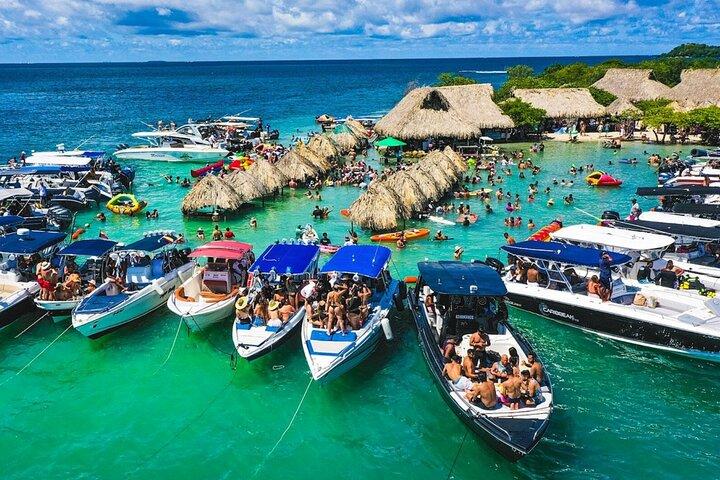
An hour or so by boat, and the standard escape from the old city’s heat. Playa Blanca on Barú is the busiest and most hawked beach; the smaller island day-passes are calmer and cost more.
The coffee region is its own base
Salento and the Cocora valley, with its wax palms, sit between Medellín and Bogotá and need a night or two rather than a day. Farm tours there are genuinely good and among the best-value guided activities in the country.
Safety has improved and is still uneven
The tourist cities are ordinary Latin American cities now. The local advice is “no dar papaya” — do not give an opportunity: no visible phone at night, registered taxis or apps after dark, and care in specific neighbourhoods your guide will name.
Two festivals worth planning around
Medellín’s Feria de las Flores in August fills the city for a week, and Barranquilla’s carnival in February or March is second in size only to Rio’s. Both need accommodation booked well in advance.
When to visit
Colombia through the seasons
What is open, how busy it gets, and when to book ahead.
Dry season
Dec–Mar
- Best for
- The Caribbean coast, Bogotá at its brightest, hiking in the coffee region.
- Crowds
- Booking tip
- December and January are the domestic holiday peak — Cartagena books out.
Wet
Apr–May
- Best for
- Green everything, low prices, city sightseeing between showers.
- Crowds
- Booking tip
- Rain is usually an afternoon event rather than an all-day one.
Mid-year
Jun–Aug
- Best for
- The second dry window, Caño Cristales opening, the Medellín flower fair.
- Crowds
- Booking tip
- July and August are reliable across most of the country — a good all-round choice.
Second wet
Sep–Nov
- Best for
- Caño Cristales at its most colourful, few visitors, the lowest prices.
- Crowds
- Booking tip
- The quietest travel months, and the coast stays warm throughout.
Frequently asked
Colombia: common questions
How many days do you need in Colombia?
Ten days for the usual triangle: Bogotá, Medellín and Cartagena, with internal flights between them. Two weeks to add the coffee region or Santa Marta and Tayrona, which is where most people wish they had spent longer.
What does a tour in Colombia cost?
Colombia is not in our fifty-city price index, so we avoid quoting a median. It is inexpensive by South American standards — coffee farm tours, city walks and food tours all cost well below the regional average, while island day trips from Cartagena are the priciest common product.
When is the best time to visit?
December to March and July to August are the two drier windows. Because altitude governs the climate, the difference between months is smaller here than almost anywhere else — the wetter months mostly mean an afternoon downpour and lower prices.
Is Colombia safe for visitors?
The main tourist cities are far safer than their reputation and receive millions of visitors a year. The sensible precautions are the ordinary urban ones: apps rather than street taxis at night, nothing valuable on display, and asking locally which neighbourhoods to avoid after dark.
Bogotá, Medellín or Cartagena?
Cartagena for the walled colonial city and the Caribbean, and the one most visitors love. Medellín for the transformation story, the cable cars and the climate. Bogotá for the museums — the Gold Museum in particular — and the best food. Most trips include all three.