Visit the Sassi of Matera with Brunella-exciting Sassi Tour


Description
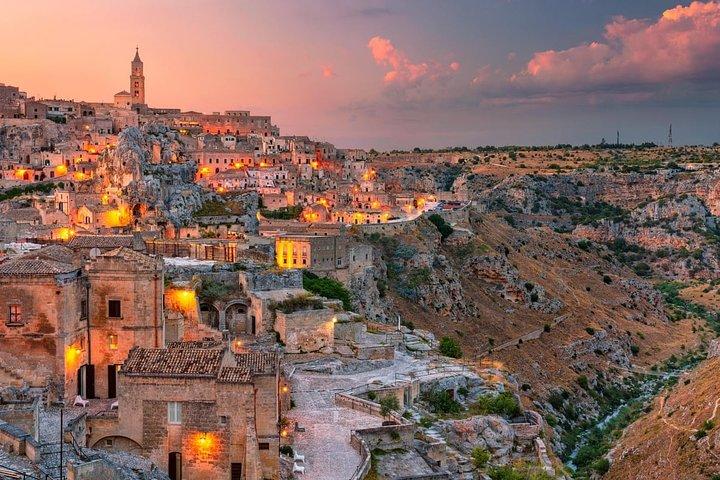
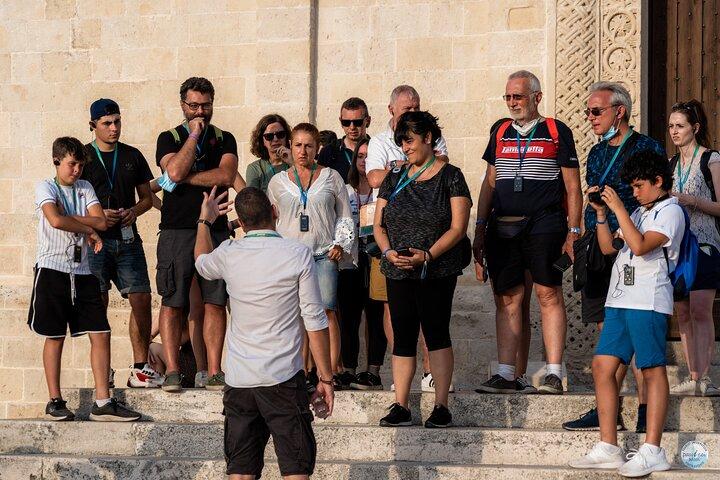
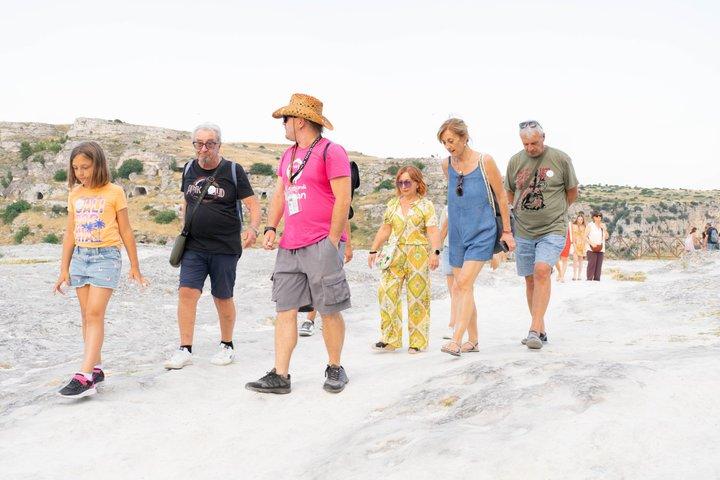
This is an exciting tour. Through the stories of his family, Brunella manages to make you enter the past and make alive the History of the Stones, a story of sacrifice especially of redemption, just think that DA "Shame of Italy" in 2014 was proclaimed "European Capital of Culture 2019". They say about me: Hi I'm Clelia DA Bergamo. This visit was recommended DA a friend but I confirm.... DA do ....Our Guide Brunella managed to make me understand what I was seeing ... the reality of a life in those places that today are beautiful and unique to us but there is a whole why is a percome tell DA. Brunella was a fantastic Guide, who was able to give a familiar and personal touch to the history of the place and the people. Hearing stories of how his father and family had lived provided valuable context for the places we visited.
Tour Options
Itinerary
From the Murgia departure by Vespa to enter the Sasso Barisano, overlooking the famous E. COLOMBO belvedere
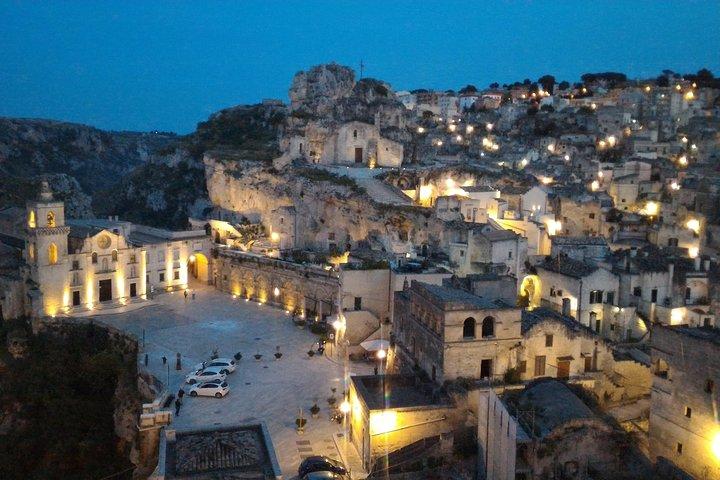
Continue on your Vespa until you reach the beautiful Piazza di San Pietro Caveoso located inside the Sasso Caveoso, a historic and ancient part of the city in front of the caves of prehistory
The Sasso Caveoso, which looks south towards Montescaglioso, recalls the shape of a theatre cavea, with the houses arranged in steps. Inside there are various neighborhoods, districts and districts
The Church of San Francesco d'Assisi is a Baroque Catholic place of worship in Matera, located in the central Piazza San Francesco.
The Cathedral of Matera, which has the official name of the Cathedral of Our Lady of Bruna and St. Eustace, is the main place of Catholic worship in Matera, the mother church of the Archdiocese of Matera-Irsina. The cathedral was built in Apulian Romanesque style in the 13th century on the highest spur of the Civita that divides the two Sassi.
It is a beautiful frescoed Rock Church. The church of Madonna delle Grazie is located in the Via del Sasso Caveoso in Matera. The church was formerly named after St. Eustace. The entrance includes a terracotta bas-relief representing the Madonna and Child. The interior of the rock church has an imposing Baroque altar placed at the original iconostasis. Behind the altar we find a rock wall with several openings that lead to the sacristy; once there was the chancel. In the ceiling there are two carved domes and visible apse arches. On the right wall there is a Crucifixion, now ruined, under which there is a faded fresco. The figure of Christ is accompanied DA two angels and at the foot of it are: the Mother and John. On another wall is represented St. Francis of Assisi receiving the stigmata. The corresponding wall, however, shows a painting of Saint Lucia.
The Casa Grotta is the typical house of the Sassi built partially by digging into the rock and partially built. In the Casa Grotta del Casalnuovo you can experience a real house of the Sassi through its original furniture and the tools of daily use that the family that lived there used in everyday life until 1958. It is a real ethnographic collection, a small museum with objects of common use and work from the times when the Sassi were inhabited, before the depopulation that occurred in the fifties. Inside, the original rooms and furnishings of the house are reconstructed before the ancient districts were depopulated in the late 1950s.
The current Piazza del Sedile was called Piazza Maggiore until the 14th century, and there was space especially for commercial activity, with the headquarters of the Point of Sale. In 1550, according to some sources, the Saracen Bishop decided to build a palace intended to host the meetings of the city government. Around the Palazzo del Sedile a new form was given to the square itself, building (or modifying) some buildings, with the intention of hosting some functions of government of the city itself. Among others, the prisons were located in the Square, the seat of the Governor and the garrison. The Palazzo del Sedile and the Piazza underwent heavy alterations in 1779 that substantially gave the current shape to the square and the buildings that surround it. After the Unification of Italy and until 1944 the Palazzo del Sedile housed the seat of the Municipality. Later the palace was destined to a secondary seat of the Conservatory of Bari, then destined to become the Duni Conservatory of Matera.
Highlights
What's included
Traveller Ratings
Important Information
- Service animals allowed
- Public transportation options are available nearby
- Suitable for all physical fitness levels
Reviews(64)
It was a wonderful experience with Brunella; you can see how she shares the passion and history of this wonderful city that belongs to her. Highly recommended!!
Professional guide, and very good at explaining. Personal history too, a very beautiful experience.
Interesting and engaging, Brunella guided us with her friendliness and her compelling way of telling stories.
Brunella, the guide with heart
Our guide was excellent: competent, passionate, and made us experience the Sassi in an engaging way that we would never have appreciated on our own. She told stories, anecdotes, and took us to the most beautiful and hidden spots. 2 hours that flew by. Matera is magical, but with a guide like this, it is 10 times more so. Thank you, Brunella! Highly recommended!
We really enjoyed the tour of Matera city. Our guide, Brunella, was excellent. Spoke very good English and gave us the wonderful history of the town, including her own personal link which was an amazing insight. Was mindful of everyone in the group and made sure everyone was comfortable. Pick up was easy and clear too. Would definitely recommend!
Brunella told the story of Matera in a way that brought tears to my eyes. I am so glad that we took the tour - it was a fascinating, incredible and emotional story of what we discovered is the third oldest city in the world!!
Brunella is great, explains very well and has a lot of information because her family lived in sassi, and she lived until the 4 years until they were “expelled” so she knows the depth of the whole story and explains very well!! I would like to walk around there with her and learn from this interesting story!!!
Pisanie I usually prefer exploring places on my own, but I had a feeling that Matera hides many stories and details that are easy to miss, so I decided to join a guided tour. It turned out to be a great decision. Brunella was friendly, knowledgeable, and made the history of the city easy to follow and genuinely interesting. She pointed out many details I would never have noticed on my own and was happy to answer all our questions. I would definitely recommend a tour with Brunella to anyone visiting Matera.
Brunella gave us a personal insight into the lives of people in Matera both past and present. And helped us to appreciate the history of the city