Vienna Hidden Gems and Coffee Houses Premium


+10 photos

At a glance
- Duration
- 1 hour
- Price from
- $48 / person
- Location
- Vienna, Austria
- Languages
- DE, EN, IT, FR
- Group
- Private
- Cancellation
- Free cancellation up to 24 hours before
- Confirmation
- Instant
- Ticket
- Mobile or paper ticket accepted
- Operator
- Libra Tours Vienna
- Meeting point
- Directly opposite the ''City Hall''/ also known as the ''Rathaus'
Description
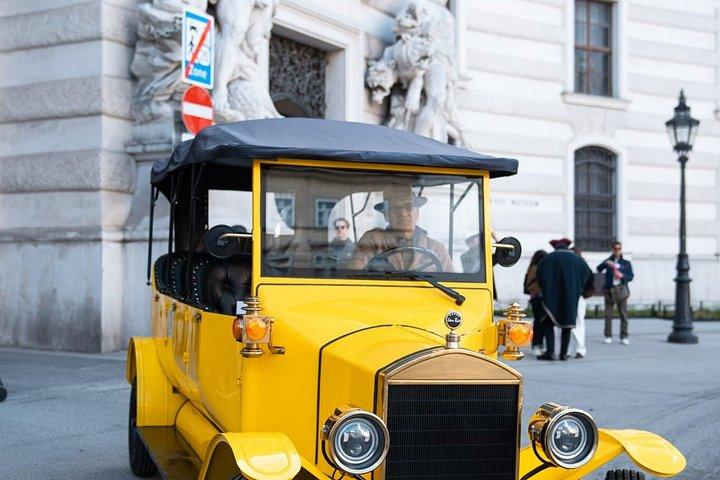
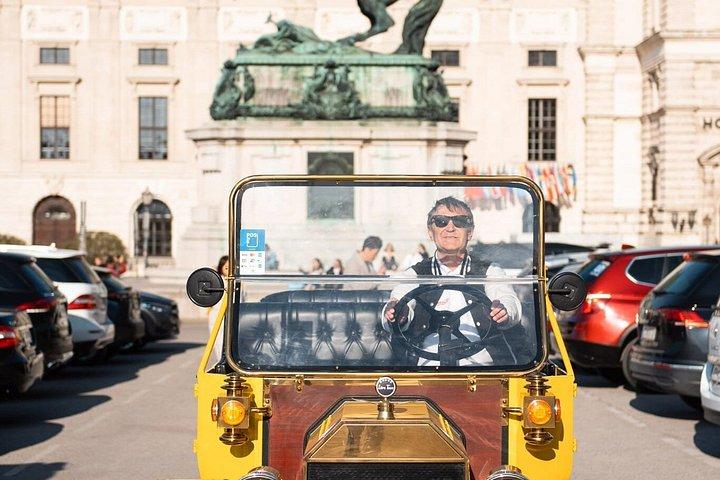
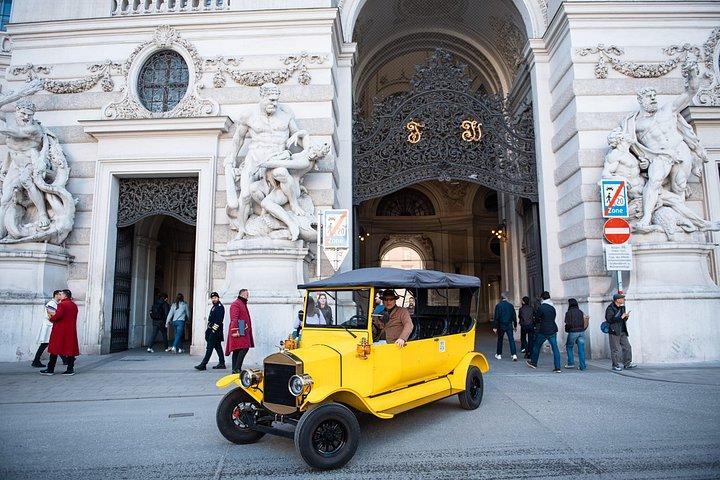
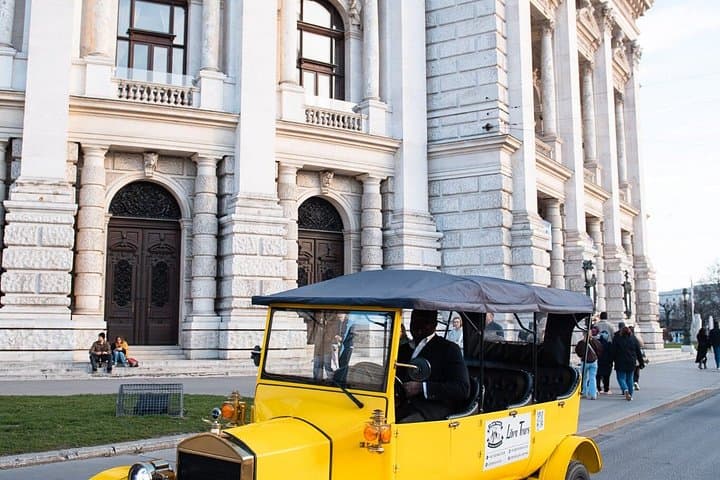
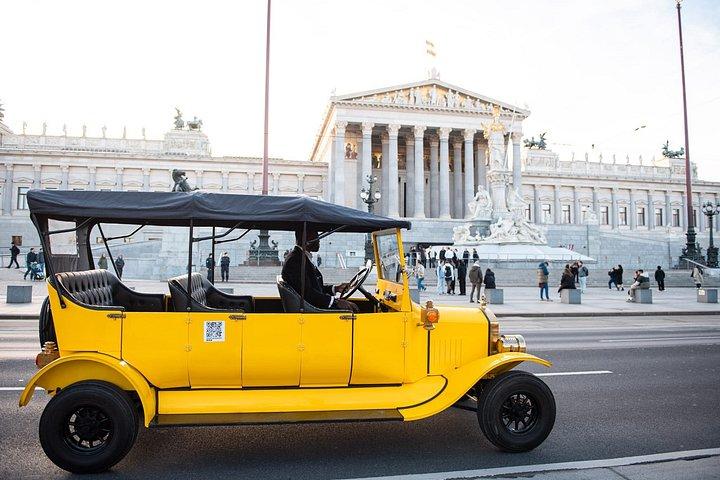
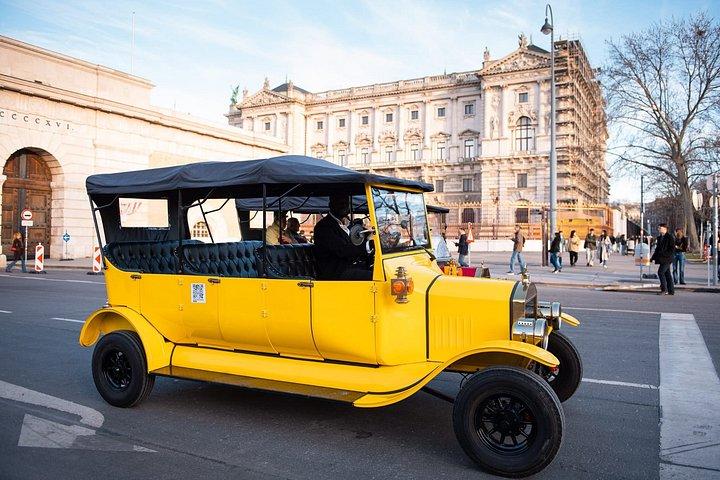
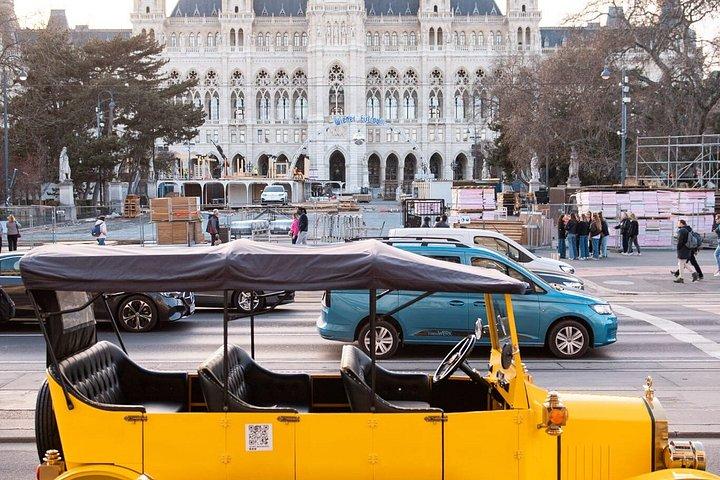
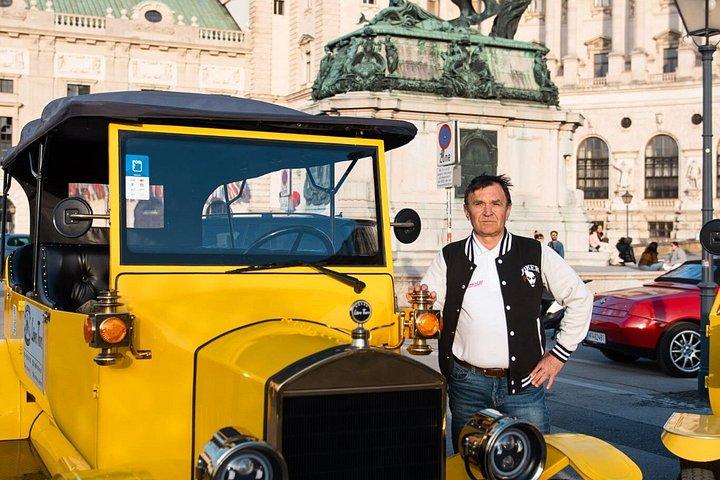
Libra tours Vienna offer a unique and unforgettable way to experience the city's rich history and stunning architecture. Here's what sets Us apart Vintage charm: Travel in beautifully restored classic cars, evoking the elegance and glamour of Vienna's past. Unparalleled views: Enjoy open-air sightseeing, providing unobstructed panoramic views of Vienna's iconic landmarks. Personalized experience: Intimate tours with knowledgeable guides who share fascinating stories and insights into Vienna's history and culture. Comfort and style: Relax in luxurious vintage vehicles, meticulously maintained for your comfort and safety. Sustainable travel: Environmentally friendly tours that minimize their impact on Vienna's delicate ecosystem. Libra tours Vienna offer an unparalleled journey through time, combining the charm of classic cars with the allure of Vienna's captivating history.
Schedule & prices
- Runs
- Every day
- Next available
- Tue, Oct 27
- Adult (ages 19–64)
- $48
- Senior (ages 65+)
- $48
- Youth (ages 13–18)
- $48
- Child (ages 2–12)
- $21
- Infant (ages 0–1)
- Free
From the operator’s live schedule on Viator, checked Oct 26.
Tour Options
Itinerary
The Hofburg
The Hofburg Palace is a former imperial palace in Vienna, Austria, built in the 13th century by Ottokar II of Bohemia. It served as the winter residence of the Habsburg dynasty and is now the official residence and workplace of the president of Austria. The palace is a complex of buildings, including the Imperial Apartments, the Sisi Museum, and the Imperial Treasury.
Volksgarten
The Rose Garden is a beautiful public park in Vienna, Austria, known for its collection of over 300 different varieties of roses. It was created in 1903 and is a popular destination for tourists and locals alike.
National library located in Vienna, Austria. Is one of the oldest and largest libraries in the world. It is home to over 11 million books and manuscripts, including rare and valuable works from antiquity to the present day. The library also houses a number of special collections, such as the Papyrus Museum and the Globe Museum.
The Organization for Security and Co-operation in Europe (OSCE) is the world's largest regional security organization, with 57 participating States from North America, Europe and Asia. The OSCE works to prevent conflict, promote human rights, democracy and the rule of law, and strengthen international cooperation. It was founded in 1975 as the Conference on Security and Co-operation in Europe (CSCE).
This equestrian statue on Heldenplatz commemorates Prince Eugene of Savoy, one of the greatest military commanders of the 18th century. He was often called the “Prince who terrified the Turks” and was famous for his victories. Prince Eugene became so wealthy from his successes that he built the magnificent Belvedere Palace. His grave is in St. Stephen’s Cathedral, underlining his importance to Austria. Curiously, Eugene never spoke fluent German, preferring French, the language of his homeland.
The World Museum Vienna is one of Europe’s most important ethnographic museums. It was founded in 1876 as the Imperial and Royal Ethnographic Museum to showcase the vast collections of the imperial family. The museum houses more than 200,000 ethnographic objects from around the globe, including the famous collection of Archduke Franz Ferdinand, the imperial world traveler. Highlights include the feather headdress of the Aztec ruler Moctezuma. Fun fact: the museum’s name has changed several times throughout history to reflect the evolving role of ethnography.
The Outer Castle Gate, popularly known as the Heroes’ Gate, was built in the 1820s as part of Vienna’s fortifications. It was erected as a memorial to fallen soldiers. Inside the gate lies the Tomb of the Unknown Soldier.
The Archduke Karl - Equestrian Statue is a monument located in Heldenplatz, Vienna, Austria. It is a popular tourist attraction and is known for its beautiful design.
This imposing monument honors the only female ruler of the Habsburg Empire, Maria Theresa. She is remembered as one of Austria’s most significant figures, credited with modernizing the country. She ruled for over 40 years and gave birth to 16 children, several of whom became important European rulers. Her daughter Marie Antoinette became Queen of France. Maria Theresa remains the only female Habsburg ever to ascend the throne.
The Kunsthistorisches Museum Left: ''Museum of Art History'' in Vienna, opened in 1891. Houses the imperial art collection of the Habsburgs. It showcases European art from antiquity to the late 18th century.
The Natural History Museum Vienna Right: ''Naturhistorisches Museum Wien'' was founded in 1807 and opened in its current building in 1889. It houses vast collections of natural history, including dinosaur skeletons, minerals, and animal exhibits, showcasing Earth's history and biodiversity.
MuseumsQuartier Wien
The MuseumQuartier Wien is a restored area of historic and modern buildings containing many of the city's finest museums. It opened to the public in 2001.
Ringstrasse
The Ringstrasse, one of the world’s most beautiful boulevards, was commissioned in 1857 by Emperor Franz Joseph to replace the old city walls. Its construction lasted over 50 years and involved the best architects and builders of the era. Interestingly, the Ringstrasse is only 5.2 km long but features more grand buildings than almost any other street in the world.
The Austrian Parliament Building, completed in 1883, is a grand structure on Vienna's Ringstraße. Designed in a Greek Revival style, it houses the National Council and Federal Council, the two chambers of the Austrian Parliament.
The Burgtheater, Austria's national theatre in Vienna, is a historic landmark renowned for its distinguished actors and classic productions. Established in 1741, it moved to its current location on the Ringstrasse in 1888. A symbol of Viennese culture, it continues to be a leading venue for German-language theatre.
The Vienna City Hall, also known as the Rathaus, is a massive municipal building located in Vienna, Austria. It was built between 1872 and 1883 in a Neo-Gothic style. Here are some more details about the Vienna City Hall: • It is one of the largest municipal buildings in Europe, with a total floor area of over 200,000 square meters. • It is home to the Vienna City Council, as well as the offices of the mayor and other city officials. • It is a popular tourist attraction, and visitors can take tours of the building's interior. • It is also a popular venue for concerts, conferences, and other events.
Monument to Johann Andreas Von Liebenberg
This monument commemorates Andreas Liebermann, Vienna’s mayor during the Second Turkish Siege in 1683. Known for his courage and leadership, he played a decisive role in the city’s defense. Fun fact: Liebermann was the first Viennese mayor to defy the emperor when ordered to surrender the city – his refusal helped save Vienna until King Jan Sobieski’s relief troops arrived.
The University of Vienna, founded in 1365, is one of the oldest and largest universities in Europe. It's a prestigious public research university with a rich history, offering a wide range of academic programs to a diverse student body.
The Votive Church (Votivkirche) in Vienna, Austria, is a neo-Gothic masterpiece completed in 1879. Commissioned after a failed assassination attempt on Emperor Franz Joseph I, it stands as a symbol of thanksgiving and a prominent landmark, known for its intricate details and twin spires.
This historic street is named after the Schottenstift, a monastery founded by Irish monks in the Middle Ages. The “Scots” (as the Irish monks were called) arrived in Vienna in the 12th century.
Schottenkirche
The Schottenkirche is the church of the Schottenstift, founded in the 12th century by Irish Benedictine monks. It is one of Vienna’s most important churches. Fun fact: the monks were so successful that they founded not only the monastery but also one of Vienna’s oldest schools, both of which still exist today.
Freyung Passage
The Freyung is a triangular square in the heart of Vienna, surrounded by elegant palaces. Its name derives from “Freyung,” meaning sanctuary. In the Middle Ages, refugees and criminals sought protection here under the church’s authority. Fun fact: in the 1990s, medieval paving stones were discovered during construction work and integrated into the modern pavement.
Palais Ferstel
Built in the 19th century in Renaissance style, Palais Ferstel is named after its architect, Heinrich Ferstel. It features an impressive arcade and houses the famous Café Central. Fun fact: the building includes one of Vienna’s most beautiful passages, designed in Venetian style, filled with luxury shops and restaurants.
Am Hof
One of Vienna’s oldest and largest squares, Am Hof was a center of trade and public gatherings in the Middle Ages. Originally the site of the Babenberg dynasty’s residence in the 12th century, the square also served as a venue for executions and tournaments.
Kirche am Hof
Church Am Hof, located in Vienna's largest square, is a historic church with a Baroque facade and a Gothic interior. It was built in the 14th century and has served as a military church and the main church for the Croatian community in Vienna.
Palais Collalto
This palace, built in the 18th century, belonged to the influential Collalto family. Fun fact: in 1762, the young Wolfgang Amadeus Mozart, only six years old, gave his very first concert in Vienna here.
Café Central is a historic café in Vienna, Austria, established in 1876. It is known for its elegant interior, Viennese cuisine, and its association with famous historical figures such as Sigmund Freud and Leon Trotsky.
The Vienna Fire Service Museum, established in 1901 and located in the historic Central Fire Station, showcases the evolution of firefighting through a collection of historical equipment, uniforms, and documents.
The Federal Ministry of the Interior, established in 1848, is responsible for Austria's public safety, law enforcement, and various administrative matters. It oversees the police, manages citizenship and elections, and handles emergency services.
The Federal Ministry of Education, Science and Research (BMBWF) is responsible for Austria's education system, from early childhood to higher education, and promotes scientific research and innovation. It supports universities and research institutions, fostering international cooperation in these fields.
The Wiener Minoritenkirche is a Gothic church in Vienna, Austria, built in the 13th century. It is known for its beautiful mosaic of Leonardo da Vinci's Last Supper. The church is also a popular tourist destination and is often included in Vienna city tours.
Bundeskanzleramt Oesterreich
The Federal Chancellery in Vienna, Austria, is the seat of the Austrian Federal Chancellor. The current building, a Baroque masterpiece, was completed in 1719. It has served as the center of Austrian political power since the First Austrian Republic in 1918.
Michaelerplatz, a historic square in Vienna, showcases a blend of architectural styles. The impressive Michaelertor gate (completed in 1893) leads into the Hofburg Palace complex. The square also features the Baroque St. Michael's Church (dating back to the 13th century) and the modernist Looshaus building (built in 1911).
Graben and Kohlmarkt
One of Vienna’s most exclusive shopping streets, its name comes from the coal traders who once sold their goods here. Fun fact: it is home to Demel, the former Imperial and Royal Court confectioner, one of Vienna’s oldest pastry shops.
St. Michael's Church
The late Romanesque elements of St. Michael’s Church, which is located on Michaelerplatz close to ''Damel'' date back to the first half of the 13th century. The choir was probably built between 1327 and 1340, followed by the lower parts of the spire. The church was rebuilt and extended several times over the following centuries and has remained largely in its present form since 1792.
The Spanish Riding School in Vienna, established in 1572, showcases the Lipizzaner stallions' classical dressage. Performances in the Baroque Winter Riding School are a unique Viennese tradition.
Built in the 18th century on the site of a church founded by Charlemagne, St. Peter’s is one of Vienna’s most beautiful Baroque churches. Fun fact: its dome frescoes and acoustics make it a favorite venue for concerts.
St. Stephen's Cathedral, Vienna's iconic Gothic cathedral, was primarily built between the 12th and 15th centuries, though its origins date back to the 12th century. Its towering spire and intricate details make it a symbol of the city.
Ankeruhr Clock
An Art Nouveau masterpiece completed in 1914, linking two buildings at Hoher Markt. Fun fact: at noon, all 12 historical figures parade across the clock to music – including Maria Theresa, Prince Eugene, and Emperor Franz Joseph.
A historic street once home to cloth merchants, today an exclusive shopping area. Fun fact: the street was so narrow it was still officially classified as an alley well into modern times.
Once home to aristocratic palaces, this street linked the Freyung to the Hofburg. Fun fact: Vienna’s first high-rise, the Herrengasse Tower, was built here in 1932 and considered scandalous at the time.
Albertina
This grand palace houses one of the world’s largest collections of prints and drawings. Fun fact: the building sits atop the remains of Vienna’s old fortifications, parts of which are still visible inside.
The Memorial Against Fascism, located in Vienna's Albertinaplatz, commemorates victims of Nazi terror. Created by Alfred Hrdlicka, it was unveiled in 1988, serving as a reminder of Austria's dark past and a call for peace
Café Mozart, established in 1794, is a historic Viennese coffee house. It's known for its traditional Viennese cakes and dishes, including the popular apple strudel.
The Hotel Sacher Wien is a luxury hotel located in Vienna, Austria. It was founded in 1876 by Eduard Sacher, the son of Franz Sacher, the inventor of the Sachertorte. The hotel is known for its elegant and historic atmosphere, as well as its world-famous Sachertorte.
Vienna State Opera
The Vienna State Opera, opened in 1869, is a world-renowned opera house celebrated for its exquisite productions and rich history. It hosts over 50 operas and ballets each season, showcasing top international talent.
Since: 1913.
Founded in 1692, the Academy of Fine Arts Vienna is a renowned art school. It offers studies in fine arts, architecture, and art history. Many famous artists have studied there. Adolf Hitler wanted to study at the Academy of Fine Arts Vienna, but he was rejected twice. He applied in 1907 and 1908, but his work was deemed insufficient. This rejection had a significant impact on Hitler's life and may have contributed to his later political career.
The Goethe Monument in Vienna honors Johann Wolfgang von Goethe (1749-1832), a literary giant. Created by Edmund Hellmer, it was unveiled in 1900. The seated bronze statue reflects Goethe's influence on German literature and thought
The Vienna Secession, formed in 1897, was an art movement where artists like Gustav Klimt broke away from traditional styles. Their iconic Secession Building, completed in 1898, became a symbol of this progressive movement, showcasing modern art and design.
The Mozart Monument, unveiled in Vienna's Burggarten in 1896, honors Wolfgang Amadeus Mozart (1756-1791). This marble statue by Viktor Tilgner depicts the composer with a music stand, celebrating his genius and enduring legacy.
The Butterfly House in Vienna is a tropical oasis with hundreds of free-flying butterflies. It was established in 1998 and is located in the Hofburg Palace.
What's included
Included
Drinks
Not included
Food
How it compares in Vienna
- Starting price $48 is 35% below the typical $74 for tours of similar length in Vienna
Excurgo comparison of 1,216 Viator tours, recalculated daily.
Important Information
- Service animals allowed
- Public transportation options are available nearby
- Infants are required to sit on an adult’s lap
- Suitable for all physical fitness levels
Cancellation
For a full refund, cancel at least 24 hours before the scheduled departure time.
1+ days before100% refund
0–1 days before0% refund
Frequently asked questions
How long does Vienna Hidden Gems and Coffee Houses Premium take?
Vienna Hidden Gems and Coffee Houses Premium lasts about 1 hour. The itinerary has 52 stops.
How much does Vienna Hidden Gems and Coffee Houses Premium cost?
Prices start at $48 per person for this Vienna experience, booked through Viator with the price shown before checkout. There is 1 booking option, so the final price depends on the option you choose.
What days does Vienna Hidden Gems and Coffee Houses Premium run?
According to the operator’s current schedule, it runs every day.
How much does Vienna Hidden Gems and Coffee Houses Premium cost for children?
Children aged 2–12 pay from $21, adults from $48. Infants go free.
Can I cancel Vienna Hidden Gems and Coffee Houses Premium for free?
Yes. Cancel at least 1 day before the start for a full refund. Later cancellations are non-refundable.
Where does the tour start?
The meeting point is Directly opposite the ''City Hall''/ also known as the ''Rathaus'. Hotel pickup is not part of this experience.
What languages is Vienna Hidden Gems and Coffee Houses Premium offered in?
The experience is available in DE, EN, IT, FR, ES.
Is this a private or a group tour?
It is a private experience: only your party takes part. Up to 15 travellers can book together.
Is the tour suitable for children?
Infants are required to sit on an adult’s lap
Will my booking be confirmed immediately?
Yes, bookings are confirmed instantly.
Compare similar tours in Vienna
- Lowest price: Vienna Classical Concert at House of Music: Mozart & Strauss — $33
- Best rated: Vienna Classical Concert at House of Music: Mozart & Strauss — 4.9 (143 reviews)
- Shortest: Vienna Hidden Gems and Coffee Houses Premium — 1 hour
| Tour | Duration | Rating | Price | |
|---|---|---|---|---|
| Vienna Hidden Gems and Coffee Houses Premium | 1 hour | — | $48 | |
 5 Hour Vienna Food Tour Austrian Cuisine and Hidden Gems | 5 hours | — | $168 | View |
 2.5 Hours Viennese Coffee House Culture Tour with Tastings | 2h 30min | 5.0 (1) | $79 | View |
 Vienna Classical Concert at House of Music: Mozart & Strauss | 1 hour | 4.9 (143) | $33 | View |
 Hidden Gems in Vienna a Private Inner City Walk | 3 hours | 4.9 (140) | $325 | View |
 Vienna Food and Wine tasting tour of Hidden Gems for Small Groups | 3 hours | 4.8 (127) | $134 | View |
 Vienna Eats: Private Foodie Walk with Coffee & Markets | 6 hours | 5.0 (77) | $221 | View |
from$48
Free cancellation