BeirutPass by
8:30 AM — Hotel pickup
Your guide meets the group at your Beirut hotel and heads north along the Mediterranean coastal highway toward Tripoli.
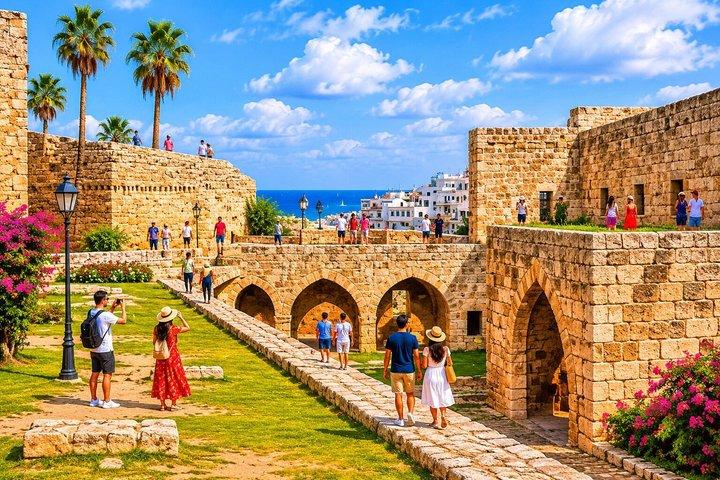
Citadel Saint Gilles (Qal'at Sinjil)Citadel of Raymond de Saint-Gilles — nine centuries above the city
Built by Raymond de Saint-Gilles during the First Crusade, expanded by the Mamluks, modified by the Ottomans — nine centuries of conquest and control visible in a single set of walls. From the ramparts: panoramic views over Tripoli's rooftops, minarets, and the port of El Mina. Your guide traces the full arc of who held these walls and what it cost them.
The Great Mosque15 min
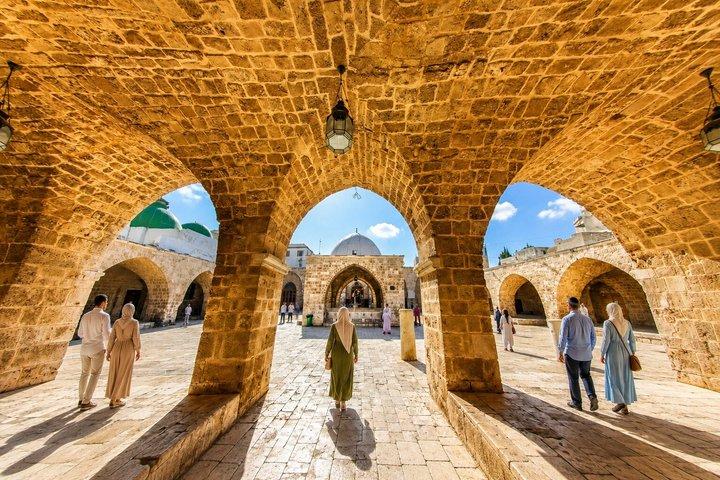
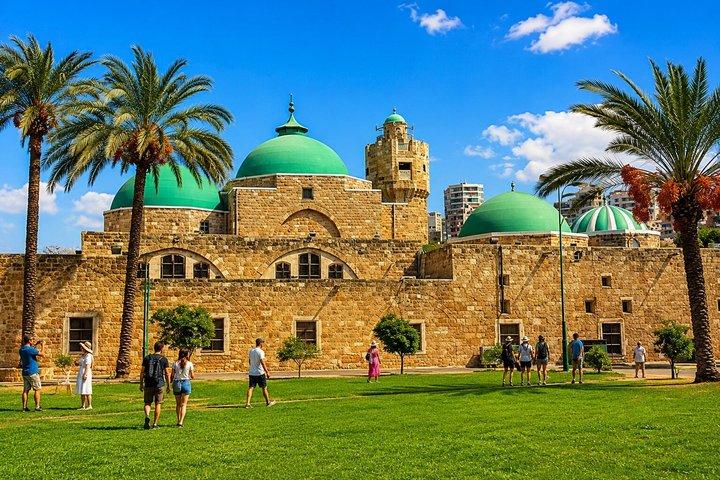
Al-Mansouri Great Mosque & Taynal Mosque
Al-Mansouri — built on the site of a Crusader cathedral, the original Gothic portal still clearly visible in the 14th-century Mamluk stonework. Taynal — two prayer halls where Gothic arches and Mamluk architecture exist side by side in the same building. Two mosques that are also two history lessons — your guide makes sure you see both.
Souk Al-Harajb60 min
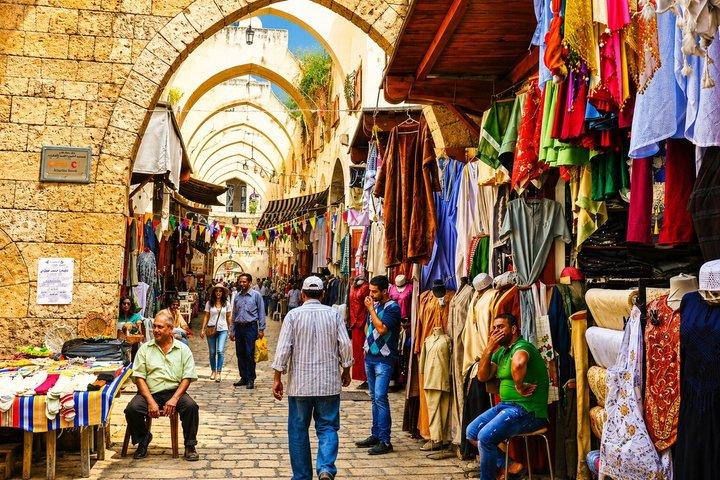
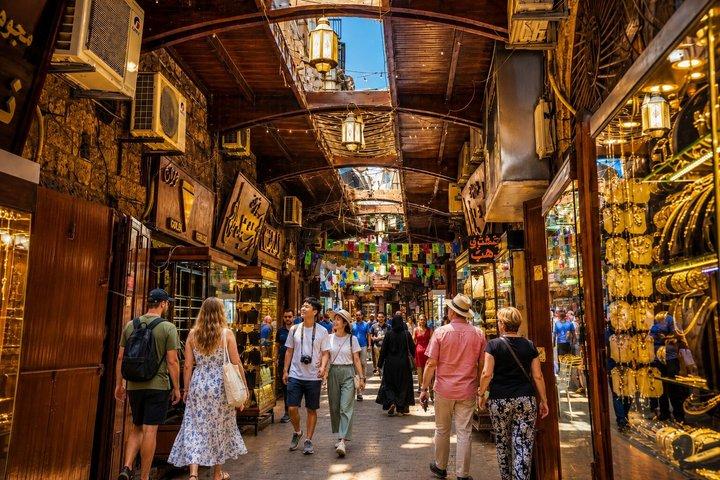
Souk Al-Harajb — unchanged since the Mamluk era
A full hour in stone-vaulted alleyways where gold merchants, spice vendors, fabric traders, and artisan workshops have occupied the same spaces for centuries — not renovated, not curated for visitors, just functioning exactly as it always has. Your guide navigates with local knowledge and explains what makes Tripoli's market different from every other souk in Lebanon.
10 min
Khan el Masriyin soap factory & Hallab 1881
A brief stop at the historic Egyptian merchants' khan — home to a traditional olive oil soap factory producing here for centuries. Then Hallab 1881 — founded in the Ottoman era, the most celebrated pastry and dining institution in Lebanon. Lunch of fresh Lebanese dishes followed by Hallab's legendary knefeh, baklava, and mamoul. Fully included.
El Mina Port10 min
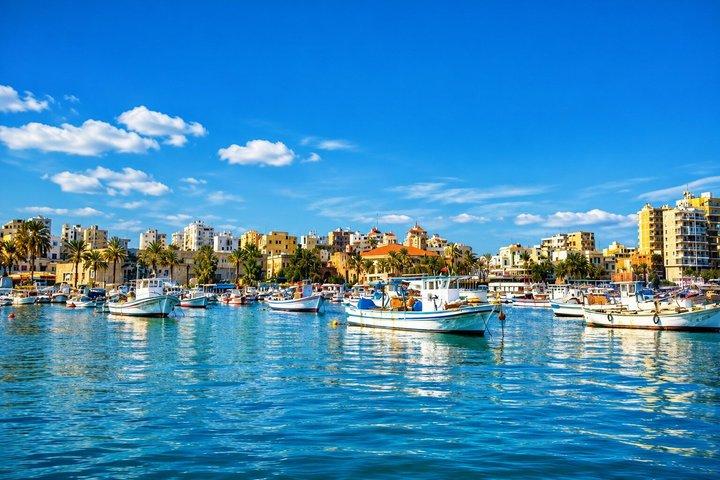
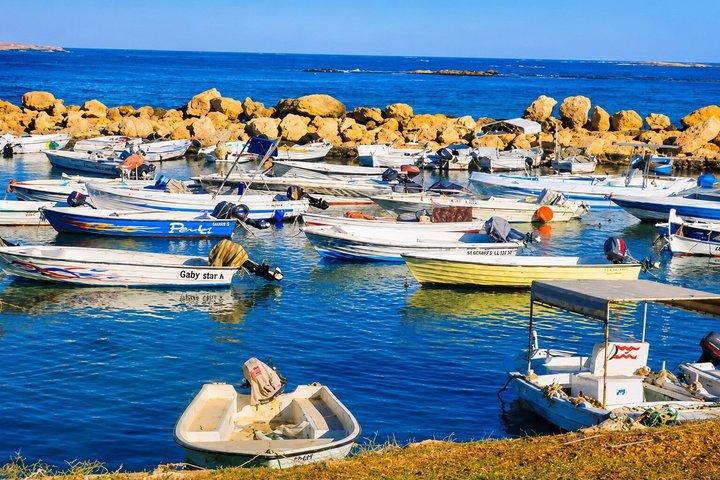
El Mina Port — Tripoli's ancient waterfront
A brief stroll along El Mina — Tripoli's historic fishing port with colourful boats, Ottoman-era mansions, and a pace of life that resists acceleration. The natural transition between medieval Tripoli and the Phoenician coast ahead.
Batroun30 min
Batroun old town — 3,000 years of coastal life
Founded by the Phoenicians over 3,000 years ago and still going. Stone-paved streets, Ottoman houses, seafront cafés, and a Mediterranean setting that has attracted visitors since before recorded history. Your guide covers the Phoenician origins and the remarkable continuity of a town that has never stopped being lived in.
Phoenician Wall15 min
Phoenician Sea Wall — 3,000 years old, still functional
A natural rock barrier shaped by Phoenician hands over 3,000 years ago to protect the ancient harbour — still standing on the beach, still doing exactly what it was built to do. One of the most quietly extraordinary ancient structures in Lebanon and proof that Phoenician engineering has outlasted every empire that followed it.
10 min
Hilmi's House of Lemonade — the only way to finish
Freshly squeezed lemonade at Batroun's most legendary local institution — cold, sharp, made to a recipe that has been refreshing this corner of the Lebanese coast for generations. After a full day in Lebanon's north, there is no better close.
BeirutPass by
Return to Beirut — approx. 5:30–6:30 PM
Drop-off at your Beirut hotel. Tripoli's medieval layers and Batroun's Phoenician coast — Lebanon's north done properly, everything included.