Angkor WatAdmission not included180 min
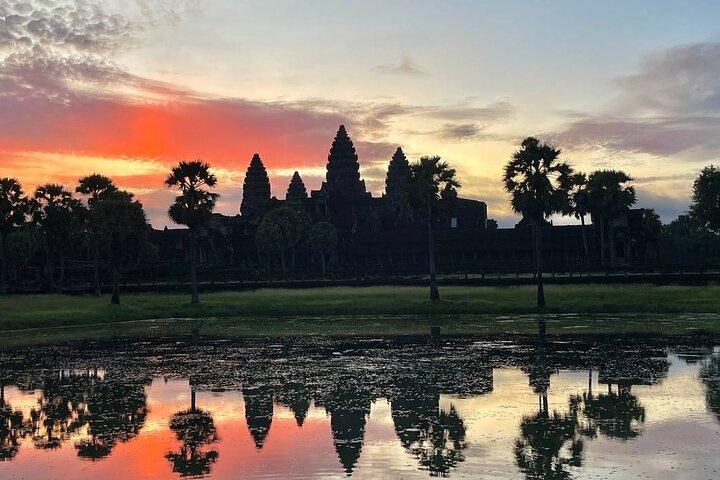
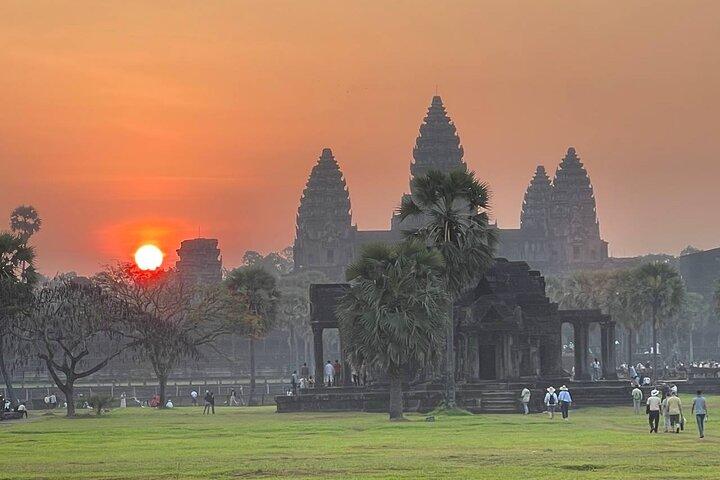
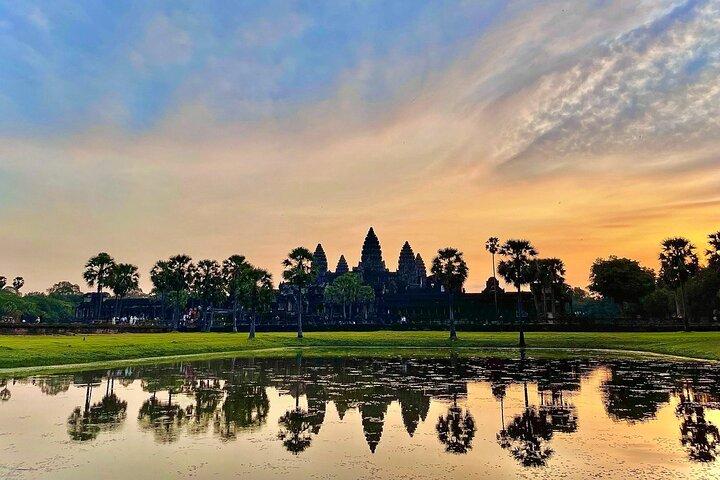
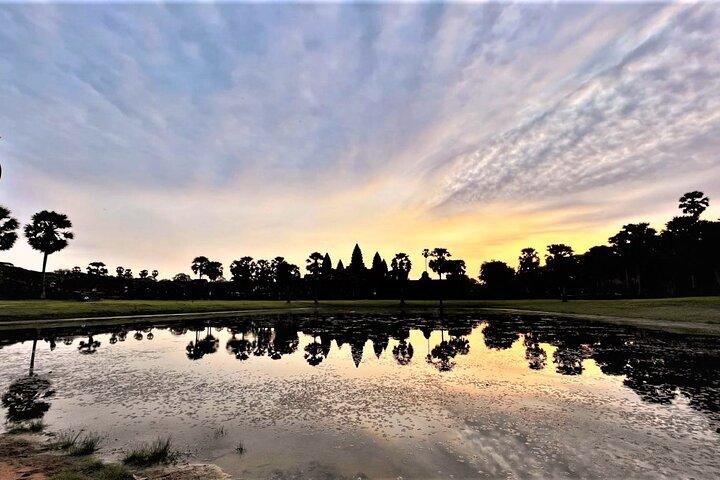
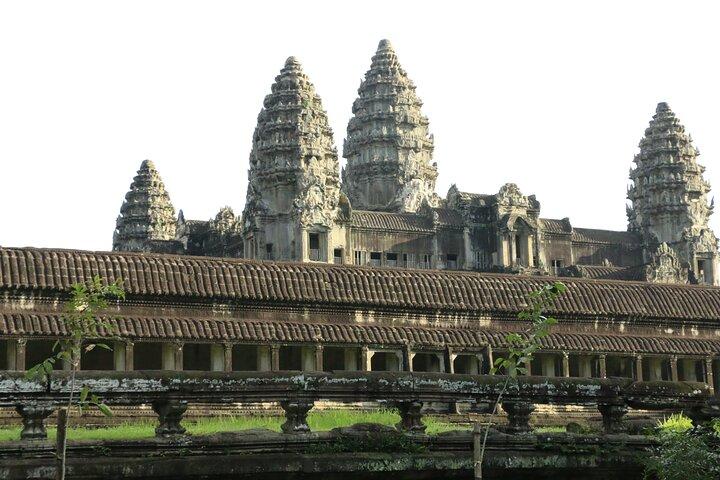
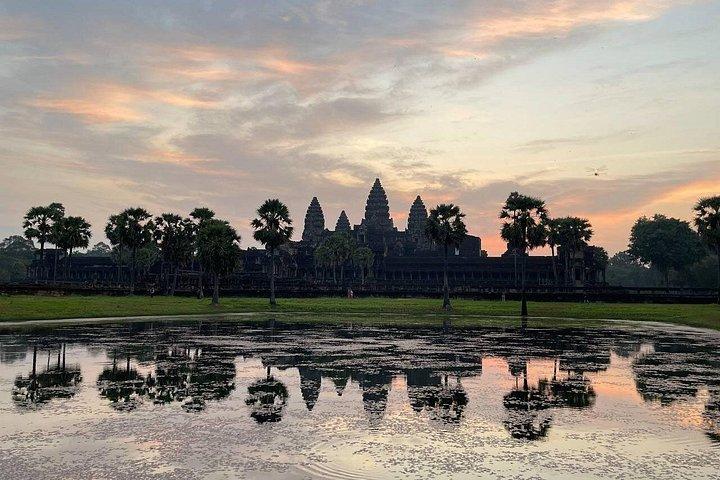
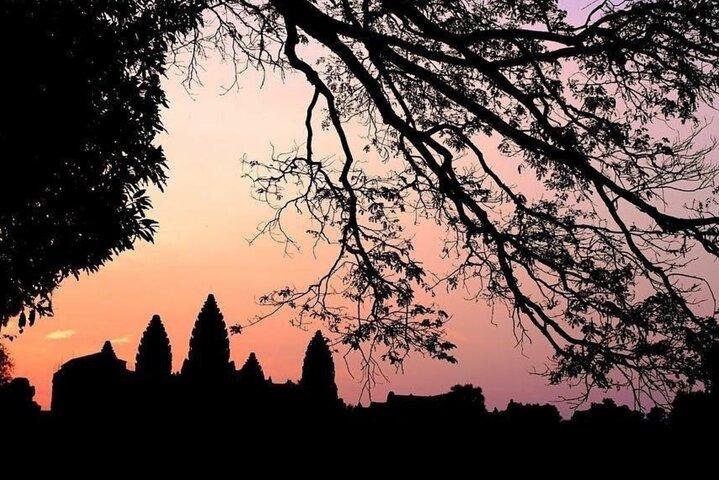
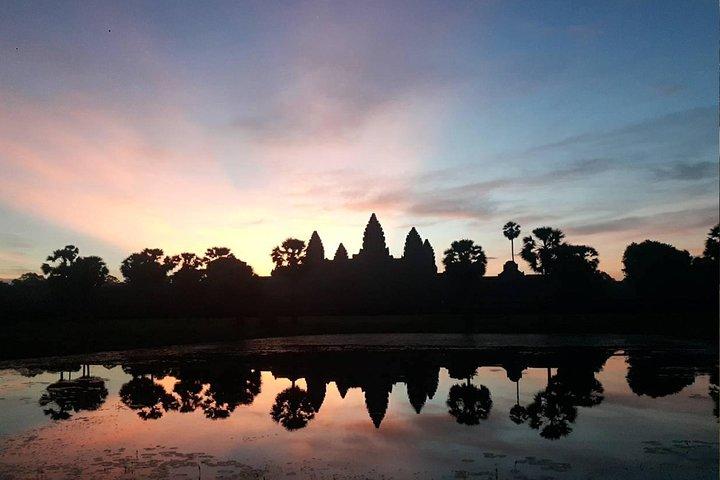
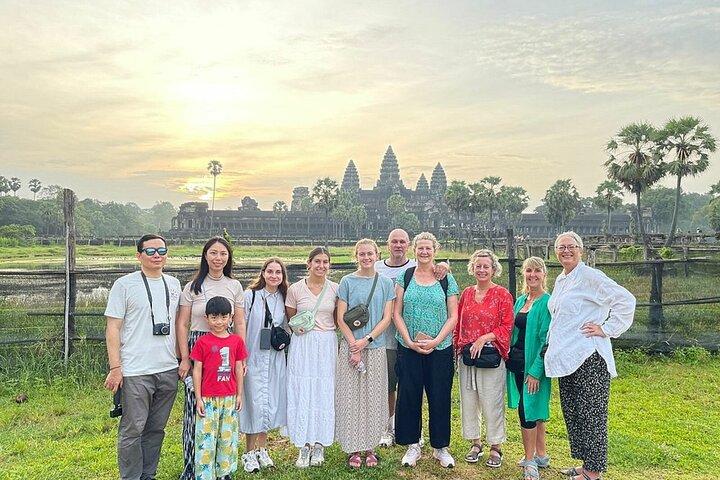
You will be picked up from your hotel between 4:00 and 4:30 a.m. (depending on your hotel location) to visit Angkor Wat. Travel to the ticket office takes about 15 to 30 minutes. After purchasing your ticket, it will take another 15 minutes to reach Angkor Wat. then arrive at the western part of Angkor Wat by crossing the floating bridge and will enjoy the surroundings at dawn to reach the pond inside the Angkor Wat complex. After arriving at the pond, we will stand and watch the beautiful sky above Angkor Wat before the sun goes up. We will then take about two hours to visit some of the other areas of Angkor Wat, where you will see statues, bas-reliefs, libraries, and other parts of the central tower. After visiting Angkor Wat, we will take about 35 to 45 minutes for breakfast.
Srah SrangAdmission not included50 min
This morning after we see the sunrise at Angkor Wat we will driving 10 minutes to reach the local restaurant and take about 30-50 minutes for Breakfast and visit the royal Bath called Srah Srang is a baray or reservoir at Angkor, Cambodia, located south of the East Baray and east of Banteay Kdei.
Ta ProhmAdmission not included60 min
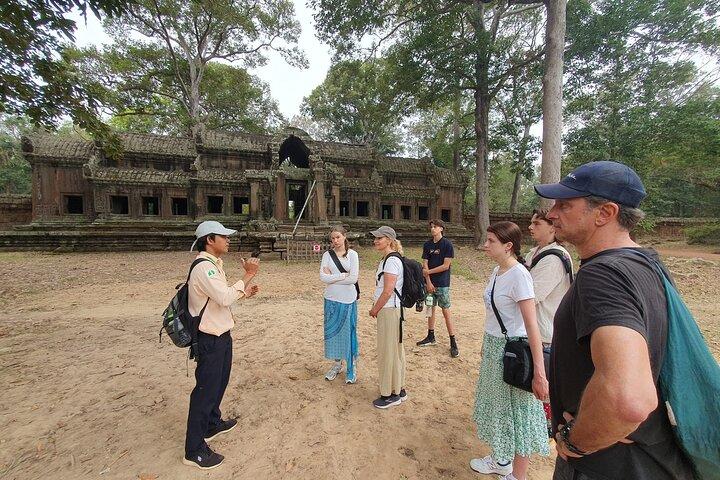
Ta Prohm – is one of the most atmospheric of all temples in Angkor. Once home to 2,740 monks, Ta Prohm today looks much as it did in the early 1850s when French explorer Henri Mouhot ‘rediscovered’ this crumbling site. After exploring the maze-like interior of Ta Prohm.
The Victory GateAdmission not included15 min
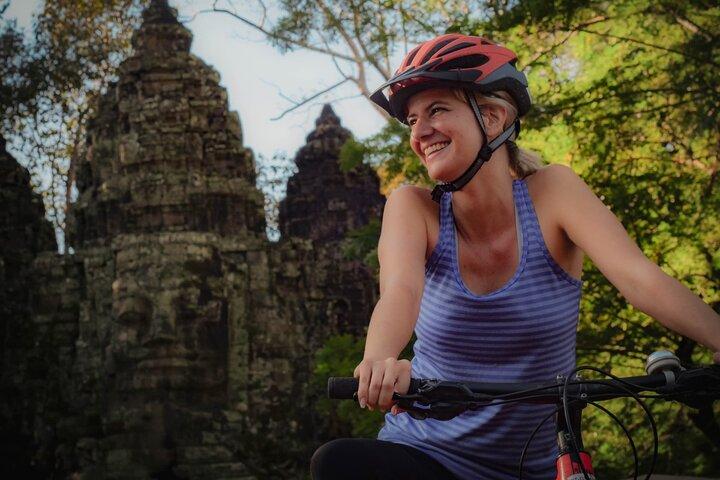
Angkor Thom alternatively Nokor Thom located in present-day Cambodia was the last and most enduring capital city of the Khmer Empire.
Terrace of the ElephantsPass by
The Terrace of the Elephants is part of the walled city of Angkor Thom, a ruined temple complex in Cambodia. The terrace was used by Angkor's king Jayavarman VII as a platform from which to view his victorious returning army. It was attached to the palace of Phimeanakas, of which only a few ruins remain.
Bayon TempleAdmission not included60 min
The Bayon is a richly decorated Khmer temple related to Buddhism at Angkor in Cambodia. Built-in the late 12th or early 13th century as the state temple of King Jayavarman VII, the Bayon stands at the center of Jayavarman's capital, Angkor Thom.