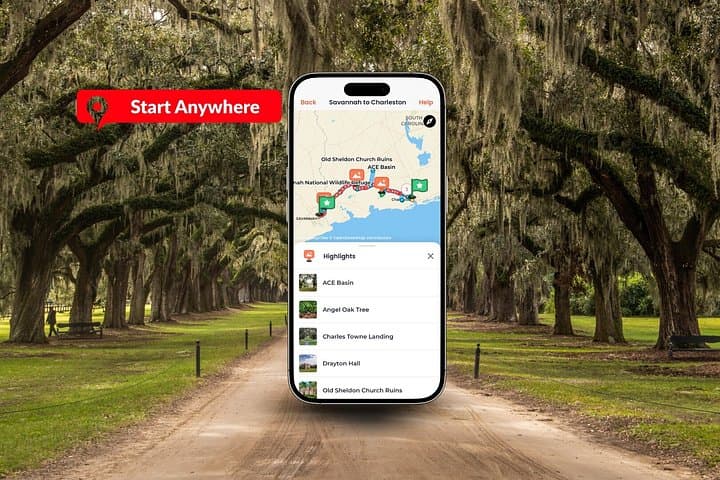
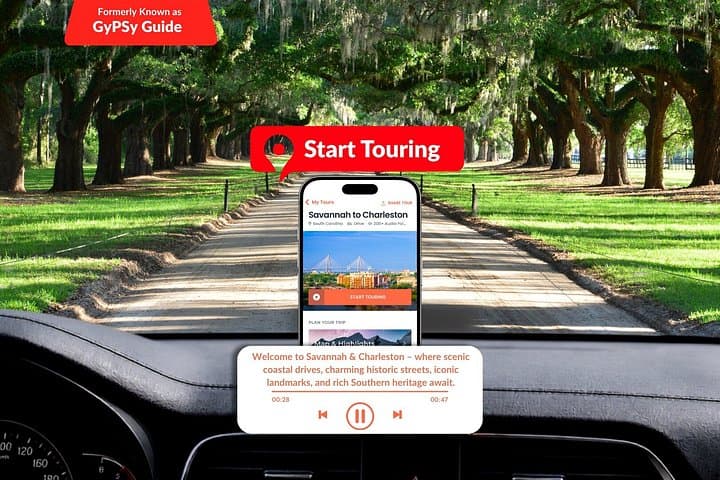
Download our Savannah Charleston audio tour for a scenic drive along Route 17, plus historic walks through each city. Start from either direction, and stop for spots like the 400 year old Angel Oak, the ACE Basin Wildlife Refuge, and historic sites like Charles Towne Landing and Drayton Hall. Longer side trips in Charleston and Savannah's historic districts lead you through the Colonial and Civil War history here. Allow a full day to enjoy the highlights of the walks and scenic drive, or two days to explore more along the route. Enjoy the freedom to explore offline at your own pace, spending more time at places that interest you and bypassing any that don’t. Stories, tips, and directions play automatically based on your location Travel at your own pace Tour offline using GPS. No cell service or WiFi is needed Suggested itineraries for half, full, or multi-day use No time limits or expiry Like having a tour guide along for the drive Purchase one tour per vehicle.
From the operator’s live schedule on Viator, checked Nov 22.
Set inside a historic brick complex near the heart of downtown Savannah, the Savannah Visitor Center is a convenient starting point for exploring the city. Pick up local information, get oriented, and step straight into Savannah’s historic streets, leafy squares, and centuries-old architecture. It’s an easy place to begin before heading deeper into the Historic District.
Savannah’s oldest public square, Johnson Square has been part of the city since its founding in 1733. Shaded by mature trees and surrounded by historic buildings, the square features a striking monument to Revolutionary War General Nathanael Greene. It’s a peaceful introduction to Savannah’s distinctive network of green public squares.
Once part of Savannah’s original city plan, Ellis Square is now a lively gathering space near City Market. Open lawns, fountains, shaded seating, and nearby restaurants make it a popular place to stop while exploring downtown. The square blends Savannah’s historic layout with a more modern, energetic atmosphere.
Dating to the 18th century, Colonial Park Cemetery is one of Savannah’s oldest surviving burial grounds. Weathered headstones and historic graves tell stories from the city’s colonial and early American past, while moss-draped trees give the cemetery a quiet, atmospheric feel. It’s an especially interesting stop for visitors drawn to Savannah’s history and legends.
Built in the 18th century, the General Lachlan McIntosh House is one of Savannah’s notable early brick residences. Its elegant exterior reflects the architecture of the colonial city, while its history connects to important figures and events from Georgia’s early years. It’s a worthwhile architectural stop while walking through the Historic District.
This elegant historic home was the birthplace of Juliette Gordon Low, founder of the Girl Scouts of the USA. Inside, period furnishings, family objects, and exhibits help tell the story of her life and the movement she created. The beautifully preserved house also offers a glimpse into upper-class Savannah life during the 19th century.
For a full refund, cancel at least 24 hours before the scheduled departure time.
Self-Guided Savannah to Charleston Driving Audio Tour lasts about 8–9 hours. The itinerary has 33 stops.
Prices start at $30 per person for this Savannah experience, booked through Viator with the price shown before checkout. There is 1 booking option, so the final price depends on the option you choose.
According to the operator’s current schedule, it runs every day.
Yes. Cancel at least 1 day before the start for a full refund. Later cancellations are non-refundable.
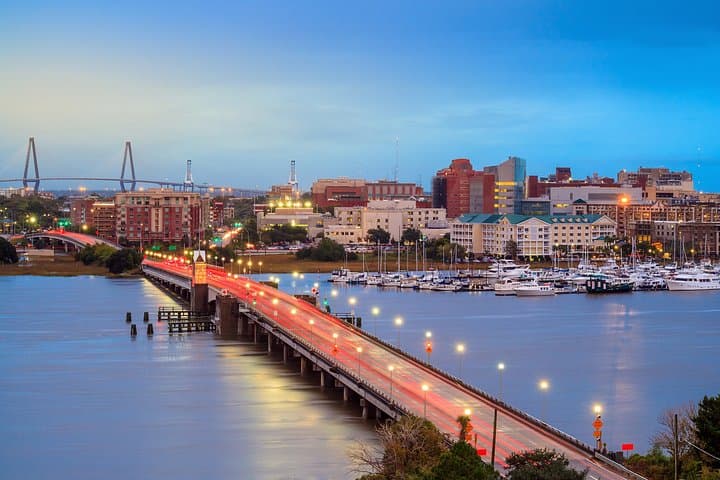
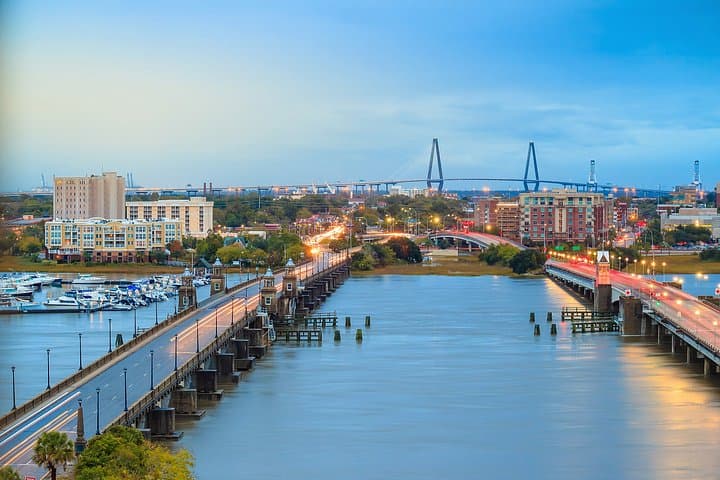
The meeting point is From Charleston, begin on US-17 South as you drive across the T. Allen Legare Bridge. Commentary begins automatically as you continue south along the route. Search your email for “Download Audio Tour,” then preview the route in the app. Hotel pickup is not part of this experience.
The experience is available in EN.
It is a private experience: only your party takes part. Your own group can be up to 8 people on one booking; no other travellers join.
| Tour | Duration | Rating | Price | |
|---|---|---|---|---|
 Self-Guided Savannah to Charleston Driving Audio Tour | 8–9 hours | — | $30 | |
 Savannah to Charleston Scenic Self-Guided Audio Driving Tour | 2–3 hours | 4.3 (7) | $17 | View |
 Savannah Historic District: Self-Guided Audio Walking Tour | 45 min–1h | 4.4 (72) | $13 | View |
 Chippewa Square to Forsyth Park: A Self-Guided Audio Tour of Savannah | 1h–1h 30min | 4.6 (9) | $10 | View |
 Johnson Square to Independent Presbyterian: A Self-Guided Audio Tour of Savannah | 1h 30min–2h | 5.0 (3) | $15 | View |
 Ghosts of Savannah Self-Guided Haunted Audio Tour App/EMF Reader | 55 min–1h 15min | 4.0 (20) | $10 | View |
 Savannah Civil War Self Guided Audio Tour | 1 hour | — | $10 | View |
Facing Monterey Square, the Mercer-Williams House is one of Savannah’s most recognizable historic homes. Its grand Italianate architecture, elegant interiors, and connections to the story made famous by Midnight in the Garden of Good and Evil have made it a popular stop. Even from outside, the mansion is an impressive example of Savannah’s 19th-century architecture.
Surrounded by elegant historic homes, Chatham Square is one of Savannah’s quieter residential squares. Laid out in the 19th century, it features shady trees, walking paths, and a peaceful neighborhood atmosphere. It’s a pleasant place to slow down and appreciate the city’s beautifully preserved urban design.
Pulaski Square is known for its enormous live oaks and peaceful residential setting. The leafy canopy and surrounding historic homes make it one of Savannah’s most photogenic squares, especially for visitors looking to experience the quieter side of the Historic District. It’s an ideal final pause during a walk through the city.
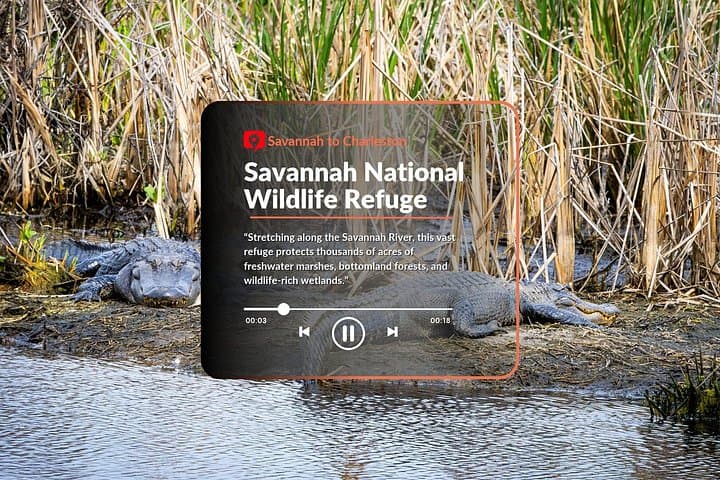
Spreading across wetlands and former rice fields along the Savannah River, this wildlife refuge offers a peaceful escape just outside the city. Visitors may spot alligators, turtles, deer, and an impressive variety of birds while exploring trails and wildlife-viewing areas. Historic canals and rice fields also reveal how the landscape has changed over centuries.
Hardeeville is a small Lowcountry town with deep ties to the region’s railroad and timber history. One of its most distinctive sights is the historic Argent steam engine displayed downtown, a reminder of the lumber industry that once shaped the community. It’s a quick glimpse into the working history of South Carolina’s Lowcountry.
Saint Helena Island is one of the most culturally significant Sea Islands in South Carolina and an important center of Gullah Geechee heritage. Rural roads, historic churches, cultural sites, and centuries of African American history give the island a character very different from nearby resort communities. It’s a rewarding side trip for visitors who have time to explore beyond the main highway.
Built on Saint Helena Island, Brick Baptist Church is closely connected to the history of emancipation and education in the Sea Islands. After the Civil War began, formerly enslaved residents took control of the church, and some of the earliest classes that led to the Penn School were held here. Its simple red-brick exterior stands as a powerful reminder of the Reconstruction era.
Crossing the broad Combahee River, the Harriet Tubman Memorial Bridge commemorates Tubman’s remarkable Civil War work in South Carolina. The surrounding landscape is connected to the famous Combahee River Raid, during which hundreds of enslaved people gained their freedom. Views across the river add a scenic dimension to this historically significant stop.
Set beside the Combahee River, this quiet boat landing offers an excellent place to appreciate both the scenery and the history of the area. Visitors can look toward the Harriet Tubman Memorial Bridge, walk near the water, and find historical interpretation connected to the Combahee River Raid. It’s a simple but meaningful stop along the route.
Oyotunji African Village is a unique cultural community inspired by traditional Yoruba settlements of West Africa. Founded in 1970, the village was created as a center for preserving and practicing Yoruba religion, art, and cultural traditions in the United States. Visits offer a very different cultural experience from the historic plantations and colonial sites found elsewhere in the Lowcountry.
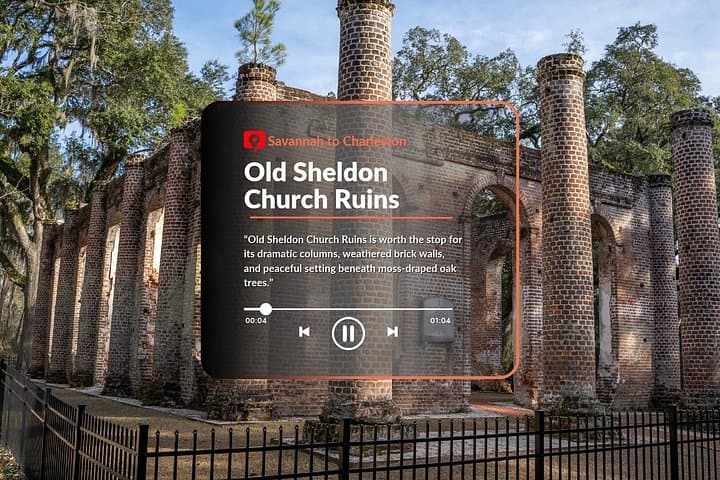
Surrounded by towering live oaks and scattered historic graves, the Old Sheldon Church Ruins are among the most atmospheric sights along the route. Massive columns and surviving walls hint at the scale of the original 18th-century church, creating a striking blend of architecture and nature. It’s an especially memorable stop for photography and quiet exploration.
Known as the “Front Porch of the Lowcountry,” Walterboro combines small-town charm with historic streets, antique shops, and local art. The community began as a summer retreat and still retains a relaxed atmosphere shaped by porches, shaded streets, and traditional Southern architecture. It’s a worthwhile detour for visitors who enjoy quieter historic towns.
Housed in a restored historic building in Walterboro, the South Carolina Artisans Center showcases works created by artists from across the state. Displays include handmade crafts, decorative art, and pieces reflecting South Carolina’s diverse cultural traditions. It’s a good stop for discovering regional creativity and locally made work.
Just outside downtown Walterboro, this peaceful sanctuary protects a landscape of wetlands, forests, and blackwater habitats. Boardwalks and trails provide opportunities for walking, biking, birdwatching, and experiencing the natural side of the Lowcountry. Part of the trail system also follows an old route once used between Charleston and Savannah.
At the heart of one of the East Coast’s largest undeveloped estuaries, the ACE Basin National Wildlife Refuge protects sweeping marshes, tidal creeks, and quiet hardwood forests. This is one of the best places in the Lowcountry to spot herons, egrets, bald eagles, and even the occasional alligator along the water’s edge. Old rice fields and historic structures hint at centuries of human history layered into the landscape, making this a peaceful, nature-rich stop that rewards slow exploration.
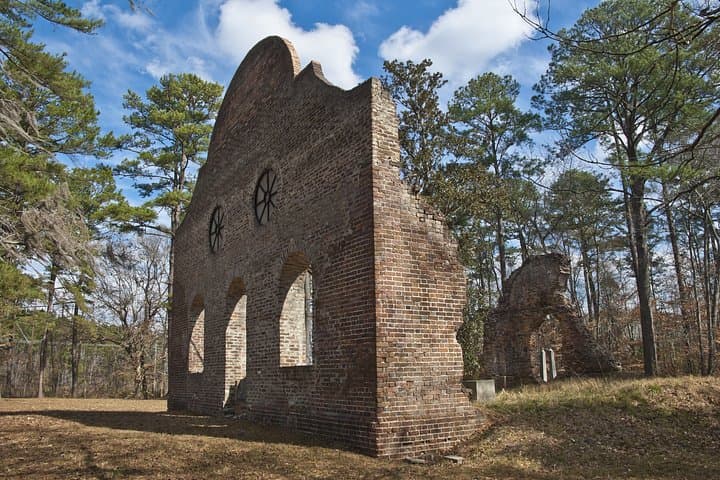
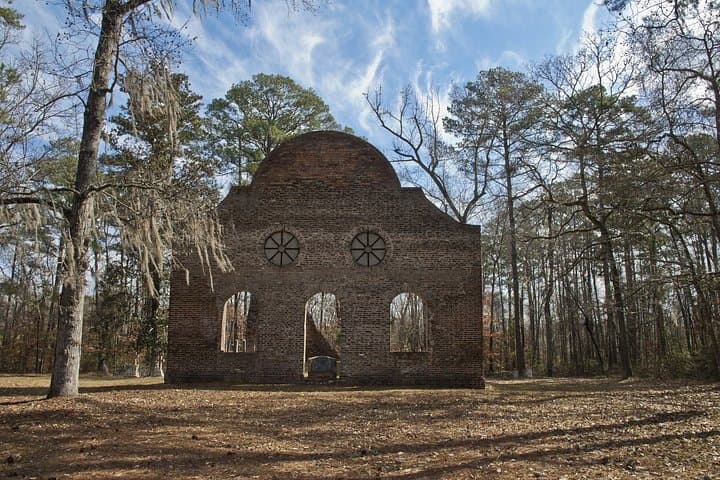
Hidden among moss-draped trees near Jacksonboro, the ruins of Pon Pon Chapel of Ease are a haunting reminder of colonial South Carolina. The church stood along an important historic route between Charleston and Savannah before fire and abandonment left only part of the structure standing. The surviving wall and old graves create an atmospheric glimpse into the region’s past.
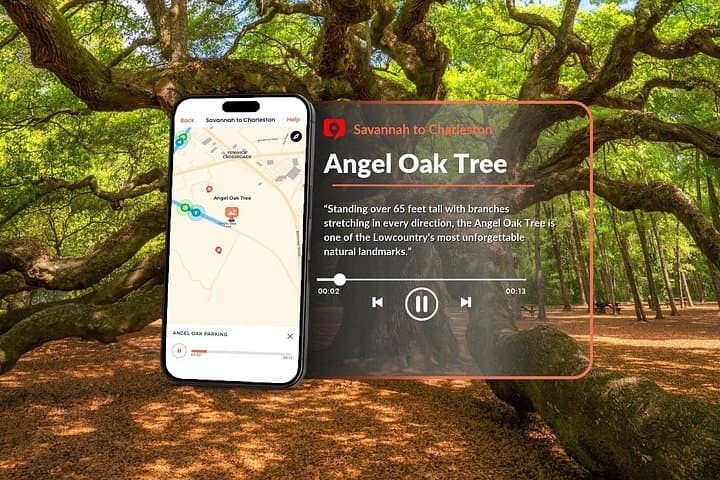
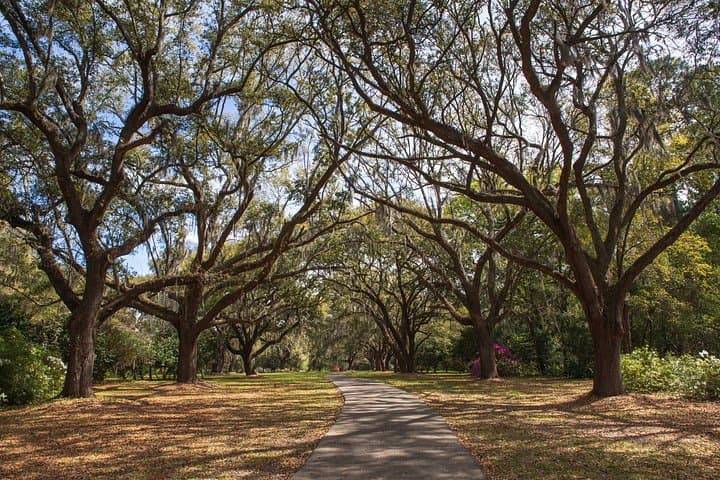
Towering over Johns Island, the Angel Oak is one of the Lowcountry’s most impressive natural landmarks. Its enormous trunk and sprawling limbs stretch outward beneath a broad canopy, creating a dramatic scene beneath the Spanish moss. The surrounding park offers an easy place to pause and appreciate one of the region’s most iconic live oaks.
Centered around the famous Angel Oak Tree, this small Johns Island park offers visitors a quiet setting to appreciate one of South Carolina’s most remarkable natural landmarks. Shaded ground beneath the enormous tree provides dramatic views of its twisting branches and massive canopy. It’s a simple but unforgettable stop along the Charleston side of the route.
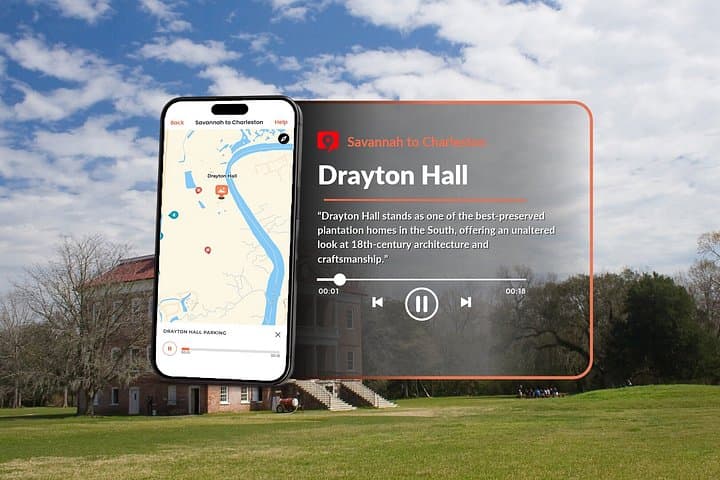
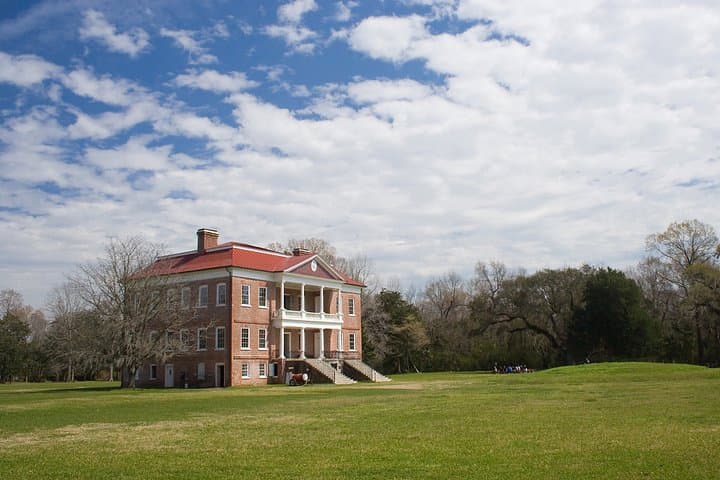
Standing beside the Ashley River, Drayton Hall is one of the most important surviving plantation houses in the Lowcountry. Rather than being heavily restored, the historic building preserves layers of architectural and social history that reveal how the property changed over generations. Its riverside grounds and striking Georgian architecture make it one of the area’s most significant historic sites.
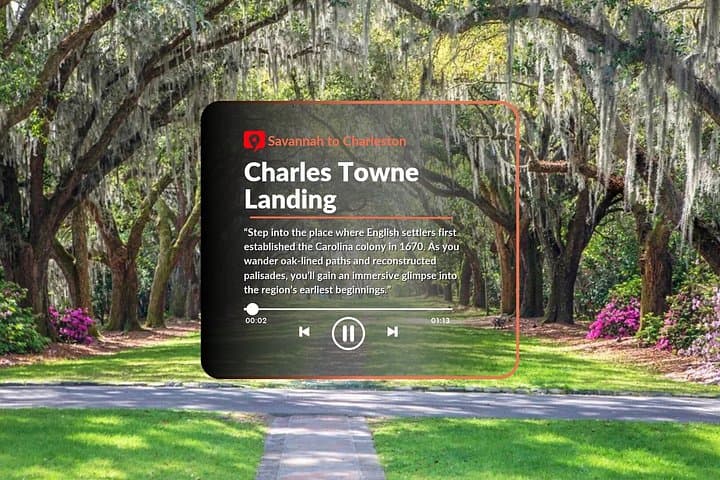
This expansive historic site marks the area where English settlers established the first permanent European settlement in what became South Carolina. Trails wind through gardens, wetlands, archaeological areas, and reconstructed historical features, while a replica sailing ship helps bring the colonial story to life. The grounds also include native wildlife, making it a good mix of history and outdoor exploration.
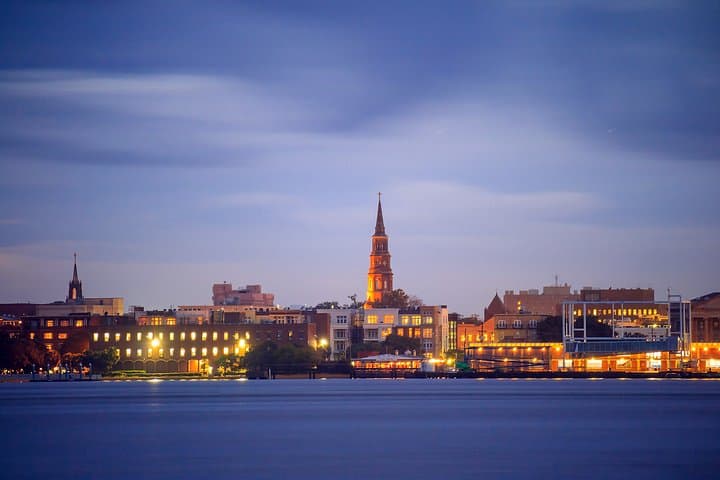
Stretching through the heart of downtown Charleston, the historic City Market has been a center of commerce for generations. Today its open-air stalls and market buildings are filled with local crafts, artwork, souvenirs, and traditional sweetgrass baskets. The lively atmosphere makes it one of the easiest places to experience Charleston’s culture while exploring the historic district.
Rising above Charleston City Market, Market Hall is a prominent Greek Revival landmark in the historic district. The museum inside preserves artifacts connected to Charleston and South Carolina’s past, while the building itself serves as one of the most recognizable architectural sights near the market. It’s a convenient historical stop at the beginning of a downtown walk.
With its distinctive circular design and historic graveyard, the Circular Congregational Church stands out among Charleston’s many houses of worship. The congregation traces its roots deep into the colonial era, and the church is closely tied to the city’s long religious and political history. Its unusual architecture makes it an eye-catching stop along Meeting Street.
This elegant 19th-century residence offers a glimpse into the wealth and architecture of antebellum Charleston. Built for a prominent local family, its refined exterior reflects the prosperity that shaped many of the grand homes in the historic district. It’s an interesting streetside stop while exploring Charleston’s residential neighborhoods.
At the southern tip of Charleston’s peninsula, White Point Garden combines harbor views, enormous shade trees, and reminders of the city’s military history. Historic cannons and monuments are scattered throughout the park, while paths beneath the live oaks make it an inviting place to walk or rest. Views toward Charleston Harbor make this one of the city’s most scenic public spaces.
One of Charleston’s most photographed sights, Rainbow Row is a line of historic homes painted in soft pinks, blues, yellows, and greens. The colorful facades transformed this once-neglected section of the city into an instantly recognizable landmark. It’s a quick but essential stop for anyone exploring Charleston’s historic waterfront streets.
Standing near Charleston’s waterfront, the Old Exchange has witnessed some of the most important chapters in the city’s history. The building served several roles over the centuries, while the underground Provost Dungeon is associated with prisoners held during the Revolutionary era. Today, its historic rooms and exhibits offer a fascinating look at Charleston’s colonial and Revolutionary past.
Yes, bookings are confirmed instantly.