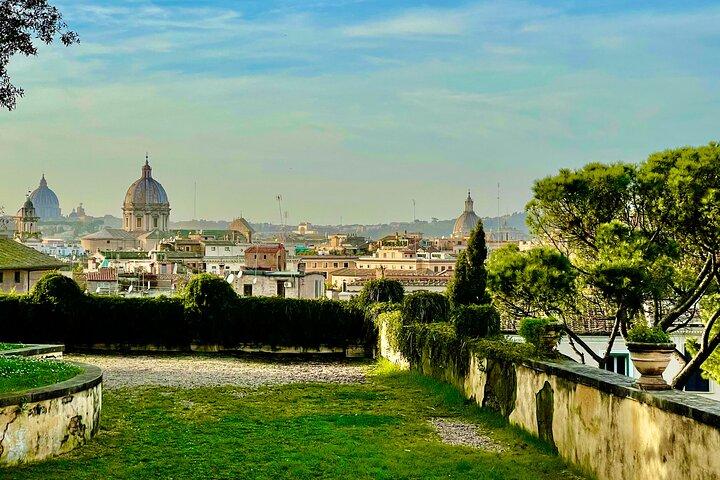
Musei CapitoliniDiscover the Capitoline Museums and enjoy incredible panoramic views.
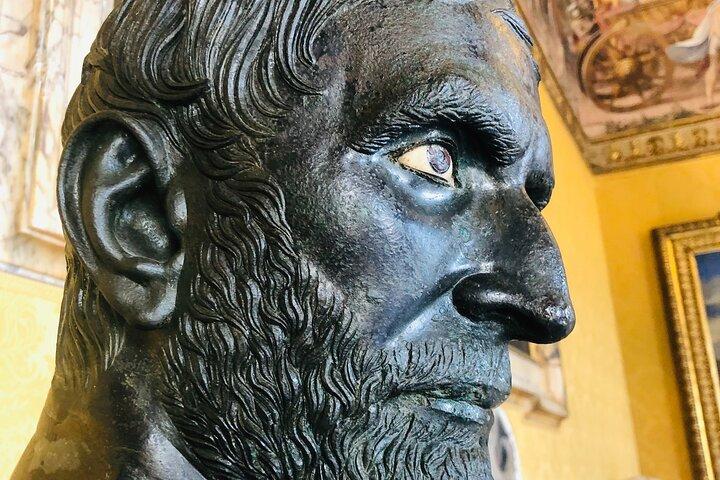
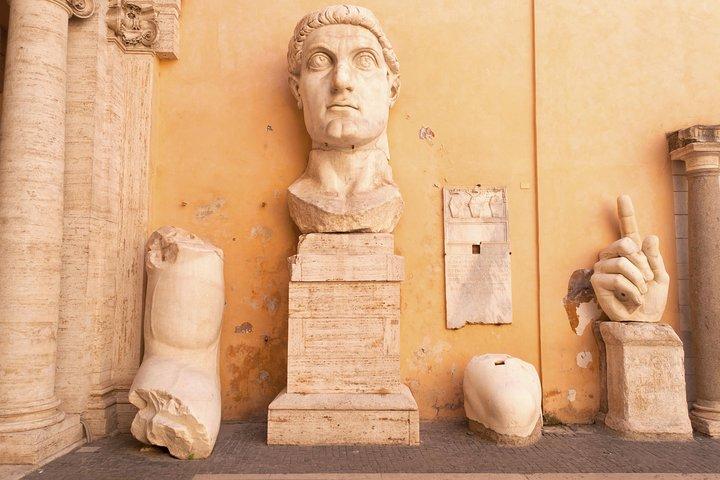
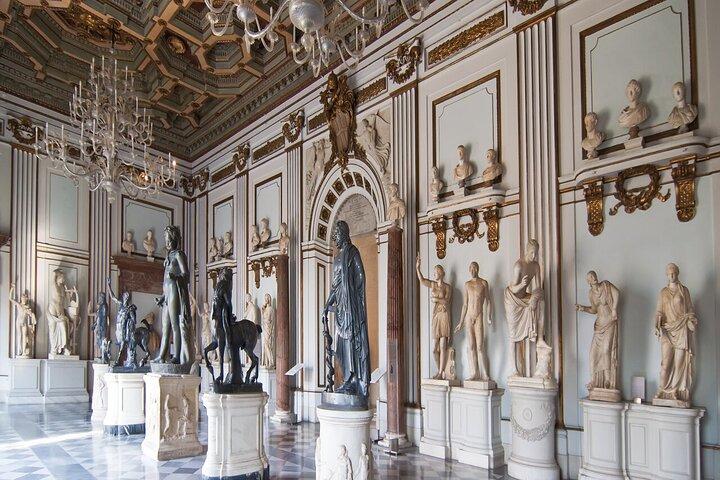
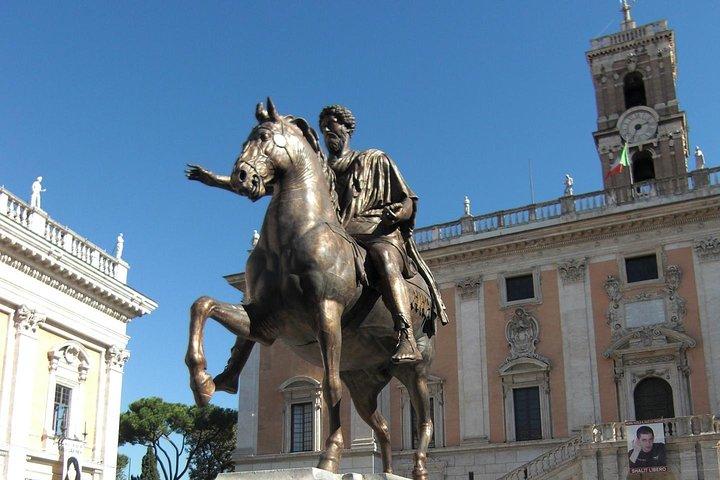
Admire bronze sculptures such as the bust of Capitoline Brutus; the Spinario, the Capitoline Wolf who suckles Romulus and Remus, which has become the symbol of the Eternal City; and an extraordinary collection of Greek and Etruscan vases. Moving on to the Pinacoteca, the oldest public collection of paintings, you will be able to enjoy the view of paintings by Caravaggio, Guido Reni, Carracci, Guercino, Domenichino, Veronese, Titian, Tintoretto, Rubens, Pietro da Cortona as well as statues from Renaissance and Baroque Rome. Once you reach the exedra, the spectacular equestrian statue of Emperor Marcus Aurelius stands among the remains of the ancient temples still visible.
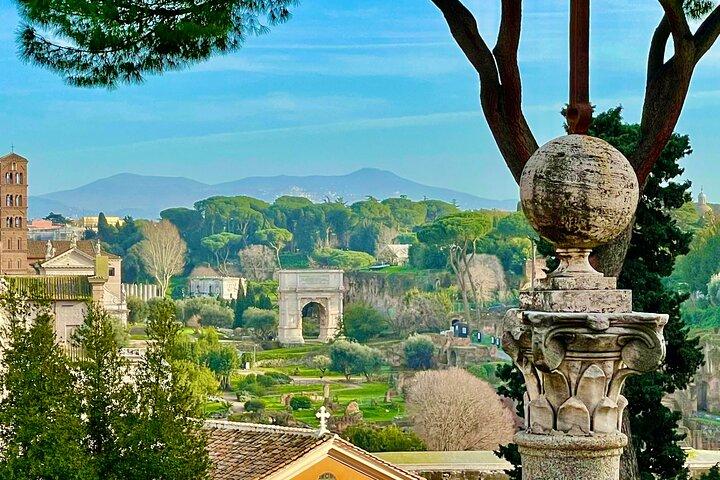
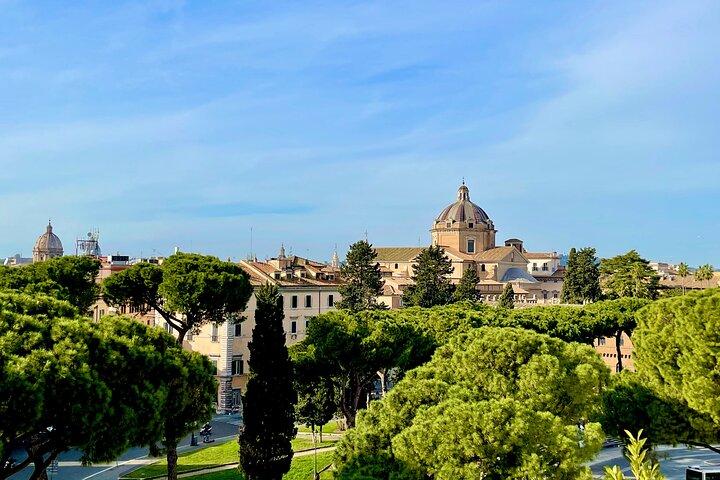
Through an underground tunnel among the Tabularium's remains, you can enjoy a magnificent view of the Roman Forum. Among sarcophagi, busts, and mosaics, you will see the statue of Marforio, the Dying Gaul, and the figure of Cupid and Psyche.
Piazza del Campidoglio15 min
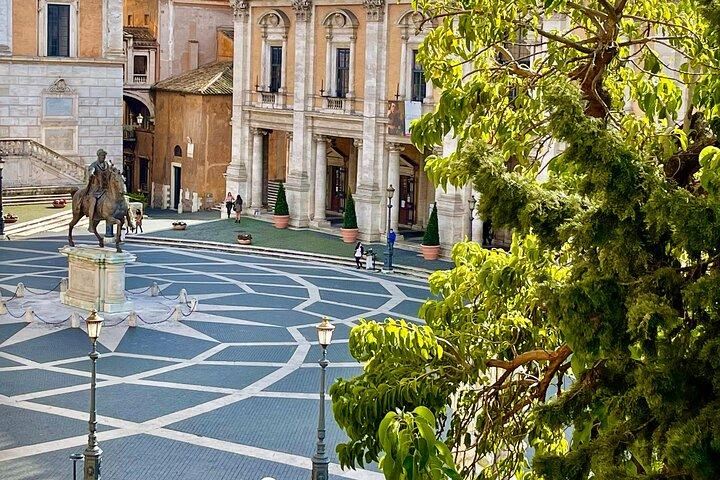
The first square that modern Rome saw born according to the criteria of a uniform project, due to the genius of Michelangelo, stands on the Capitoline hill (Capitolium), where an ancient village was located and the place chosen to dedicate numerous temples to the Roman deities.
In 1536, on the occasion of the visit to Rome of the Spanish emperor Charles V, Piazza del Campidoglio underwent a series of transformations due to the serious state of abandonment in which the hill found itself. Pope Paul III commissioned Michelangelo to complete the overall layout of the square.
The Florentine architect created an elegant podium for the equestrian statue of Marcus Aurelius, placed in the center of the hill in 1537, so that this became the fulcrum of the new urban project.
Furthermore, Buonarroti designed an imposing staircase with giant steps, allowing knights an easy climb, culminating with the solemn balustrade surmounted by classic marble groups.
Replica Statua Equestre di Marco Aurelio10 min
Since 1997, a copy of the gilded bronze group depicting the emperor Marcus Aurelius on horseback has been placed in Piazza del Campidoglio.
It is an absolutely faithful copy of the original, based on a photogrammetric survey which allowed the design and composition of a model from which, after appropriate additions, the metal reproduction was created.
The original had been removed from Piazza del Campidoglio in 1981, when it was transported to the Central Institute for Restoration, to be subjected to diagnostic tests and restoration interventions to remedy the damage caused by exposure to atmospheric agents and pollution.
Palazzo SenatorioBuilt between the mid-12th century and the last quarter of the 13th century on the ruins of the ancient Tabularium, from 1144 it was the seat of the Municipality of Rome and its highest representative: the Senator, responsible for the administration of justice and the interests of the citizens .
The main facade of the thirteenth-century palace opened towards the future Piazza del Campidoglio with a series of loggias with round arches arranged on three levels. In the room on the first floor, where the Senator's court was, the brick arches were punctuated by recovered ancient columns with Ionic capitals from the first quarter of the thirteenth century. A large off-center arch on the right of the facade marked the main entrance from the square.
Palazzo NuovoThe seventeenth-century Palazzo Nuovo stands in front of the mirrored Palazzo dei Conservatori, on the splendid Piazza del Campidoglio, designed around the mid-sixteenth century by Michelangelo, commissioned by Pope Paul III, and dominated in the background by Palazzo Senatorio.
Construction began in 1603, based on a design by Buonarroti himself, and was completed only in 1654 by Girolamo and Carlo Rainaldi, under Pope Innocent Used to house ancient statues that had no place in the Palazzo dei Conservatori, Palazzo Nuovo officially became a museum in 1734, under the pontificate of Clement XII Corsini; the previous year, the pontiff had acquired the prestigious Albani collection - 418 sculptures - which was added to the works already on display, together with the sculptures that continued to enrich the collection year after year.
Palazzo dei ConservatoriLocated in the monumental Piazza del Campidoglio, on top of the hill of the same name, the palace had been the residence of the Conservators, magistrates elected by the people to administer the city, since its construction in the 13th century.
In view of the Jubilee of 1500, Pope Nicholas V entrusted Michelangelo with the rebuilding and reorganization of the square.
Upon the death of the great artist, the works begun with Pope Paul III Farnese (1534-1549), were continued by Guidetto Guidetti and finished in 1568 by Giacomo della Porta who faithfully followed Michelangelo's designs, except in the construction of a larger room representation on the first floor.
Palazzo dei Conservatori houses the art gallery, tapestries and several bronze sculptures, including the Capitoline Wolf.
Its apartments are decorated with important cycles of frescoes, among whose authors there is also Pietro da Cortona, dating back to between the 16th and 17th centuries, relating to the ancient history of Rome.