Private Day Tour & Experience wearing Hanbok at Seoul City Tour
Description
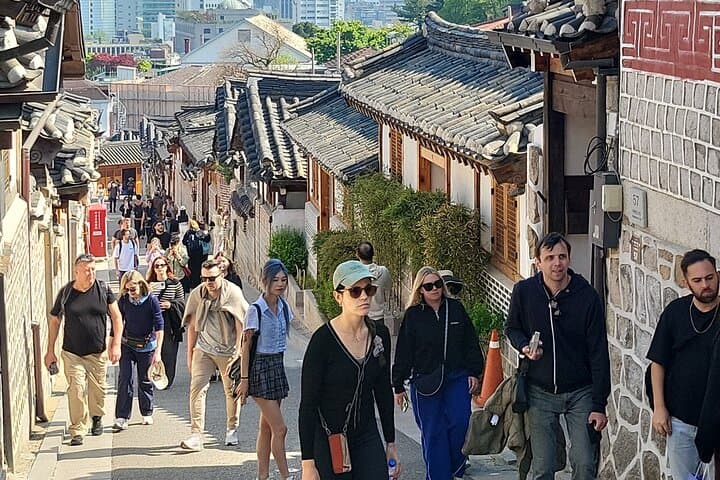
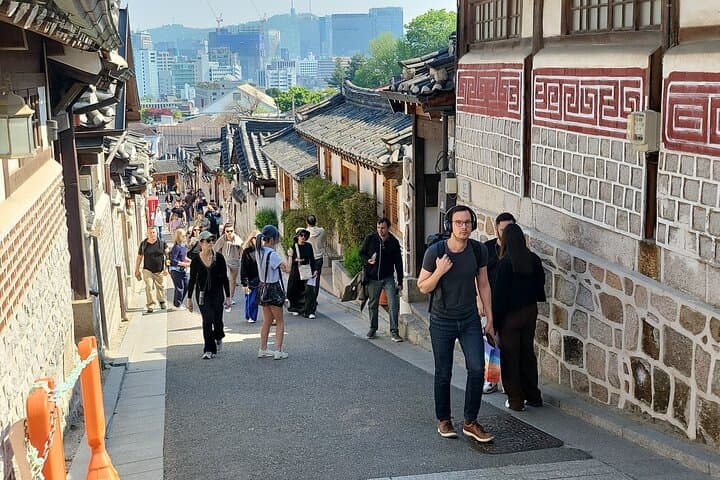
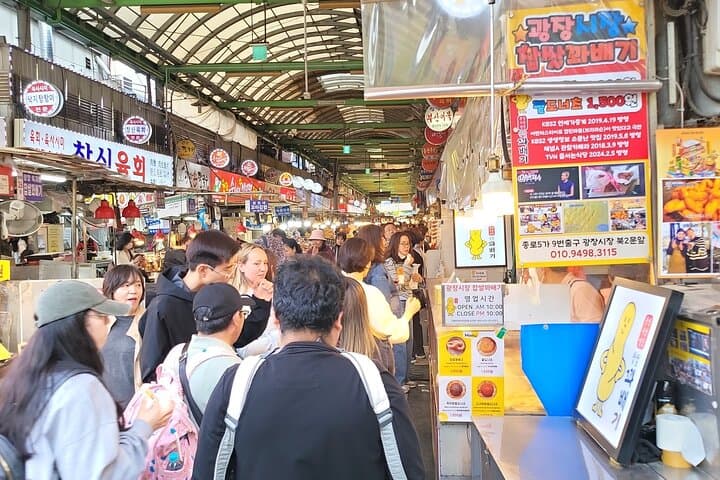
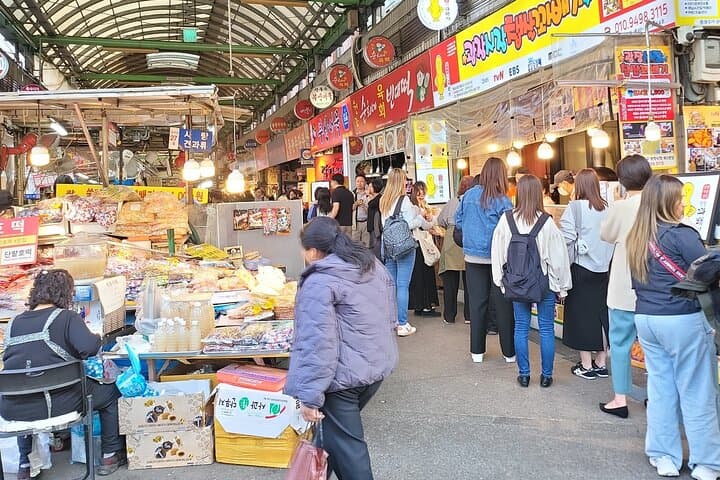
The name Gyeongbokgung contains the meaning that "the new dynasty will enjoy great fortune and prosper." The Gyeongbokgung Palace tour provides an opportunity to increase your understanding of Korean culture. In addition, Gyeongbokgung Palace offers traditional performances such as the Changing of the Royal Guard Ceremony held every day at noon, providing foreigners with a chance to experience Korean traditions vividly. Insa-dong has galleries, traditional tea houses, restaurants, street vendors, specialized shopping malls for handicrafts, antique shops, antique stores, and flower shops, so I recommend taking a walk and eating bibimbap. Take a walk along Bukcheon Hanok Village Road and feel and experience the beauty of Korean culture. Gwangjang Market is the first permanent market in our country, established in 1905. The Korean pronunciation of the name was kept the same, but the meaning of ‘widely gathering and preserving’ was added, and it became the current Gwangjang Market.
Tour Options
Itinerary
A Seoul tour can be a special experience for many people. The attractive scenery and culture of Seoul shine even brighter when you share it with friends of various nationalities. Seoul, which is a geomantic place, has been a symbol of royal authority and a city that has been the most prosperous in Korean folk theater throughout history. With the "Seoul Tour", we hope that you will receive the living and breathing culture and strong energy of the beautiful Republic of Korea on your journey, and that you will have eternal health, success, and wealth. We begin today's tour. It is a symbol of royal authority and has been the most prosperous city in Korea throughout history.
According to a story, the name Seoul was first used during the Joseon Dynasty when Jeong Do-jeon accompanied King Taejo Yi Seong-gye to Bukaksan Mountain. It was March, so the surrounding mountains were covered in snow. The land inside looked like it was inside a snow fence, so he called it Seol-ul, which became Seoul. The name Gyeongbokgung Palace contains the meaning that "the new dynasty will enjoy great fortune and prosperity." You will experience the essence of the noble and dignified royal culture. It is located against Bukhansan Mountain to the north, and you can admire the main gate, Gwanghwamun. You can also experience wearing Hanbok, and feel traditional Korean culture. The Gyeongbokgung Palace tour provides an opportunity to gain a deeper understanding of Korean culture. Traditional performances, such as the Changing of the Royal Guards Ceremony held every day at noon, provide foreigners with a vivid experience of Korean tradition.
Insa-dong is a car-free street representing Seoul, and is a must-see attraction in Seoul. There are galleries, traditional tea houses, restaurants, street vendors, handicraft shops, Janmun shopping malls, antique shops, craft shops, and flower shops, so take a walk and spend some time there, and try Korean bibimbap. You will see, feel, and experience the appearance of a street with Korean characteristics, and you will have a unique memory of seeing, feeling, and experiencing a cultural aspect.
The National Folk Museum of Korea is an organization under the Ministry of Culture, Sports and Tourism of the Republic of Korea that oversees the collection, preservation, investigation, research, exhibition, education and exchange of lifestyles, customs and practices of the Korean people and countries around the world, as well as the tools and materials used for them. The National Folk Museum of Korea is a national museum under the Ministry of Culture, Sports and Tourism established to collect, preserve and exhibit unique folk materials and systematically investigate and research related to them. It is closed on January 1, Lunar New Year's Day and Chuseok. The main building has a children's museum under its wing.
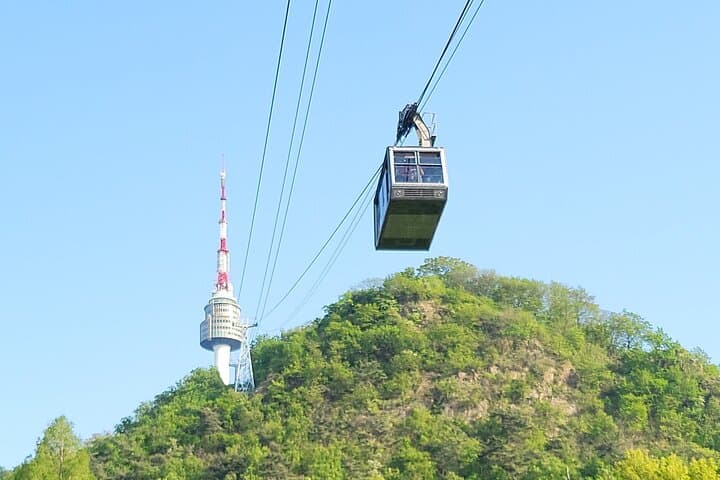
Namsan Seoul Tower The tower itself is 236.7m high, which is relatively low compared to typical landmark structures, but when combined with the elevation of Namsan, it becomes 479.7m. You can look down on the view of Seoul, and from the Namsan Tower Observatory, you can see the entire view of Seoul while rotating 360 degrees, making it a place where you can enjoy the entire city of Seoul at a glance. The Namsan Tower Cable Car costs 15,000 Korean won per person, and the Observatory admission fee costs 26,000 Korean won per person.
Bukchon is a representative traditional residential area in Seoul, located between Gyeongbokgung Palace, Changdeokgung Palace, and Jongmyo Shrine, where traditional hanok houses are densely packed. It is also called a street museum in the city center because it has many historical sites, cultural assets, and folk materials. It is called ‘Bukchon (North Village)’ because it is the upper neighborhood of Cheonggyecheon and Jongno, and it includes Gahoe-dong, Songhyeon-dong, Anguk-dong, and Samcheong-dong. Sagan-dong, Gye-dong, Sogyeok-dong, and Jae-dong are places where historical traces remain and have been preserved for hundreds of years. In order for Bukchon Hanok Village to become a sustainable tourist destination, it is important to practice silent tourism.
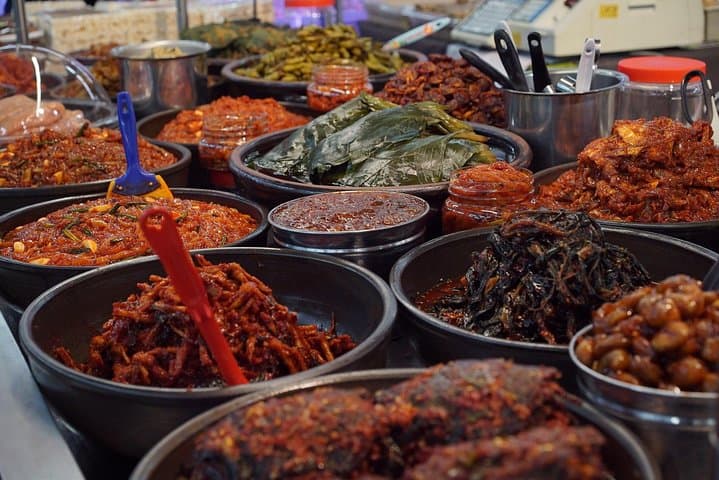
It is the first permanent market in Korea, established in 1905. Originally, Gwangjang Market was planned to be built by covering the area between Gwanggyo (wide bridge) and Janggyo (long bridge), so it was named Gwangjang Market, meaning “wide and long,” after the first letters of the bridge names. However, when it was moved to Baeogae, the Korean pronunciation of the previous name was kept, but the meaning of “widely gathering and preserving” was newly added, and it became the current Gwangjang (廣藏) Market. Now, more than 100 years later, it has become a comprehensive market boasting a considerable transaction volume. Also, the busiest place in Gwangjang Market is the food market formed on the street where Dongmun, Buk 2 Gate, and Nam 1 Gate meet. The food market of Gwangjang Market attracts all ages, from students, middle-aged people, and the elderly. It is currently designated as a world tourist course, and is famous as a transit point for many foreign tourists traveling to Korea.
Changgyeonggung Palace is the third palace built during the Joseon Dynasty, following Gyeongbokgung Palace and Changdeokgung Palace. Since the early days of the Joseon Dynasty, the two-palace system was in place, with Gyeongbokgung Palace as the main palace and Changdeokgung Palace as the auxiliary palace. However, the kings of the past preferred to reside in Changdeokgung Palace over Gyeongbokgung Palace, and as the royal family grew, the living space in Changdeokgung Palace gradually became cramped. Accordingly, King Seongjong built Changgyeonggung Palace next to Changdeokgung Palace so that the three queens of the royal family, including Queen Jeonghui, wife of King Sejo, Queen Ansun, wife of King Yejong, and Queen Sohye, wife of King Deokjong, could live comfortably. The name at the time was Suganggung Palace, meaning longevity and peace. Changgyeonggung Palace is open until 9 p.m., so it’s a good last stop.
After completing your tour of downtown Seoul, it is time to return to your hotel or accommodation. We will drop you off at your desired accommodation or location in downtown Seoul.
Highlights
What's included
Pickup Locations & Times
Hotel.Airport .Etc : We will hold a signboard with your name. Hotel :Lobby or parking area (Tour Taxi number check.please ) Returns to original departure point.
Important Information
- Infants are required to sit on an adult’s lap
- Not recommended for travelers with spinal injuries
- Not recommended for travelers with poor cardiovascular health
- Not recommended for pregnant travelers
- Public transportation options are available nearby
- Infants and small children can ride in a pram or stroller
- Wheelchair accessible
- Suitable for all physical fitness levels