Archaeological Site MycenaeAdmission not included100 min
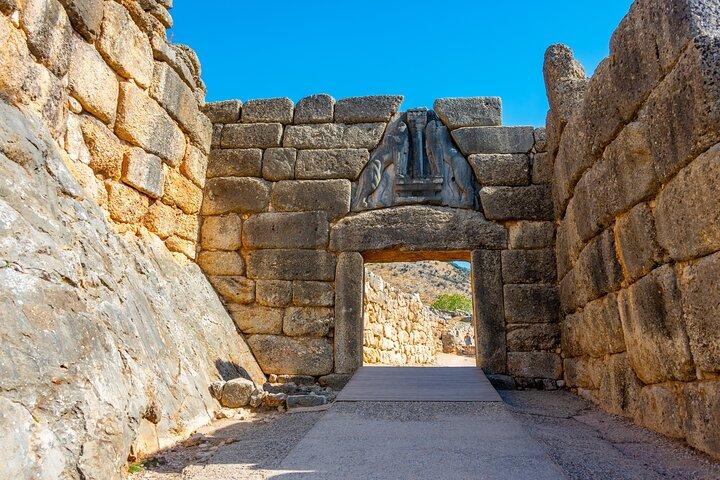
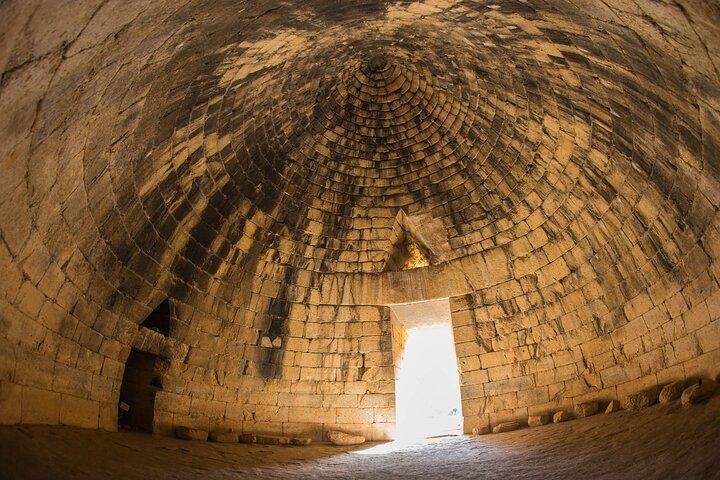
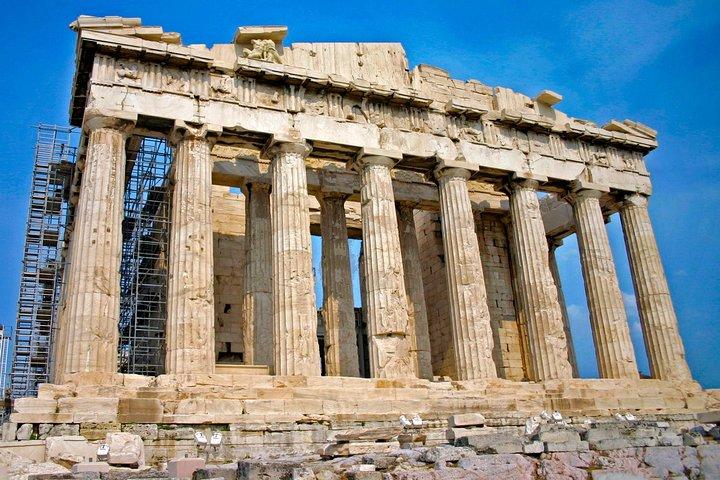
The archaeological site of Mycenae includes the fortified acropolis and the surrounding burial and residential areas, mainly located to the west and southwest of the Acropolis. Most of the visible monuments date back to the great flourishing period of the center, from 1350 to 1200 BC. The massive Cyclopean walls surround the nearly triangular acropolis, accessible from the northwest through the famous Lion Gate, the symbol of the power of Mycenaean rulers. The gate is named after the two-facing lions carved in relief and placed in the relieving triangle above the door, a characteristic feature of Mycenaean architecture. Explore Treasury of Atreus or Tomb of Agamemnon a large beehive tomb on the hill of Panagitsa at Mycenae, constructed during the Bronze Age around 1250 BC. The stone lintel above the entrance weighs 120 tons, with dimensions approximately 8.3 x 5.2 x 1.2 meters, the largest in the world. The tomb was used for an unknown period.
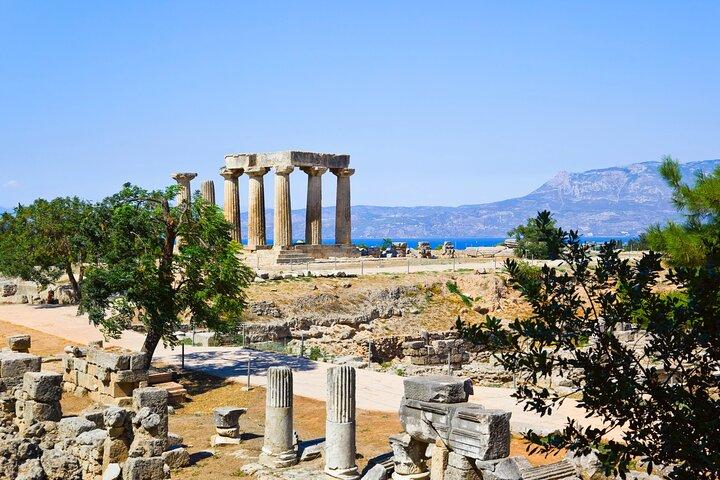
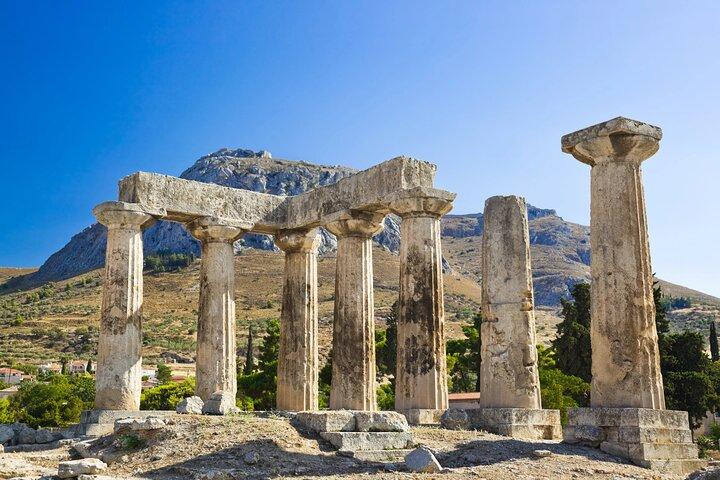
Ancient Corinth (Archaia Korinthos)Admission not included100 min
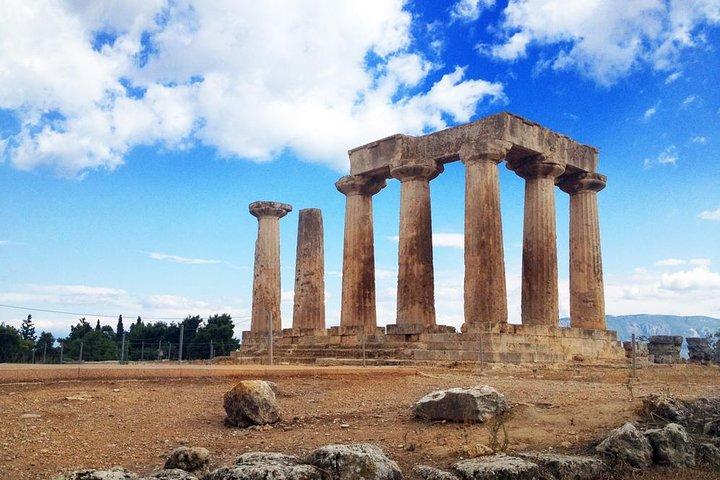
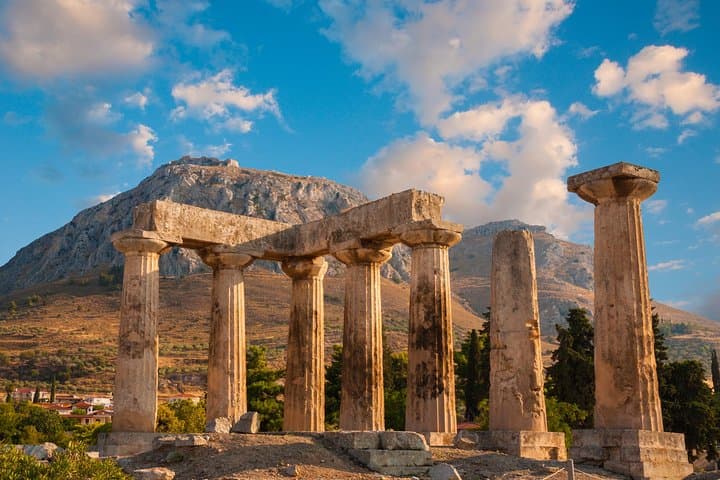
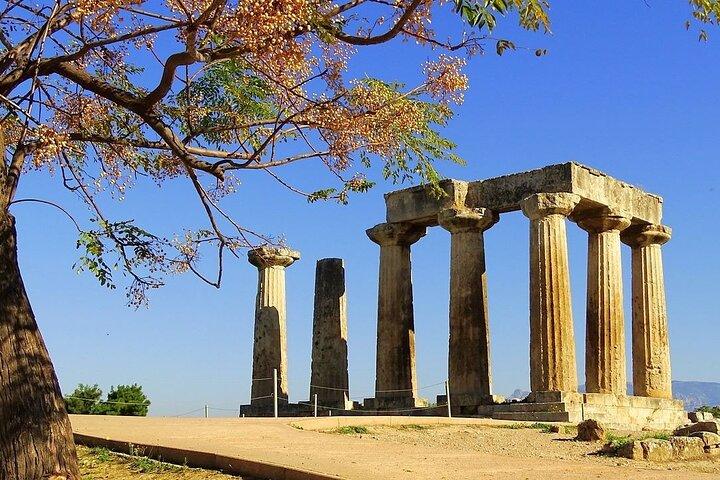
The archaeological site of Ancient Corinth is one of Greece's most important, featuring the Temple of Apollo, the ancient marketplace, Roman baths, and the Peirene Fountain. The Archaeological Museum displays sculptures and artifacts that showcase the region's history. Additionally, the Acrocorinth hill offers stunning views and is a popular destination for hiking.
Corinth CanalAdmission not included30 min
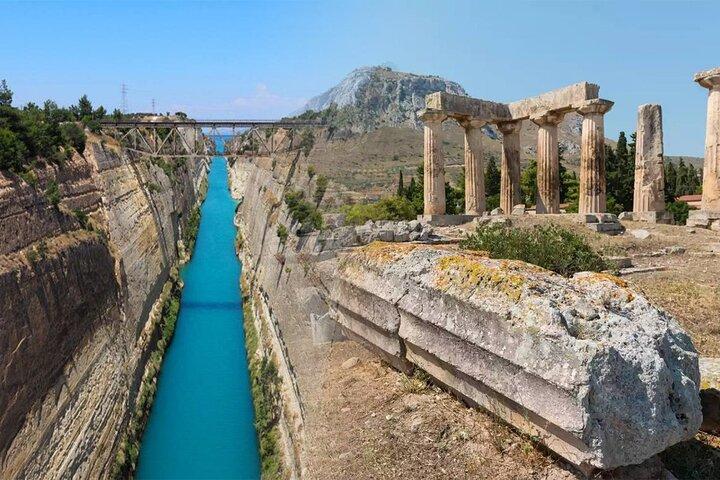
The Corinth Canal, or Isthmus of Corinth, is a narrow canal 6.4 km long that connects the Saronic Gulf with the Gulf of Corinth, effectively separating the Peloponnese from mainland Greece. It was constructed in 1893, saving ships about 200 nautical miles by avoiding the route around the Peloponnese. It is also a significant tourist attraction with steep sides reaching 80 meters high.
The Ancient Theatre of EpidaurusAdmission not included90 min
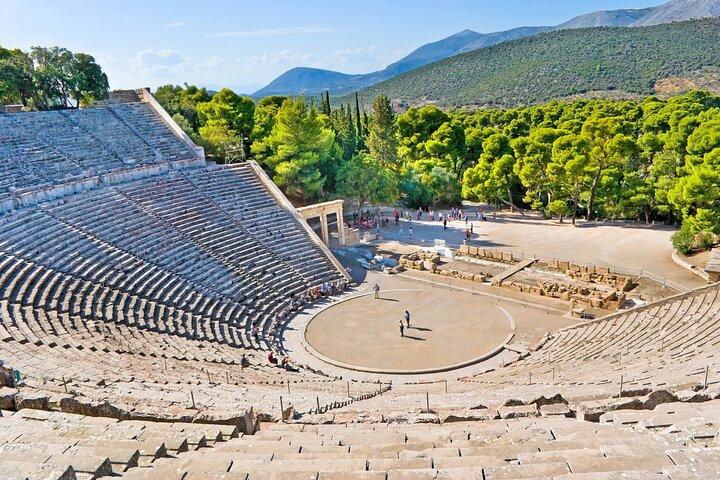
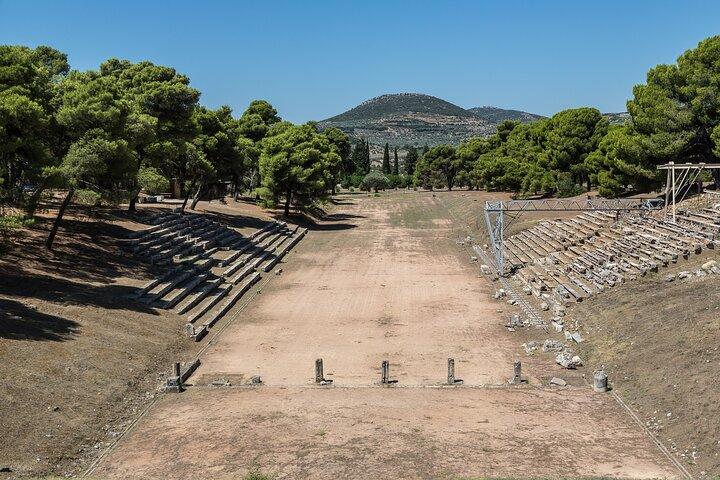
The Archaeological Site of Epidaurus is best known for its ancient theater, famous for its exceptional acoustics and excellent preservation. Built in the 4th century BCE, it was part of the sanctuary of Asclepius, the god of medicine, where ancient Greeks came for healing. Today, the theater is used for performances and stands as an important cultural monument and tourist attraction.