A
Highly Recommended
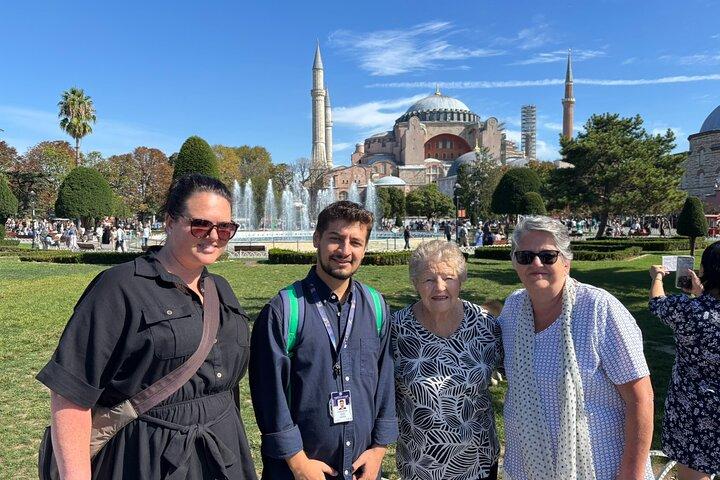
Very informative, flexible, really recommended. Ugur was very helpful knowledgeable and accommodating. Most memorable sights were the Ayasofia and Topkapi palace.
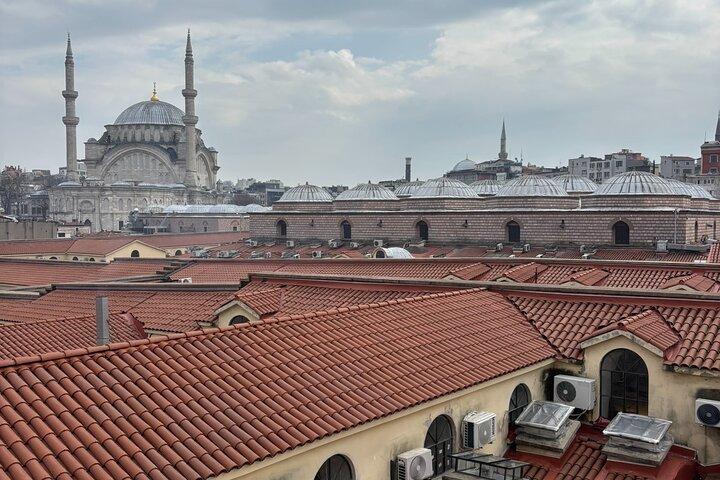
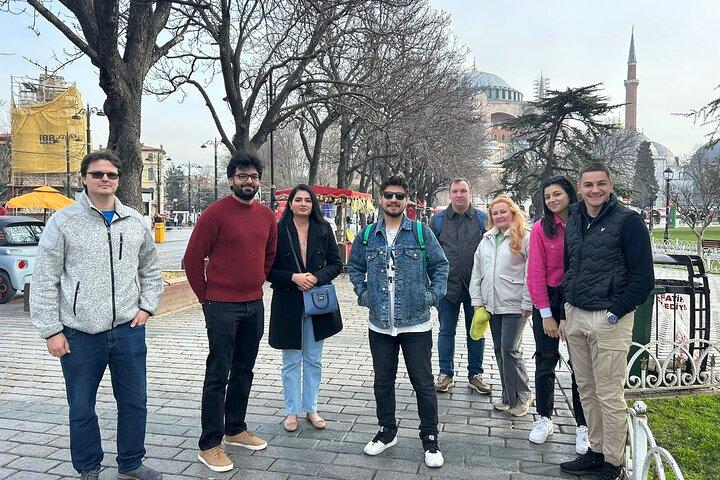
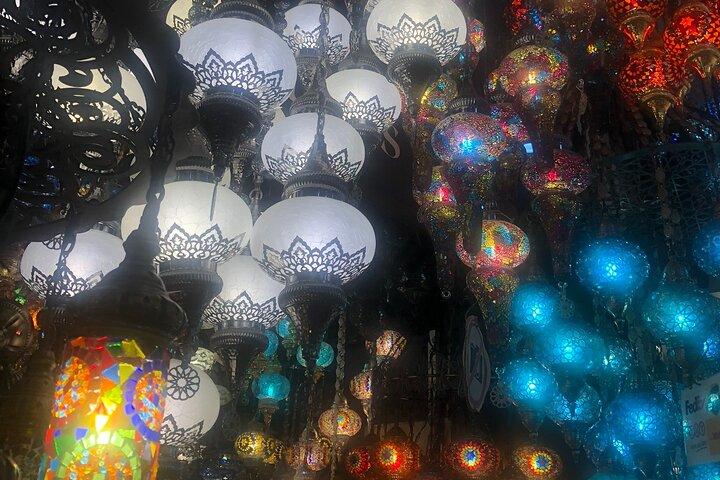
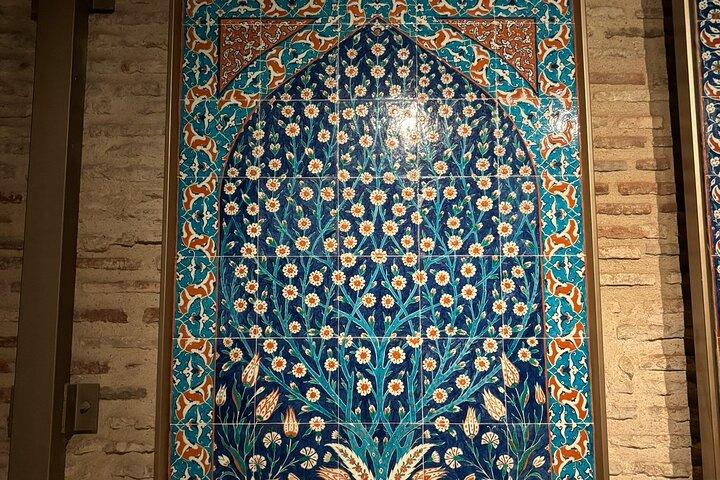
Istanbul's Old City is usually experienced as a checklist of monuments. This walk takes a different approach: following the streets, public spaces, neighborhoods, and surviving traces that reveal how the city changed from Constantinople to Ottoman Istanbul and into the city of today. Begin inside Topkapı Palace's First Courtyard, then move from the monumental center around Hagia Sophia and the Hippodrome into Kadırga's neighborhood streets. Along the way, encounter a Greek Orthodox church, an Ottoman hammam, the route of the ancient Mese, the Column of Constantine, the Grand Bazaar, and Beyazıt Square. Rather than moving from attraction to attraction, the walk connects these places as parts of one evolving city — imperial, religious, civic, residential, and commercial. No paid admission is required for the standard itinerary. Just four to five hours on foot, reading Istanbul through the traces its many lives have left behind.
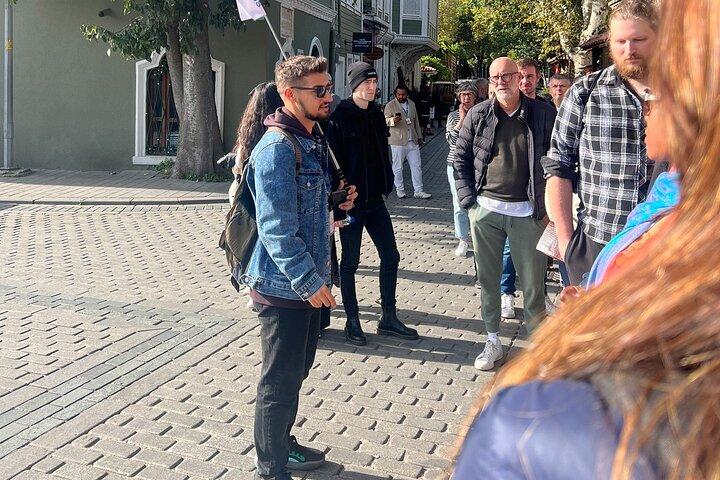
Meet at Caferağa Medresesi, a 16th-century Ottoman school designed by Mimar Sinan. From here, we set out on foot to read the Old City through the monuments, streets, and traces left by the people who shaped it.
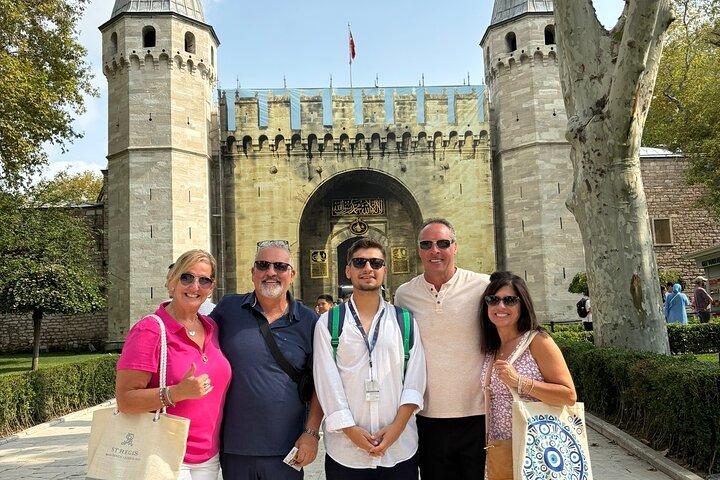
Enter through the Imperial Gate into Topkapi Palace's First Courtyard, the public threshold of the Ottoman court. Here we also encounter Hagia Irene, an Eastern Roman church preserved within the palace grounds. We remain in the free First Courtyard; palace admission is not required.
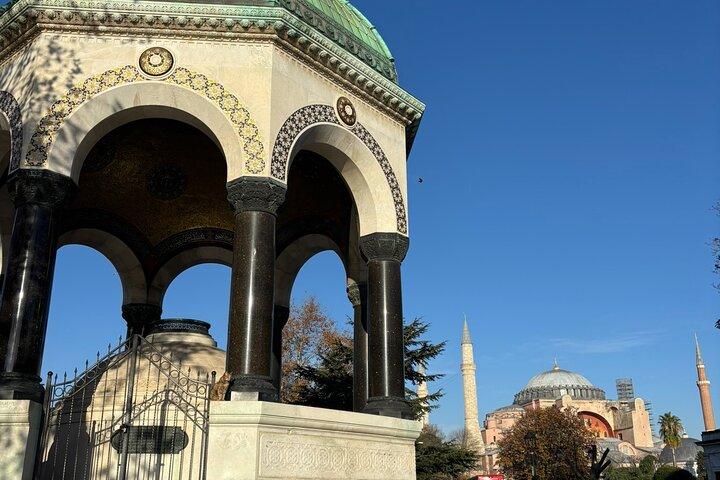
Step outside the palace walls to the Fountain of Ahmed III, built in 1728 between the Imperial Gate and Hagia Sophia. Its richly decorated façade marks a shift in Ottoman architectural taste and the transition from the palace enclosure into the public city.
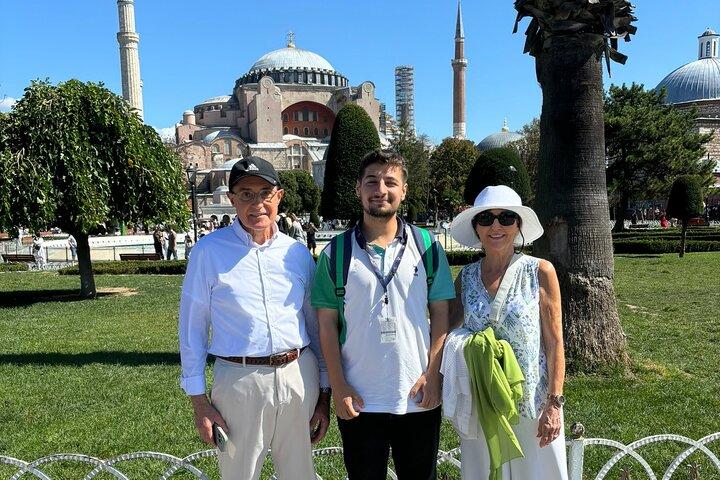
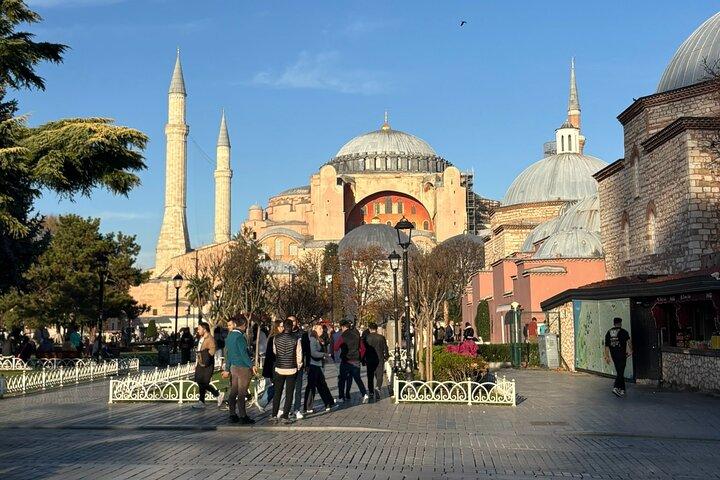
Read Istanbul's monumental center from the outside, with Hagia Sophia and the Blue Mosque facing one another across the historic square. Rather than joining ticket lines, we use their architecture and surroundings to trace how the city's imperial center changed across centuries.
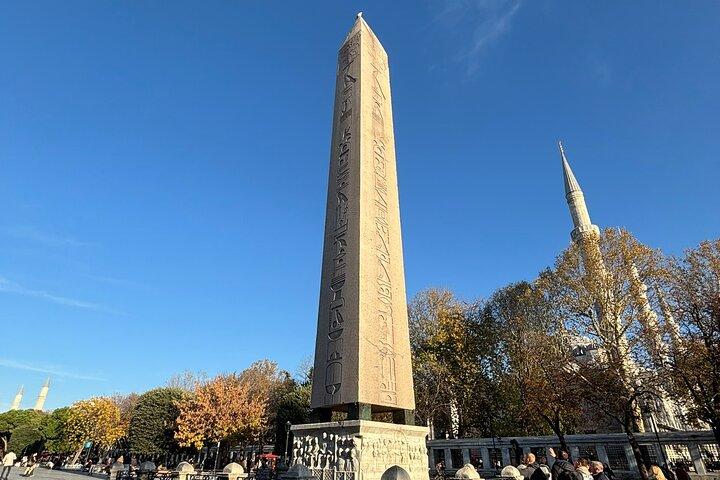
Walk through the former Hippodrome, once the ceremonial and civic heart of Constantinople. Its surviving monuments reveal more than Roman spectacle: objects were moved here, altered, stripped, reused, and sometimes carried away as the city changed hands.
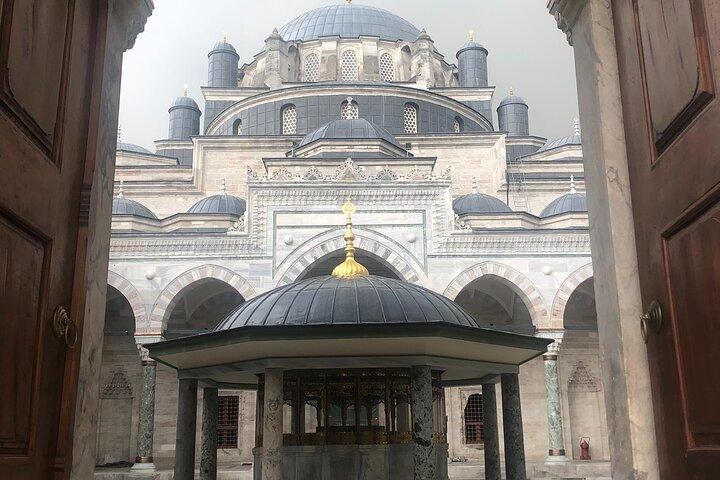
Leave the monumental center for Kadırga and a different scale of city life. At Sokullu Mehmed Pasha Mosque, architecture and sloping terrain reveal how an Ottoman neighborhood complex was fitted into the older topography of the city.
Continue through the neighborhood around Aya Kiryaki, a Greek Orthodox church whose present building reflects the city's 19th-century Greek community. Interior access depends on opening conditions; the route does not depend on entering the church.
At Gedikpaşa Hamamı, shift from emperors and monuments to the infrastructure of everyday Ottoman life. The historic bathhouse helps us read the Old City as a lived neighborhood rather than only a collection of imperial landmarks.
Return to an earlier Constantinople beneath the modern street. At the Şerefiye Cistern, we consider the city's vertical layers and the infrastructure that survives below today's urban fabric. The tour views the site from outside; paid admission is not required.
At the tomb complex of Sultan Mahmud II, read a different kind of urban layer: reform, memory, and death along Divanyolu. The surrounding cemetery preserves the names and monuments of the late Ottoman city before we continue along the historic route of the Mese.
Follow Divanyolu to the Column of Constantine, erected when Constantinople became Constantine's imperial capital in the 4th century. Today it stands beside a busy modern street — a surviving marker of the ancient Forum of Constantine and the route once known as the Mese.
Walk through the Grand Bazaar as a living commercial district rather than a shopping stop, then emerge at Beyazıt Square. Here, today's city occupies the ground of the ancient Forum of Theodosius — a fitting place to end a walk through what Istanbul has preserved, transformed, and reused.
Istanbul: The Trace City — Topkapı, Hippodrome & Grand Bazaar lasts about 4–5 hours. The itinerary has 12 stops.
Prices start at $99 per person for this Istanbul experience, booked through Viator with the price shown before checkout. There is 1 booking option, so the final price depends on the option you choose.
Yes. Cancel at least 1 day before the start for a full refund. Later cancellations are non-refundable.
The meeting point is Meet your guide at the entrance of Caferağa Medresesi, a short walk behind Hagia Sophia. Please arrive 5–10 minutes before the scheduled start time.. Hotel pickup is not part of this experience.
The experience is available in EN, TR.
It is a small-group experience with a maximum of 12 participants.
Yes, bookings are confirmed instantly.
Travellers rate it 5.0 out of 5 across 1 verified reviews; it is run by Via Vestigia.
Very informative, flexible, really recommended. Ugur was very helpful knowledgeable and accommodating. Most memorable sights were the Ayasofia and Topkapi palace.
| Tour | Duration | Rating | Price | |
|---|---|---|---|---|
| Istanbul: The Trace City — Topkapı, Hippodrome & Grand Bazaar | 4–5 hours | 5.0 (1) | $99 | |
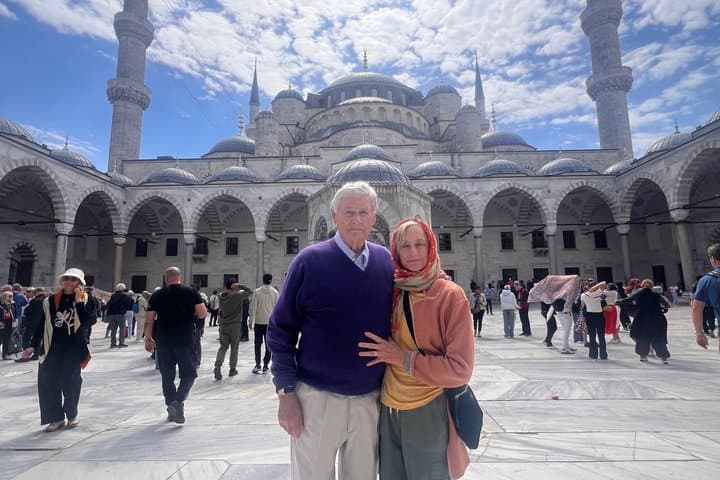 WONDERS of ISTANBUL : Full Day Private Guided City Tour WONDERS of ISTANBUL : Full Day Private Guided City Tour | 5–7 hours | 5.0 (445) | $75 | View |
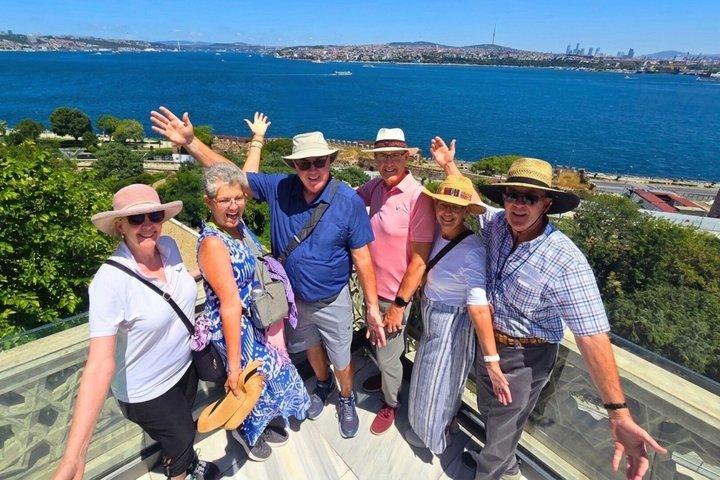 Best of Istanbul 1, 2 or 3-Day Private Guided Istanbul Tour Best of Istanbul 1, 2 or 3-Day Private Guided Istanbul Tour | 7–21 hours | 5.0 (10,117) | $100 | View |
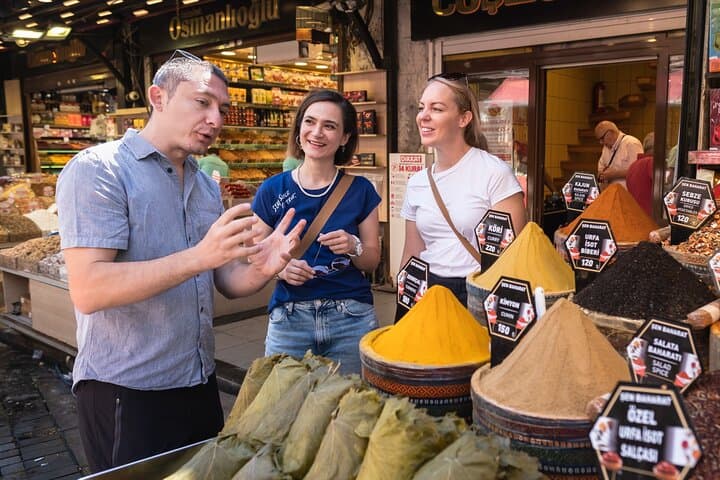 Istanbul Taste of Two Continents Food Tour - Spice Market & Ferry Istanbul Taste of Two Continents Food Tour - Spice Market & Ferry | 5h 30min | 5.0 (3,592) | $135 | View |
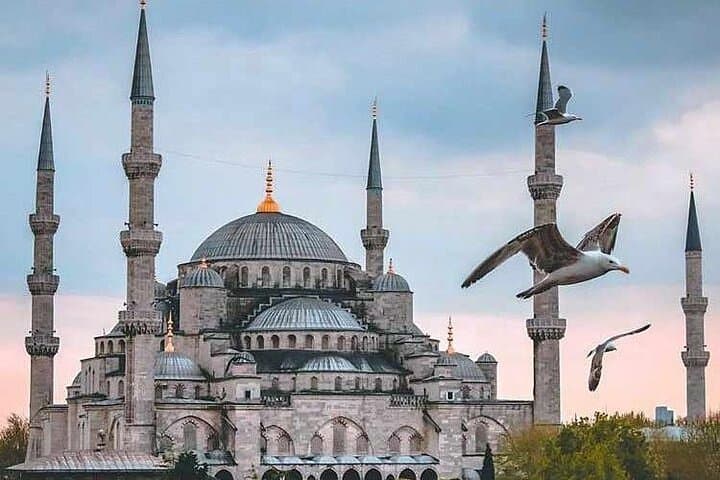 ISTANBUL BEST: Iconic Landmarks Full Day PRIVATE Guided City Tour ISTANBUL BEST: Iconic Landmarks Full Day PRIVATE Guided City Tour | 6–8 hours | 5.0 (1,478) | $85 | View |
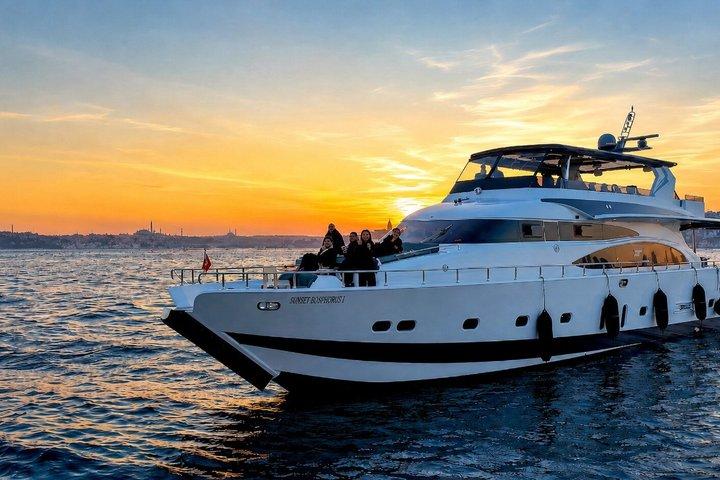 Istanbul Bosphorus Sunset Luxury Yacht Cruise with Snacks Istanbul Bosphorus Sunset Luxury Yacht Cruise with Snacks | 2h 30min | 4.9 (2,384) | $47 | View |
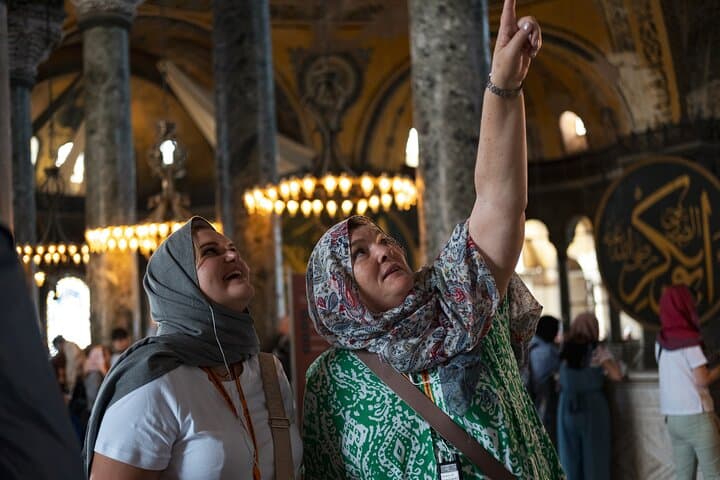 Istanbul Blue Mosque, Hagia Sophia, Basilica Cistern with Tickets Istanbul Blue Mosque, Hagia Sophia, Basilica Cistern with Tickets | 3 hours | 4.9 (131) | $135 | View |