Nine Holy CannonsThe Cửu Vị Thần Công (Nine Dynastic Cannons) were cast during the reign of Emperor Gia Long in 1803, completed in 1804. These bronze cannons are not only of significant historical importance but are also a peak in Vietnamese bronze-casting art. Their intricate carvings and high-quality casting highlight the artistic value of the 19th century in Vietnam.
The Flag TowerFlag tower Hue (Kỳ Đài ) is a historical site where major events during the Nguyen Dynasty took place, including ceremonies for festivals, celebrations, and public announcements. This site is integral to understanding the imperial life of Hue and the Nguyen Dynasty’s customs.
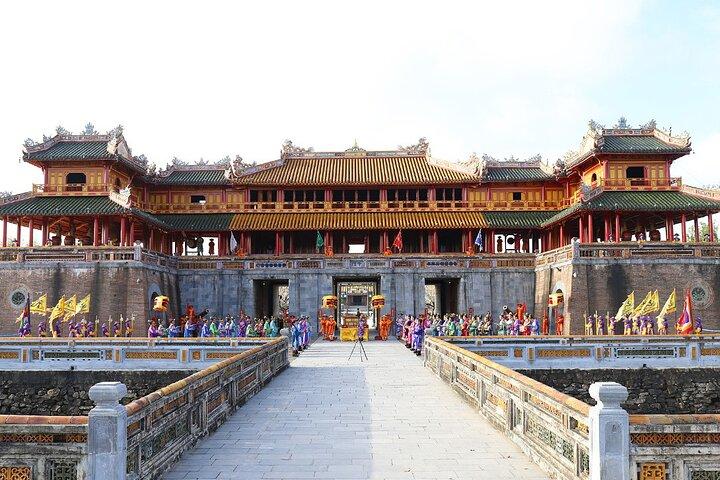
The Noon Gate (Cua Ngo Mon)As the main gate of the Imperial City, the Ngo Mon Gate was exclusively for the emperor and royal entourage. Its unique architecture has withstood the test of time and war, making it a symbol of Hue’s imperial past.
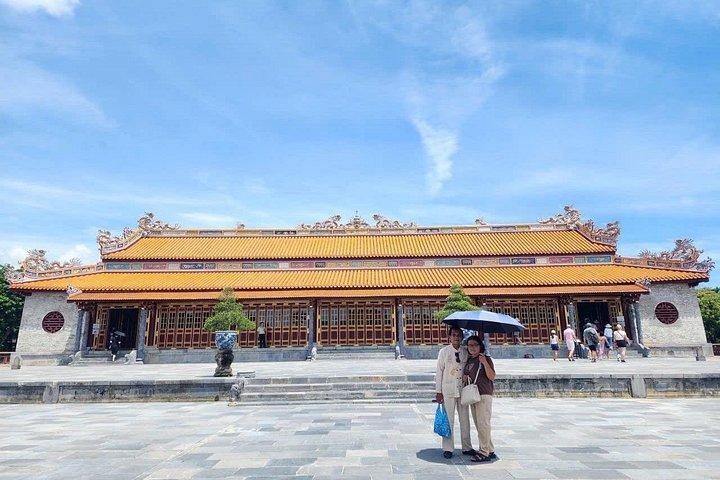
Thai Hoa PalaceThe Thai Hoa Palace, also known as the Palace of Supreme Harmony, is the most important palace within the Imperial City. It served as the venue for significant imperial ceremonies and was the location for the emperor’s throne. This palace is a key symbol of the Nguyen Dynasty’s royal authority.
Nine Dynastic UrnsConstructed between 1835 and 1837 under the reign of Emperor Minh Mang, the Nine Dynastic Urns are monumental bronze structures. Each urn stands at 2.3 meters tall and weighs between 1.9 to 2.6 tons. These urns, decorated with intricate images, reflect the cosmic worldview and human beliefs of the era.
The Mieu TempleBuilt in 1804, Thế Miếu was a place of worship for the Nguyen emperors and their queens. It also honors the great officials who contributed to the Nguyen Lords’ reign, making it an essential site for understanding the royal history of Vietnam
Hue Imperial City (The Citadel)The Purple Forbidden City represents the highest level of authority within the Imperial City, reserved exclusively for the emperor and his royal family. As the third level of the Imperial City, it was a place where only the emperor and his entourage could enter, symbolizing the royal authority.
Kien Trung Palace, built in 1923 during Emperor Khai Dinh’s reign, was the residence of the last two emperors of the Nguyen Dynasty, Khai Dinh and Bao Dai. This palace is a symbol of the last chapter of the Nguyen Dynasty’s imperial rule.
Hue10 min
Truong Lang (Long Corridor):
The Truong Lang, a system of long corridors within the Forbidden Purple City, facilitated communication and movement within the palace. It illustrates the spatial division and the organizational structure of the Imperial City.
Hue10 min
The Hall of Peace (Thai Binh Lau)
Thai Binh Palace is a tranquil retreat for the emperor to rest, reflect, and compose poetry. This hall reflects the emperor’s need for a peaceful space for personal reflection amidst the grandeur of imperial life.
Duyet Thi Duong TheaterThe Royal Theatre was one of four built during the Nguyen Dynasty for cultural performances. It provided a space for artistic expression and enriched the spiritual life of the imperial court.
Hue10 min
Hien Nhon Gate
Located at the eastern side of the Imperial City, Hien Nhon Gate was built in 1805 and later renovated under the reigns of Emperors Minh Mang and Khai Dinh. Considered the most beautiful of the 13 gates of the Imperial City, it is renowned for its exquisite carvings and decorations.