T
Do-it-yourself Tour
We used the Shaka self-guided tour fir our visit to the Gettysburg memorials and battlefields. Well worth the modest price paid. Would recommend this option to all.
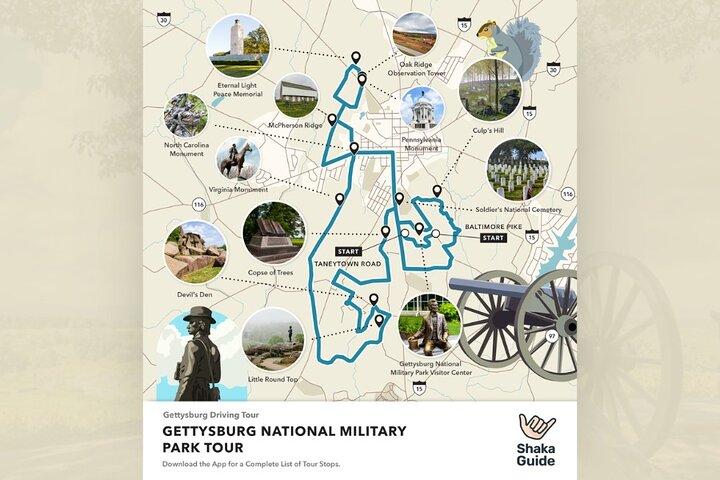
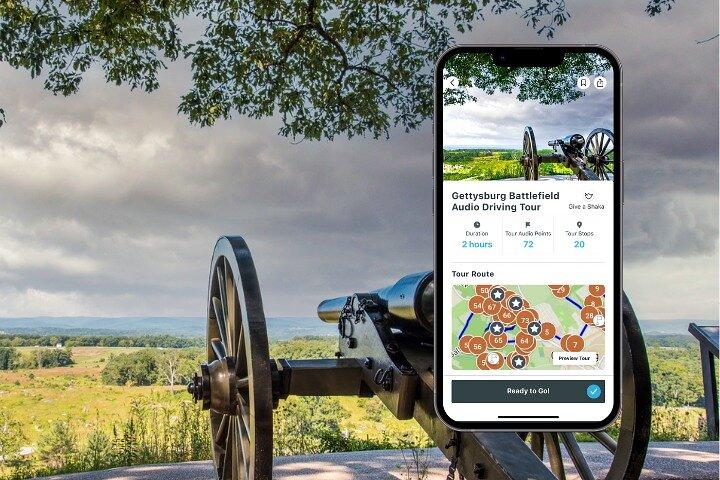
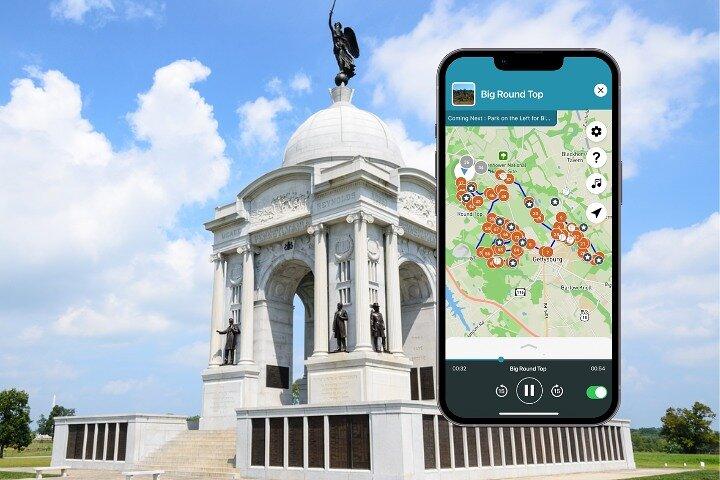
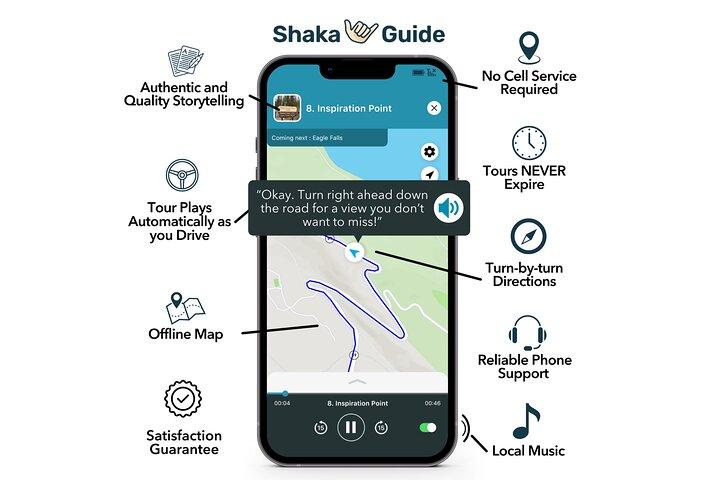
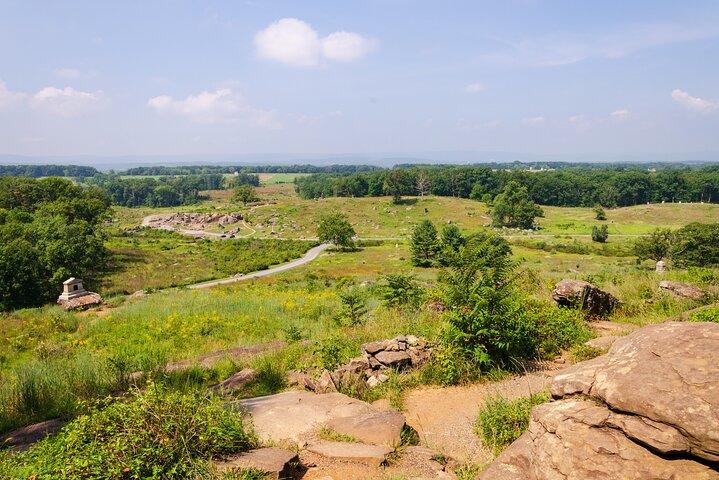


Step onto hallowed ground with our immersive Gettysburg Battlefield self-guided driving audio tour! Relive the epic three-day battle that shaped America as you drive past key sites like Little Round Top, Pickett’s Charge, and Devil’s Den. Unlike crowded tours, this guide lets you explore at your own pace, stopping whenever you want to soak in the history. Hear expert insights, gripping soldier stories, and hidden details you won’t find on plaques. Affordable and flexible, this tour transforms your car into a personal time machine. Join thousands who’ve rediscovered Gettysburg with the freedom of an audio tour—download now and step into history! *Download the Shaka Guide app to access the purchased tours*
The Visitor Center offers a rich introduction to the Battle of Gettysburg. Visitors can explore the museum exhibits, featuring artifacts, interactive displays, and multimedia presentations on the Civil War and the battle's significance. The Cyclorama, a massive 360-degree painting, immerses guests in Pickett's Charge. A film narrated by Morgan Freeman, A New Birth of Freedom, provides historical context. Rangers lead talks, tours, and educational programs. The bookstore offers souvenirs and resources, while the refreshment saloon provides meals in a period-inspired setting.
McPherson Ridge at Gettysburg National Military Park marks the site of the opening clash of the Battle of Gettysburg on July 1, 1863. Visitors can explore historic landscapes, including woodlots and open fields, where Union and Confederate forces first engaged. Key landmarks include the McPherson Barn, used as a field hospital, and monuments honoring regiments and leaders such as General John Reynolds. Wayside exhibits provide detailed insights into the events of the battle. The ridge offers panoramic views of the battlefield and its surroundings.
This monument features a bronze relief portrait of Doubleday mounted on a granite base. It commemorates his leadership in commanding the Union’s First Corps after the death of Major General John Reynolds. Though Doubleday is often linked to the myth of inventing baseball, his true legacy lies in his service during the Civil War.
The Eternal Light Peace Memorial at Gettysburg National Military Park commemorates unity between the North and South. Erected in 1938 for the battle's 75th anniversary, it features a granite and Alabama limestone tower crowned by a perpetually burning gas flame symbolizing peace. The site offers stunning views of the battlefield's northern sector, including Oak Hill and the fields where the first day’s fighting unfolded. Surrounding the memorial are monuments and markers honoring units from both Union and Confederate forces. The tranquil setting invites reflection on the sacrifices made during the Civil War and the enduring hope for reconciliation.
The Oak Ridge Observation Tower offers breathtaking views of the first day’s battlefield, including key areas like McPherson Ridge, Eternal Light Peace Memorial, and the fields of the Union defense line. From the tower, visitors can trace the movements of Union and Confederate forces during the pivotal opening day of the battle. Nearby are significant monuments, such as the 11th Pennsylvania Infantry Monument, featuring the famous war dog Sallie, and markers honoring Union and Confederate units.
The 11th Pennsylvania Monument honors the regiment's service during the battle. It features a bronze statue of the regiment's mascot, Sallie, a loyal war dog who stayed with the wounded and fallen. Surrounding the monument are battle markers detailing the regiment's position during the first and second days of fighting.
The General Lee Headquarters site preserves the historic stone house used by Confederate General Robert E. Lee during the battle. Visitors can explore the restored Mary Thompson House, which served as Lee's headquarters and a field hospital. The area features interpretive signs detailing the battle’s events and Lee’s strategic decisions. Nearby, visitors can see artillery emplacements and monuments commemorating Confederate units. The location offers views of Seminary Ridge and the surrounding battlefield, providing insight into the Confederate command’s vantage point. The site also includes a small garden area, perfect for reflection on this historic setting.
Seminary Ridge, a key Confederate position during the Battle of Gettysburg, offers a wealth of historic and scenic features. Visitors can explore the Lutheran Theological Seminary, including its cupola, used as an observation point by Union General Buford. The Seminary Ridge Museum provides exhibits on the battle and the Civil War's broader context. Numerous monuments and markers honor Confederate units and leaders, and the ridge offers panoramic views of Pickett’s Charge.
The North Carolina Monument at Gettysburg honors the valor of North Carolina troops during the battle. Designed by Gutzon Borglum, it depicts five Confederate soldiers advancing into battle. Located on Seminary Ridge, it offers a view of Pickett’s Charge, symbolizing the courage and sacrifice of North Carolinians in the Civil War.
The Virginia Monument at Gettysburg features a bronze statue of General Robert E. Lee atop his horse, Traveller, leading his troops. Surrounded by Confederate soldiers in relief, it commemorates Virginia’s contributions to the battle. Located on Seminary Ridge, it marks the starting point of the famous Pickett’s Charge.
The Warfield Ridge Observation Tower offers panoramic views of Gettysburg's southern battlefield, including key sites like Little Round Top, Devil’s Den, and the Peach Orchard. It highlights the Confederate approach on July 2, 1863. Nearby markers and monuments honor the actions of Confederate divisions during their assault on Union positions
The Big Round Top Trail is a short but moderately challenging hike leading to the highest elevation on the battlefield. Surrounded by dense forest, the trail winds past scattered boulders and remnants of Civil War history. While the wooded summit doesn't offer expansive views, it provides a peaceful atmosphere for reflection. Interpretive markers along the trail highlight the historical importance of this area, making it a rewarding stop for both history enthusiasts and nature lovers.
Little Round Top was a crucial site of Union defense during the second day of battle. Visitors can see dramatic rocky outcroppings and sweeping views of the battlefield, including Devil’s Den, the Wheatfield, and the Peach Orchard. The site is marked by numerous monuments, including the 20th Maine Monument, honoring the regiment’s heroic stand under Colonel Joshua Chamberlain. The Warren Statue commemorates Union General Gouverneur K. Warren, who recognized Little Round Top’s strategic importance.
Devil’s Den is a striking site of fierce fighting during the battle’s second day. Known for its massive boulders and rugged terrain, it offers a dramatic landscape that played a pivotal role in the Union’s defense. Visitors can explore the Slaughter Pen, a deadly hotspot of combat, and view monuments honoring Union and Confederate units. The site overlooks Little Round Top, highlighting its tactical significance. Interpretive signs detail the fierce clashes that occurred here, while its scenic views and historic atmosphere make it a popular destination for understanding the battle’s intensity and human cost.
The Pennsylvania and First Minnesota Monuments honor key contributions during the battle. The Pennsylvania Monument, the park’s largest, features a grand dome, bronze tablets listing all Pennsylvanian soldiers, and statues of notable leaders like Meade and Reynolds. Climb to the observation deck for sweeping battlefield views. Across the road, the First Minnesota Monument marks the regiment’s heroic charge on July 2, 1863, which halted a Confederate advance at great cost, losing over 80% of its men. The monuments are surrounded by interpretive signs, additional markers, and the dramatic landscape of Cemetery Ridge, central to the Union defense.
Spangler’s Spring is a serene, historic site on Culp’s Hill where Union and Confederate soldiers reportedly shared water during lulls in the fighting. Surrounded by monuments and markers, it symbolizes humanity amid conflict. Nearby, trails explore the intense fighting on Culp’s Hill, a key Union defensive position.
Culp’s Hill offers a mix of history and stunning views. The Culp’s Hill Observation Tower provides a panoramic perspective of the battlefield and surrounding areas, emphasizing the hill’s strategic importance. Visitors can explore well-preserved breastworks, constructed by Union soldiers to defend against Confederate assaults during intense fighting on July 2–3, 1863. Numerous monuments and markers honor Union regiments that held the line, including the Maryland Monument, the only monument for both Union and Confederate troops. Trails lead to Spangler’s Spring, a site of rumored battlefield camaraderie, combining a peaceful setting with vivid historical storytelling.
The Copse of Trees is a symbolic landmark on Cemetery Ridge, marking the Confederate "High Water Mark" during Pickett’s Charge on July 3, 1863. This small cluster of trees became the focal point for the Confederate assault’s culmination and eventual repulsion. You'll find nearby monuments commemorating Union and Confederate units, including the High Water Mark Monument, honoring the Union’s successful defense. Interpretive signs detail the charge’s dramatic events, and the surrounding area offers views of the battlefield, including Seminary Ridge. This historic site provides insight into one of the Civil War’s most pivotal moments.
The Soldier’s National Cemetery is a sacred site where over 3,500 Union soldiers are buried, commemorating their sacrifice in the Civil War. It is the location of President Abraham Lincoln’s iconic Gettysburg Address, delivered at the cemetery’s dedication in 1863. Visitors can explore rows of grave markers, the Lincoln Speech Memorial, and the Soldiers' National Monument, the cemetery’s focal point. The site’s serene atmosphere encourages reflection on the battle’s legacy. Adjacent to the battlefield, it offers sweeping views of Cemetery Hill and nearby landmarks, emphasizing the cost of the war and the enduring fight for national unity.
Reviews collected by Viator and Tripadvisor
For a full refund, cancel at least 24 hours before the scheduled departure time.
Gettysburg Battlefield Self Guided Audio Driving Tour lasts about 8–9 hours. The itinerary has 19 stops.
Prices start at $13 per person for this Gettysburg experience, booked through Viator with the price shown before checkout. There is 1 booking option, so the final price depends on the option you choose.
Yes. Cancel at least 1 day before the start for a full refund. Later cancellations are non-refundable.
The experience is available in EN.
It is a small-group experience with a maximum of 15 participants.
Infants and small children can ride in a pram or stroller
Wheelchair accessible
Yes, bookings are confirmed instantly.
Travellers rate it 4.3 out of 5 across 36 reviews on Viator and Tripadvisor; it is run by Shaka Guide Apps.
Reviews collected by Viator and Tripadvisor
We used the Shaka self-guided tour fir our visit to the Gettysburg memorials and battlefields. Well worth the modest price paid. Would recommend this option to all.
Make time for this tour. It has you stop at multiple locations. Hit all of the places I wanted to see.
Great overview and way to see the battlefield by yourself driving. This was very insightful and driving and commentating with your phone's gps is the only way to go.
Very well done tour,very informative and entertaining. We especially liked the way the tour was laid out chronologically. A great amount of historical detail was provided.
Aloha Larry, We're thrilled to hear that the timeline layout and historical depth hit the mark for your trip through Gettysburg. Safe travels on your next adventure, and we hope to guide you again down the road! 🤙
If you are a senior it isn’t easy to get app! You have to go someplace else and do all sorts of stuff!
Aloha Glenda, We are so sorry for the frustration you experienced while setting up the app. We know how overwhelming technology can be, and we truly wish we could have stepped in to help guide you through it at the time. We really appreciate your honesty. I’m sharing your feedback directly with our team, as insights like yours are essential in helping us make the app easier and more accessible for everyone. If you're open to sharing a few more details, please reach out to us at aloha@shakaguide.com. We'd love the chance to connect and make things right for you. Mahalo for giving us a try, Shaka Guide O'hana
Great experience! Informative, interesting information combined with leisure stop and take pictures, walk around site, total package. Highly recommend!
Aloha Cindy, So glad to hear you had an awesome time at Gettysburg—that balance of learning the history while having total freedom to jump out, snap photos, and wander around at your own pace is really what it's all about. Appreciate the recommendation so much! Hope we get to join you on your next road trip. 🌺🤙
We had a good tour. It took us a little while to figure out how the app works, but we eventually got it. After we were on our way, it was very informative and gave us good directions. I'll
Aloha Joel, Navigating somewhere new can definitely take a minute to get used to, so we really appreciate your patience as you figured things out. We can't wait to join you on your next adventure! 🤙 With warm aloha, Shaka Guide Team 🌺
Easy to use. Does not work with Android auto, but we just used Bluetooth for sound and kept the map on.
Aloha Holly, So glad you got to check out Gettysburg on your own time! Our crew is actually working hard on Android Auto right now, so fingers crossed we'll have that ready for future trips! Really appreciate you rolling with the Bluetooth setup in the meantime to keep the music and stories going. Thanks for cruising with us—hope to hit the road with you again soon! 🤙 With warm aloha, Shaka Guide Team
If you want to see a specific regime monument ask at the visitor center it's location as not every monument is on the tour.
Aloha Holly, Mahalo for sharing such a helpful tip for fellow travelers! We really appreciate you pointing that out. With hundreds of memorials scattered across Gettysburg, stopping by the visitor center first is definitely a smart move for anyone looking to honor a particular unit or story. We're glad our narration could guide you through the main highlights along the way! Wishing you many more memorable journeys ahead! Mahalo, Shaka Guide Team
The audio car tour was fantastic. Worked very well with Apple CarPlay. It made touring the Gettysburg battlefield much more enjoyable than just viewing a bunch of monuments.
Aloha David, So awesome to hear that CarPlay worked like a charm and that bringing the history to life made your drive so much more meaningful. That's what it's all about! Thanks for bringing us along for the ride. Can't wait to explore the next spot with you! Mahalo, Shaka Guide Team
| Tour | Duration | Rating | Price | |
|---|---|---|---|---|
| Gettysburg Battlefield Self Guided Audio Driving Tour | 8–9 hours | 4.3 (36) | $13 | |
 Self Guided Driving Audio Tour of Valley Forge Self Guided Driving Audio Tour of Valley Forge | 1–2 hours | — | $17 | View |
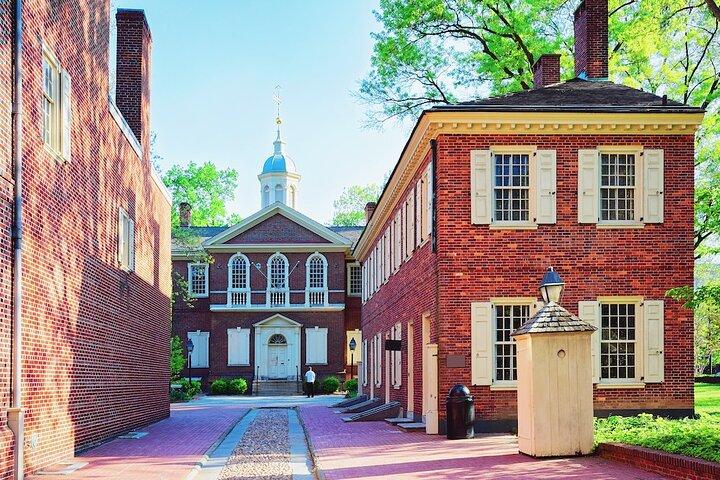 Historic Sites of Philadelphia Self-Guided Walking Audio Tour Historic Sites of Philadelphia Self-Guided Walking Audio Tour | 1h–1h 30min | 4.4 (37) | $9 | View |
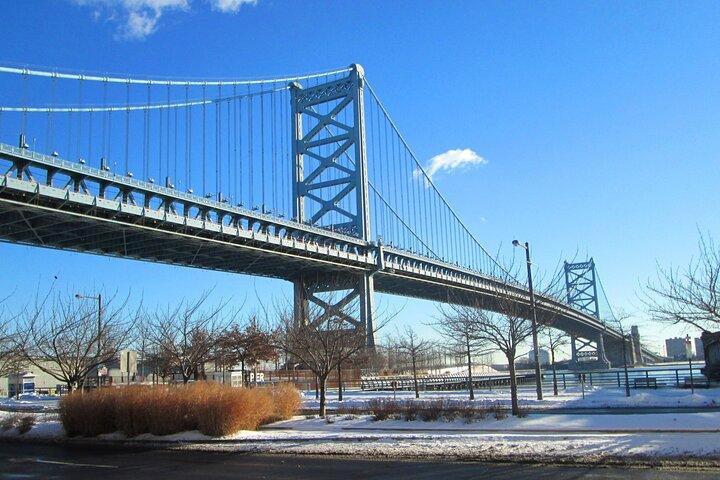 Philadelphia's Lost Waterfront: A Self-Guided Audio Tour Philadelphia's Lost Waterfront: A Self-Guided Audio Tour | 40 min–1h | 4.3 (3) | $8 | View |
 Philadelphia’s Black History: A Self-Guided Audio Tour Philadelphia’s Black History: A Self-Guided Audio Tour | 1h 15min–1h 30min | 3.0 (1) | $12 | View |
 The Road to Revolution: A Self-Guided Audio Tour in Philadelphia The Road to Revolution: A Self-Guided Audio Tour in Philadelphia | 2h–2h 30min | 3.0 (2) | $15 | View |
 Discover Fantastic Philadelphia: Self-Guided Audio Tour Discover Fantastic Philadelphia: Self-Guided Audio Tour | 2–5 hours | 3.0 (2) | $15 | View |