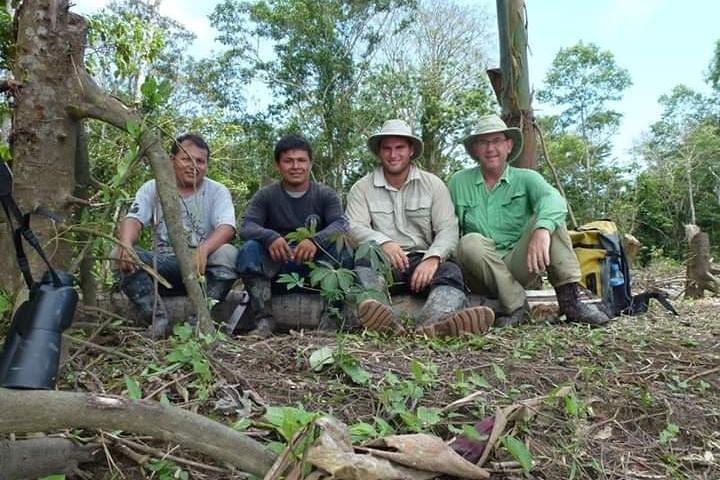
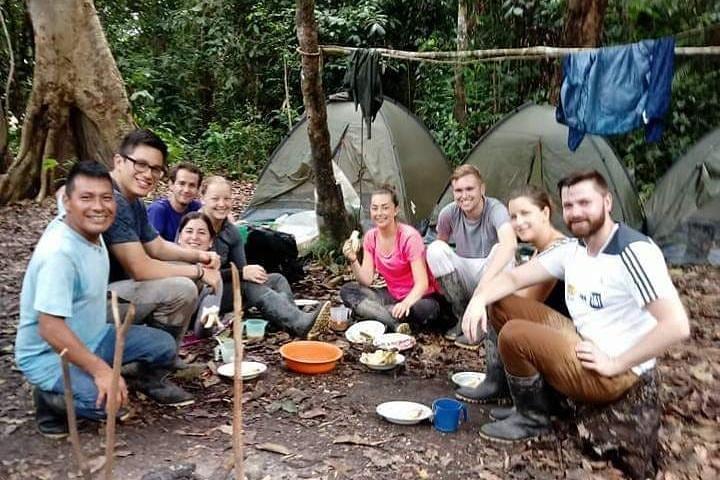
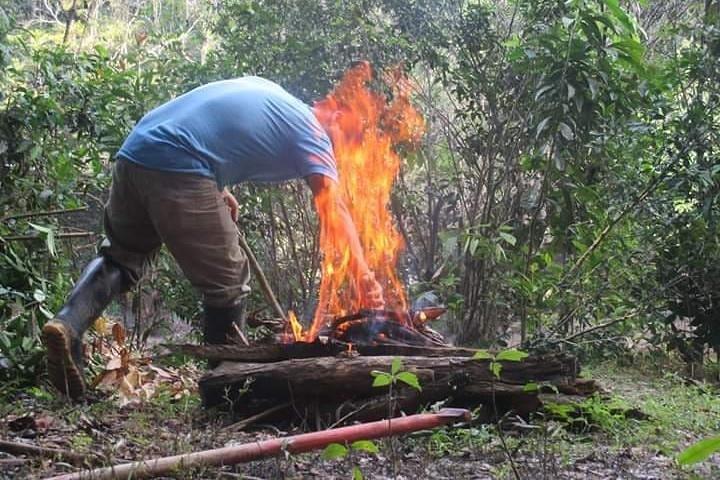
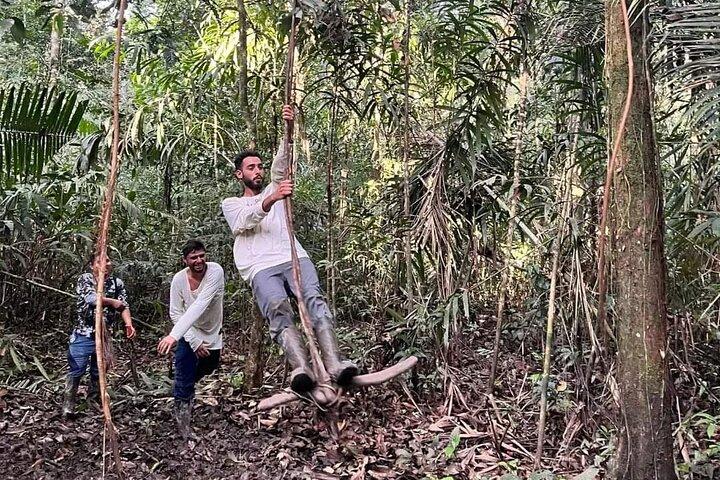
This is where my immersive survival expedition in the Peruvian Amazon jungle, in Iquitos, comes to an end. 8 days and 7 nights during which I built traps and a spear, started fires, hunted and fished, and built a shelter where I slept alone in the jungle, surrounded by darkness, noises, animals, and insects everywhere. Everything was done in true survival style, without any modern help. I never felt sick, even though I ate caiman, electric eel, giant frogs, and piranhas. At times, there were so many insects that they flew into my mouth every time I opened it. Mosquito bites everywhere, spiders, scorpions, and snakes: I had to be careful about everything I touched and everywhere I sat or leaned. Hunting during the day and at night, in complete darkness, with only my headlamp and the moon, knowing that if we didn’t catch anything, we would go hungry. And out there, energy is essential for survival. I drank water from a lagoon after boiling and filtering it, was bitten by fire ants, and drank water directly from the vines growing on the trees. Nothing else matters when the heat and humidity are so intense that you remain sweaty and dirty for days without washing, or when you spend entire days under heavy rain, completely soaked day and night. Despite the water and mud, you still have to carry on with your day. When you finally find a lagoon where you can wash, it feels like paradise. The same goes for swimming in the river where, only a few hours earlier, I had caught piranhas and where we went searching for caimans at night. Diving in to cool down, even for just a few minutes, and washing away the sticky sweat I had been carrying for days—while still feeling little bites on my back and legs from tiny fish or who knows what—before climbing back into the canoe and continuing the journey. One of my guides developed a slight fever, while the other had back pain and got a wooden splinter in her eye while cutting with the machete. Luckily, I had brought some medicine and eye drops with me. At the same time, they treated me with sap from a “doctor tree” and a ritual. Later, they also gave me a cleansing bath using fruits and plants. Learning how many trees and plants in the jungle can help you when you don’t have access to the medicines we are used to is incredible. At night, we told each other stories about jaguars, anacondas, and spirits of the jungle, while the sounds of the forest and its animals continued all around us. I watched the sun set and the moon rise almost at the same time, surrounded by picture-perfect scenery and a star-filled sky that left me speechless. I saw capybaras, monkeys, snakes, and countless other species of animals and birds. I searched for turtle eggs for breakfast and made my way through the thickest parts of the jungle with my machete. The jungle is a fascinating but dangerous place, where you understand that if you cannot adapt and survive, nature will overpower you. Finally, I was welcomed into their village and their homes, played with the children, and was also able to offer some advice to the person responsible for operating the water purification filters, trying to help them improve and manage the system more effectively. It provides their only source of drinking water, taken directly from the river. Visiting beautiful places is wonderful, but this was a surreal, incredible, and unique experience. It is truly thought-provoking to realize that today, in 2026, there are still communities of around 150 people living this way in the heart of the jungle—where money matters relatively little and the ability to hunt, fish, grow food, and understand nature is among the most important skills needed to live. This was not a tourist excursion, but a genuine survival course completed by only six people each year. One of the most powerful experiences I have ever lived, and one that I will carry with me forever.
full course amazon 8/ Days /7 Nights


+3 photos


At a glance
- Duration
- 8 days
- Price from
- $70,000 / person
- Location
- Iquitos, Peru
- Rating
- 5.0 / 5 · 9 reviews
- Languages
- EN, ES
- Group
- Private
- Cancellation
- Free cancellation
- Confirmation
- Instant
- Ticket
- Mobile or paper ticket accepted
- Operator
- Amazon Jungle Survival Tours
Description
This trip allow you to enter deeply in nature and learn about natural history and crosscultural experience. We working for build a very responsable tourism with porpuse and environmental friendly ways.
Tour Options
What's included
Included
transportation,tour guide,all the meals,all the activities in the jungle
Not included
tips,beers,ticket flights
Traveller Ratings
5.0
9 reviews
Important Information
- Public transportation options are available nearby
- Specialized infant seats are available
- Not recommended for travelers with spinal injuries
- Not recommended for pregnant travelers
- Not recommended for travelers with poor cardiovascular health
- Suitable for all physical fitness levels
Cancellation
For a full refund, cancel at least 24 hours before the scheduled departure time.
1+ days before100% refund
0–1 days before0% refund
Frequently asked questions
How long does full course amazon 8/ Days /7 Nights take?
full course amazon 8/ Days /7 Nights lasts about 8 days.
How much does full course amazon 8/ Days /7 Nights cost?
Prices start at $70,000 per person for this Iquitos experience, booked through Viator with the price shown before checkout. There is 1 booking option, so the final price depends on the option you choose.
Can I cancel full course amazon 8/ Days /7 Nights for free?
Yes. Cancel at least 1 day before the start for a full refund. Later cancellations are non-refundable.
What languages is full course amazon 8/ Days /7 Nights offered in?
The experience is available in EN, ES.
Is this a private or a group tour?
It is a private experience: only your party takes part. Up to 10 travellers can book together.
Is the tour suitable for children?
Specialized infant seats are available
Will my booking be confirmed immediately?
Yes, bookings are confirmed instantly.
Is full course amazon 8/ Days /7 Nights worth it?
Travellers rate it 5.0 out of 5 across 9 verified reviews; it is run by Amazon Jungle Survival Tours.
Reviews(9)
W
8 Days in the Amazon: A True Survival Experience
3
Amazing
I wanted to experience the jungle. No airconditioned room or seeing from a safe distance sort of thing. I were searching for an adventure - one with connection to the jungle and with the local people. If that is what you are looking for, then this is your team. The guide Ricky is super friendly and helpful the whole stay in Iquitos even after the tour has ended
D
It was incredible!
From the bottom of my heart I say THANK YOU for this indescribably great week in Iquitos! It was the best decision to choose you as my guide. I was very selective and did a lot of research. I didn't want a "classic tourist tour". The contact was super professional right from the start. Ricky was a wonderful guide at all times. I have carried wonderful experiences with me ever since! I felt very comfortable as a woman traveling alone! Hairo our boatman and Ricky really went out of their way to make me happy every day. They are so lovely and funny. I will carry this time with me all my life, it was very special! I wish you all the very best! 1000% recommendation for this company. I miss the Amazonas Camp and ricky's cooking skills <3
1 people found this helpful
C
This is the Place
My girlfriend and I wanted to experience the jungle. No airconditioned room or seeing from a safe distance sort of thing. We were searching for an adventure - one with connection to the jungle and with the local people. If that is what you are looking for, then this is your team. The lodge is small and simple. It is owned and run completely by the local community. Describing each detail of our experience is futile - it will suffice to say that as much as we experienced, the jungle is not finished with us. Her voice still reaches my ear, and we are planning our return. Shout out to Ricky as our guide. With him, everything is possible!
1 people found this helpful
1
jungle experience
I want to recommend everyone of Edgar's teips to the jungle. we went for a 3 days. everything was very organized.the food was really delicious. he showed us all the beauty that the jungle offers.it was amazing!! if you want a trip to the jungle than only with Edgar!!!
O
אמזונס
We arrived on a trip to Amazon 3 friends and got us Edgar the guide. From the first moment he gave us personal and professional treatment! We had so much fun in Aeol we learned and saw life in the Amazon and we finally saw animals we never saw. I 100% recommend going on this trip especially with a guide like Edgar!
J
Honeymoon to Peru
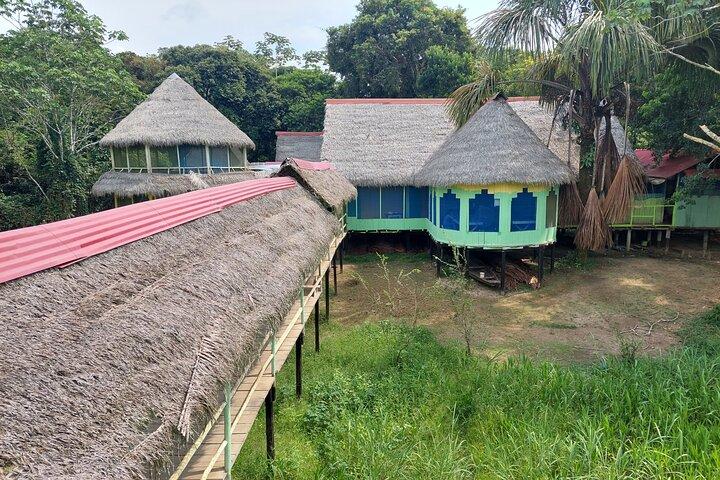
Edgar and his jungle survival knowledge were just what my wife and I were looking for during one of the weeks of our honeymoon adventure to Peru. Edgar took us deep into the jungle and showed us how to catch caiman, use basic tools to catch and cook piranhas, and locate a variety of monkeys and other wildlife. Throughout our time with Edgar, we felt extremely safe and comfortable. By the end of our trip, he was definitely our friend. He was kind and considerate to our needs. I can't wait to go back to Peru and go on another adventure with him someday soon!
M
Amazing Tours great guide
I've had the pleasure to spend some time in the Amazon Jungle with our Peruvian guide Edgar. It was an amazing experience! I highly recommend Edgar as a guide in the Amazon jungle!
J
An amazing experience!
We were accompanied by Edgar for 4 wonderful days, he was born in the jungle and knows her by heart. We were able to swim with pink dolphins, taste delicious fruits, observe jungle animals, carry a baby caiman, fish for piranhas and so on... Thank you for this life experience, my friend, we should all come by your house someday. I highly recommend the services of Edgar which will make you have an extraordinary stay.
Compare similar tours in Iquitos
- Lowest price: Amazing Amazon 2Days 1Night - Amazon Wonder Expeditions — $245
- Best rated: Amazing Jungle 3Days 2Nights - Amazon Wonder Expeditions — 4.9 (54 reviews)
- Shortest: Amazing Amazon 2Days 1Night - Amazon Wonder Expeditions — 2 days
| Tour | Duration | Rating | Price | |
|---|---|---|---|---|
| full course amazon 8/ Days /7 Nights | 8 days | 5.0 (9) | $70,000 | |
 Amazing Jungle 3Days 2Nights - Amazon Wonder Expeditions Amazing Jungle 3Days 2Nights - Amazon Wonder Expeditions | 3 days | 4.9 (54) | $350 | View |
 amazon jungle experience 3 days 2 nights amazon jungle experience 3 days 2 nights | 3 days | 4.1 (17) | $260 | View |
 Amazon wildlife explorations 3 days 2 night Amazon wildlife explorations 3 days 2 night | 3 days | 4.4 (15) | $250 | View |
 Amazing Amazon 2Days 1Night - Amazon Wonder Expeditions Amazing Amazon 2Days 1Night - Amazon Wonder Expeditions | 2 days | 5.0 (7) | $245 | View |
 amazon adventure 4 days 3 nights amazon adventure 4 days 3 nights | 4 days | 4.3 (7) | $325 | View |
 Amazon Paradise 3 Days and 2 Nights Ecolodge Amazon Paradise 3 Days and 2 Nights Ecolodge | 3 days | 4.7 (7) | $361 | View |
from$70,000
5.0(9) Free cancellation