Fort KochiPass by
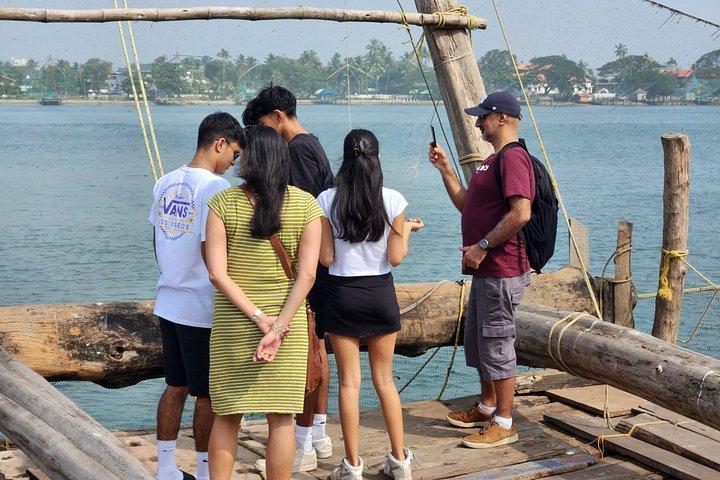
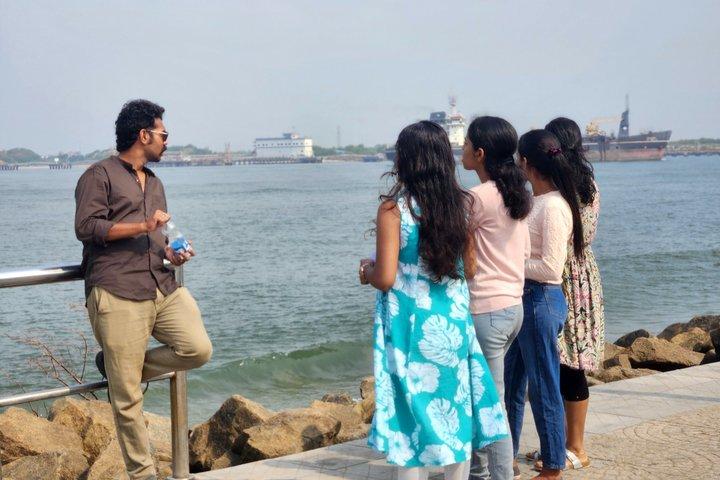
The tour begins at Fort Kochi Beach, where guests are introduced to the historical importance of Cochin as a major port city on the Arabian Sea. Here, the iconic Chinese Fishing Nets serve as a visual reminder of ancient trade connections between Kerala and China. The guide explains the maritime trade system, spice commerce, and how Cochin emerged as a global trading hub centuries ago.
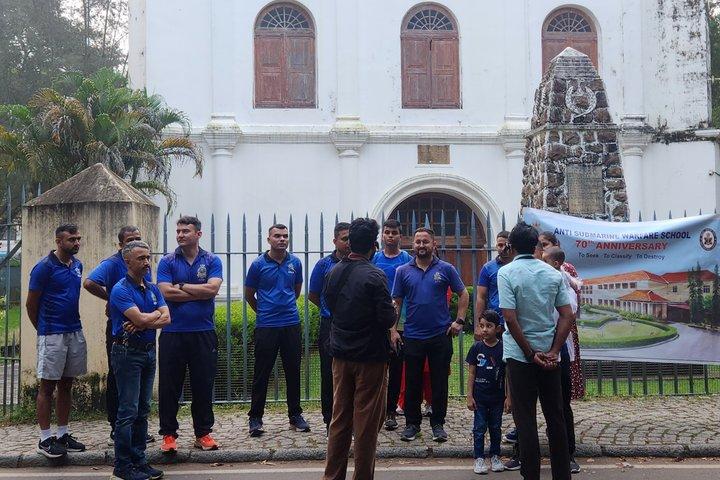
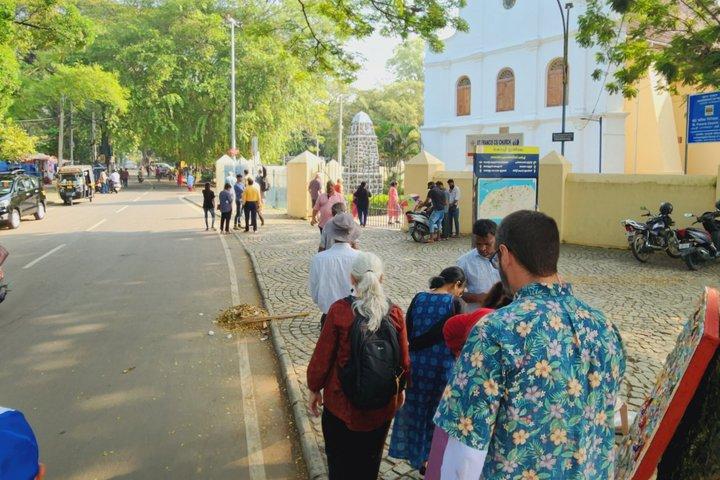
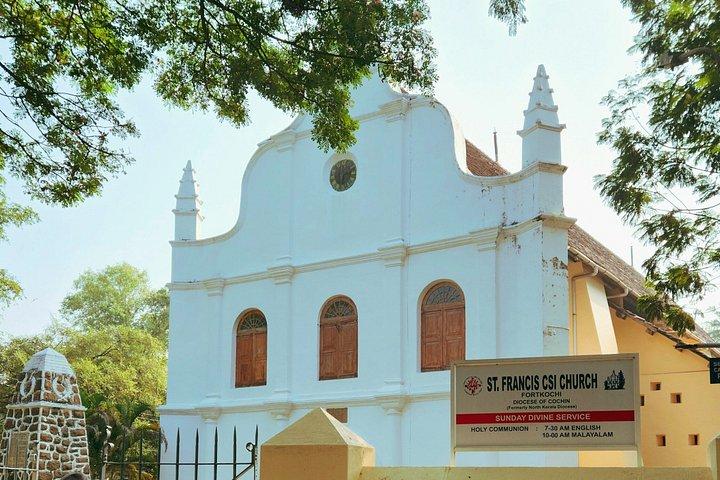
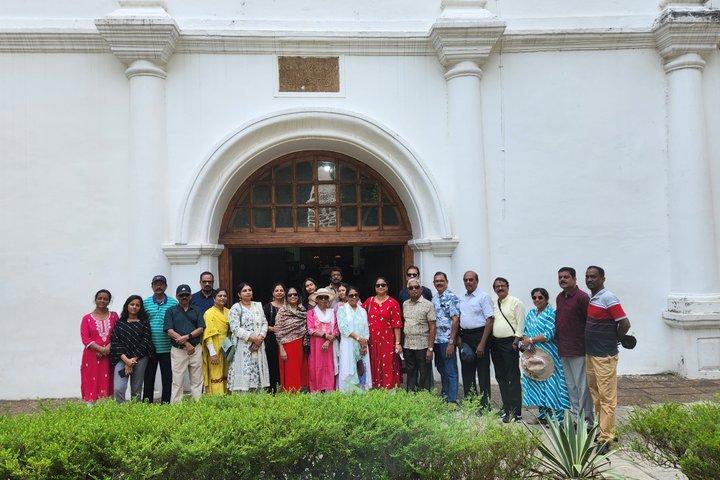
From the beach promenade, the walk proceeds to St. Francis Church, one of the oldest European churches in India. Guests learn about the arrival of the Portuguese in 1498, the establishment of colonial settlements, and the transition of power from Portuguese to Dutch and later to British rule. The church stands as a testimony to these successive regimes and their influence on the region’s administration, architecture, and religion.
Pass by
The tour continues to Santa Cruz Basilica, an important Roman Catholic landmark reflecting the strong Portuguese missionary presence in Kerala. The guide elaborates on the growth of Christianity in the region, the religious harmony that characterizes Cochin, and the coexistence of Hindu, Muslim, Christian, and Jewish communities over centuries.
Walking along Princess Street, one of the oldest streets in Fort Kochi, guests observe colonial-era buildings, traditional architecture, and modern cafés that represent the transformation of the area from a European trading quarter into a vibrant cultural district. The narrative includes insights into present-day tourism, economic activities, and the urban evolution of Kochi.
Pass by
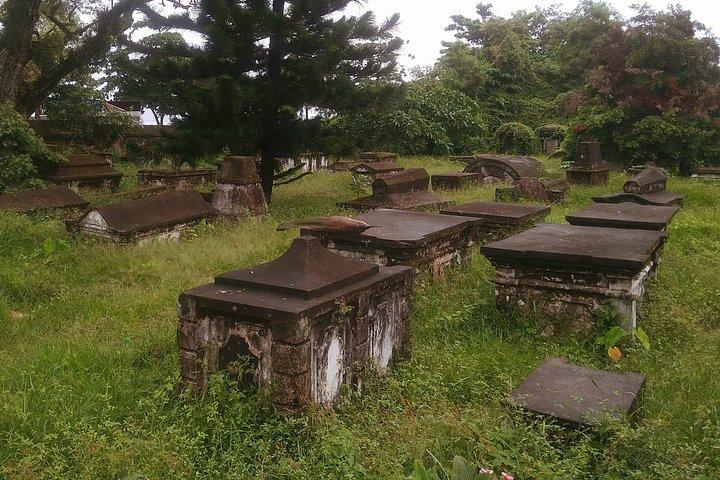
A visit to the Dutch Cemetery provides context about Dutch governance, trade monopolies, and the role of the Dutch East India Company in shaping Cochin’s political landscape. The guide discusses burial traditions, administrative systems, and the strategic significance of Cochin during the 17th century.
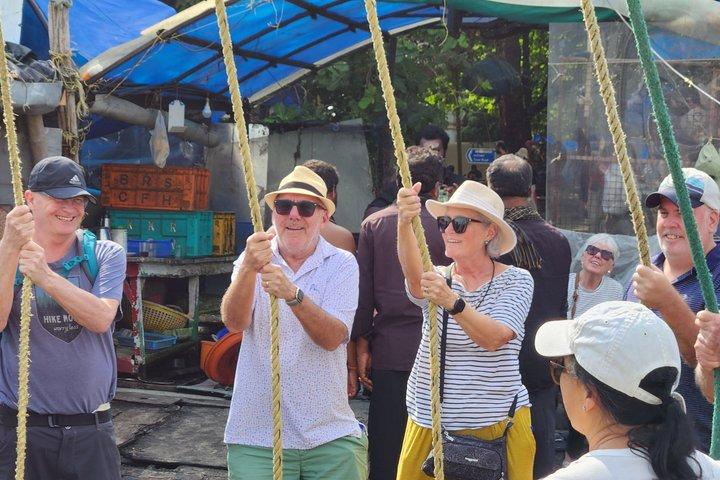
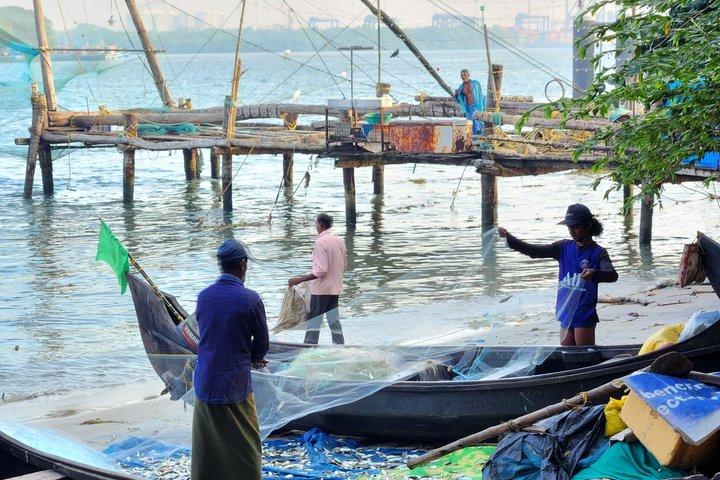
The walk also includes a visit to the local fish market, where guests witness the daily life of coastal communities. This segment highlights the continuity of maritime culture and fishing traditions that remain central to Kochi’s economy even today.
Throughout the walk, guests gain understanding of Cochin’s political transitions, its role as a princely state, its integration into modern Kerala, and its importance in Kerala’s historical, economic, and cultural framework. Discussions also touch upon contemporary political and religious dynamics, giving participants a balanced perspective on both past and present Cochin.