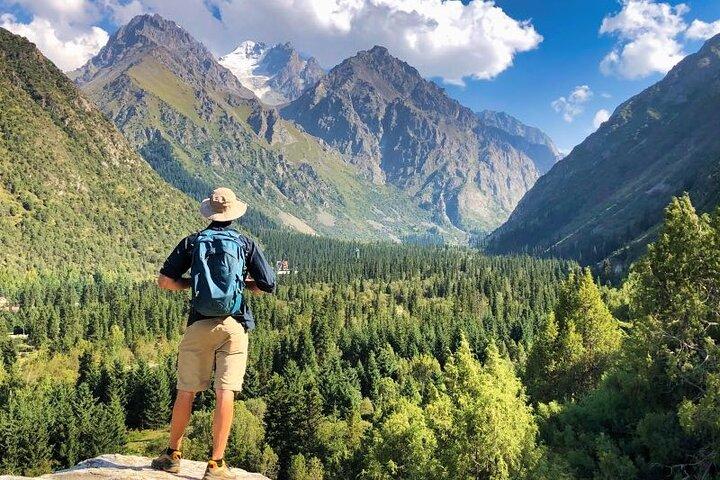
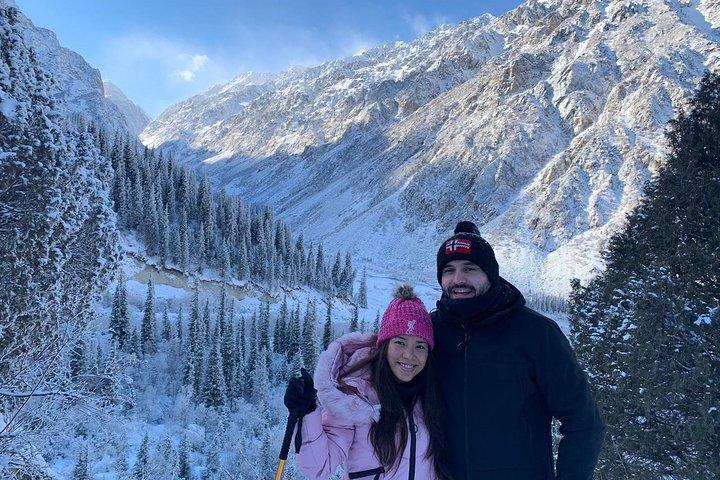
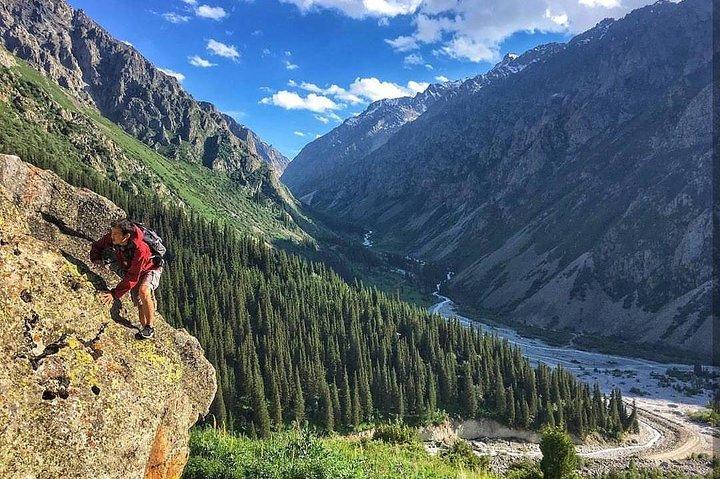
Ala-Archa National ParkAla-Archa National Park, located 40 km from Bishkek in the Tian Shan mountains, ranges in altitude from 1,500 to 4,895 meters and features glaciers, waterfalls, rich wildlife, and scenic trails popular for hiking and climbing.
State History MuseumThe State History Museum in Bishkek, Kyrgyzstan, established in 1925, showcases the country's rich cultural heritage. Housed in a striking Soviet-era building, it features a diverse collection, including artifacts from prehistoric times, traditional clothing, and items from the Silk Road. The museum offers insights into the nomadic lifestyle of the Kyrgyz people and their history through the Soviet era to independence, making it an essential resource for both locals and visitors.
Panfilov ParkPass by
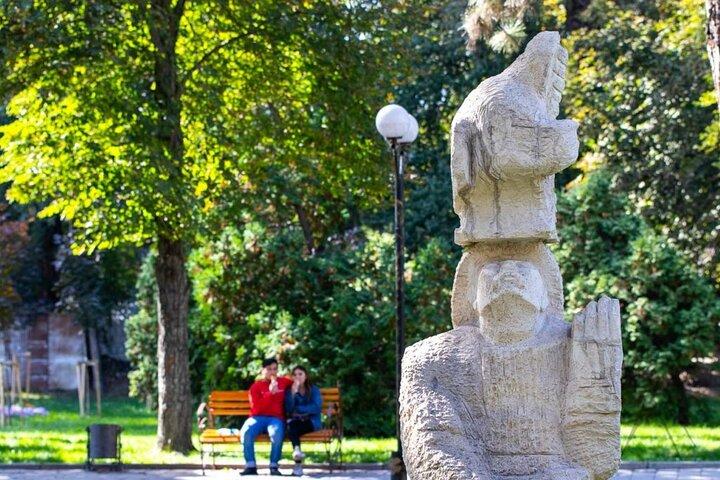
Park Panfilova in Bishkek, Kyrgyzstan, is a scenic public park dedicated to the Panfilov Division of World War II. It features lush greenery, walking paths, and a central monument honoring the soldiers. The park is a popular spot for relaxation and cultural reflection, making it a must-visit destination in the city.
Osh BazaarAdmission not included40 min
Osh Bazaar in Bishkek was created in 1983, its one of the largest and oldest markets in the country, with roots tracing back to the Soviet era and earlier. It has evolved from a small marketplace into a vibrant trading hub, offering a wide variety of goods, including fresh produce, textiles, and traditional foods. The bazaar reflects the diverse cultures of Kyrgyzstan, showcasing influences from various ethnic groups. Today, it remains a key economic and cultural center, attracting both locals and tourists with its lively atmosphere and rich heritage.
Pass by
The Jogorku Kenesh, or Supreme Council of Kyrgyzstan, is the country's legislative body with 120 members elected for five-year terms. Established in 1991, it plays a key role in shaping laws, approving budgets, and overseeing the executive branch. Operating within a parliamentary system, it influences government formation and reflects the political dynamics of Kyrgyzstan.
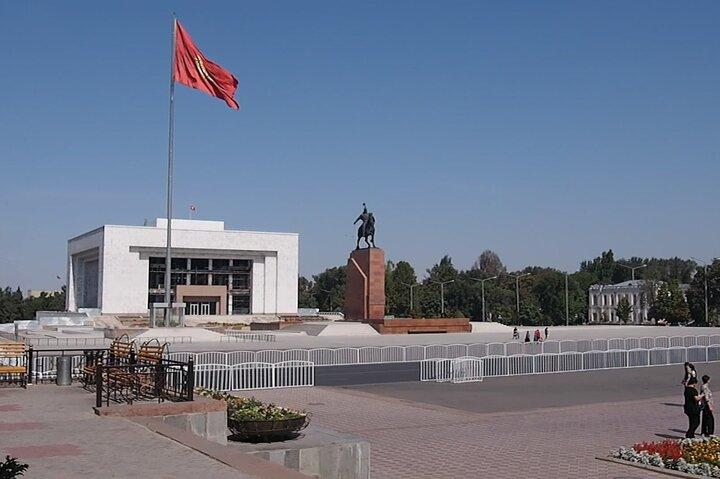
Ala-Too SquarePass by
The White House in Bishkek serves as the presidential office and has been a focal point of political unrest in Kyrgyzstan, notably during the 2005 Tulip Revolution and the 2010 riots, which resulted in significant damage, including a fire that destroyed many government records. Today, it houses deputies of the Supreme Council, while the President occupies part of the seventh floor. This building symbolizes both the political challenges and the governance structure in Kyrgyzstan.
Pass by
Kurmanjan Datka, born in 1811, was a key leader in Kyrgyz history, known for her bravery and diplomatic skills during the Russian colonial expansion in the late 19th century. After her husband's death, she united various tribes and fought to protect her people's interests. Today, she is celebrated as a national hero and a symbol of Kyrgyz resilience and strength. Monuments and cultural references honor her contributions to Kyrgyz identity.
Vladimir Lenin StatuePass by
We will pass by the monuments of Lenin and Karl Marx, which honor the influential leaders of socialism and communism. Additionally, we'll see the former U.S. university, a significant educational institution with a rich history. Lastly, we'll visit Oak Park, known for its beautiful parks and vibrant community. Each of these sites holds cultural and historical significance, providing insight into the area's heritage.
Victory SquarePass by
Victory Square (Ploshchad Pobedy) in Bishkek, Kyrgyzstan, is a key landmark honoring the nation's World War II veterans. Central to the square is a striking monument of a soldier with a child, symbolizing protection and hope. The area features beautiful gardens, making it a popular spot for relaxation and reflection. It hosts public events, especially on May 9th, celebrating victory and remembering sacrifices. Overall, Victory Square embodies Kyrgyz history, resilience, and community spirit.
Central Mosque15 min
The Bishkek Central Mosque, officially known as the Central Mosque of Imam Sarakhsi, is a significant landmark in Bishkek, Kyrgyzstan. Construction began in 2012, and the mosque was inaugurated in 2018, funded by Turkey's Diyanet. Designed in an Ottoman revival style, it ranks among the largest mosques in Central Asia, with a capacity for around 30,000 worshipers. More than just a place of worship, it symbolizes the cultural and religious ties between Turkey and Kyrgyzstan. The mosque is conveniently located near the State Wedding Palace and the State Circus, both notable attractions in the area. The State Wedding Palace is a popular venue for ceremonies and celebrations, while the State Circus offers entertainment and performances. Together, these sites contribute to a vibrant cultural hub in Bishkek, reflecting the city’s lively social and cultural landscape.
Monument to Manas the GreatPass by
Manas is a legendary figure in Kyrgyz culture and the protagonist of the epic poem "Manas," which is one of the longest epic poems in the world. The poem tells the story of Manas, a heroic warrior and leader who unites the Kyrgyz tribes against their enemies, embodying themes of bravery, loyalty, and national identity.
Manas is often regarded as a symbol of Kyrgyz pride and cultural heritage. His adventures reflect the values and traditions of the Kyrgyz people, and the epic is performed through oral storytelling, music, and dance, playing a vital role in preserving the history and culture of Kyrgyzstan. The legacy of Manas continues to influence contemporary Kyrgyz art, literature, and national identity.