City Image Tour Melbourne


+3 photos


At a glance
- Duration
- 2h 30min
- Price from
- $35 / person
- Location
- Melbourne, Australia
- Languages
- EN
- Group
- Small group, up to 10
- Cancellation
- Free cancellation up to 24 hours before
- Confirmation
- Instant
- Ticket
- Mobile or paper ticket accepted
- Operator
- City Image Tour
- Meeting point
- We meet at the Flinders Street entrance to the Australian Centre for the Moving Image (ACMI), on the bluestone pavement
Description
City Image Tour is created and delivered by Anthony McInneny, a visual artist, academic, and urban researcher who lived in the city centre in the 1980s, and returned in 2003 to create public artworks, and was part of the City of Melbourne's Arts Advisory Committee between 2004 and 2008. Anthony taught in RMIT University's Master of Art, Art in Public Space program from 2008 to 2014, and he has exhibited and published widely about public space for the last 10 years. The tour is designed to be walked and read as the story of the two Melbournes that have made this city the Cultural Capital of Australia. Art meets architecture in unique public spaces created in the transformation of the historic city to a riverfront city. Pivoting on the iconic Federation Square, we'll explore the city form, its cobblestone alleys and contemporary bluestone laneways, its pedestrianised heritage bridges, postmodern plaza, riverside promenade, and newest park that links the cultural and sporting precincts
Schedule & prices
- Runs
- Tue, Wed, Thu, Fri, and Sat
- Start times
- 2:30 PM
- Next available
- Wed, Oct 14
- Adult (ages 18–60)
- $35
- Senior (ages 61–80)
- $28
- Youth (ages 13–17)
- $18
- Child (ages 3–12)
- Free
- Infant (ages 1–2)
- Free
From the operator’s live schedule on Viator, checked Oct 13.
Tour Options
Itinerary
ACMI
The Australian Centre for the Moving Image (ACMI). ACMI was designed by Lab Architecture Studio and Bates Smart (2002) and its interior and public spaces renewed in 2021 by BKK Architects and Razorfish. ACMI anticipated the ubiquitous nature of digital screen culture and its collection of 21C content and technologoy builds on the basis of the State Film Centre library of film and television, established in 1946. Through the postmodern façade of ACMI we connect to Federation Square, Melbourne’s iconic public space, the Ian Potter Centre at the National Gallery of Victoria, and onto the Yarra River.
Hosier Lane
The cobblestone alley of Hosier Lane is a prime example of the original 1837 design for the city grid by Robert Hoddle. Heading north from ACMI, we experience Melbourne’s famous street art culture. Hosier Lane became an outdoor gallery in 1996, when City Lights studio began to appropriate this space with lightboxes and street art. Hosier lane attracts annually as many visitors as most museums of art. Local, National, and International street artists come to Melbourne create works in this landmark site.
Melbourne Town Hall
Between Flinders Lane and the Town Hall is the site of Melbourne’s original City Square, established in 1980. This controversial space was cut in half in the 1990s and is the area now known as the New City Square. The Vault (1980-1981), a modernist sculpture by Ron Roberston Swan in the original square, was immediated removed back in the 1980s and is now situated at the Australian Centre for Contemporary Art. The new New Melbourne City Square (2025) was designed by a collaboration of architects RSHP, Hassell, and Weston Williamson + Partners. Contemporary Art. The New Melbourne City Square hosts the entrance to the Town Hall Station (2025) and a digital interpretation of the Mockridge Fountain that was an integral part of the first New City Square (1996-2017).
Nicholas Building
Diagonally opposite the New, New Melbourne City Square is the Nicholas Building (1926), designed by Harry Norris for the Nicholas Brothers, who made their fortune from creating the Aspro during WWI, as an alternative to Asprin. Today the building is home to a community of 200 artists and creatives. The building’s L-shaped Cathedral Arcade, takes us from Swanston Street to the cultural heart Flinders Lane, the City Library, Ross House and the warehouse living of this former rag trade area.
Degraves Street
The Degraves Street & Centre Place intersection of Flinders Lane pivots on cafés, high end street food, boutiques, and culture. On one corner of lane of Centre Place, the Majorca Building (1930) boasts an exotic Spanish/Moorish Art Nouveau style. The design is by Harry Norris with façades of strongly coloured faience (glazed ceramics), and an ornate entrance from the original bluesstone lane of Centre Place. Down Degraves street, the underground Campbell Arcade opened as a Creative Space initiative of the City of Melbourne (2025) and connects with Flinders Street Station and Town Hall stations.
Flinders Street Station
Built in 1854, and designed by Fawcett and Ashworth Architects, the northern façade and Eastern main entrance are of French Renaissance style. Under the impressive Clock Tower at the intersection with Elizabeth Street, a heritage listed and restored underground tunnel takes us to the north bank of the Yarra River. The first rail line to Flinders Street connected Port Melbourne to the City centre. This line was surveyed by the world’s first Steam Engine Company Stephenson (established in 1823) and the line opened in 1854 as Australia’s first city rail line.
Evan Walker Bridge
We connect to the Yarra River and arrive at the northbank entrance to the Evan Walker pedestrian Bridge (1992). The bridge is named after the former Minister for Public Works who oversaw the construction of Southgate (1992) that is the original project to reorientate Melbourne to the river. The north bank of the Yarra River is a pedestrian route connecting three kilometres of river front. It is now part of the Green Line environmental restoration project to create a natural corridor from the Sports Precinct to the new Docklands precinct. On the Northbank, the City of Melbourne has coverted the original railway signal box (1854) into a youth digital art centre, featuring digital glas windows for the projection of digital video art. The pedestrial path is lined with speakers for the creation and presentation of sound works.
Sandridge Railway Bridge
This steel railway bridge was built in 1886, and replaced earlier rail connections with Port Melbourne as a modern solution to the transport of people and goods from the only port at the time. The line and bridge were decommissioned for rail use in 1987 and replaced with a light rail system through the famous Melbourne tram network. The rails were removed and the bridge was heritage listed for cultural significance. The bridge was redeveloped in 2001 and opened in 2006 as a pedestrian connection. The Travellers, by Nadim Karam 2005, is a gigantic kinetic sculpture that tells the story of the traditional owners who inhabited the area called Melbourne, and the immigrants who migrated from over 130 different countries to make Melbourne the multicultural capital of Australia
Southgate Melbourne
We cross the Sandridge Brigde and land on the Southbank Promenade (1992) designed by Denton Corker and March. Along the promenade heading east, are a series of public art and distinct public spaces. Red Stair Amphitheatre as a new public space of free public entertainment. Faultline (1996), is a sculpture by Iranian-Australian artist Hossein Valamanesh. The Ponyfish Island (1992) is a bar-restaurant underneath the Evan Walker Bridge and sits uniquely in the middle of the Yarra River. Orphelia (1992), the most loved public artwork in Melbourne is by Deborah Halpren. Dervishes (1981), by Clement Meadmore, is a world class example of modernist sculpture, mostly appreciated as a giant piece of play equipment.
Hamer Hall
Hamer Hall 1982, was designed by Roy Grounds, the same architect who designed the National Gallery of Victoria (NGV) that form tow of the three cultural centres in this precinct. The third is the State Theatre with its tower symbolizing the pitch of a circus tent, as this site was traditional the place when circuses came to town. Between Hamer Hall and the State Theatre is Inge King's Forward Surge. Commissioned by the William Angliss Art Fund, 1976, it is remarkable not only because of its form, scale, and location but because Inge King defies societal norms of the time by being a female sculpture working with architectural scale steel sculptures.
Fed Square
Designed by designed by Lab Architecture Studio and Bates Smart (2002), Federation Square is Melbourne's answer to the Sydney Opera House. From here we see St Paul’s Cathedral (1891) designed by William Butterfiled. The controversy over the original design of Fed Square, as it is known, saw several features removed to clear this view. Fed Square was declared national heritage in 2019. In Federation Square is Nearamnew (2002), a public artwork by Paul Carter. Tour participants are encouraged to make a momento from the embossed surface of Nearamnew that is integrated into the billowing post modern plaza.
Birrarung Marr
Birrarung Marr was designed by a team that included in-house landscape architects Ronald Jones and Helena Piha of the City of Melbourne, as well as external consultants like Taylor Cullity Lethlean (for detailed design), and Paul Thompson (for planting design). It opened in 2002 as Melbourne's newest public park. ArtPlay, a children’s art centre was established by the City of Melbourne in 2004 in the last remaining buildings of the former railway yards. In the parklands of Birrurung Marr is Birrarung Wilam (Common Ground) 2006. This contains works by indigenous artists Vicki Couzens (Kirrae Wurrong/Gunditjmara); Lee Darroch (Yorta Yorta, Mutti Mutti and Trawlwoolway); Treahna Hamm (Yorta Yorta). On the waters edge is the gigantic Angel (1988), by Halpern. This mosaic sculpture was the first sculptural work by the printmaker and once resided in the mote of the NGV in St Kilda Road.
William Barak Bridge
The William Barak Bridge is named after the last traditional ngurungaeta (elder) of the Wurundjeri-willam clan, the pre-colonial inhabitants of present-day Melbourne. The bridge connects the cultural precinct with the sporting precinct of Melbourne. On the cultural side of this bridge is Federation Bells, an installation and musical instrument comprising 39 upturned bells. It was created for celebrations of the centenary of Australia's federation in 2001. Designed by Anton Hasell and Neil McLachlan in collaboration with Swaney Draper Architects, the immersive instrument is designed to be played and musicians have composed music that is played daily from 12.30 to 1.30 and 5.00 until 6.00. We conclude our tour in this site. Next to Federation Bells is a large flat area overlooking the MCG, home of Australian Rules Football. This flat area is where Circuses pitch their big top tents, including the world famous Circus Oz.
What's included
Included
The material to make the momento in Federation Square.
How it compares in Melbourne
- Starting price $35 is 44% below the typical $64 for tours of similar length in Melbourne
Excurgo comparison of 839 Viator tours, recalculated daily.
Important Information
- Infants and small children can ride in a pram or stroller
- Service animals allowed
- Public transportation options are available nearby
- Travelers should have at least a moderate level of physical fitness
Cancellation
For a full refund, cancel at least 24 hours before the scheduled departure time.
1+ days before100% refund
0–1 days before0% refund
Frequently asked questions
How long does City Image Tour Melbourne take?
City Image Tour Melbourne lasts about 2h 30min. The itinerary has 13 stops.
How much does City Image Tour Melbourne cost?
Prices start at $35 per person for this Melbourne experience, booked through Viator with the price shown before checkout. There is 1 booking option, so the final price depends on the option you choose.
What days does City Image Tour Melbourne run?
According to the operator’s current schedule, it runs on Tuesdays, Wednesdays, Thursdays, Fridays, and Saturdays, starting at 2:30 PM.
How much does City Image Tour Melbourne cost for children?
Children aged 3–12 pay nothing, adults from $35. Infants go free.
Can I cancel City Image Tour Melbourne for free?
Yes. Cancel at least 1 day before the start for a full refund. Later cancellations are non-refundable.
Where does the tour start?
The meeting point is We meet at the Flinders Street entrance to the Australian Centre for the Moving Image (ACMI), on the bluestone pavement. Hotel pickup is not part of this experience.
What languages is City Image Tour Melbourne offered in?
The experience is available in EN.
Is this a private or a group tour?
It is a small-group experience with a maximum of 10 participants.
Is the tour suitable for children?
Infants and small children can ride in a pram or stroller
Will my booking be confirmed immediately?
Yes, bookings are confirmed instantly.
Compare similar tours in Melbourne
- Lowest price: City Image Tour Melbourne — $35
- Best rated: Melbourne: Yarra Valley Wine, Gin, Whisky and Chocolate Tour — 5.0 (5,251 reviews)
- Shortest: Old Stories of Melbourne's Chinatown — 2 hours
| Tour | Duration | Rating | Price | |
|---|---|---|---|---|
| City Image Tour Melbourne | 2h 30min | — | $35 | |
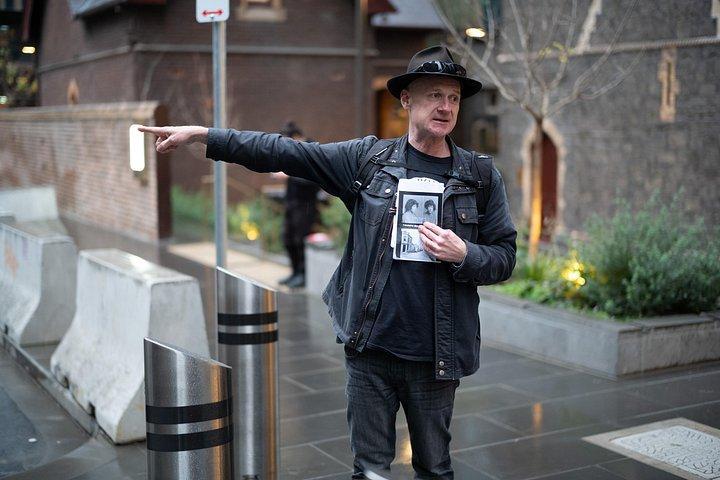 Old Stories of Melbourne's Chinatown Old Stories of Melbourne's Chinatown | 2 hours | 5.0 (5) | $35 | View |
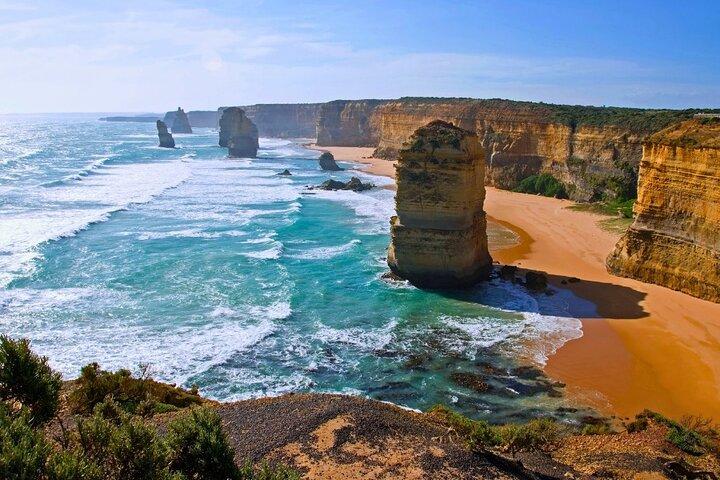 Great Ocean Road Small-Group Eco Tour from Melbourne Great Ocean Road Small-Group Eco Tour from Melbourne | 14 hours | 4.9 (7,056) | $113 | View |
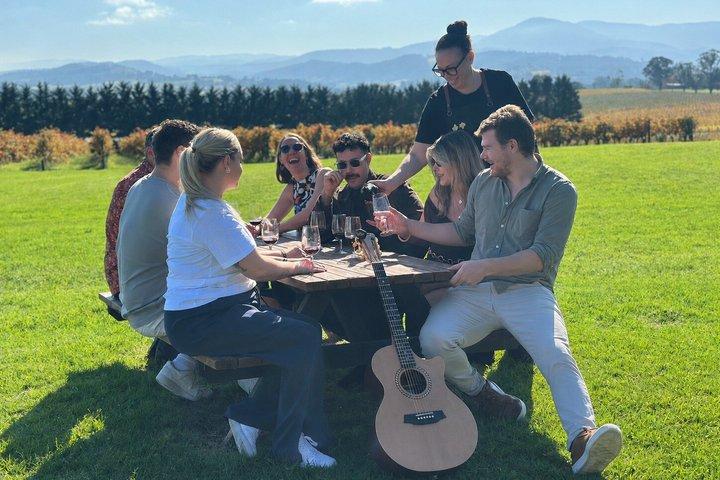 Yarra Valley Wine Tour w Exclusive Gin, Cider & Chocolate Tasting Yarra Valley Wine Tour w Exclusive Gin, Cider & Chocolate Tasting | 8 hours | 5.0 (5,628) | $84 | View |
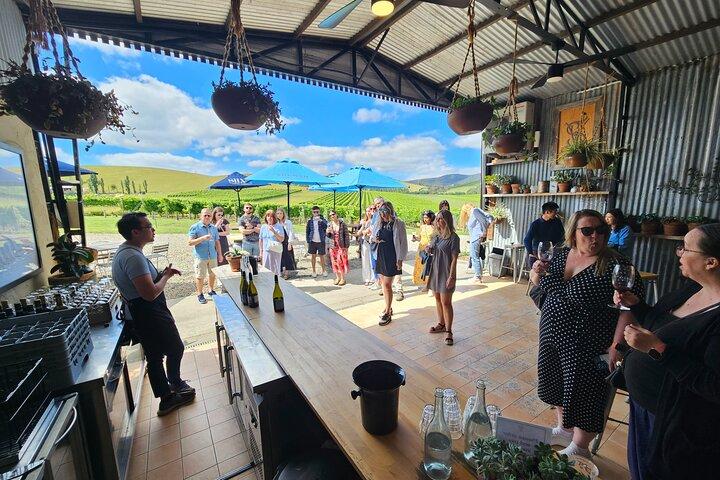 Melbourne: Yarra Valley Wine, Gin, Whisky and Chocolate Tour Melbourne: Yarra Valley Wine, Gin, Whisky and Chocolate Tour | 8 hours | 5.0 (5,251) | $84 | View |
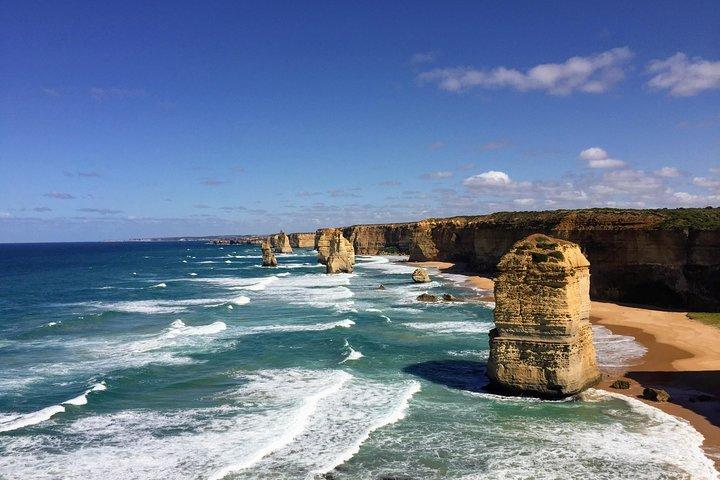 Great Ocean Road Reverse Itinerary Boutique Tour - Max 12 Guests Great Ocean Road Reverse Itinerary Boutique Tour - Max 12 Guests | 12 hours | 4.9 (4,867) | $98 | View |
 Phillip Island Penguin Parade Day Tour from Melbourne Phillip Island Penguin Parade Day Tour from Melbourne | 12 hours | 4.9 (4,113) | $124 | View |
from$35
Free cancellation