Lyab-i-Hauz10 min
Labi Hauz which is translated as 'at the pond' is one of the central squares of Bukhara situated in the southeast part of the city. The architectural ensemble was created in the 16th-17th centuries. The square has the form of an irregular polygon with the Divan-Begi madrasah in the eastern part.
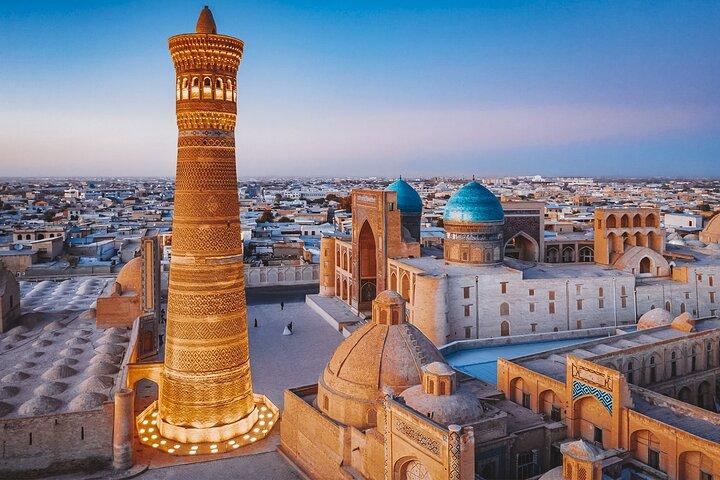
Great Minaret of the KalonAdmission not included30 min
The Kalyan Minaret is a minaret of the Po-i-Kalyan mosque complex in Bukhara, Uzbekistan and one of the most prominent landmarks in the city.
Mir-i-Arab MadrasaAdmission not included30 min
Miri-Arab madrasah was the only spiritual educational establishment in the USSR that had begun to function after the WWII. All leading imams of those times had graduated from this religious center.
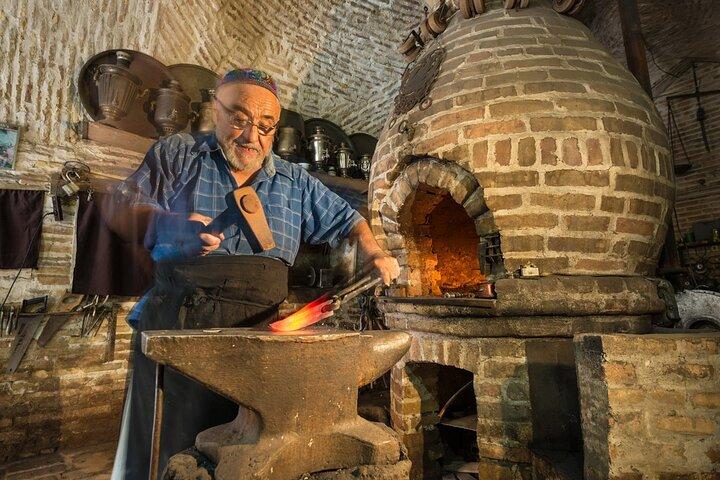
Blacksmith Workshop10 min
One of the main activities of the Bukhara museum-preserve is to revive and support traditional Bukharan handicrafts. The museum-workshop has swords, knives, arrowheads, and craftsmen's instruments.
Poi Kalyan MosqueAdmission not included10 min
Po-i-Kalan, or Poi Kalan, is an Islamic religious complex located in Bukhara, Uzbekistan. The complex consists of three parts, the Kalan Mosque, the Kalan Minaret to which the name refers to, and the Mir-i-Arab Madrasah.
Bolo Hauz Mosque10 min
Bolo Haouz Mosque is a historical mosque in Bukhara, Uzbekistan. Built in 1712, on the opposite side of the citadel of Ark in Registan district, it is inscribed in the UNESCO World Heritage Site list along with other parts of the historic city. It served as a Friday mosque during the time when the emir of Bukhara was being subjugated under the Bolshevik Russian rule in the 1920s.
Ark of BukharaAdmission not included30 min
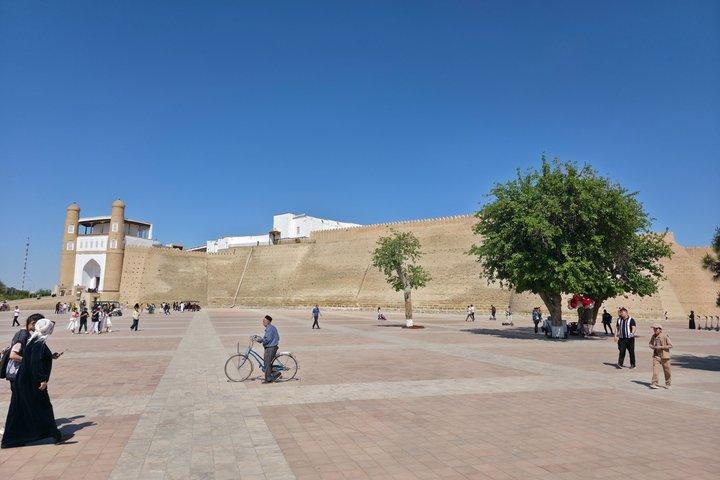
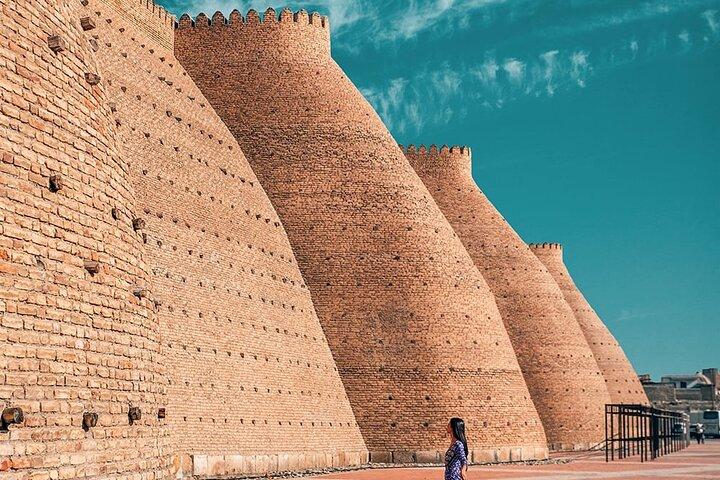
The Ark of Bukhara is a massive fortress located in the city of Bukhara, Uzbekistan, that was initially built and occupied around the 5th century AD.
Trading Domes10 min
There are four trading domes remaining in the ancient city. They are all positioned on a north to south route through the old city.
Nodir Devon Begi MadrasasiAdmission not included10 min
The madrasah was built in 1622-1623. by the vizier of Imamkuli-khan, Uzbek dignitary Nodir Devon-run as a caravanserai, but was later converted into a madrasah. In 1993, the madrasah, along with other monuments of the historical center of Bukhara, was included in the UNESCO World Heritage List.
Monument to Hodja Nasreddin30 min
The bronze monument to Nasreddin Khoja is located in the central city square of Bukhara, beside the "Lyabi-Hauz" complex. It was installed in 1979. Apparently, it gives an air of joy and humour to the ancient atmosphere of traditional buildings.
Maghak-i 'Attari MosqueAdmission not included30 min
Maghoki Attori Mosque is a historical mosque in Bukhara, Uzbekistan. It forms a part of the historical religious complex of Lyab-i Hauz
Ulugbek MadrasahAdmission not included30 min
Completed in 1420, this madrasa features exterior tiles, a fluted dome, stained windows & old tombs
Abdulaziz-Khan MadrasahAdmission not included30 min
It is known that Ulughbek was not only famous ruler but the great scholar and patron of the sciences. His first madrasa was built in 1417 in Bukhara.
Bukhara SynagogueAdmission not included30 min
The synagogue is a holy place of worship in the Jewish religion. Before its construction Jews of Bukhara prayed together with Muslims in the same mosque.
Ismail Samani MausoleumAdmission not included30 min
The Samanid Mausoleum is a mausoleum located in the northwestern part of Bukhara, Uzbekistan, just outside its historic center. It was built in the 10th century CE as the resting place of the powerful and influential Islamic Samanid dynasty that ruled the Samanid Empire from approximately 900 to 1000. It contained three burials, one of whom is known to have been that of Nasr II. The mausoleum is considered one of the iconic examples of early Islamic architecture[3] and is known as the oldest funerary building of Central Asian architecture.[4] The Samanids established their de facto independence from the Abbasid Caliphate in Baghdad and ruled over parts of modern Afghanistan, Iran, Uzbekistan, Tajikistan, and Kazakhstan. It is the only surviving monument from the Samanid era, but American art historian Arthur Upham Pope called it the "one of the finest in Persia".
Chor Minor MadrasahAdmission not included30 min
Chor Minor, alternatively known as the Madrasah of Khalif Niyaz-kul, is a historic gatehouse for a now-destroyed madrasa in the historic city of Bukhara, Uzbekistan. It is located in a lane northeast of the Lyab-i Hauz complex.