The Roman BathsPass by
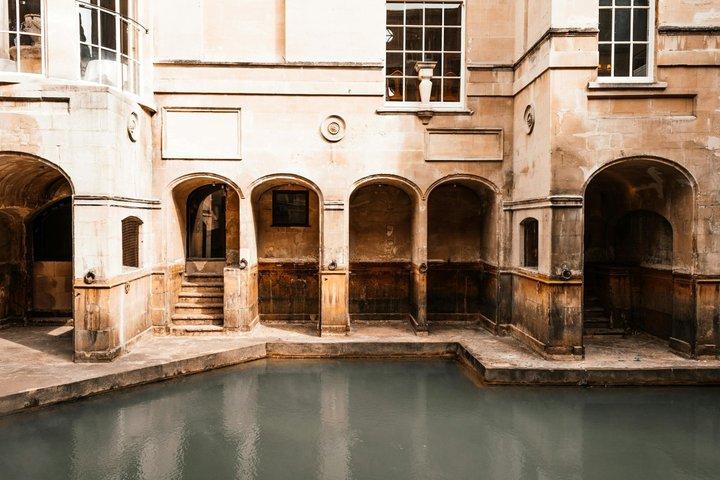
The beautiful city of Bath has been a destination since Roman times. ‘Aquae Sulis’, which is the city’s original name, is thought to have been occupied from around 43AD. The Roman Baths is designated as both a Grade I listed building and a Scheduled Monument.
Bath AbbeyPass by
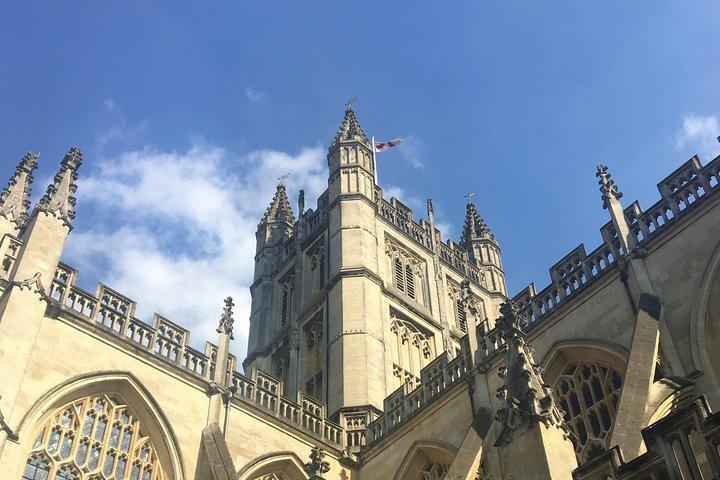
Many people view Bath Abbey as being the centre of the city. The Abbey is one of the most visited attractions in the Southwest.
10 min
The journey from the Abbey Courtyard to York Street takes you through Kingston Parade, which in reality is more of a square than a promenade as its name suggests. This is a popular place for people to gather and relax, with magnificent views of the cathedral and Roman Baths.
Sally Lunn's Museum10 min
North Parade Passage, formerly known as Old Lilliput Lane, is one of the few examples of pre-Georgian architecture in Bath. Most of the timber-framed houses have been rebuilt over the centuries, but Sally Lunn’s (number 4 North Parade Passage) still has its timber-framework.
Parade Gardens10 min
Parade Gardens is a two-and-a-half-acre site beside the River Avon. It dates back to 1709 and is now a Grade II-listed park.
Pulteney Bridge10 min
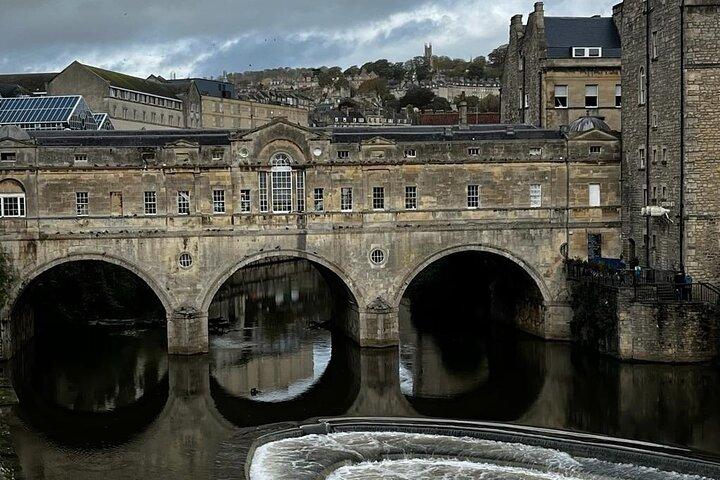
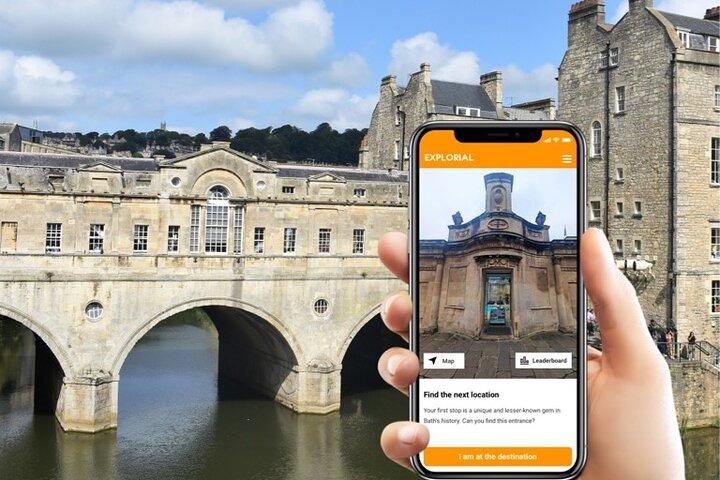
Pulteney Bridge is believed to be one of only four bridges worldwide to have shops across the full span on both sides. The idea for Pulteney Bridge came from a man called William Johnston Pulteney.
Pulteney Weir5 min
Pulteney Weir has been a feature of the city for centuries. It first appeared on maps of Bath in 1603 and was originally built to power two corn mills on both sides of the river.
Henrietta Park15 min
A little off the tourist trail, Henrietta Park is one of Bath’s hidden gems. The park is a seven-acre site that was opened in 1897 to celebrate the Diamond Jubilee of Queen Victoria.
Holburne MuseumPass by
The Holburne Museum houses a collection of items previously owned by Sir William Holburne, who inherited a modest fortune, some of which he spent travelling Europe. Here you will discover the story behind the museum and the character who gave life to it.
Great Pulteney Street10 min
Great Pulteney Street is by far the widest and grandest thoroughfare in the city. The street was designed to have wide pavements, and in some places, these pavements are as wide as the road itself.
Pass by
Upper Borough Walls gets its name as it’s the site of the original town wall of medieval Bath. Many of the houses along this road are listed themselves.
The Circus5 min
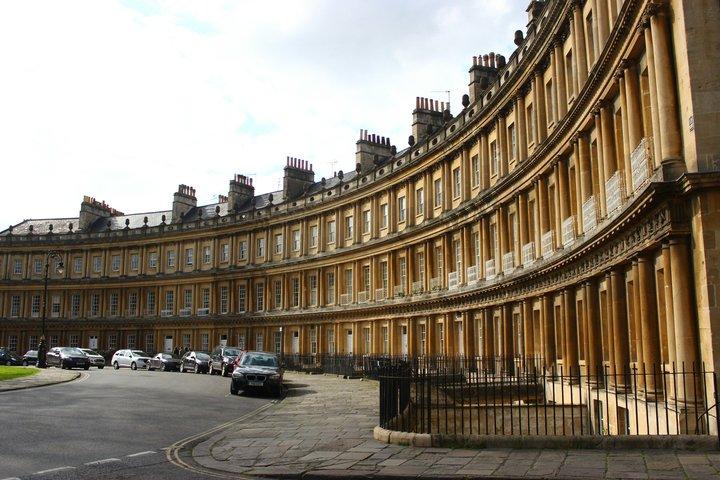
There is arguably no better place to see Bath’s Georgian architecture than the Circus. The Circus was originally called ‘the King’s Circus’.
No. 1 Royal Crescent5 min
The crescent was built between 1767 and 1775. There are 30 grade I listed houses here. There are several other Georgian crescents found in the city of Bath, including Lansdown Crescent and Somerset Place.
Royal Victoria Park5 min
Royal Victoria Park was opened in 1830 by Princess Victoria, who at eleven years old was the future queen.
5 min
Gay Street was part of the Circus development, designed by John Wood the Elder and completed by John Wood the Younger after his father’s death. Many of the houses along this stretch are Grade I or II listed.
Queen Square5 min
Queen Square is a one-acre communal garden surrounded by Grade I listed buildings. The square is dedicated to Queen Caroline, who was the wife of George II.
Theatre Royal Bath5 min
The Theatre Royal is a Georgian building constructed in 1805 and refurbished in 2010. It is one of the oldest and arguably most attractive theatres in the country.
Thermae Bath Spa5 min
Built on the site of the former Beau Street swimming baths, Thermae Bath Spa opened in 2006. The spa is heated using the naturally thermal waters of the Minerva Bath.