Middle East · 2 cities
Things to Do in Saudi Arabia
Riyadh and Jeddah in one place: how recently tourism opened at all, which cities remain closed to non-Muslims, and what AlUla requires.
303 tours listed by Viator 2 cities we cover Free cancellation








Practical info
Know before you book
The things that change a decision — not a retelling of the guidebook.
Tourist visas only opened in 2019
Before that there was effectively no leisure travel to the country. The e-visa is now straightforward for many nationalities and issued online. Because the change is recent, a lot of the advice you will find elsewhere describes a country that no longer exists.
Mecca and Medina are closed to non-Muslims
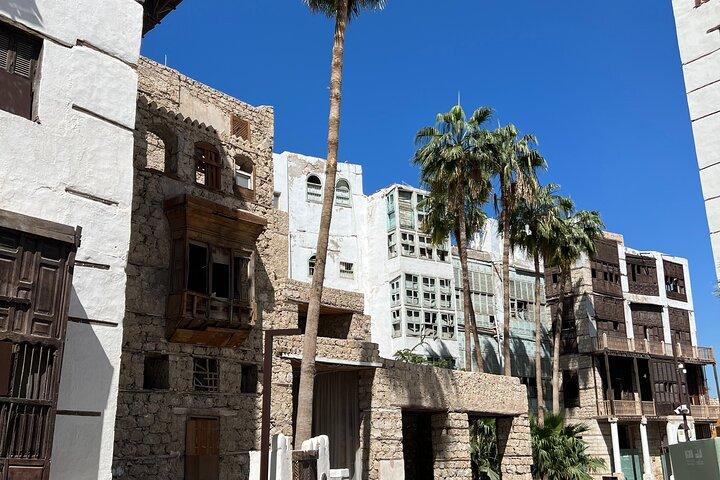
The restriction is legal, signposted on the approach roads and enforced at checkpoints. Jeddah, an hour from Mecca, is open to everyone and is where the historic Al-Balad district and the Red Sea diving are.
Hegra is Petra’s sister city
The Nabataean site at AlUla was carved by the same civilisation and is a UNESCO world heritage site with a fraction of the visitors. Access is by booked guided tour only, through the official AlUla system, and it is a two-hour flight from Riyadh.
The dress rules relaxed but did not vanish
Foreign women are no longer required to wear an abaya, though modest dress covering shoulders and knees is expected. Alcohol remains illegal throughout the country. Prayer times still close many shops for twenty to thirty minutes, several times a day.
Riyadh summers are extreme
Over 45°C from June to September, dry rather than humid, with nothing outdoors realistically possible in the middle of the day. November to March is the season, and desert nights in winter get genuinely cold.
The weekend is Friday and Saturday
Friday is the holy day and the working week runs Sunday to Thursday. Museums and attractions often open late on Fridays. Ramadan changes hours substantially across the whole country.
When to visit
Saudi Arabia through the seasons
What is open, how busy it gets, and when to book ahead.
Winter
Nov–Feb
- Best for
- AlUla, the desert, Riyadh and Jeddah all comfortable — the main season.
- Crowds
- Booking tip
- Desert nights are cold; the festival season around AlUla runs in these months.
Spring
Mar–Apr
- Best for
- Warm days before the extreme heat, the Red Sea at a good temperature.
- Crowds
- Booking tip
- The last workable window for full days outdoors before summer.
Summer
May–Sep
- Best for
- The southwest highlands around Abha, which stay cool and green.
- Crowds
- Booking tip
- Riyadh and Jeddah exceed 45°C — everything else moves indoors entirely.
Autumn
Oct
- Best for
- The heat breaking and the season starting, with low visitor numbers.
- Crowds
- Booking tip
- A good quiet month before the winter events calendar fills up.
Frequently asked
Saudi Arabia: common questions
How many days do you need in Saudi Arabia?
A week: two days in Riyadh, two in Jeddah for Al-Balad and the Red Sea, and three in AlUla for Hegra and the desert. AlUla is what most visitors come for and it deserves the largest share.
What does a tour in Saudi Arabia cost?
Saudi Arabia is not in our fifty-city price index, so we avoid quoting a median. The tourism sector is new and priced at the premium end: AlUla experiences in particular are sold as curated, capacity-limited products rather than as a competitive market.
Can tourists visit Saudi Arabia?
Yes, since 2019, on an e-visa available to many nationalities and issued online in days. It is a genuinely recent change — the country had no leisure visa category at all before that.
When is the best time to visit?
November to March. The rest of the year is extremely hot across most of the country, with the exception of the southwestern highlands around Abha, which are cooler and green in summer.
What are the rules for visitors?
Modest dress covering shoulders and knees; the abaya is no longer required for foreign women. Alcohol is illegal and there are no exceptions for hotels. Mecca and Medina are closed to non-Muslims. Shops close briefly for each of the five daily prayers.