Middle East · 2 cities
Things to Do in Oman
Muscat and Salalah in one place: the monsoon that turns a desert green, when the Grand Mosque admits visitors, and why self-driving works here.
1,530 tours listed by Viator 2 cities we cover Free cancellation









Practical info
Know before you book
The things that change a decision — not a retelling of the guidebook.
The khareef turns Salalah green
From June to September a monsoon reaches the southern Dhofar region and the hills go green with waterfalls and mist — in Arabia, in high summer. It is the biggest domestic tourism season in the country and it is unlike anything else in the Gulf.
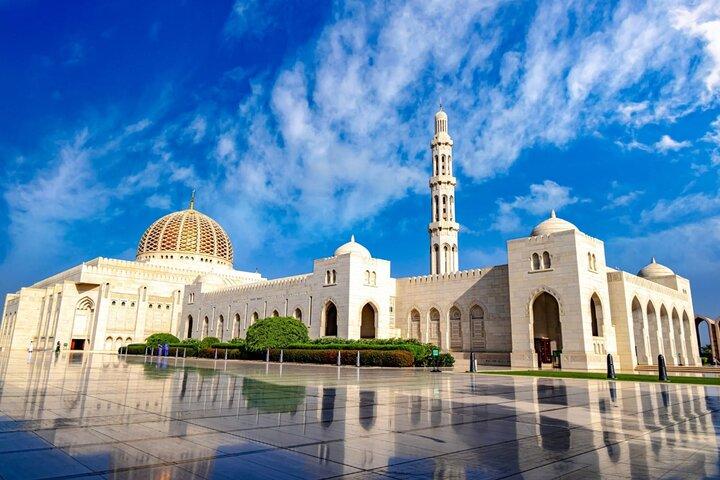
The Grand Mosque admits non-Muslims in the morning
The Sultan Qaboos Grand Mosque in Muscat opens to visitors on weekday mornings only, with a firm dress code: ankles, wrists and hair covered for women, long trousers for men. The carpet and the chandelier alone justify the early start.
Self-driving is easy and the wadis are not
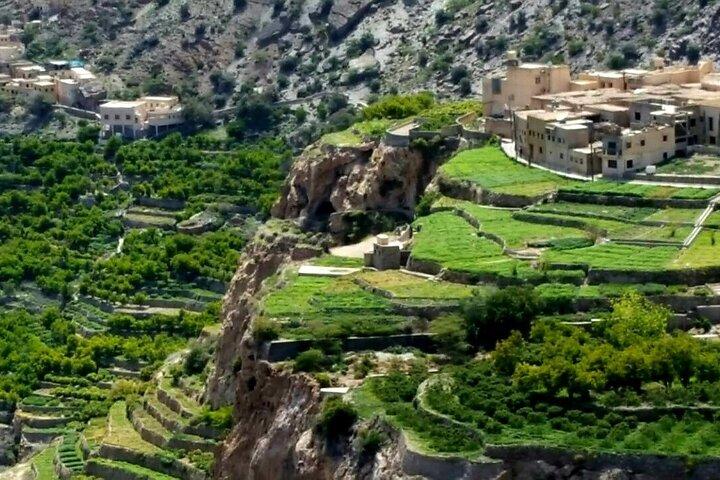
The main roads are excellent and the traffic is light, so a hire car is the standard way to see the north. The wadis and the mountain roads up Jebel Shams and Jebel Akhdar require four-wheel drive, and it is checked at some access points.
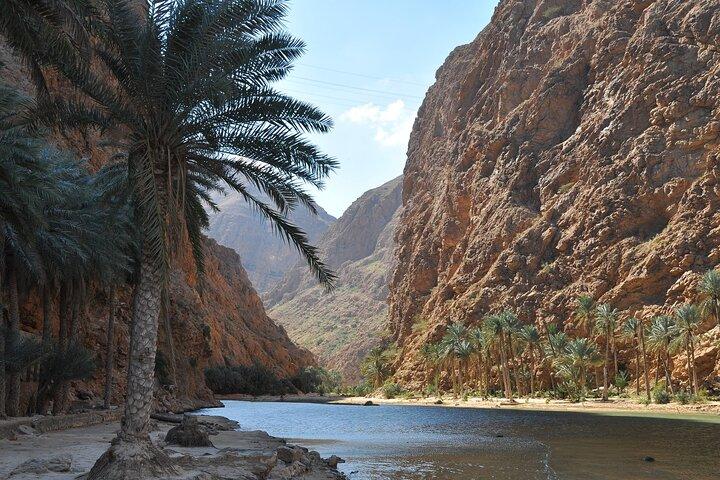
Wadi Shab needs a swim
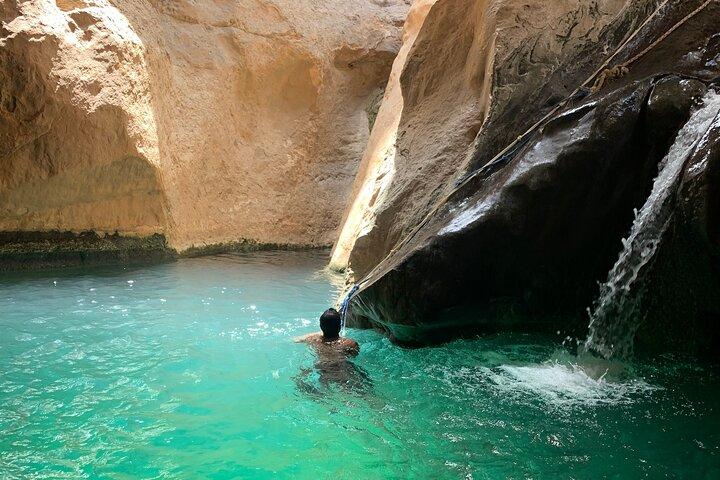
The walk in is easy; reaching the cave and its waterfall at the end means swimming through several pools with your belongings in a dry bag. It is the country’s most-loved day out and people regularly turn up unprepared for that last part.
Conservative, and unusually relaxed with it
Modest dress away from hotel beaches — shoulders and knees covered — is expected and that is broadly it. Oman is among the safest countries in the region for visitors and has a reputation for courtesy that holds up in practice.
Turtles nest at Ras al Jinz all year
Green turtles come ashore every night of the year on the east coast, peaking from June to September. Visits are guided only, in small groups, with red light and no flash — the restrictions are why the site still works.
When to visit
Oman through the seasons
What is open, how busy it gets, and when to book ahead.
Winter
Nov–Mar
- Best for
- The north at its best: Muscat, the wadis, the mountains and the desert.
- Crowds
- Booking tip
- The peak season, and the only comfortable window for the northern interior.
Spring
Apr–May
- Best for
- Diving and the coast before the heat, with prices dropping away.
- Crowds
- Booking tip
- Heat builds fast through April — inland trips get difficult by May.
Khareef
Jun–Sep
- Best for
- Salalah and Dhofar, green and misty, at the one time of year they are.
- Crowds
- Booking tip
- Salalah books out with regional visitors; the north is at its hottest and emptiest.
Autumn
Oct
- Best for
- The heat breaking in the north, the season restarting, low prices.
- Crowds
- Booking tip
- A good value month before the November high season begins.
Frequently asked
Oman: common questions
How many days do you need in Oman?
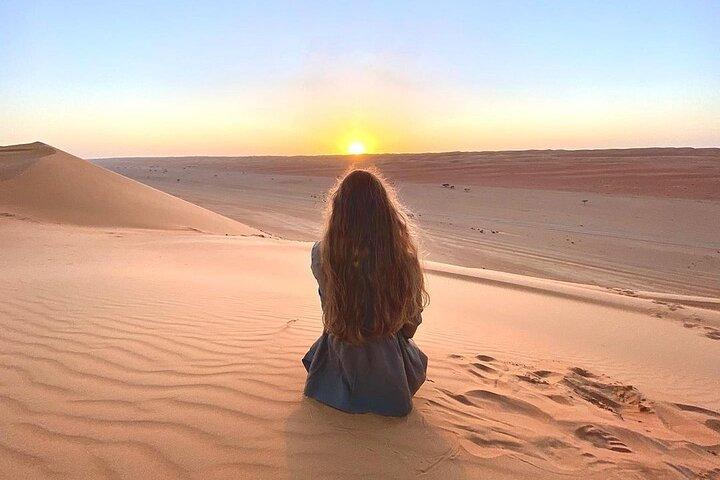
A week for the north: Muscat, Nizwa and the forts, Jebel Akhdar, Wadi Shab and a night in the Wahiba Sands. Salalah is a separate two-hour flight and a further three or four days, best timed for the khareef.
What does a tour in Oman cost?
Oman is not in our fifty-city price index, so we avoid quoting a median. It is less expensive than the UAE for guided days and accommodation, with four-wheel-drive mountain and desert excursions the main cost.
When is the best time to visit?
November to March for the north, which is the classic season. June to September for Salalah and the khareef, when the south is green and the north is at forty degrees. The two halves of the country are best at opposite times of year.
Is Oman good for a first Gulf trip?
It is the one to pick if you want landscape, forts and mountains rather than malls and skyscrapers. It is calmer and more traditional than the UAE, easy to drive around, and very safe. For nightlife and shopping it is the wrong country.
What should women wear?
Shoulders and knees covered in public, which is the practical standard; a headscarf is only needed in mosques, where the Grand Mosque additionally requires wrists and ankles covered. Swimwear is fine at hotel pools and private beaches.