6
Awesome tour with Meg
Meg was a great guide. She took us all around Tokyo and gave us a ton of advice for the rest of the days we are here. Would highly recommend her!
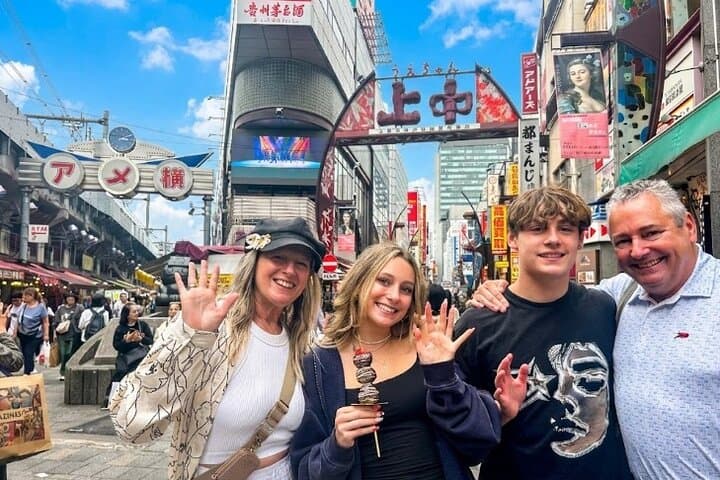
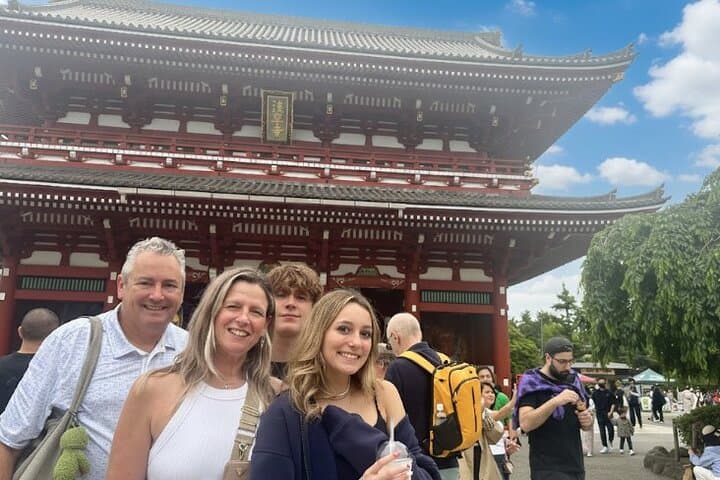
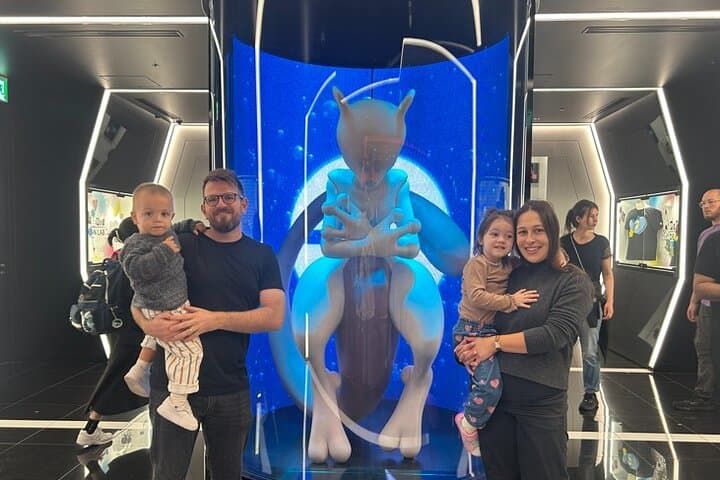
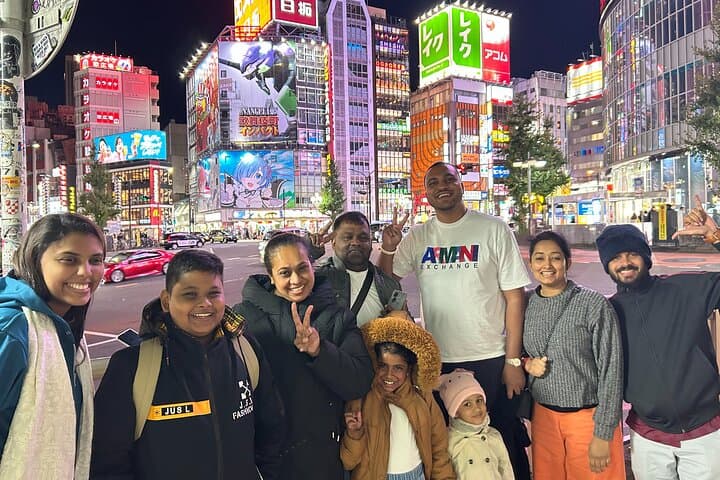
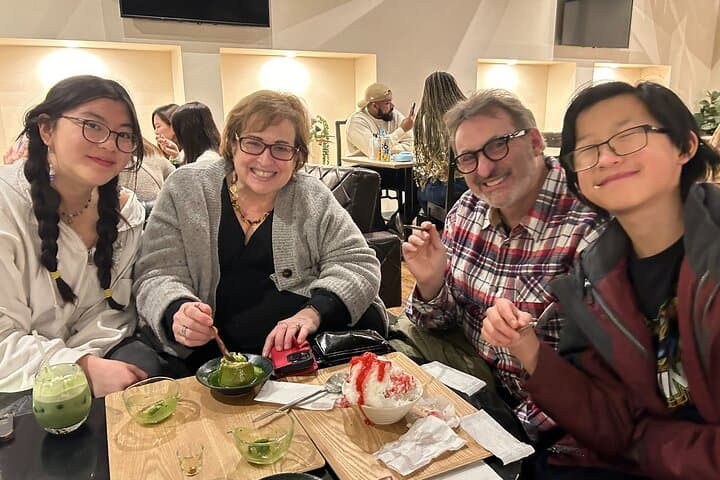


This tour is private and fully customized to your interests and needs. Before the tour, you’ll be asked to complete a short questionnaire about not only the places you would like to visit, but also your hobbies, preferred pace, and the kinds of experiences you would like to have. Our Tokyo experts will then design your ideal itinerary just for you. Whether you’re looking for a plan that the whole family can enjoy, a tour focused on your personal hobbies, or a shopping route to find the items you want in Japan — we can tailor it all to your requests. Perfect for both first-time visitors and repeat travelers, this tour lets you explore Tokyo through a route designed uniquely for you, experiencing its charm in the most personal way. Learn about Tokyo from a professional and friendly local guide, and discover this vast city without getting lost. You’ll also gain insider local tips directly from your private guide. Please note that meals and admission fees are not included.
Prices change with the date; the lowest is shown.
Prices are per person when two book together; a solo traveller pays $374.
Out at sunset: the 1:00 PM departure is under way when the sun sets, around 5:00 PM in the coming weeks.
From the operator’s live schedule on Viator, checked Oct 7.
The locations below are just examples of what you can explore. Your itinerary will be fully customized around your interests, preferences, and tour duration. Your guide can combine some of the places listed below with other destinations across Tokyo to create an experience tailored to you. Asakusa (浅草) is the center of Tokyo's shitamachi (literally "low city"), one of Tokyo's districts, where an atmosphere of the Tokyo of past decades survives. Asakusa's main attraction is Sensoji, a very popular Buddhist temple, built in the 7th century. The temple is approached via the Nakamise, a shopping street that has been providing temple visitors with a variety of traditional, local snacks and tourist souvenirs for centuries.
This tour does not include access to the inside of the Imperial Palace** The current Imperial Palace is located on the former site of Edo Castle, a large park area surrounded by moats and massive stone walls in the center of Tokyo, a short walk from Tokyo Station. It is the residence of Japan's Imperial Family. Edo Castle used to be the seat of the Tokugawa shogun who ruled Japan from 1603 until 1867. In 1868, the shogunate was overthrown, and the country's capital and imperial residence were moved from Kyoto to Tokyo. In 1888 construction of a new Imperial Palace was completed. The palace was once destroyed during World War Two, and rebuilt in the same style, afterwards.
Said to be the busiest crossing in the world, Shibuya Scramble is a marvel of modern cities. You can also visit the loyal Hachiko dog statue here!
Explore the old fish market in Tokyo!
Meiji Shrine (明治神宮, Meiji Jingū) is a shrine dedicated to the deified spirits of Emperor Meiji and his consort, Empress Shoken. Located just beside the JR Yamanote Line's busy Harajuku Station, Meiji Shrine and the adjacent Yoyogi Park make up a large forested area within the densely built-up city. The spacious shrine grounds offer walking paths that are great for a relaxing stroll. The shrine was completed and dedicated to the Emperor Meiji and the Empress Shoken in 1920, eight years after the passing of the emperor and six years after the passing of the empress. The shrine was destroyed during the Second World War but was rebuilt shortly thereafter.
Akihabara (秋葉原), also called Akiba after a former local shrine, is a district in central Tokyo that is famous for its many electronics shops. In more recent years, Akihabara has gained recognition as the center of Japan's otaku (diehard fan) culture, and many shops and establishments devoted to anime and manga are now dispersed among the electronic stores in the district. On Sundays, Chuo Dori, the main street through the district, is closed to car traffic from 13:00 to 18:00 (until 17:00 from October through March).
Koishikawa Korakuen (小石川後楽園, Koishikawa Kōrakuen) is one of Tokyo's oldest and best Japanese gardens. It was built in the early Edo Period (1600-1867) at the Tokyo residence of the Mito branch of the ruling Tokugawa family. Like its namesake in Okayama, the garden was named Korakuen after a poem encouraging a ruler to enjoy pleasure only after achieving happiness for his people. Koishikawa is the district in which the garden is located in.
Sensoji (浅草寺, Sensōji, also known as Asakusa Kannon Temple) is a Buddhist temple located in Asakusa. It is one of Tokyo's most colorful and popular temples. The legend says that in the year 628, two brothers fished a statue of Kannon, the goddess of mercy, out of the Sumida River, and even though they put the statue back into the river, it always returned to them. Consequently, Sensoji was built nearby for the goddess of Kannon. The temple was completed in 645, making it Tokyo's oldest temple.
Yoyogi Park (代々木公園, Yoyogi Kōen) is one of Tokyo's largest city parks, featuring wide lawns, ponds and forested areas. It is a great place for jogging, picnicking and other outdoor activities. Although Yoyogi Park has relatively few cherry trees compared to other sites in Tokyo, it makes for a nice cherry blossom viewing spot in spring. Furthermore, it is known for its ginko tree forest, which turns intensely golden in autumn.
Harajuku (原宿) refers to the area around Tokyo's Harajuku Station, which is between Shinjuku and Shibuya on the Yamanote Line. It is the center of Japan's most extreme teenage cultures and fashion styles, but also offers shopping for adults and some historic sights. The focal point of Harajuku's teenage culture is Takeshita Dori (Takeshita Street) and its side streets, which are lined by many trendy shops, fashion boutiques, used clothes stores, crepe stands and fast food outlets geared towards the fashion and trend conscious teens.
Odaiba (お台場) is a popular shopping and entertainment district on a man made island in Tokyo Bay. It originated as a set of small man made fort islands (daiba literally means "fort"), which were built towards the end of the Edo Period (1603-1868) to protect Tokyo against possible attacks from the sea and specifically in response to the gunboat diplomacy of Commodore Perry. More than a century later, the small islands were joined into larger islands by massive landfills, and Tokyo began a spectacular development project aimed to turn the islands into a futuristic residential and business district during the extravagant 1980s. But development was critically slowed after the burst of the "bubble economy" in the early 1990s, leaving Odaiba nearly vacant.
Shibamata (柴又) is a neighborhood on the eastern end of Tokyo, not far from the Edogawa River which is the natural border between Tokyo and Chiba Prefecture. The town retains its old-school charm from yesteryear and is a perfect break away from modern Tokyo. One of the main attractions to see is the Shibamata Taishakuten Temple not far from the station.
Having miraculously avoided major damage during world wars and natural disasters, Yanaka and Nezu—two of the neighborhoods that make up shitamachi, Tokyo's old downtown—retain their last-century charm. You'll find historical sites such as Yanaka Cemetery and Nezu Shrine tucked away among shitamachi's narrow back alleys, traditional wooden houses, izakaya pubs, atmospheric coffee shops and retro stores selling old-style sweets and snacks. Here you can slip back in time to a slower-paced, more genteel Tokyo.
Golden Gai is said to have started around 1950 when the black market that had arisen in front of Shinjuku Station moved and, in this new area, a number of eating and drinking establishments set up shop. Although Shinjuku has undergone considerable modernization since then, Golden Gai seems to have remained largely unchanged. The alley is narrow and cramped with countless signs advertising the various establishments that line the way. Many of the buildings themselves are made of wood, remnants hanging on from the Showa Era. Most measure only around thirteen square meters (one hundred forty-two square feet). It's a dim, boisterous place filled with the aromatic smoke of grilling meats. Yet despite the nearly endless number of slick new restaurants available in Shinjuku, this little alley continues to draw the attention of foreign tourists. Golden Gai is a popular “un-touristy” tourist spot.
Only up to the main deck, top deck is not included** The retro cute version of Tokyo Sky tree! This vermillion tower has been a symbol of Tokyo for a generation and can be seen in the background of many famous animes!
Gotokuji Temple, located in the Setagaya ward of Tokyo, is a Buddhist temple that is said to be the birthplace of the maneki-neko, or “luck-inviting cat figurine.” These small statues, which portray a cat sitting up and beckoning with its front paw, have become quite popular all over the world with cat-lovers.
Ueno Park About half a dozen museums, a zoo, a Toshogu Shrine and the Shinobazu Pond are just some of Ueno Park's attractions. Ueno Park is also Tokyo's most notorious cherry blossom party spot.
Please download WhatsApp in advance as it will be used to meet and discuss with your guide.
Reviews collected by Viator and Tripadvisor
Excurgo comparison of 4,165 Viator tours, recalculated daily.
For a full refund, cancel at least 24 hours before the scheduled departure time.
Tokyo Customized Private Tour Explore Your Way in 1 Day lasts about 4–8 hours. The itinerary has 17 stops.
Prices start at $125 per person for this Tokyo experience, booked through Viator with the price shown before checkout. That is the per-person price when two book together; a solo traveller pays $374. There are 3 booking options, so the final price depends on the option you choose.
According to the operator’s current schedule, it runs every day, with 9 departures a day between 8:00 AM and 4:00 PM.
Yes. Cancel at least 1 day before the start for a full refund. Later cancellations are non-refundable.
Yes, pickup is offered. Please download WhatsApp in advance as it will be used to meet and discuss with your guide. Pickup points include HOTEL MYSTAYS Ueno Iriyaguchi, Hotel Livemax Asakusa Ekimae.
The experience is available in JA, EN.
It is a private experience: only your party takes part. Up to 15 travellers can book together.
Infants and small children can ride in a pram or stroller Specialized infant seats are available Please request any special needs (strollers, wheelchairs, or dietary restrictions) when booking. We cannot accommodate requests made without prior notice.
Wheelchair accessible Transportation options are wheelchair accessible Please request any special needs (strollers, wheelchairs, or dietary restrictions) when booking. We cannot accommodate requests made without prior notice.
Yes, bookings are confirmed instantly.
Travellers rate it 5.0 out of 5 across 28 reviews on Viator and Tripadvisor; it is run by Fuji Tour.
Reviews collected by Viator and Tripadvisor
Meg was a great guide. She took us all around Tokyo and gave us a ton of advice for the rest of the days we are here. Would highly recommend her!
Very good time in Tokyo. We will visit Akihabara, Asakusa and Shibuya. Good experience and and very fast to change mind for our idea and need. Thanks 😊
We were accompanied on a visit to some districts of Tokyo. It fully met our expectations and was able to change the tour in the run according to our needs. Promoted!
The tour offered a satisfying experience even in a short time, making it perfect for young children. We efficiently walked while experiencing the condensed charm of Tokyo.
Thank you very much for your kind review. We are very glad to hear that the tour provided a satisfying experience even within a short time and that it was comfortable for young children. It is wonderful that you were able to enjoy the condensed charm of Tokyo while walking efficiently. We hope to welcome you again on your next visit to the city.
Since I was a bit tired from walking, they kindly changed our plans to a cafe instead of our original destination. Their service was attentive, and I felt anyone would enjoy it.
Thank you very much for your kind review. We are glad to hear that the flexible change to a cafe helped you relax when you were feeling tired. It is wonderful that the attentive service made you feel comfortable and confident that anyone could enjoy the experience. We hope to welcome you again on your next visit to Tokyo.
I participated with friends from overseas, and they were thrilled with the flawless English explanations. The tour was very smooth, with thoughtful consideration for cultural differences.
Thank you very much for your kind review. We are very glad to hear that your friends from overseas were pleased with the clear English explanations. It is wonderful that the tour felt smooth and that the guidance was thoughtful about cultural differences. We hope to welcome you all again on your next visit to Tokyo.
They accommodated even our niche requests, allowing us to discover a side of Tokyo we wouldn't normally notice. I was amazed by guide Mariko's wealth of knowledge.
Thank you very much for your warm review. We are very glad to hear that even your niche requests were accommodated and that you were able to discover a side of Tokyo that is often overlooked. It is wonderful that Mariko's extensive knowledge made such a strong impression on you. We hope to welcome you again on your next visit to Tokyo.
Thanks to her choosing a route that avoided the crowds, I was able to enjoy the city at a leisurely pace. I was very impressed with our guide, Nami, who answered all my questions thoughtfully.
Thank you very much for your kind review. We are very glad to hear that the uncrowded route allowed you to enjoy the city at a relaxed pace. It is wonderful that Nami's thoughtful answers made a strong impression on you. We hope to welcome you again on your next visit to Tokyo.
It was my first time in Tokyo, but the guide listened carefully to my requests, so I felt comfortable walking around. The historical stories were interesting, and it had that special feeling unique to a custom tour. Our guide Nami was very kind.
Thank you very much for your warm review. We are very glad to hear that you felt comfortable during your first visit to Tokyo and that the guide listened carefully to your requests. It is wonderful that the historical stories and the personalized feel of the custom tour made the experience special. We are also happy to hear your kind words about Nami. We hope to welcome you again on your next visit to Tokyo.
Our guide tailored the tour to our interests, taking us from the old downtown to the latest spots, making it a more fulfilling day than we could have imagined. There were plenty of photo opportunities, and we were completely satisfied. Eight hours was just right.
Thank you very much for your wonderful review. We are very glad to hear that the tour matched your interests and that exploring from the old downtown to the newest spots made your day even more fulfilling than expected. It is great to know that you enjoyed the many photo opportunities and that the eight hour tour felt just right. We hope to welcome you again on your next visit to Tokyo.
| Tour | Duration | Rating | Price | |
|---|---|---|---|---|
| Tokyo Customized Private Tour Explore Your Way in 1 Day | 4–8 hours | 5.0 (28) | $125 | |
 Tokyo Customized Private Tour in 1 Day with Licensed Guide Tokyo Customized Private Tour in 1 Day with Licensed Guide | 4–8 hours | 4.9 (4,796) | $107 | View |
 Tokyo Customized Private Tour (Must See Places in 1 Day) Tokyo Customized Private Tour (Must See Places in 1 Day) | 2–8 hours | 5.0 (2,359) | $142 | View |
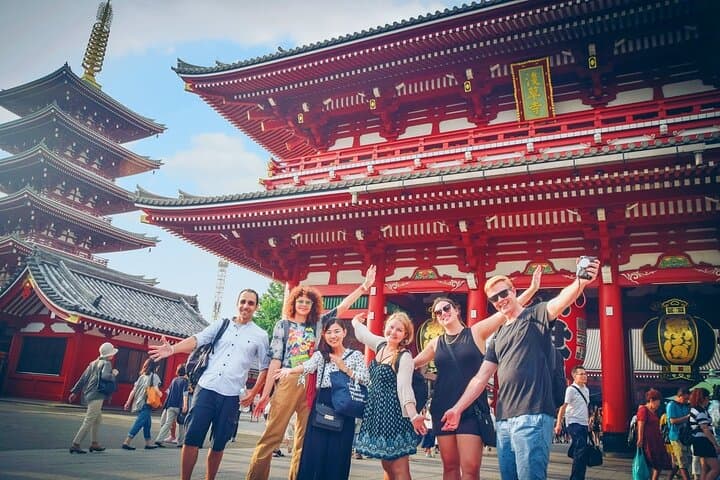 Tokyo Customized Private Tour See Top Attractions in 1 Day Tokyo Customized Private Tour See Top Attractions in 1 Day | 4–8 hours | 4.9 (1,984) | $142 | View |
 Tokyo ⇆ Narita Airport (NRT) Private Transfer One-Way/Roundtrip Tokyo ⇆ Narita Airport (NRT) Private Transfer One-Way/Roundtrip | 50 min–2h | 4.6 (555) | $154 | View |
 Tokyo Customized Private Tour by Car with Licensed Guide Tokyo Customized Private Tour by Car with Licensed Guide | 6 hours | 4.9 (182) | $320 | View |
 Mt Fuji and Hakone 1-Day Bus Tour Return by Bullet Train Mt Fuji and Hakone 1-Day Bus Tour Return by Bullet Train | 11 hours | 4.8 (32,339) | $159 | View |