Capture Old Hong Kong Heritage: Sidecar Mobile Photo Booth
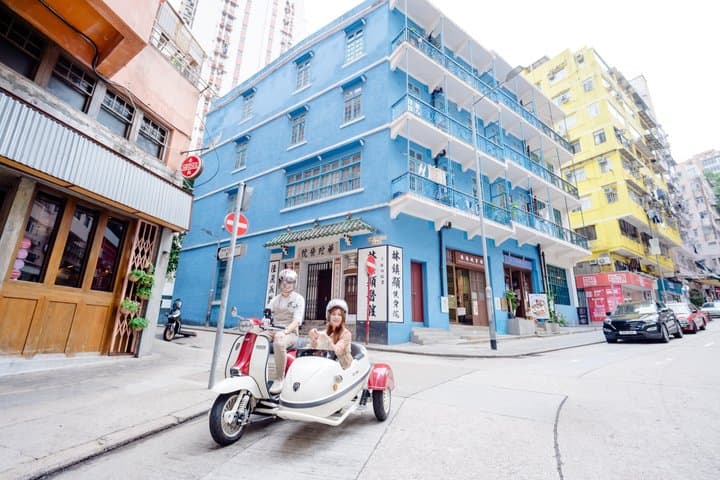
Description
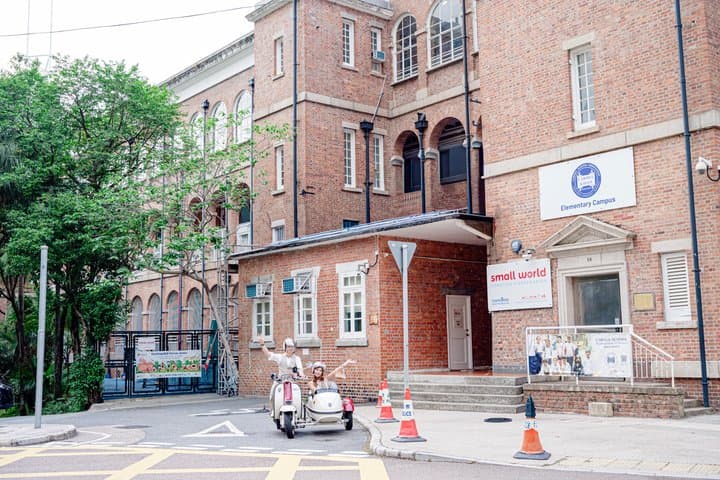
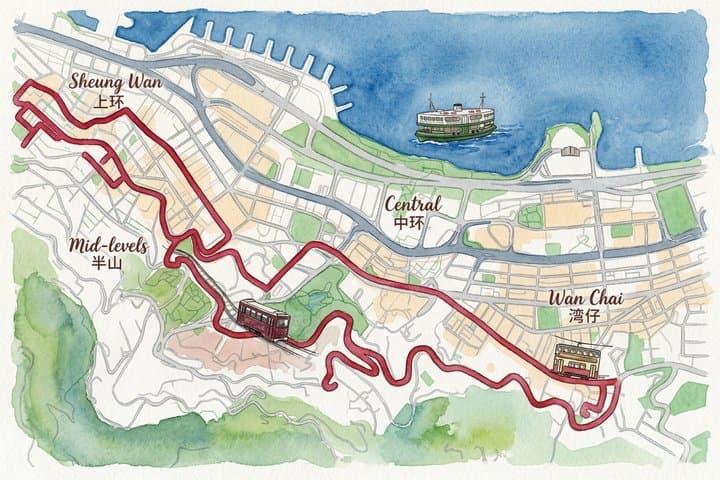
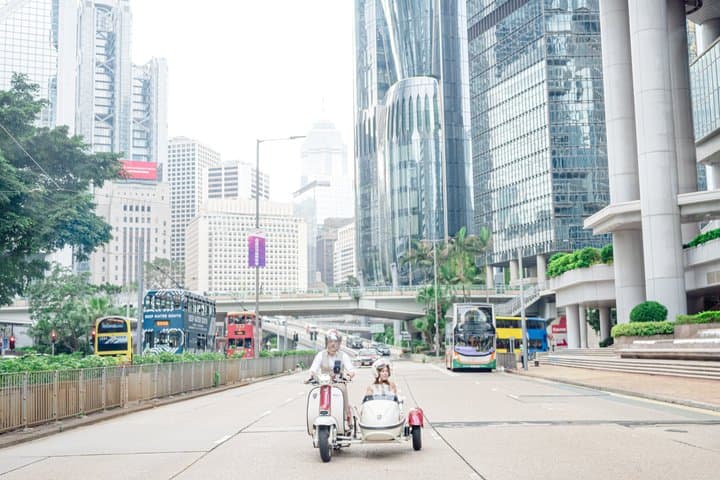
"Time-Travel" Urban Circuit: An itinerary designed for history and architecture lovers, scouting the city’s most significant monuments. Our vintage sidecar serves as the perfect aesthetic anchor blending seamlessly into the heritage background. Unobstructed Exclusive Access: Avoid the glare of taxi windows and the main-road-only routes of buses. We dive into the narrow hidden paths, allowing you to capture the details of colonial facades and tucked-away alleys that are unreachable by big cars. The Ultimate "Street Style" Platform: The low-to-the-ground vantage point is perfect for capturing the grit and glamour of local neighborhoods. East-meets-West Backdrops: From the gothic spires of St. John’s Cathedral to the traditional incense of Man Mo Temple, we curate an impressive cultural contrast for your lens. Effortless Cinematic Coverage: Forget the steep hills and exhausting staircases of Central and Sheung Wan. We cover a 12km circuit that would take hours to navigate on foot.
Tour Options
Itinerary
Built in 1863 by local residents during the Qing dynasty to honor the Northern Emperor and stands as an important early landmark in Wan Chai. The Northern Emperor represents the northern constellations and is traditionally revered as a water deity, reflecting the community’s ties to the sea.
A row of four connected four‑storey tong lau (chinese-style buildings). The site once housed a charitable school (鏡涵義學), and before the war it was the campus of an English school (一中書院). The “Fresh Fish Trader Association” (鮮魚行商會), which organised many community festival rites, also operated here.
Completed in 1913, this is the oldest surviving post office building in Hong Kong. In 1993 it was repurposed by the Environmental Protection Department as the Environmental Resource Centre.
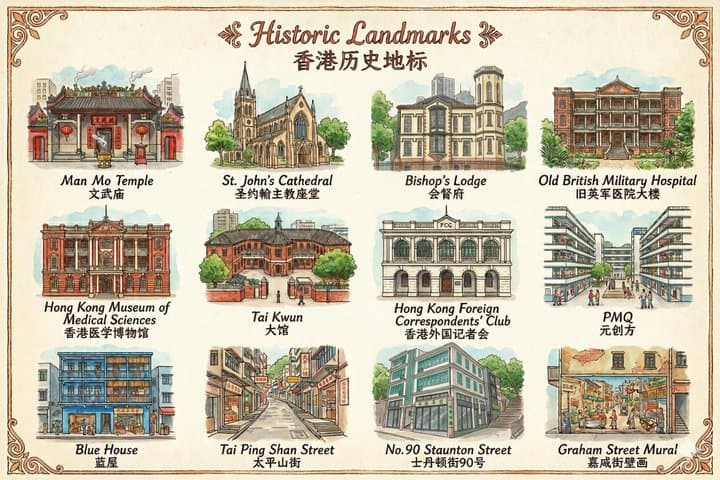
Former British Military Hospital Building: Opened in 1907, this building originally served as the medical facility for the British garrison in Hong Kong. It suffered repeated air raids in 1941 during the Japanese invasion, then returned to military medical use after the war. In 1967 the site was repurposed as the campus of the Hong Kong English Boys’ School; after the school moved out in 1979, the building became government offices.
Built in 1892, this building originally served as the Dairy Farm Company’s warehouse and icehouse. From 1896 through the 1970s it functioned as the company’s headquarters and gradually expanded to include a slaughterhouse, workshops, and cold‑storage facilities. In 1984 the Foreign Correspondents’ Club and the Fringe Club—an organisation dedicated to promoting the arts—moved into the premises, beginning the site’s new life as a cultural and creative hub.
Founded in 1943 in Chongqing to connect overseas correspondents with the then Republic of China government, the club relocated to Hong Kong in 1949. Today it serves as a platform for foreign journalists, media professionals, and those interested in the press to exchange views, host talks, and organise professional events.
Built in 1848, this building originally housed St. Paul’s College, a school established for Chinese students. It served as the college campus from 1849 to 1950, before the school relocated to Bonham Road after World War II. Today the site functions as the office of the Hong Kong Anglican Province, commonly known as Bishop’s House, and remains an important centre of the city’s Anglican heritage.
Queen's Road was the first major road built after Hong Kong was opened to foreign trade and remains a principal thoroughfare on Hong Kong Island. It stretches from Shek Tong Tsui in the Central and Western District eastward to Happy Valley in Wan Chai and is divided into Queen’s Road West, Queen’s Road Central, and Queen’s Road East. Queen’s Road Central was the earliest section to be constructed; it opened in 1842, linking Sai Ying Pun and Central, and is the first major paved road built in Hong Kong.
A street mainly composed of staircases, built between 1841 and 1850 during the early days of Hong Kong's opening to trade. It has a long history and starts from Queen's Road Central, goes up the hillside, passes Upper Lascar Row, Circular Pathway, Hollywood Road, Square Street, Bridges Street, U Lam Terrace, Ladder Street Terrace, and ends at Caine Road, with a total length of 350 meters.
Originally built in 1906 as the Bacteriological Institute to control plague and other infectious diseases, the facility expanded after World War II and was renamed the Pathological Institute. During the 1960s–70s it focused on vaccine research and development. In 1996, the site was repurposed as the Hong Kong Museum of Medical Sciences, preserving its scientific legacy for public education.
Built between 1847 and 1862, the complex comprises three structures: Man Mo Temple (文武廟), Lit Shing Kung (列聖宮), and the Kung Sor (公所: community office). Man Mo Temple is dedicated to Wenchang (文昌: the God of Literature) and Martial Deity (武帝: the God of War), while Lit Shing Kung houses various gods and venerated saints. The temple holds significant historical and social value, reflecting the social organisation and religious practices of the Chinese community in earlier times.
Construction began as early as 1841 when the British landed on Hong Kong Island. At that time, it was close to the sea. After years of land reclamation, Hollywood Road is now far from the sea. Hollywood Road is believed to have gotten its name from the holly woods that grew in the area in the early years.
Graham Street Mural: Created by local graffiti artist Alex Croft, is a popular photo spot in Central. The mural draws inspiration from Yau Ma Tei patterns, reinterpreting them in Croft's style. Inspired by the former Kowloon Walled City, he uses a bright blue background paired with colorful tenement buildings, creating a striking contrast that vividly recreates the charm and atmosphere of old Hong Kong.
Built in 1951, this building served as the temporary residence of Chen Kai (陳楷) and Sham Wai‑hau (岑維休), founders of Hong Kong’s earliest Chinese newspaper, the Wah Kiu Yat Po (華僑日報), whose office was then nearby on Hollywood Road in Sheung Wan. After years of restoration by the Urban Renewal Authority, the structure has been returned to the traditional tong lau appearance it once had, preserving its historical streetscape and connection to Hong Kong’s early Chinese press.
The site originally housed Central School (now Queen’s College). The school buildings were demolished in 1948 and rebuilt in 1951 as the Hollywood Road Police Married Quarters. After adaptive reuse, the creative hub opened in 2014 under the name PMQ, an abbreviation for Police Married Quarters.
Revitalised in 2018, Tai Kwun comprises the Former Central Magistracy, the Central Police Station, and Victoria Prison, forming a historic complex that symbolizes law and discipline. The Central Police Station is one of the few police stations built in the 19th century and served as the police headquarters before World War II. Victoria Prison was constructed after the British occupied Hong Kong Island in 1841 to establish law and order.
Built in 1849, it is the seat of the Anglican Diocese on Hong Kong Island and the oldest surviving Christian building in the city. Originally constructed as the garrison chapel for British troops, it stood beside Murray Barracks and the military parade ground. During the Japanese occupation the cathedral was used as a clubhouse and suffered damage; after the war it was reopened and subsequently restored.
Highlights
What's included
Important Information
- Not recommended for travelers with spinal injuries
- Not recommended for travelers with poor cardiovascular health
- Not recommended for pregnant travelers
- Public transportation options are available nearby
- Suitable for all physical fitness levels