Córdoba Uncovered: Self Guided Walk Through the Old Town

Description
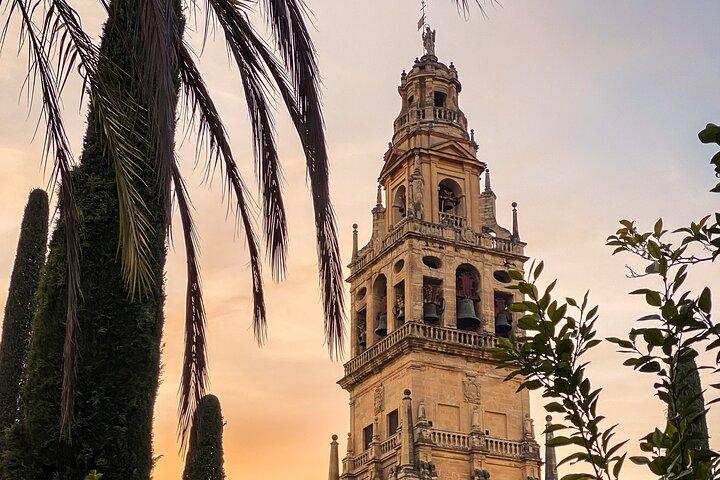
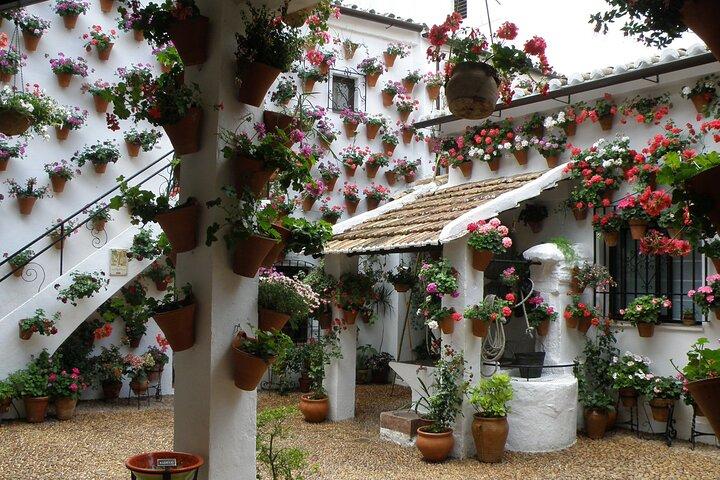
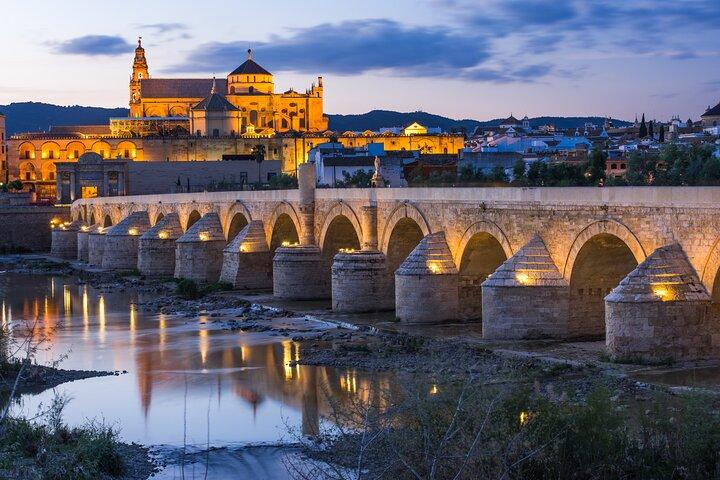
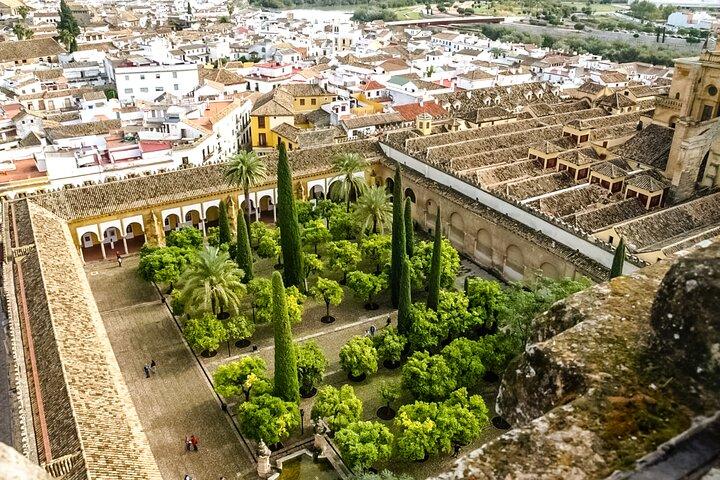
Discover Córdoba’s rich history and unique character with our self-guided audio tour app, letting you explore the city at your own pace. Begin at the stunning Mezquita-Cathedral, the heart of Córdoba’s historic center, then step into the peaceful Patio de los Naranjos, filled with orange trees and fountains. Climb the Bell Tower for panoramic city views before seeing ancient Roman remains at the wall in Parking La Mezquita. Experience royal life at the Alcázar of the Christian Monarchs, with its beautiful gardens and Roman mosaics, and learn about medieval bathing culture at the Caliphal Baths. Wander through the picturesque San Basilio Quarter and Puerta de Sevilla, where you’ll spot traces of a Roman aqueduct, and admire Córdoba’s famous patios, especially lively during the May festival. Explore the city’s multicultural heritage at Casa Andalusí and Casa de Sefarad, stroll the historic Jewish Quarter along Calle Judíos, and visit the Córdoba Synagogue.
Tour Options
Itinerary
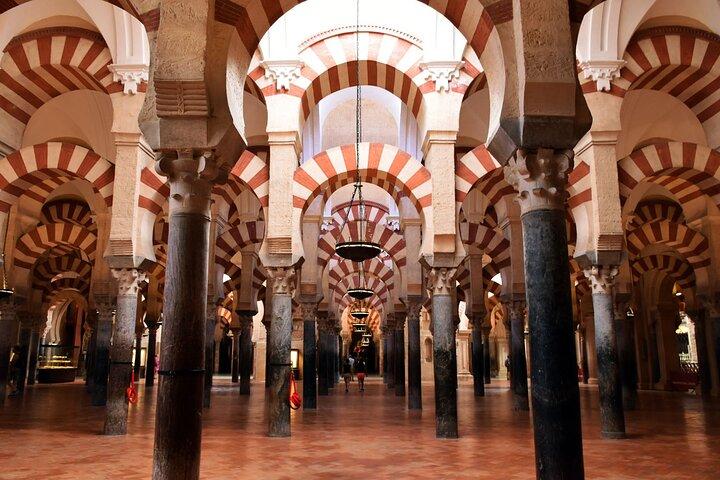
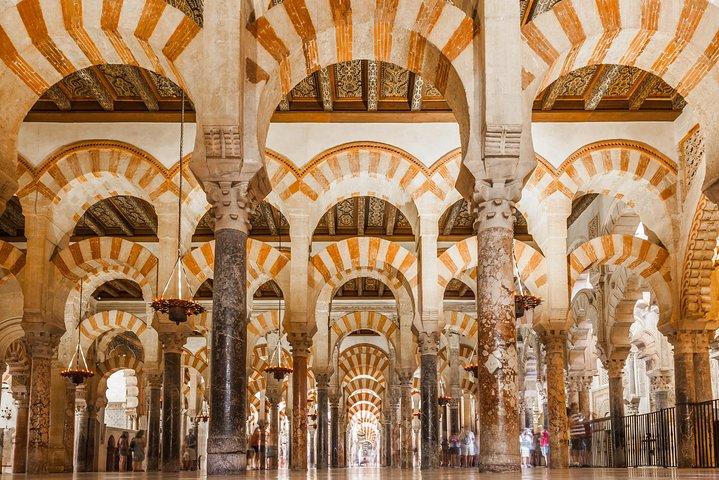
A unique monument blending Islamic and Christian architecture, originally built as a mosque in the 8th century and later converted into a cathedral. Its iconic red and white arches and ornate mihrab are world-renowned. Today, it stands as Córdoba’s most famous landmark and a UNESCO World Heritage Site.
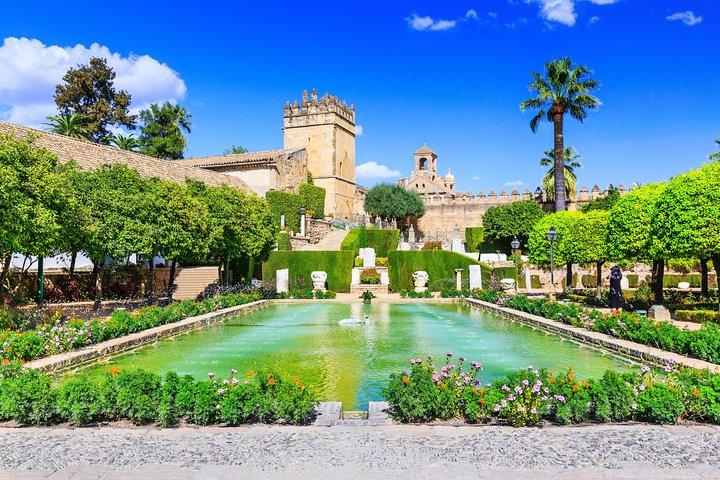
This fortress-palace was built over earlier Roman and Islamic structures and features lush gardens, towers, and historic baths. The Hall of Mosaics displays impressive Roman mosaics discovered under Plaza de la Corredera. The Alcázar served as a royal residence and later as a prison
Dating to the 10th century, these Arab baths were part of the Umayyad palace complex and reserved for the caliph and his court. The site includes a museum explaining the baths’ social and religious significance. Vaulted rooms and ancient heating systems are still visible today
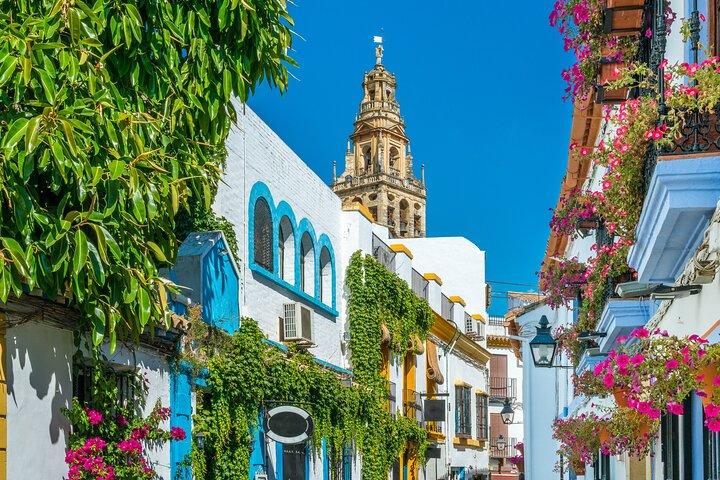
San Basilio is known for its whitewashed houses and flower-filled patios. At Puerta de Sevilla, you’ll find a historic city gate and traces of a Roman aqueduct, highlighting Córdoba’s layered past. The area is perfect for wandering and discovering local traditions.
This touching sculpture depicts an elderly man with a child, symbolizing generational bonds in Córdoba. It’s a popular spot for photos and a quiet moment of reflection. The artwork is found along the self-guided route, adding a modern cultural touch.
A small, welcoming square named after a local figure, offering benches and shade. It’s a pleasant place to pause and watch daily life in the neighborhood. The plaza is surrounded by traditional Cordoban architecture.
This restored house offers a glimpse into Córdoba’s Islamic heritage, with original architecture, period furnishings, and a tranquil courtyard. Exhibits highlight daily life and craftsmanship from the city’s medieval era.
Located in the Jewish Quarter, this museum explores the history, culture, and traditions of Córdoba’s Sephardic Jews. Displays include artifacts, music, and stories of coexistence and expulsion.
Named for the philosopher Maimonides, this plaza is a hub in the Jewish Quarter. A statue honors the scholar, and the square is surrounded by historic buildings and narrow lanes.
One of Spain’s few surviving medieval synagogues, dating to the 14th century. The small, richly decorated prayer hall offers insight into Jewish life in Córdoba before the expulsion.
This narrow, winding street is the heart of the old Jewish Quarter. Lined with whitewashed houses and artisan shops, it preserves the atmosphere of medieval Córdoba.
A lively market where local artisans sell ceramics, leather goods, and crafts. It’s an ideal stop to experience Córdoba’s artistic traditions and pick up unique souvenirs.
This historic square features the Posada del Potro, a former inn mentioned in Don Quixote, and the Museum of Fine Arts. The plaza is known for its fountain and cultural significance.
A quiet square surrounded by historic buildings, offering a peaceful break from the city’s busier spots. It’s a good place to relax and enjoy the local atmosphere.
A picturesque alleyway famous for its flower-filled balconies and view of the Mezquita’s bell tower. It’s one of Córdoba’s most photographed spots.
Highlights
What's included
Traveller Ratings
Important Information
- Not recommended for travelers with spinal injuries
- Not recommended for travelers with poor cardiovascular health
- Public transportation options are available nearby
- Suitable for all physical fitness levels
Reviews(2)
As for the organization of the guide and their preparation, nothing to complain about, very, very good; unfortunately, I was disappointed to find Cordoba again after about eight years, practically in my opinion mass tourism got out of hand, caravans of people clogging the small and wonderful streets of the historic center, restaurant prices tripled, practically a continuous stress, so much so that to have a bit of peace we went to visit some towns nearby, a big disappointment, a shame because it is a wonderful city and it used to be very livable.
Thank you so much for the kind words about the guide — we're really glad the tour served you well! We understand the disappointment of finding Córdoba so changed after eight years. Tourist crowds in the old town have grown a great deal, and it's a shame when it takes away some of the calm that makes the city so special. Your idea of visiting a few nearby towns is a great one — they often offer the same charm at a much gentler pace. Thank you for exploring Córdoba with us, and we hope to guide you around a new city soon! Kind regards, The CloudGuide team
My wife and I had to each download the CloudGuide app to our phones and enter a code, then the audio guide for the tour was downloaded to the app and we could start the walk. The app was a bit clunky to navigate initially but worked fine once we got the hang of it. It took us to some fascinating sites and had plenty of useful recorded information on each site, though some of the text-to-speech conversion was inaccurate. We changed the order of the sites into something a bit more logical and skipped a few we had already seen, but that was not a problem as the sites were randomly accessible in the guide. The guide had a built-in static map but it had no live location info to guide you between sites, so we used another app to navigate between the sites. All in all a good way to spend about two hours to see and hear about some of the tucked-away sights in inner Cordoba which is a most beautiful city.