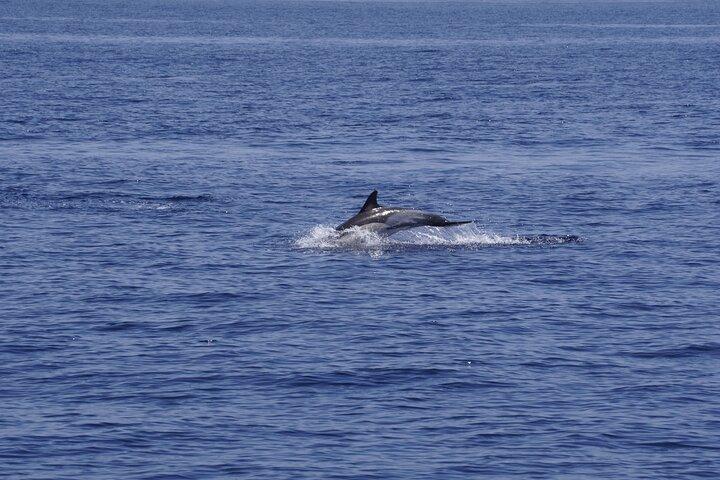


I am contacting you to convey my assessment of the dolphin-watching excursion I took on September 3rd with your company at the Dénia base, in the morning, which I attended in the company of my partner and our 12-year-old child. Let it be said upfront that we are fully aware that wildlife watching in the wild in the marine environment carries an intrinsic risk of failure (nature is unpredictable). My letter is not based, at all, on the fact that we did not sight dolphins. The reason for this message is to share our disappointment with the lack of overall quality in the development of the experience and the service received on board. For my family in particular, this activity represented a very significant financial outlay; although, we assumed it under the expectations of obtaining a rigorous, educational ecotourism service that was up to the standards of premium rates. However, we felt that the excursion's operations fell very short in all its phases: Start of the trip and language management: From the beginning of the activity, a notable inequality in communication became evident. Although the guide/skipper spoke Spanish perfectly, the safety explanations, biological introductions, and route plan were offered first and more extensively in English. We believe that the national language and attention to children should have been prioritized or, at least, have an equitable and equivalent presence on board. Navigation strategy and excursion planning: The route strategy, focused on searching for and reaching trawlers in the open sea (according to an opportunistic hunting technique significantly shown by bottlenose dolphins), consumed half the excursion time without ensuring results. When the initial strategy failed, upon finding a single trawler free of dolphins, and only spotting another fishing vessel in the distance that was unreachable due to distance and speed, the skipper chose to turn around and return to port. At that moment, we missed a clear explanation about the situation and the real options for the day (such as the feasibility of approaching the Cabo de San Antonio Reserve, etc.), instead of just limiting themselves to communicating the return to port in a somewhat sparse and timid manner. Return trip and empathy gap: During the remaining 2 hours of the trip back to port, a deep empathy gap on board was evident. While for the boat's guide/skipper it seemed to be a simple work routine that went wrong, for our family (and I understand for the rest of the passengers on board) a unique experience filled with excitement was falling apart. At that moment, the informative and scientific work should have surfaced even more (especially with a child on board) through the use of the hydrophone (which they boast of having) or other pedagogical dynamics. Instead of that, the guide/skipper once again maintained a closer treatment and conversation almost exclusively with a part of the passengers (compatriots), leaving the rest in absolute disconnection. We appreciate the commercial courtesy details during the trip (the refreshing drinks and the brand's gifts), but these material elements do not replace the conceptual content, the dynamism, and the attention that we legitimately expected after paying such rates. We left with the clear feeling of having received a distant service, more typical of a mass tour operator than the citizen science project that you market. I hope you take these observations as constructive criticism to improve the operations and sensitivity of the staff at your base in Dénia. Thank you
Aunque lamentamos el resultado de su experiencia; desde WeWhale Denia queremos recalcar que en ningún momento ustedes solicitaron la atención de nuestra bióloga. Sophia estuvo conversando profundamente con aquellos dos clientes porque tenían diversas preguntas y anécdotas relacionadas con cetáceos. Muchos de los invitados que suben a bordo del barco desean disfrutar del silencio y la tranquilidad del velero eléctrico, lo que podría resultar maleducado de interrumpir para trasladar información que no fue solicitada. Finalmente, la elección de visitar ciertas embarcaciones es muy común en empresas de avistamiento y es algo mundialmente reconocido dentro de la comunidad científica. En cambio, visitar la reserva marina sería un sin sentido ya que solo abarca hasta los 20 metros de profundidad, los delfines mulares habitan aguas más profundas. Nos entristece no haberla podido trasladar está información, y le aseguramos que tenemos en cuenta su experiencia para abordar otras maneras de educar que incluyan las necesidades de todo tipo de grupos.