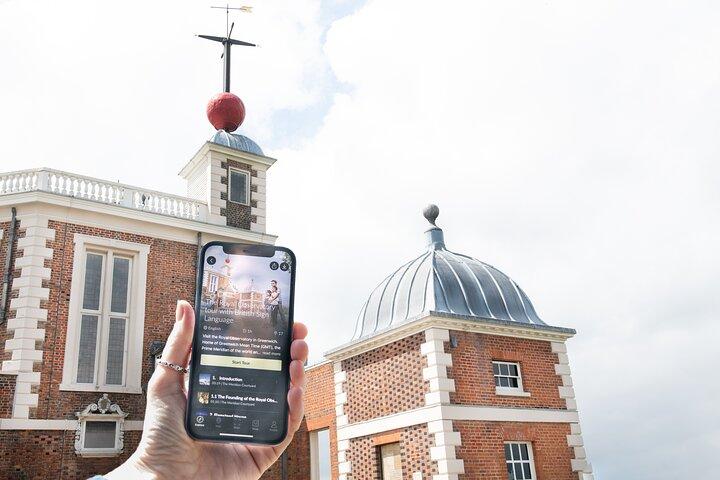
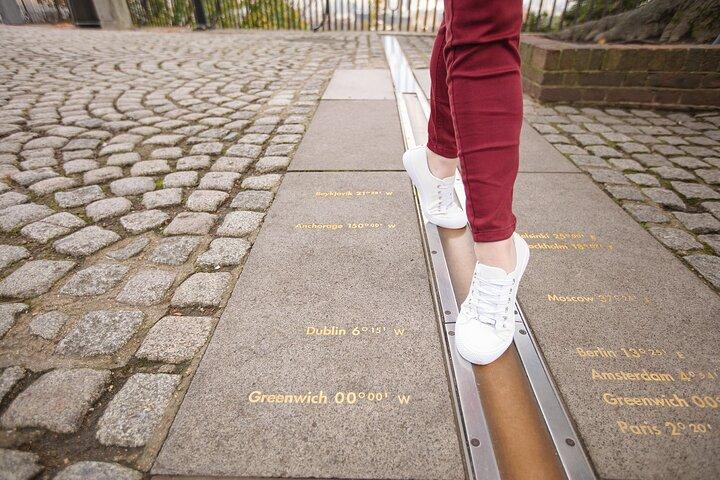
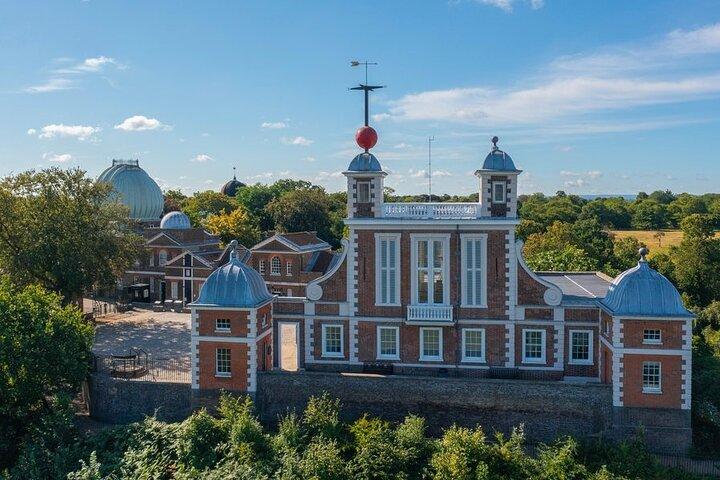
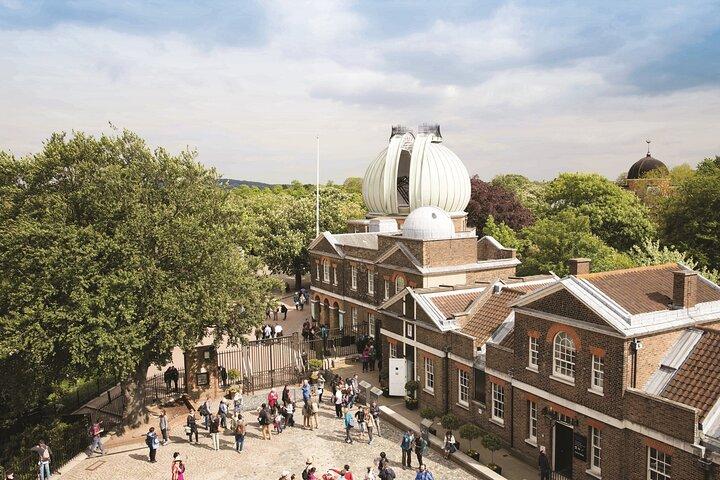
ROYAL OBSERVATORY GREENWICH – BLACKHEATH AVENUE, LONDON ONE OF MY ABSOLUTE FAVOURITE PLACES IN LONDON! And quite frankly, if you visit Greenwich and don’t go to the Royal Observatory, I shall be questioning your life choices. Because where else can you stand on an imaginary line, have one foot in the eastern hemisphere and the other in the western hemisphere, learn how humanity conquered the problem of navigation, admire extraordinary scientific instruments and discover that the British once managed to convince much of the world to organise its geography around a line running through London? ABSOLUTELY BLOODY BRILLIANT! It’s history. It’s science. It’s astronomy. It’s geography. And it’s probably the only tourist attraction where people queue enthusiastically to stand on a strip of metal embedded in the ground. Honestly, if somebody installed the same thing outside Tesco, people would step over it without a second thought. But put it in Greenwich, call it the Prime Meridian, and suddenly we’re all taking photographs of our feet. AND I LOVE EVERY SECOND OF IT! FIRST, LET’S TALK ABOUT THE HISTORY. The Royal Observatory was founded in 1675 by King Charles II. Now, Charles II had a rather serious problem. Britain was becoming increasingly dependent on ships, trade and naval power, but sailors were struggling to determine their longitude accurately while at sea. Latitude was relatively straightforward. Longitude? An absolute nightmare. Imagine being a seventeenth-century sailor. “Captain, where are we?” “Somewhere in the Atlantic.” “Can you be more specific?” “Wet.” “Anything else?” “Very wet.” And that was about the extent of the information available. So Charles II decided Britain needed an observatory to improve astronomical knowledge and help solve the problem of navigation. And who better to design it than Sir Christopher Wren? Yes, the same Christopher Wren associated with St Paul’s Cathedral. Apparently, designing magnificent buildings wasn’t enough to keep him occupied. Some people take up gardening. Wren designed an observatory. THE FIRST ASTRONOMER ROYAL! 🔭 Enter John Flamsteed. Appointed in 1675, Flamsteed became the first Astronomer Royal. His job was to observe the heavens, map the stars and improve the astronomical information available to navigators. Which sounds wonderfully romantic until you remember that this involved spending an enormous amount of time staring into the night sky, recording observations and dealing with British weather. Imagine the conversations. “Good evening, Mr Flamsteed. What are you doing tonight?” “Observing the stars.” “But it’s cloudy.” “Yes.” “And raining.” “Yes.” “Would you like to come to the pub?” “Actually, that’s an excellent suggestion.” Flamsteed House, the original observatory building, remains one of the site’s most recognisable features. And it’s absolutely fascinating to think that such important scientific work began here nearly 350 years ago. NOW, THE PRIME MERIDIAN! 🌍 OH, THIS IS MY FAVOURITE BIT! The famous line marking zero degrees longitude runs through the observatory. And people come from all over the world to stand on it. Including me. Because apparently there’s something enormously satisfying about having one foot in the eastern hemisphere and the other in the western hemisphere. Technically, you’re standing in two halves of the world simultaneously. Which makes you sound incredibly well travelled without having to move more than eighteen inches. “Where have you been today?” “Both hemispheres.” “Really?” “Yes.” “How long did it take?” “About four seconds.” “Impressive.” “Thank you.” Now, here’s where the history gets even better. In 1884, representatives from 25 nations gathered at the International Meridian Conference in Washington, DC. They needed to agree on a common reference meridian for longitude. And Greenwich was selected as the international prime meridian. Not because the British had discovered the centre of the universe. Not because King Charles II had personally claimed ownership of zero. But largely because Greenwich was already widely used in maritime navigation and international mapping. Nevertheless, I like to imagine the British delegation sitting there looking terribly pleased with themselves. “Right, gentlemen. We propose that the entire planet measures its longitude from Greenwich.” “Why Greenwich?” “Because it’s terribly convenient.” “For whom?” “Us.” “Anything else?” “We have excellent tea.” And somehow, Greenwich became the international reference. WE DIDN’T INVENT ZERO, BUT WE CERTAINLY GAVE IT A VERY NICE ADDRESS! AND THEN THERE’S TIME ITSELF! ⏰ Greenwich Mean Time. GMT. Three little letters recognised around the world. The observatory played a central role in establishing accurate timekeeping, and Greenwich became closely associated with the measurement and distribution of time. Before standardised time became widespread, towns could keep their own local solar time. Which sounds rather charming until you try to organise a railway timetable. Imagine catching a train in the nineteenth century. “What time does it leave?” “Ten o’clock.” “London time?” “No, Bristol time.” “What time is that in London?” “Depends.” “On what?” “Where the sun is.” “Right. I’ll walk.” Accurate timekeeping became essential for navigation, railways and communications. And Greenwich was at the centre of this transformation. Which means that every time I look at my watch, I can appreciate the enormous amount of scientific effort that went into making sure we all know precisely how late we’re running. THE TIME BALL! 🔴 Now THIS is wonderfully quirky. On top of Flamsteed House sits a large red time ball. First installed in 1833, it was designed to provide a visible time signal to ships on the Thames. The ball rises shortly before 1 pm and drops at exactly 1 pm. Ships could use the signal to check their marine chronometers. Brilliantly simple. No internet. No satellite signal. No mobile phone. Just a large red ball falling off the top of a building. Not completely off, obviously. That would have made timekeeping rather expensive. Imagine a sailor in 1833. “What’s the time, Captain?” “Watch the ball.” “What ball?” “The red one.” “What’s it doing?” “Falling.” “Excellent. One o’clock.” And somehow, that helped keep Britain’s maritime world running on time. These days, people stare at their smartphones. Back then, they stared at a ball on a roof. I’m not entirely convinced we’ve become more interesting. NOW, THE LONGITUDE PROBLEM! This is one of the most fascinating chapters in the observatory’s history. In 1714, the British government established the Longitude Act, offering substantial rewards for a practical method of determining longitude at sea. The biggest reward was £20,000. TWENTY THOUSAND POUNDS IN 1714! An enormous fortune. And along came John Harrison, a self-taught clockmaker from Yorkshire. Harrison spent decades developing increasingly accurate timekeepers, eventually producing his extraordinary marine timekeeper H4. His work demonstrated how a sufficiently accurate clock could help sailors calculate longitude. Think about that. For centuries, people had struggled to determine where they were on the world’s oceans. And a crucial part of the solution involved building a clock that didn’t lose its mind every time a ship rocked about. I struggle to keep my phone charged. Harrison was developing precision timekeeping that would help transform navigation. THE MAN DESERVED MORE THAN A GOLD WATCH AT RETIREMENT. And you can see Harrison’s extraordinary timekeepers at the Royal Observatory. They are absolutely fascinating. Beautiful examples of engineering, determination and scientific ingenuity. Although I do wonder whether Harrison ever looked at one of his complicated mechanisms and thought: “Perhaps I should have become a carpenter.” THE TELESCOPES AND ASTRONOMY! 🔭 Of course, the Royal Observatory isn’t just about clocks and lines on the ground. It’s also about studying the universe. And what an extraordinary subject that is. The observatory is home to the magnificent Great Equatorial Telescope, installed in 1893. It’s an enormous historic refracting telescope housed beneath a distinctive onion-shaped dome. And it is spectacular. The Victorians clearly decided that if they were going to look at the stars, they weren’t going to do it with anything modest. No little telescope on a tripod. No binoculars borrowed from Uncle Albert. They built an enormous scientific instrument and put a great big dome over it. Because apparently even astronomy required impressive architecture. And standing there, surrounded by the history of astronomical discovery, you begin to appreciate just how much humanity has learned about the universe. Planets. Stars. Galaxies. The movement of celestial bodies. The sheer unimaginable scale of space. And then you remember that despite all this extraordinary scientific progress, we still haven’t managed to invent a supermarket trolley that reliably travels in a straight line. BUT THE VIEWS! 😍 OH, THE VIEWS! The Royal Observatory sits high in Greenwich Park, overlooking one of the most spectacular panoramas in London. From up there, you can admire the magnificent Old Royal Naval College, the River Thames and the modern skyline of Canary Wharf. It’s breathtaking. Historic London and modern London spread out before you. Beautiful architecture, green spaces, the river and towering skyscrapers. All in one extraordinary view. And there’s something wonderfully appropriate about standing at a place dedicated to measuring the Earth while looking out across one of the world’s great cities. Although, naturally, the observatory is at the top of a hill. Because why make scientific discovery accessible without first testing everyone’s cardiovascular fitness? By the time you’ve walked up through Greenwich Park, you’ve already completed the practical examination in gravity. Newton would have been delighted. AND HERE’S SOMETHING ELSE I LOVE… The Royal Observatory isn’t just a collection of old instruments. It’s a place where some of the most important questions in human history were investigated. Where are we? How do we navigate? How do we measure time? How do the stars move? How can we understand our place in the universe? For centuries, scientists, astronomers, engineers and mathematicians worked to answer those questions. And their discoveries helped change the world. That’s extraordinary. And yet, one of the biggest attractions today is still a metal line in the courtyard. Which I think is absolutely wonderful. SO, WOULD I RECOMMEND THE ROYAL OBSERVATORY? ARE YOU KIDDING ME?! It’s one of my favourite places in London! I absolutely love it. The history is fascinating. The scientific achievements are extraordinary. The buildings and instruments are magnificent. The views are spectacular. And the whole experience is wonderfully quirky. Where else can you learn about the history of navigation, see clocks that helped change maritime travel, admire a giant telescope, watch a red ball tell the time and stand in two hemispheres at once? All in one visit! FIVE MASSIVE, ASTRONOMICALLY ENTHUSIASTIC STARS! ⭐⭐⭐⭐⭐ If you’re visiting Greenwich, this is an absolute must. Allow yourself plenty of time to explore, enjoy the history and appreciate the extraordinary scientific achievements associated with this remarkable place. And don’t forget to have your photograph taken on the Prime Meridian. Because if you’re going to stand on zero degrees longitude, you might as well have photographic evidence. My only suggestion would be to install a sign beside the line reading: “CONGRATULATIONS! YOU ARE NOW OFFICIALLY IN TWO HEMISPHERES. PLEASE DO NOT ATTEMPT TO CLAIM TWO PASSPORTS.” And perhaps another beside the historic clocks: “WARNING: VISITING THIS ATTRACTION WILL NOT IMPROVE YOUR PERSONAL TIMEKEEPING.” Because, despite centuries of astronomical research and precision engineering, I can still manage to be late. ROYAL OBSERVATORY GREENWICH — WHERE TIME WAS MEASURED, LONGITUDE WAS STANDARDISED, THE STARS WERE STUDIED, AND THE BRITISH SOMEHOW GOT THE WHOLE WORLD TO AGREE WHERE ZERO SHOULD BE! 🌍🔭⏰🤣 ONE OF MY ABSOLUTE FAVOURITE PLACES. HISTORICALLY BRILLIANT, SCIENTIFICALLY EXTRAORDINARY AND COMPLETELY UNMISSABLE! And finally, a word of advice. If somebody asks you whether you’re east or west… JUST TELL THEM YOU’RE STANDING ON THE LINE AND REFUSE TO TAKE SIDES!
ロンドン王立天文台グリニッジ子午線入場チケット

+6 photos


概要
- 所要時間
- 2 時間
- 料金
- $33 / 人
- 場所
- London, イギリス
- 評価
- 4.1 / 5 · 421 件のレビュー
- 言語
- DE, PT, KO, CMN
- グループ
- 1〜14名
- キャンセル
- 24時間前まで無料キャンセル
- 確認
- 即時
- チケット
- モバイルチケットまたは印刷したチケットの受付可
- 事業者
- National Maritime Museum
説明
ロンドンへの訪問は、GMT (グリニッジ標準時) の本拠地である本初子午線にまたがり、片足を東にもう片足を西に置くグリニッジ天文台を訪問せずには完了しません。天文学者ロイヤルの足跡をたどり、彼らの物語を発見し、天文学、宇宙、星の過去、現在、未来の驚異を体験してください。グリニッジ ロイヤル パーク、ロンドン シティ、テムズ川の向こうに広がるロンドンのドラマチックな景色をお楽しみください。
原文からGoogle 翻訳により自動翻訳されています。
催行日と料金
- 催行日
- 毎日
- 開始時刻
- 1日13回(10:00〜16:00)
- 最短の空き日
- 10月19日(月)
- 大人 (16歳以上)
- $33
- 子ども (4〜15歳)
- $17
夕日の時間帯に:15:00発の回は日没時(今後数週間は16:36ごろ)にツアー中です。
Viator上の催行会社の最新スケジュールより(10月18日確認)。
ツアーオプション
旅程
Royal Observatory Greenwich
グリニッジ・ロイヤル・パークの丘の上にあるロイヤル・オブザーバトリー・グリニッジへ向かいましょう。そうするうちに、グリニッジ・ロイヤル・パーク、ロンドン・シティ、テムズ川の向こうのロンドンの劇的な景観を楽しむことができます。内部に入ると、補完的なオーディオガイドを拾うことができます。利用可能な7つの言語があります。 あなたの訪問はグリニッジ標準時(GMT)の家にある東に1フィート、西にもう1つ、プライムメリディアンラインを跨いでいるメリディアン中庭で始まります。 このツアーではFlamsteed Houseを訪れ、天文学者ロイヤルの足跡を歩きます。卿クリストファー・レンによる設計されたオクタゴンルームを訪れ、ロンドンで最もよく保存されているレンのインテリアの一つです。ハリソンの時計、世界を変えた発明を見てください。グリニッジ標準時を公開した最初の時計であった、外にマウントされたシェパードゲートクロックを発見してください。ハリソン、ニュートン、ハレー、ブラッドリー、マウンダー、ハリソン、エアリー、アインシュタインを含む王立天文台に拠点を置くまたは関連した偉大な科学者と発明者の発見について学びましょう。 Flamsteed Houseの上にある明るい赤色のTime Ballは、世界で最も早く公開された時代の信号の1つで、1833年に初めて使用され、今日もなお動作しています。 100年以上前に天文学者に宇宙の新しい展望をもたらした巨大な象牙質のドームにある大赤道望遠鏡を見逃さないでください。 ユネスコの世界遺産に登録されているMaritime Greenwichに位置するNational Maritime MuseumとQueen's Houseは、天文台から徒歩圏内にあり、無料でアクセスできます。世界で唯一生き残った茶の切り身カティサークは、今では受賞歴のある博物館と訪問者の経験であり、グリニッジを訪れる際には必見です。
含まれるもの
含む
音声ガイドは10カ国語で無料ダウンロード
国立海洋博物館とクイーンズハウスは無料で見学でき、徒歩圏内に
すべての手数料および税金
アトラクション入場券
含まない
アトラクションへの/からの交通機関
旅行者の評価
レビューはViatorとTripadvisorが収集したものです
4.1
421 レビュー
Londonのツアーとの比較
- 最低料金$33は、Londonの同程度の所要時間のツアーの標準的な料金$68より51%安い
Viatorの4,766件のツアーをExcurgoが比較(毎日更新)。
重要情報
- 車いす対応
- 介助動物の同伴可
- 近くに公共交通機関があります
- あらゆる体力レベルの方に適しています
- 4歳未満のお子様は、無料でアトラクションに入ることができます
- お子様は大人の同伴が必要です
- アトラクションの一部が完全にはアクセスできませんのでご注意ください。訪問の計画に支援が必要な場合は、アトラクションにお問い合わせください
キャンセル
出発予定時刻の24時間前までにキャンセルされた場合、全額返金の対象となります。
1日前以上100%の払い戻し
0〜1日前まで0%の払い戻し
レビュー(421)
レビューはViatorとTripadvisorが収集したものです
T
I STOOD ON THE EDGE OF THE WORLD, HAD ONE FOOT IN EACH HEMISPHERE AND DISCOVERED THE BRITISH INVENTED ZERO!
A
Loved it
Great experience with my teen (birthday visit). Now, I work in astronomy, so I am biased :)
事業者からの返答
Hi There, Thank you for leaving us a review and feedback about your visit with us to the Royal Observatory. We're very glad to be a part of a celebratory day (big Birthday wishes!) and thrilled to hear that you enjoyed the experience on offer. Don't worry, as you can tell we're also very biased and are very lucky to have such a fantastic curatorial and Astronomy team with us at the Observatory. The Royal Observatory will be closing from 2nd November to make way for a transformation project that has already begun in out Planetarium; there is more information available on our website about specific timelines, but we hope to see you again once the project is complete.
V
So enjoyable
We had such a good day at the Royal Observatory Greenwich On arrival , we booked for the three o’clock guided tour , for a very reasonable extra cost of £5 We were delighted with the content and delivery of the tour , with our tour guide Rachel We couldn’t have asked for a better experience and we learned so much about the history and the time lines of events All in all , we would like to thank the entire team who were very helpful and professional
事業者からの返答
Hi There, Thank you for taking the time to leave us a review and some feedback about your visit to the Royal Observatory. We're very glad to hear you had such a wonderful time visiting with us, and are especially appreciative for your kind words about one of our members of staff. Rachael and the tour guide team work incredibly hard to deliver engaging tours with people like yourselves; they love sharing their knowledge and passion with others. The Royal Observatory will be closing from 2nd November to make way for a huge transformation project; more information can be found on our website about the project and timeline, but once it is complete and we are re-open fully we hope to be able to welcome you back once more.
C
Better than expected
Good experience visiting the Royal Observatory. I thought it would be a bit of a tourist trap, and the truth is that I left very satisfied. In addition to the famous line (with its line for photos) and one of the best views (if not the best) of the entire city, it features an interesting camera obscura, the Royal Astronomer's house (a position of great prestige), and a navigation museum where the problematic history of orientation on the high seas and how Harrison managed to overcome it is explained. The visit ends with the climb to the telescope and the observation of the 3 quadrants that allowed for the creation of the famous meridian (the current one and the two previous measurements). The entire area is very well signposted and the infographics are excellent for being able to understand the place.
事業者からの返答
Hi There, Thank you for taking the time to leave us a review and feedback about your visit with us to the Royal Observatory. We're over the moon to hear you had such a fantastic time with us and you have summed up the experience we want everyone to have absolutely perfectly. Thank you again for such kind and informative feedback, we look forward to welcoming you back in the future.
5
Awsome time at Greenwich
Our guide Divian was amazing! The tour was cheap, but the quality was awsome. We got to know everything about this place with an amazing, funny guide and an affordable price. Also, taking pictures at the prime meridian with the wonderful view was good. I recommend this place with a tour to everyone who comes to London.
事業者からの返答
Hi There, Thank you for taking the time to leave us some feedback about your visit to the Royal Observatory. We're thrilled to hear that you joined one of our guided tours and found it very informative and worthwhile. Our tour guides like Divya work very hard to deliver engaging tours with our visitors, sharing their knowledge and passion with others whilst they're with us. We'll be sure to pass your kind words over to Divya who I'm sure will be very appreciative.
V
Disappointed Can’t recommend unless tour operator is aware of what is going on. Entry ticket didn’t work as bldg is shut
We got there and after walking about a half mile up the whole thing was closed for construction!!I am so so annoyed.
H
Unexpectedly interesting.
The Royal Observatory was not quite what I expected. However, it was still very interesting! The view of the park from the prime meridian line was a bit of a letdown. After such a dry summer, the usually very green expansive grounds were extremely brown. But… inside, seeing all the old tools used to determine time and longitude and learning about the evolution of time keeping devices was interesting. I would definitely recommend this for your trip as it’s a little bit of history that I think anyone would find intriguing!
S
Overpriced Tourist Hotspot with Little to Offer
I went solely because we had visitors and thought it would be a good tourist attraction to experience together. Unfortunately, I found it difficult to justify the hefty £25 admission price. For that price, I expected a much richer and more in-depth experience. There was very little interactive learning, no meaningful guided element during our visit, and I came away feeling that I had learned surprisingly little. The space itself also felt extremely small considering the cost of admission. It is a shame, because a major London attraction has the potential to offer so much more than simply being somewhere tourists check in and take photographs. At £25 per person, I would expect engaging interpretation, opportunities to learn in depth, and an experience that feels substantial enough to justify the price. Unless you particularly want to visit this specific attraction, I find it difficult to recommend at the current admission price.
事業者からの返答
Hi There, Thank you for taking the time to leave us a review and feedback regarding your visit to the Royal Observatory. We're sorry to hear that you felt your experience was not accurately reflected in the ticket price. We have a fantastic volunteer team who work hard to deliver free talks several times a day to our visitors to add to their experience. Times for these can be found on our daily signage, as well as announcements in the site during the course of the day. We also have a Smartify offer for those who would prefer 'self-guided' audio tours, or who may have missed the volunteer talks. Your comments about the interpretation and lack of opportunities to learn in depth will be taken forward in order to improve the future Visitor Experience. The Royal Observatory will be closing from November 2nd as we undergo a renovation project that has already begun on the part of our site that houses the Peter Harrison Planetarium. We would look forward to welcoming you back once the project is complete and we fully re-open, where we hope to change your current memory of the Observatory.
C
Outrageous treatment and poor value.
More than disappointing. Given the cost of entry and several things such as the planetarium and camera obscurer being closed, it did not offer good value for money. Furthermore, it was advertised outside that there was a FREE guided tour at 1:30pm when we got there. We saw the tour convening only to be told by a very snooty woman that it would cost an extra £5 each for the guided tour. We subsequently decided to make our own way around the museum and despite trying to avoid the guided tour, we felt watched. This concluded with the tour guide physically pushing my girlfriend out of the way when she was merely trying to quietly look at a museum exhibit on her own. Absolutely outrageous.
事業者からの返答
HI There, Thank you for taking the time to leave us some feedback. We're saddened to hear about your experience with us, with particular concerns around the conduct you have said you witnessed during your visit. We would appreciate it if you could reach out to our Bookings team via email address Bookings@rmg.co.uk so that we can gather some more information about your visit and the member of staff you encountered that 'pushed' the other member of your party. We take complaints such as these extremely seriously so would appreciate you getting in touch. The Camera Obscura was closed due to poor visibility; it is advertised on our website that this is an item that is temperamental and we cannot guarantee it will always be open due to British weather, there was also signage up at our ticketing office to explain it would be closed. Our signage outside does not specify the guided tours are free, but it does offer the multiple talks and tours that happen daily - our announcements and signage at admissions specify which are free and which are not included in the ticket price. Our Planetarium has been closed since September 2025; this information is available on our website and there is signage up at our old Planetarium entrance explaining this. Please note that when the Planetarium was open, the shows were an additional charge and a large portion of the galleries had been stripped out for the works that are now ongoing. Our renovation project will see the remainder of the site close from November 2nd; we would look forward to welcoming you back once the project is finished and we re-open so that we can rectify your experience with us.
G
Disappointing
Very crowded, not much to see and certainly not worth the money. My second visit, but this time the planetarium wasn’t open and that was probably the best thing about it last time,I went.
事業者からの返答
Hi There, Thank you for taking the time to leave us some feedback about your visit. We're saddened to hear you felt your ticket was not worth the experience received, our staff work hard to deliver free talks daily to add to people's experiences with us. The Peter Harrison Planetarium has been closed since September 2025; this information is available online and our website, please note that when it was open is was an additional cost and the gallery spaces had largely been stripped out due to the works that are currently taking place. The Observatory will close from the 2nd November 2026, so we are glad you had the chance to visit before we close, we look forward to welcoming you back in the future once we re-open after our renovation project is complete.
Londonの類似ツアーを比較
- 最安値: ロンドン王立天文台グリニッジ子午線入場チケット — $33
- 最高評価: ロンドンからストーンヘンジ、ウィンザー城、バース — 4.6 (21,030 件のレビュー)
- 最短: ロンドン王立天文台グリニッジ子午線入場チケット — 2 時間
| ツアー | 所要時間 | 評価 | 料金 | |
|---|---|---|---|---|
| ロンドン王立天文台グリニッジ子午線入場チケット | 2 時間 | 4.1 (421) | $33 | |
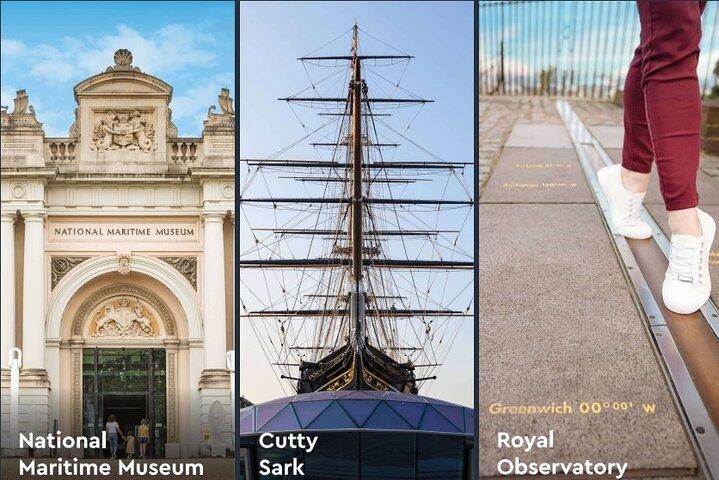 ロイヤル・オブザーバトリー&プライム・メリディアン&カティサーク ロイヤル・オブザーバトリー&プライム・メリディアン&カティサーク | 3–8 時間 | 4.5 (85) | $55 | 見る |
 グリニッジ・ハイライトプライベート半日ツアー グリニッジ・ハイライトプライベート半日ツアー | 3h 30分 | 4.8 (23) | $400 | 見る |
 ロイヤルグリニッジ浸漬ツアー(キューティーサーククリームティー付き) ロイヤルグリニッジ浸漬ツアー(キューティーサーククリームティー付き) | 2h 30分 | — | $188 | 見る |
 グリニッジ王立天文台海洋博物館プライベートツアー グリニッジ王立天文台海洋博物館プライベートツアー | 4 時間 | — | $339 | 見る |
 ロンドン グリニッジ ハイライト プライベート ツアーとテムズ川クルーズ ロンドン グリニッジ ハイライト プライベート ツアーとテムズ川クルーズ | 2–4 時間 | 5.0 (1) | $300 | 見る |
 ロンドンからストーンヘンジ、ウィンザー城、バース ロンドンからストーンヘンジ、ウィンザー城、バース | 11 時間 | 4.6 (21,030) | $107 | 見る |
料金$33
4.1(421) 無料キャンセル