Toegangskaart Leopold Museum Wenen
Beschrijving
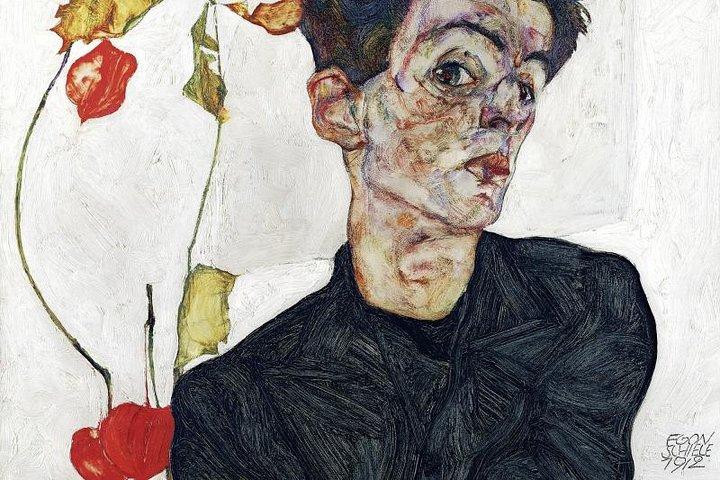
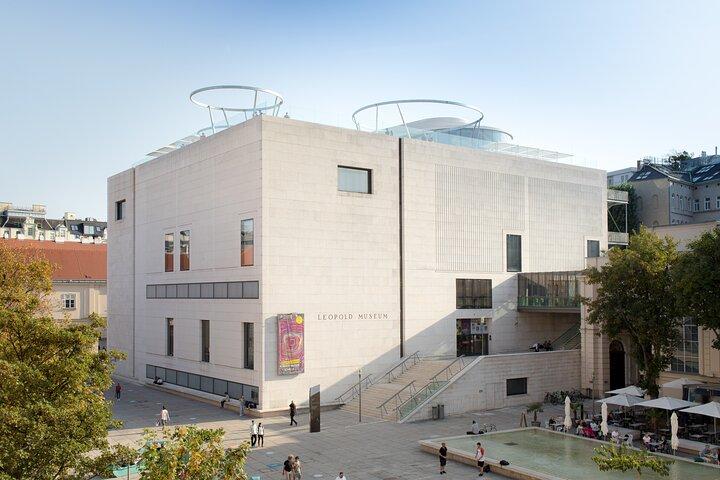
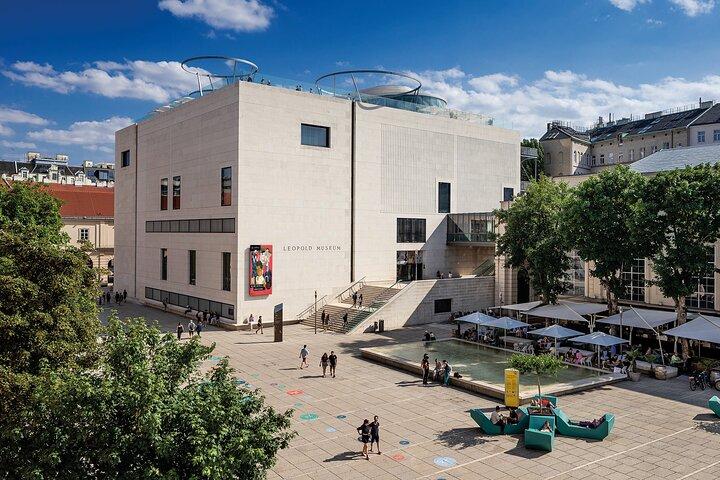
HEROPENING op 8 december 2020! Nieuwe openingstijden: woensdag–zondag 10 : 00u–18: 00u Het Leopold Museum is een unieke schatkamer van de Weense Jugendstil, de Wiener Werkstätte en het expressionisme. Het is het meest bezochte museum van de populairste culturele site van de stad, het MuseumsQuartier, en het herbergt de belangrijkste en grootste Egon Schiele-collectie ter wereld, evenals meesterwerken van Secession-oprichter Gustav Klimt. Tip : De panoramaramen van het museum bieden een prachtig uitzicht op het centrum van Wenen met het Maria Theresaplein en het Hofburgpaleis.
Rondreisopties
Reisroute
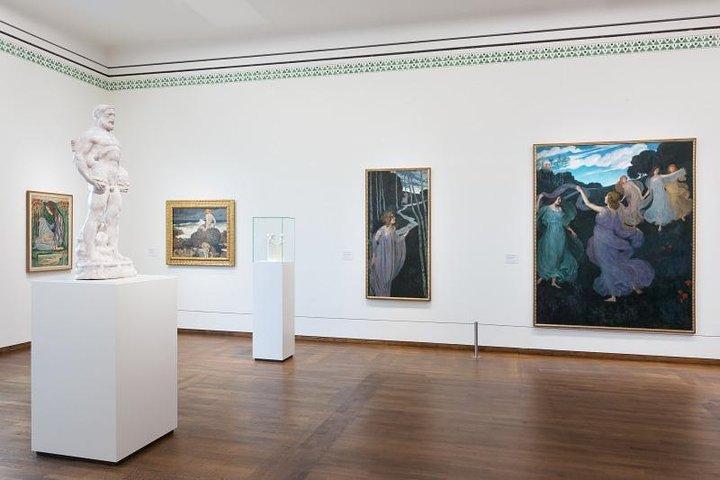
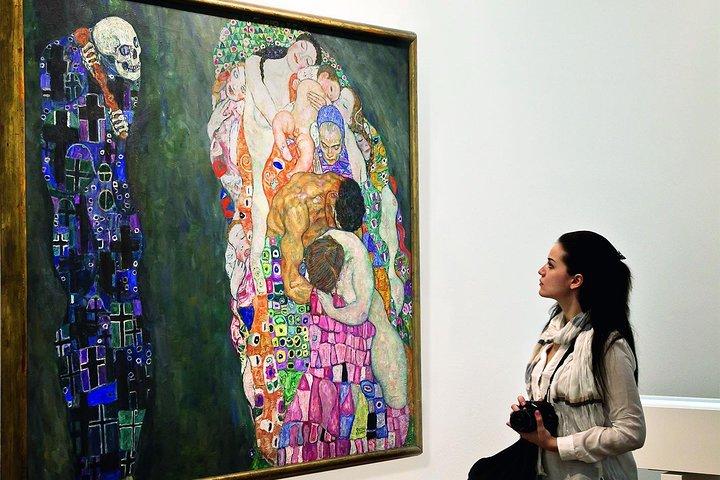
De Leopold-collectie is een van de belangrijkste collecties moderne Oostenrijkse kunst ter wereld. De meer dan 5000 exposities werden verzameld door Rudolf en zijn vrouw Elisabeth Leopold gedurende een periode van vijf decennia. In 1994 werd de collectie geconsolideerd door Rudolf Leopold met de hulp van de Republiek Oostenrijk en de Oostenrijkse Nationale Bank in de Leopold Museum Private Foundation - een particuliere stichting zonder winstoogmerk. Het Leopold Museum is een uniek en actief museum overspoeld met licht in het hart van Wenen en de grootste culturele magneet in het MuseumsQuartier. Naast spannende speciale tentoonstellingen, herbergt het niet alleen de meest substantiële en belangrijkste collectie van Egon Schiele wereldwijd, maar ook kostbare meesterwerken van Gustav Klimt, zoals zijn waarschijnlijk belangrijkste figuratieve schilderij "Death and Life". In geen enkel ander museum in Wenen kan men zo dicht bij de legendarische "Fin de Siècle Wenen" komen en getuige zijn van de geboorte van de moderniteit. De collectie laat zien hoe de kunst van het Habsburgse rijk binnen een paar jaar veranderde van strikt historicisme en mooi humeurimpressionisme naar de wereldwijd unieke "Wiener Moderne" die Klimt en Schiele omvat, evenals Oskar Kokoschka, Richard Gerstl, Koloman Moser en vele andere kunstenaars die allemaal goed vertegenwoordigd zijn met grote werken in het Leopold Museum. Een verdere focus van het museum ligt op de Oostenrijkse interbellumperiode, die veel belangrijke kunstenaars zoals Albin Egger-Lienz, Anton Kolig en Herbert Boeckl naar voren bracht en deels al in de richting van de tweede helft van de twintigste eeuw wijst. Dit is de reden waarom Oostenrijkse kunstenaars van de naoorlogse generatie of uitzonderlijke werken van de negentiende eeuw van Ferdinand Georg Waldmüller, Friedrich Gauermann, August von Pettenkofen, Anton Romako, Emil Jakob Schindler, Carl Schuch en anderen herhaaldelijk worden gepresenteerd. Wezenlijke en verbazingwekkend modern ontworpen alledaagse voorwerpen van de Fin de Siècle ronden de collectie af, waarbij met name Otto Wagner, Adolf Loos, Dagobert Peche en de oprichters van de Wiener Werkstätte Josef Hoffmann en Koloman Moser moeten worden geciteerd. En aangezien alle grote kunstenaars van de Wiener Moderne regelmatig bijeenkwamen in de tijdloze koffiehuizen voor inspirerende uitwisselingen, spreekt het vanzelf dat ook in het Leopold Museum een koffiehuis zijn plaats moet hebben. In het "Café Leopold" kunt u ontspannen en uw bezoek aan de Leopold-collectie bekijken, die in de loop van vijf decennia door Rudolf Leopold en zijn vrouw Elisabeth werd samengebracht en nu meer dan 5.000 kunstobjecten omvat.
Hoogtepunten
Wat is inbegrepen
Beoordelingen van reizigers
Belangrijke informatie
- Rolstoeltoegankelijk
- Baby's en kleine kinderen kunnen in een wandel- of kinderwagen mee
- Niet aanbevolen voor reizigers met een slechte cardiovasculaire gezondheid
- Geschikt voor alle condities
- Kinderen dienen te worden begeleid door een volwassene
- Korting voor kinderen alleen met geldige ID-kaart
- Toon uw Viator-voucher bij de kassa om deze om te wisselen voor een ticket. Druk uw voucher a.u.b. af
- Audiogids beschikbaar in het Duits, Engels, Frans, Italiaans - Extra kosten: EUR 4,-
Beoordelingen(515)
The art blew my mind. A lot of modern art and other work too - sculpture, jewellery, glassware, furniture - but if you’re open-minded and not too traditional, it’s a must. The Egon Shiele and Death and Life (Klimt) were amazing but other unexpected pieces were so memorable too. Loved it. (Cafe was underwhelming.)
The Leopold Museum in the incredible MuseumQuartier is laid out so well that you don't miss a single work, whether it's Klimt's early period or the astonishing productions of Egon Schiele. However, I was less interested in the current exhibitions, but that doesn't take anything away from the quality of the place.
Thank you for your kind feedback! We're glad you had a wonderful time at Leopold Museum and hope to see you again soon.
Stunning Museum showing the whole range of art and design from the Secessionist period.
Thank you for your kind words! We’re pleased you had an enjoyable experience at the Leopold Museum and hope to welcome you back soon.
Incredible museum!!! You are 100% worth it.
Thank you for your positive review! We’re delighted you enjoyed your visit to the Leopold Museum and look forward to welcoming you back soon.
If the Albertina tells the story of the evolution of European art between the nineteenth and twentieth centuries, the Leopold Museum is the place where one truly understands Vienna at its moment of greatest cultural splendor, precisely in the years preceding the collapse of the Austro-Hungarian Empire. It is an immense museum, very rich in works and artists, in which one could—or rather (given the time) should—spend entire days. The heart of the collection is undoubtedly dedicated to Egon Schiele, an artist who struck me a lot. His works release an extraordinary energy, but also a deep sense of restlessness. In his self-portraits and paintings, it seems one is witnessing the continuous search for his own identity, the almost desperate need to affirm his own vitality, but also the laying bare of the most intimate fragilities: the pain for the lack of maternal love, the passion for Wally and then for Edith, desire, loneliness, illness, death. Every painting appears as a confession, so intense that it still seems surprisingly modern today. The section dedicated to the artists of the Vienna Secession and Austrian Expressionism is also very rich. I particularly appreciated Oskar Kokoschka, with his vibrant and psychologically intense painting, and I was also deeply struck by Richard Gerstl, who committed suicide at only twenty-five years old. His paintings are of a surprising beauty: intense, very modern, rich in expressive force, and capable of conveying all the sensitivity and inner torment of the artist. Despite having had a very short life, he left behind works that testify to an extraordinary talent and a truly innovative pictorial language. Naturally, Gustav Klimt is not missing, represented with significant works from the different phases of his artistic production, which allow one to grasp the evolution of his pictorial language well beyond the famous "golden phase." The display dedicated to the Vienna Secession is also of great interest: in addition to the paintings, the museum exhibits furniture, design objects, and artifacts that perfectly convey the idea of how this movement was not just an artistic trend, but a true cultural project, aimed at renewing every aspect of daily life through beauty. It is a journey that helps one understand how, in the Vienna of that period, art, architecture, furniture, and applied arts were in continuous dialogue with each other, giving life to one of the most extraordinary cultural seasons in European history. On the ground floor, there are also splendid works of German Expressionism, with Ernst Ludwig Kirchner in the foreground: paintings of great expressive force, bright colors, and an emotional tension that captures the gaze. I also had the good fortune to visit the large temporary exhibition dedicated to Gustave Courbet. A truly remarkable exhibition that allowed me to understand why Courbet is considered one of the fathers of modern painting. Rejecting the stereotypes of academic painting, he chose to represent nature and man in their authenticity, paving the way for much of the art between the nineteenth and twentieth centuries. I was especially fascinated by his mountain and sea landscapes: brushstrokes that are both fluid and energetic, capable of rendering the matter, light, and force of nature with surprising modernity. Ultimately, the Leopold Museum is much more than a collection of masterpieces. It is a museum that allows one to understand the extraordinary cultural season of late nineteenth-century Vienna, with its tensions, its anxieties, and its incredible creative vitality. For those who truly wish to understand the soul of this splendid city, it represents an absolutely essential stop.
We are incredibly thankful for your outstanding review! Your poetic descriptions of the exhibitions, artists and historic relations was a wonderful read. It's great to hear you had such an inspiring time at the Leopold Museum and look forward to your next visit.
Greatest repository of Secession art, a must for enthusiasts of Klimt and Schiele, in a very comfortable setup.
Thank you for your positive review! We’re delighted you enjoyed your visit to the Leopold Museum and look forward to welcoming you back soon.
Top children's workshop in the studio as part of the holiday program.
Vielen Dank für Ihr nettes Feedback! Gerne richten wir Ihre freundlichen Worte an unsere Kunstvermittlerin aus, die den Kinderworkshop gehalten hat.
Roman was such an excellent guide..he drove perfectly and showed our small group the important sites with ample free time. Roman was so thoughtful and considerate as well..thank you!
Excellent visit and presentation of the works. A remarkable museum not to be missed, especially for people interested in artists, Austrian in particular from the late 19th-early 20th century.
Thank you for your positive feedback! We’re pleased you enjoyed our exhibitions and hope to see you again soon.
Great Museum. The museum has a good selection of paintings and each painting has a short description to better understand the paint and painter idea. I am happy to visit the museum as Several paintings in exhibition was the first time I have seen them in person or in magazines. The best time to visit is once the museum open the doors, we stayed there for 2 hours. Early is quite, but after noon the crowd is larger. All the staff is helpful and friendly.
Thank you for your positive feedback! We’re pleased you enjoyed your experience at the Leopold Museum and look forward to welcoming you back soon.