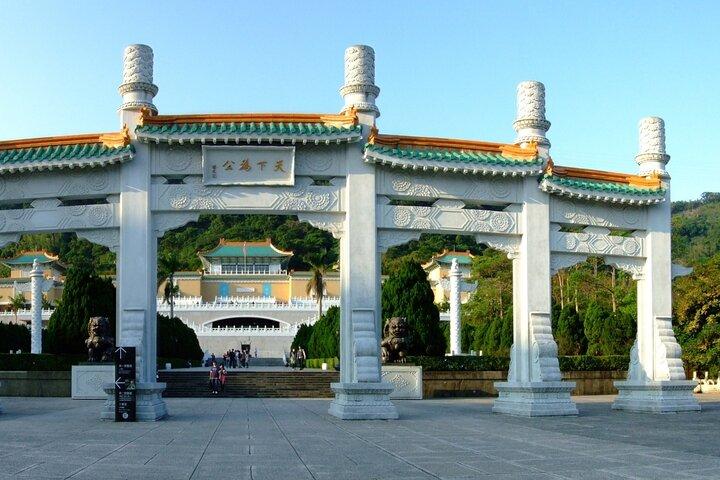
Entrée au Musée national du palais, branche nord de Taiwan



Description
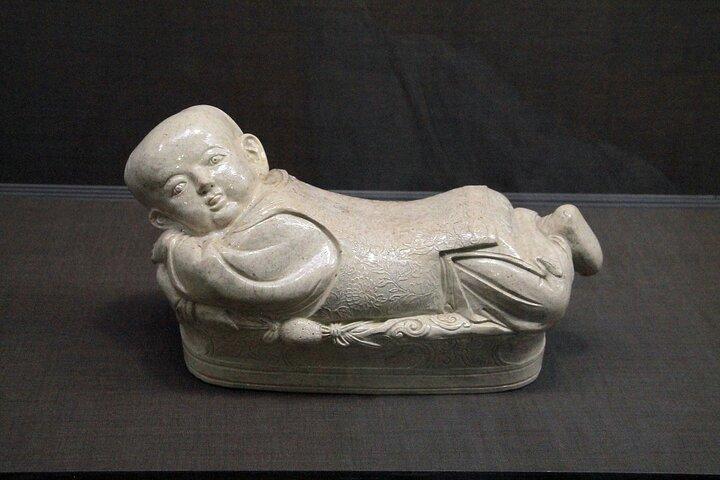
Découvrez la branche nord du National Palace Museum à Taiwan, un joyau culturel qui promet une expérience inoubliable aux voyageurs de tous horizons et de tous intérêts. La branche nord du Musée national du Palais abrite une étonnante collection de plus de 700 000 artefacts inestimables. Il abrite certains des trésors artistiques et historiques chinois les plus exquis, couvrant 8 000 ans d’histoire. Le musée lui-même est un chef-d'œuvre architectural. Le design moderne et innovant complète l'environnement naturel, offrant un mélange harmonieux de tradition et d'innovation. Le musée offre une expérience culturelle immersive qui permet aux visiteurs d'acquérir une compréhension plus approfondie de l'histoire et des traditions chinoises. En résumé, la branche nord du Musée national du Palais à Taiwan offre un mélange unique de trésors historiques, de beauté architecturale, d'immersion culturelle et d'un cadre naturel paisible. Réservez votre visite dès aujourd'hui pour embarquer pour un voyage à travers des siècles d'histoire et de culture pas comme les autres !
Options de l'excursion
Itinéraire
Parcourez la riche et longue histoire de la Chine avec une visite d’une journée des musées les plus célèbres de Taiwan. Des magnifiques œuvres d'art aux artefacts anciens, laissez-vous émerveiller par les innombrables trésors présentés dans ces bâtiments. Entrez dans le musée national du palais de Taipei, où vous pourrez voir l'évolution de l'art chinois à travers plus de 6 000 artefacts, de la période néolithique à l'ère moderne. Émerveillez-vous devant la calligraphie, la céramique et les peintures complexes. Promenez-vous au jardin Zhishan pour admirer l'harmonie du feng shui et de l'architecture chinoise. La branche nord est conçue comme un chef-d'œuvre architectural moderne situé au milieu du paysage luxuriant du nord de Taiwan. La conception du bâtiment, tant intérieure qu'extérieure, devait constituer une attraction en soi, offrant une expérience muséale unique et immersive.
Points forts
Ce qui est inclus
Avis des voyageurs
Informations importantes
- Accès pour les personnes à mobilité réduite
- Landau ou poussette possible pour les bébés et enfants en bas âge
- Transports en commun disponibles à proximité
- Les enfants en bas âge doivent être assis sur les genoux d'un adulte
- Options de transport accessibles aux personnes à mobilité réduite
- Convient à toutes les conditions physiques
- Branche Nord : 9h00-17h00, du mardi au dimanche, fermé le lundi
- Le bâtiment de la bibliothèque sera fermé les lundis, dimanches et jours fériés
- Branche Nord : présentez les documents suivants et demandez au personnel sur place de scanner votre code QR : carte d'identité de Taiwan, ISIC (carte d'identité internationale d'étudiant) ou APRC (certificat de résident permanent étranger)
Avis(3)
As a first time visitor to Taipei, I very much enjoyed learning about the rich history and culture. The museum was a wonderful way to explore and learn.
Visited the beautiful National Palace Museum this morning. I had read the book ‘Breekbare lading’ by Adam Brookes in the Netherlands and was fascinated by that story. To see the most precious part of this cargo (read art treasures) in this museum was a special experience. The museum was just half an hour from our hotel. We bought the tickets in advance. The museum opens at 9 am and it is recommended to go early so that you can first view the showpiece, the bush pak choi with grasshopper of jade on the third floor before the crowds of tourists come. We were there at 09.30 and were just in time to photograph it quietly. You can compare the popularity of the art object to our national pride, Rembrandt's Night Watch. You will also find the most beautiful other jade objects, bronzes, scriptures, embroidered and woven landscapes, jewelry, Buddhas, tableware, vases, etc. Everything is clearly described and there is enough staff to help you. Very welcoming all although we found the interior of the building not contemporary. Beautiful museum shops. We stayed there for over three hours and were impressed. Then we walked through the beautiful garden. Below is a description of Adam Brookes’ book ‘Breakable cargo’: Adam Brookes reconstructs museum director Ma Heng’s unique sixteen-year journey to safeguard the art treasures of the Forbidden City, a journey that teaches us much about modern-day China. When Japan invaded Manchuria in 1931, fears of air strikes on Beijing grew. There were fears for the fate of the art treasures in the Forbidden City: precious porcelain, priceless silk paintings, unique calligraphies and libraries, plus ten giant stones with inscriptions considered the primordial texts of China. Ma Heng, the modest museum director, was ordered to have everything packed and taken inland. It was the beginning of an incredible journey, which would last almost sixteen years. All the while, Heng and his curators were on the road, carrying nearly twenty thousand wooden crates full of valuables. They traveled by train and steamer, in trucks, with rafts and sometimes on foot, their cargo on the backs of countless porters. So they pushed deeper and deeper into the country. The treasures ended up in caves, temples and barns, where they were tried as best as possible to keep them out of the hands of the advancing Japanese troops, and to protect them from termites, moisture, heat and cold. After the Japanese capitulation, the Chinese Civil War flared up, eventually resulting in a divided country. That would also determine the fate of the collection itself: part ended up in Beijing, another in Taipei.
The collection of bronzes and ceramics is wonderful. Since there are many items in the collection, the exhibition often changes hands. This month's special exhibition is also interesting. It is home to an unimaginably large collection of precious European and Chinese jewelry, mainly from the 19th and early 20th centuries. There were few paintings in this exhibition. All are displayed in a spacious, leisurely space, with careful commentary. There are also many benches on which you can sit, and you can enjoy them at your own pace. He often brought his own bottle and supplied hot and cold water freely. Admission is free of charge, with no checks or restrictions on bags. Flash photography is prohibited. Writing with a ballpoint pen is also acceptable. There are many attendants, but there are no small restrictions on the audience like in Japan. The restrooms are spacious and the facilities are modern and clean. The gift shop also has a Japanese catalog. If you have written a postcard, you can also buy stamps at a nearby post office and put them in the green box designated for the National Palace Museum. By the way, you can also exchange money at the post office. Walking around the wonderful gardens of the adjacent Charitable Garden leads to the National Palace Museum without climbing stairs.