Descubra Rio Little Africa: un viaje cultural e histórico
Descripción
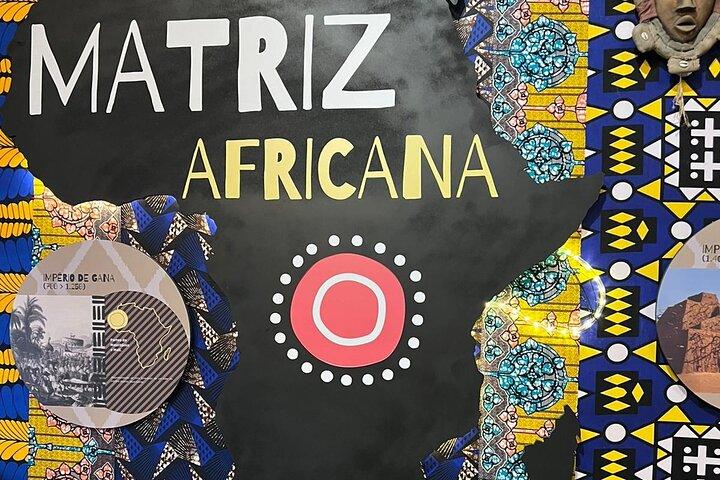
Embárquese en un viaje transformador a través de las narrativas ocultas de la Pequeña África en el bullicioso puerto de Río de Janeiro con el inmersivo recorrido a pie de Florencio. Profundice en el profundo legado de más de cuatro millones de africanos esclavizados en Brasil durante tres siglos, donde Río surgió como el epicentro de la trata mundial de esclavos africanos en el siglo XIX, acogiendo a uno de cada cinco individuos esclavizados de la era moderna. Hoy en día, los ecos de este rico patrimonio resuenan en todo Brasil, y más de la mitad de su población se identifica orgullosamente como negra. Desde los palpitantes ritmos de la samba hasta el caleidoscopio de colores del carnaval, desde los tentadores sabores de la cocina afrobrasileña hasta los ritmos espirituales de la música de influencia africana, el vibrante tapiz de la cultura africana está entretejido en el tejido mismo de la vida brasileña. Únase a Florencio en un viaje inolvidable a través del tiempo y la cultura, donde el pasado cobra vida y el legado de Pequeña África continúa inspirando y encantando.
Opciones de la excursión
Itinerario
Lugar de encuentro para "No recogida en el hotel" - Museo de Arte do Rio (MAR). El museo está ubicado en Praça Mauá, 5 - Centro, Río de Janeiro.
En Largo da Prainha verás la estatua de Mercedes Baptista. Fue la primera bailarina de ballet afrobrasileña en inscribirse en el grupo de ballet del Teatro Municipal de Río de Janeiro a finales de la década de 1940. Diversión, cerveza helada, samba y música negra siempre están en el aire.
A continuación, nuestro viaje nos llevará a Pedra do Sal, un sitio venerado en Río lleno de historia de la samba carioca urbana. Su importancia se remonta a los africanos esclavizados que trabajaban arduamente para descargar sal importada de Portugal, de ahí su nombre. Estos individuos resilientes también tallaron minuciosamente los escalones que caracterizan el área, preparando el escenario para el surgimiento del primer carnaval de ranchos, procesiones de afoxés y espacios sagrados a fines del siglo XIX. Después de sus laboriosas jornadas, los sambistas (músicos de samba) y estibadores se congregaban en las casas de las tías bahianas, formando vibrantes círculos de samba. Figuras notables como Pixinguinha asistieron regularmente, contribuyendo al rico tapiz de expresión musical. Hoy en día, Pedra do Sal sigue siendo un centro vital para los círculos de samba y encuentros culturales, llevando adelante su legado como bastión de la herencia y la expresión artística afrobrasileña.
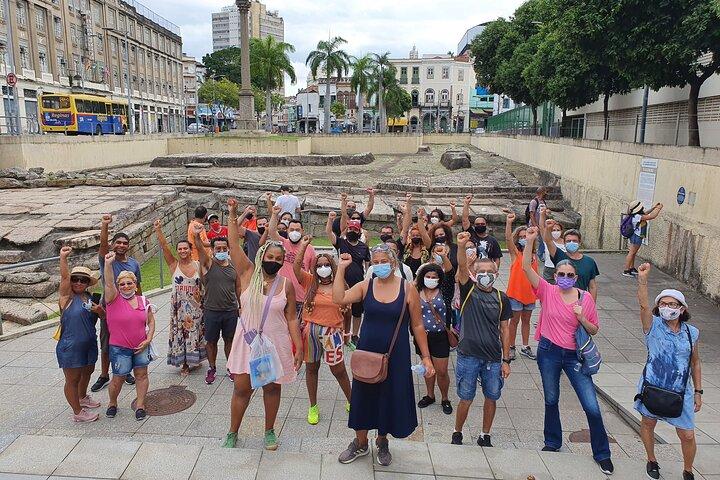
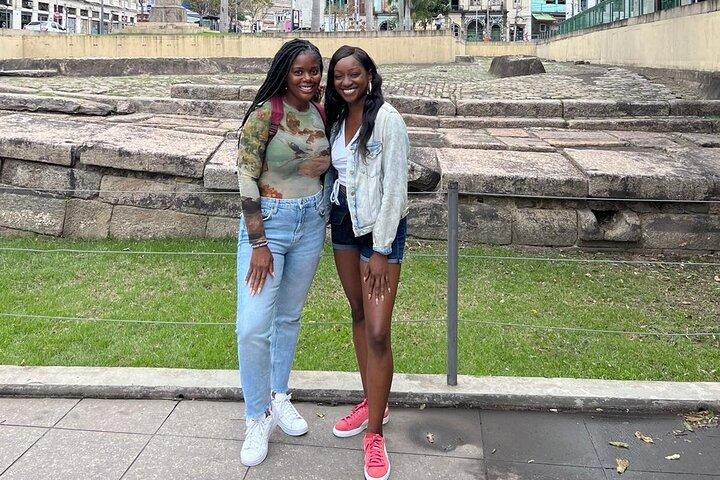
Cais do Valongo, declarado Patrimonio de la Humanidad en Río de Janeiro, es un antiguo muelle de piedra construido en 1811 para desembarcar a los africanos esclavizados. Se estima que alrededor de 900.000 africanos llegaron a Sudamérica a través de Valongo. El sitio cuenta con varios estratos arqueológicos y es la evidencia física más significativa de la llegada de esclavos africanos a América.
El mural Etnias es una pintura de 3.000 metros cuadrados ubicada en la Zona Portuária (Saúde) de Río de Janeiro. Fue creado para los Juegos Olímpicos de 2016 y cuenta con cinco representantes de diferentes tribus, uno de cada continente. Las tribus Huli, Mursi, Kayin, Supi y Tapajós fueron elegidas para representar la diversidad del mundo. Para completar el mural requirió dos meses de trabajo con turnos de 12 horas, utilizando más de 3.000 latas de aerosol, 700 litros de pintura de colores y 1.800 litros de pintura blanca para el fondo.
Después de MUHCAB caminamos hacia el IPN, un museo y sitio arqueológico en Río de Janeiro dedicado a honrar la memoria de los africanos que fueron traídos a la ciudad como esclavos. Está ubicado en el sitio del "Cementerio de Nuevos Negros" y ofrece actividades culturales y talleres sobre la historia y cultura de los afrodescendientes desde 2005. El museo está reconocido por el Estado y designado como Espacio Cultural desde 2009. .
MUHCAB es un museo en Little Africa, ubicado alrededor del muelle Valongo, declarado Patrimonio de la Humanidad. Cuenta la historia de la mayor llegada de africanos esclavizados a la región, los hitos de la afirmación negra en Brasil, el desarrollo de la cultura afrobrasileña y los problemas contemporáneos que enfrentan los negros en Brasil.
Lo más destacado
Qué incluye
Lugares y horarios de recogida
ATENCIÓN POR FAVOR: Confirmamos y actualizamos su hora y lugar de recogida a través de mensajes de WhatsApp y el mensajero de Viator enviados a su correo electrónico. Sin embargo, WhatsApp se utiliza mucho en Brasil y es la forma más fácil y rápida de comunicarse. Aviso Importante: Para actualizar su hora y lugar de recogida, le enviaremos un mensaje a través de WhatsApp y Viator Messenger a su correo electrónico. Tenga en cuenta que WhatsApp se usa ampliamente en Brasil y es la forma más rápida y eficiente de comunicarse con nosotros. Gracias por tu apoyo. ¡Esperamos verte en Río! Atentamente, El equipo de Florencios.
Valoraciones de viajeros
Información importante
- Hay opciones de transporte público disponibles en las cercanías
- Los bebés deben sentarse en el regazo de un adulto
- No se recomienda para viajeros con lesiones de la columna vertebral
- No se recomienda para viajeros con mala salud cardiovascular
- Adecuado para todos los niveles de aptitud física
Opiniones(260)
My friend and I thoroughly enjoyed the tour with Ana Julia. The tour was enhanced by her clear excitement to learn and share the information she knows. Throughout the tour she also answered our questions and we engaged in thoughtful discussion. I HIGHLY recommend this tour.
The tour was very insightful and interesting. Myllena showed us quite a few sites in provided historical commentary on the significance of the sites. She was very pleasant and patient as she answered our many questions. We enjoyed this tour and would recommend it to anyone who wants to learn about the history of Africans in Brazil!
My friends and I booked Florencios Tours for our trip to Rio de Janeiro, and it was one of the best decisions we made. We wanted a balance between the major tourist attractions and a deeper dive into the Afro‑Brazilian cultural history of Rio — and Florencios Tours delivered this perfectly.A huge thank‑you to Damanica and our amazing tour guide, Gabrielle, who were both incredibly knowledgeable, warm, and attentive. They listened to our interests and crafted a day that felt personal, meaningful, and beautifully paced.From iconic landmarks to powerful cultural sites, every stop was intentional and enriched with stories that helped us understand Rio beyond the surface. We left feeling connected, inspired, and grateful for the experience.Highly recommended for anyone seeking a tour that goes beyond the typical itinerary and truly honors the client!
This tour was fantastic! I especially appreciated my tour guide, Scarlet! Her depth of knowledge regarding 'Little Africa' & its history was IMPRESSIVE! She took me all around the surroundings sites & answered every question. She took great pics & was kind & courteous. Please book her for your next tour.
We arrived in Rio on July 2 for a four day stay before going to São Paulo. So it was important for us to have a structured tour so we could get the most out of our visit. Gabriella our very knowledgeable and caring tour guide met us in the airport and escorted us to our van where Paulo our driver was waiting. There were five people in our group and they took great care of us. They took us to our hotel in Copacabana where we checked in and came back down to go on a sunset tour of Sugar Loaf mountain. After we went to the Ginga Show which wasn’t that far from our hotel. The Gabriela explained our itinerary for the next few days which included some of the closures for the July 5 FIFA Brazil vs Norway. The next morning we visited Christ the Redeemer Statue and Gabriela made certain that accommodations were made for me since I have issues with my knee. We took the train up to the statue which was amazing!! After we went to lunch at a steak house where the food was phenomenal. We visited the Samba School which I personally loved and we did a walking tour of Little Africa. Gabriella explained in detail what we were looking at and the history behind it. We were a group of educators from New York City so we had an eagerness to learn as much as possible to bring back to our schools and classrooms. The museums she took us to were very deep in revealing the AfroBrazilian experience in ways that we did not know. The murals, favelas, and mansions, and people we experienced along the way will require another trip. Of all the places I’ve been, Brazil 🇧🇷 Rio is the most memorable. We will be back!
Our Little Africa tour with Carolina (“Carol”) was one of the highlights of our time in Rio. Carol is an excellent guide and communicator. She speaks English fluently and made complex historical, social, and cultural topics easy to understand. She welcomed questions and engaged thoughtfully with sensitive subjects related to race, ethnicity, national identity, and inequality. Her answers were honest, nuanced, and respectful, and she encouraged meaningful discussion by inviting us to share similarities and differences between our own experiences and those of people in Brazil. We were fortunate to have a private tour, which allowed for more conversation and a deeper exploration of topics that particularly interested us. While the tour follows a well-designed structure, Carol was attentive to our interests and spent additional time discussing contemporary Afro-Brazilian life, including social, political, and economic issues. She reached out before the tour to introduce herself and answer questions, which helped us get the most out of the experience. I learned an incredible amount about Brazil’s colonial history, the transatlantic slave trade, resistance movements, and the diverse African cultures that shaped Brazil. One particularly moving stop was the site where the remains of enslaved Africans, buried in a former mass grave, were rediscovered relatively recently. Carol helped us understand not only the historical significance of the site but also the ongoing process of uncovering, acknowledging, and reckoning with parts of Brazil’s history that were hidden for generations. I came away with pages of notes and a long list of topics I want to learn more about. What I expected would be an interesting tour turned out to be a genuinely eye-opening experience. Carol’s knowledge, thoughtfulness, and passion for the subject left a lasting impression on us. Highly recommended! Tips for Future Visitors: * Check the weather forecast and dress accordingly. * Wear comfortable walking shoes with good traction. Your guide can adapt the route to make it less physically demanding when possible, but expect cobblestones, uneven pavement, construction areas, and typical urban walking conditions. * Bring water, especially on warmer days. * The tour takes place in living neighborhoods and community spaces, so approach them with the same respect and courtesy you would want visitors to show in your own community. * The scheduled tour is about three hours, but if you’re curious and enjoy asking questions, it may run a little longer. If you have plans immediately afterward, it’s worth mentioning that to your guide in advance.
Ana Julia was an amazing informative tour guide! I recommend her and this Little Africa tour to all!!!
We toured with an incredibly knowledgeable and engaging guide named Myllena. She gave us so much information about the history of the slave trade in Brazil and an informed perspective on the repercussions of the social and economic impact it has had and still has on the Black Brazilians to this day. The tour sparked comparisons to the US (where I am from) and other colonized nations where I have lived (Vietnam, Singapore, Egypt, India, and Nigeria), especially with the recent Ghana resolution that passed in the UN declaring the transatlantic slave trade and the racialized chattel enslavement of Africans as the "gravest crime against humanity." This was an extremely enlightening and informative tour, which also highlighted the resilience of the people and the strong influence Africans had on Brazilian culture. Highly recommend the tour and our guide Myllena who was excellent.
Immersive experience into the history and culture of the city. I was struck by the resilience of the people and the evolution of the city
If you’re ever in Rio, please book this tour. Our tour guide carol was absolutely amazing!!! She’s very knowledgeable, organized and has such a sweet spirit. We learned so much about the history of Brasil and Carol also shared a little bit about her own personal background. Whenever I’m in Rio, I will definitely book again with her. Please ask for Carol when you book. Thank you again, Carol and team for putting together such an amazing tour.