Pompeii and Herculaneum Small Group Tour with an Archaeologist
Description
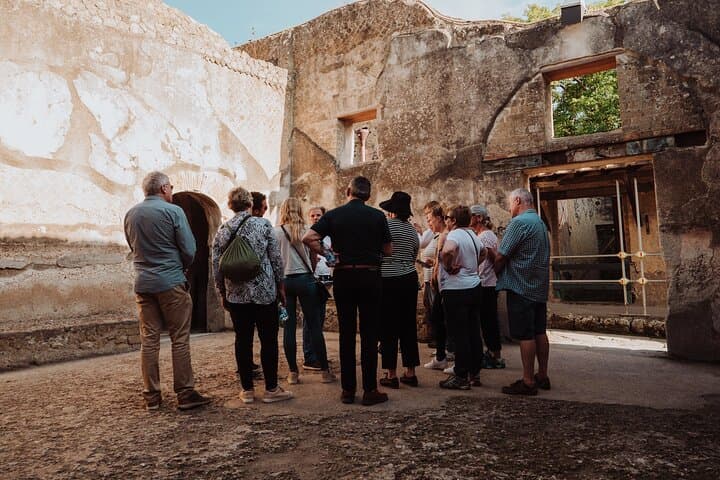
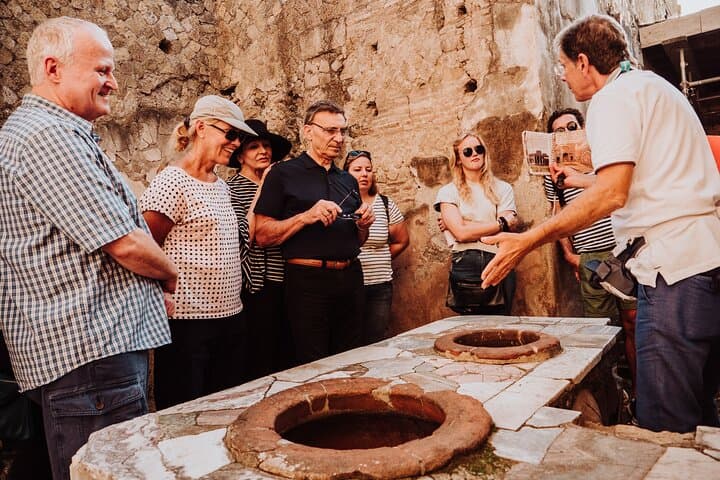
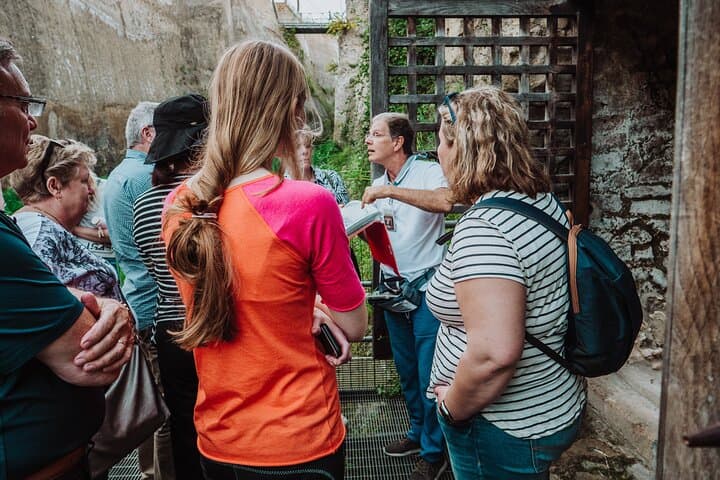
This experience combines the two archaeological sites of Pompeii and Herculaneum, famous for the eruption of Mount Vesuvius happened in 79 AD. Join the guide at the entrance of Pompeii ruins called Porta Marina Inferiore, where the tour starts. Discover the site and its best highlights with the assistance of an expert Archaeologist. You will see the Forum – the main square – the most important houses and buildings and the famous plaster casts. After the tour take a quick break, then reach the site of Herculaneum by the local metro line called Circumvesuviana at a few steps from Pompeii entrance. End your tour with the site of Herculaneum, smaller than Pompeii but better preserved: visit the beach where more than 300 skeletons were found.
Tour Options
Itinerary
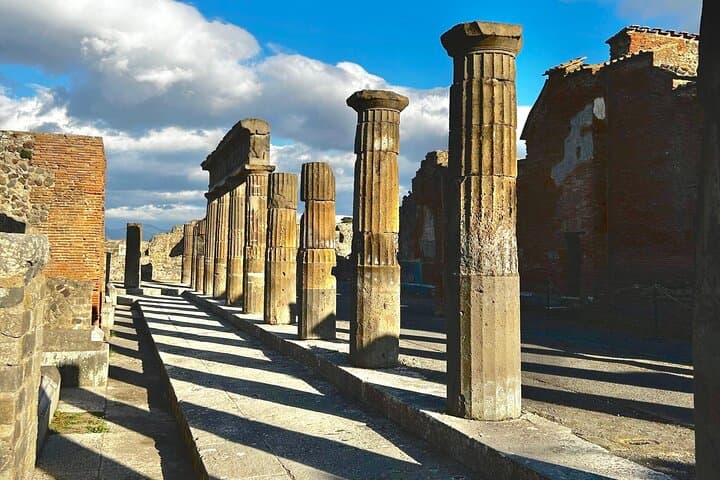
Basilica was an open portico that gave shelter to merchants and other activities.
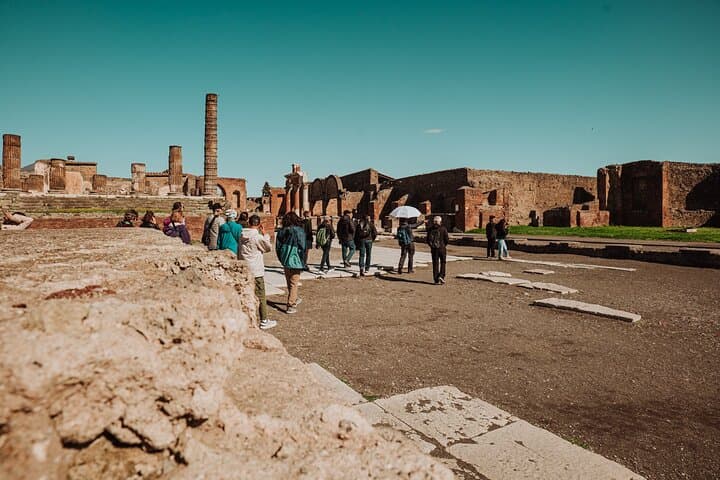
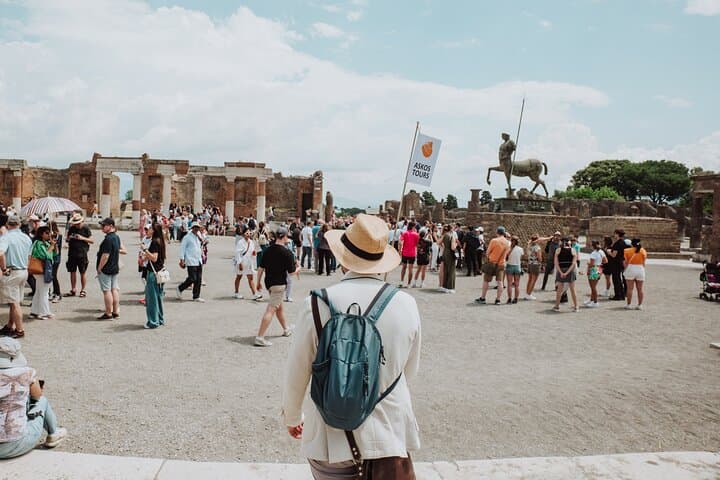
Have a look of the ancient main square of Pompeii.
Walk through the main street of Pompeii.
The house of Menander is one of the richest and most magnificent houses in ancient Pompeii in terms of architecture, decoration and contents.
In the granary you will see marble tables and baths for fountains that adorned the entrances of houses and some casts of victims of the eruption as well as that of a dog and a tree.
These occupy a vast area between the Brothel lane, the Holconius crossroads and the Via Stabiana. They represent the oldest thermal complex in the city.
Visit the most famous brothel in the ruined Roman city of Pompeii.
The house of Faun was one of the largest and most impressive private residences in Pompeii.
Have a look of the so called Teatro Piccolo of Pompeii.
Visit the most important Theater in Pompeii
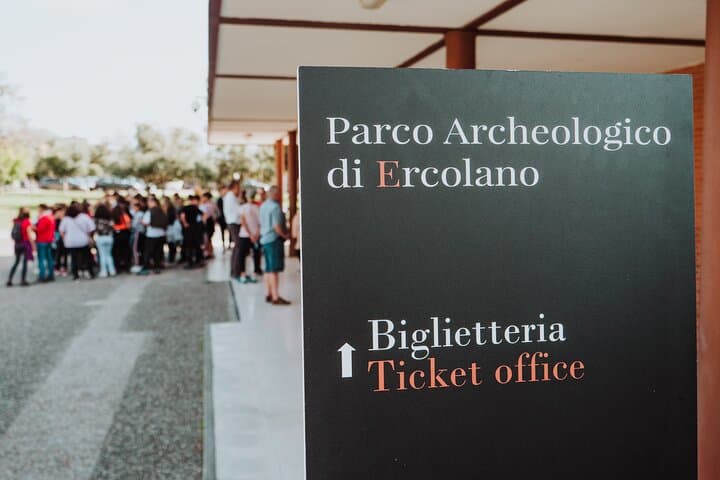
After the visit of Pompeii, continue to Herculaneum together with your archaeologist guide, following the transportation method included in your selected option: From Naples, Sorrento, or Rome: travel with the guide by modern minibus directly to the Herculaneum archaeological site. From Pompeii: reach Herculaneum with your guide using the included Circumvesuviana train ticket (about 30 minutes + 10-minute walk). A quick lunch break is available before the transfer (own expense). Arrival in Herculaneum: Upon arrival, the guide leads the group directly to the Ticket Office of the Herculaneum ruins. You may access it as follows: By minibus (Naples, Sorrento, Rome options): direct drop-off near the entrance. By train (Pompeii option): a short 10-minute walk from Ercolano Scavi station.
The house receives its name from marble statues of stags/deer found in the peristyle.
M. Nonius Balbus was the city's major benefactor restoring and building many public buildings. On his death he was made patron and feted with many honours, detailed in the long inscription on his funeral altar.
It is thought that the building was a centre of the cult of the Emperor Augustus and the headquarters of the Collegium Augustalium (or possibly even the local curia).
The house possibly belonged to one of the town's leading benefactors, Marcus Nonius Balbus and is somewhat unusual in that it has its own private access to the adjoining Suburban Thermae to the south.
It is very important house for the elegant wooden partition remained.
The House of the Skeleton probably the aggregation of three smaller buildings, derives its name from the discovery of human remains in a second floor room in 1831.
The Central Thermae were built around the beginning of the 1st century AD and were divided, as was then the common practice, into men's and women's baths, each with their own separate entrances.
The House of the Black Hall is one of Herculaneum's more luxurious mansions. The house has a monumental entrance which still retains the carbonised remains of the doorposts and lintel.
The house has an arrangement that was typical of the Samnites (an ancient people of the Sabine race who occupied this mountainous part of central Italy). The splendid atrium is skirted by a gallery with Ionic columns. The rooms are decorated with frescoes.
This is one of the most original houses in Herculaneum. It has a courtyard with a stairway and a stone balcony instead of an atrium.
Beautiful domus in the Centre of the archaeological area, with various environments, collonnati, frescos e-com everywhere at Herculaneum-charred remains of wooden parts.
Highlights
What's included
Traveller Ratings
Important Information
- Public transportation options are available nearby
- Suitable for all physical fitness levels
- Herculaneum ruins' entry tickets: 16 euros (adult) 2 euros (EU citizens 18-25 y.o.); Pompeii ruins' entry tickets: 20 euros (adult)
- Not recommended for visitors in wheelchairs
- Not recommended for visually impaired guests unless accompanied by a dedicated personal assistant
Reviews(1,673)
A must do on your trip to Naples. Our tour was organised by Askos and Diego our guide. He had a great knowledge which he shared generously and with humour. The stop between sites for lunch was a modern shopping centre with lots of food choices and facilities.
What an amazing tour. Small group which made it very personalised. The transfer with a private van also added as a benefit especially during the heat wave. I had Vito as my guide who is an experienced archeology graduate and he made the experience 100 times better. Not only did he ensure we saw everything we needed to but he also took time to stop and explain facts and answer any questions. He was awesome. He then arranged for us to have lunch at a close by air conditioned centre which was very thoughtful and didnt feel rushed. On many occasions due to the heat he gave people options to see things or wait behind which is excellent for anyone who cant handle the heat. I will be recommending this experience to my Friends and also recommend Vito as the guide.
We did this tour on an extremely hot day. The guide Mario did a fantastic job of keeping us all as cool as possible. I had my 8 year old son with me and he was attentive to his needs also
The tour guide Rafael was very knowledgeable and funny which is always helpful when it’s blazing hot outside. I have been on lots of tours - and the information he provided was probably the most in depth. A delight would absolutely recommend him again. His background archeology truly set him above the rest!
Rafael was a great guide. Very informative. Definitely worth visiting both of these sites with a tour guide!
Amadeus was great - learned so much! And I’m so glad I got to see both Pompeji and Herculaneum.
Askos Tours were fantastic. They were so accommodating when we had a travel delay and the guide was incredibly friendly and knowledgeable. Strongly recommend.
We had an excellent six-hour tour of Pompeii and Herculaneum with Askos Tours. Our guide, Amedeo, was fantastic—extremely knowledgeable, engaging and clearly passionate about the history and archaeology of both sites. He explained everything in a way that was easy to understand while also sharing so many fascinating details we never would have noticed on our own. He was happy to answer all of our questions and made the ruins feel much more vivid and meaningful. We came away with a much deeper appreciation of both Pompeii and Herculaneum. This was one of the highlights of our trip to Italy, and we wouldn't hesitate to recommend Askos Tours to anyone wanting an informative and memorable experience. If you have the chance to tour with Amedeo, you're in for a fantastic experience.
Our tour guide was super knowledgeable. He was very patient and able to answer all questions. The driver was professional and I felt very safe. I highly recommend this tour.
Let's start with the good. Our archeologist was great, funny and took time to answer our questions. HERCULEOM was my favorite as it felt like, I learned more and got to see more of the lived life. Now, the not so great. 16 people.i. a mini van/bus was way to cramped. No AC and it was a rough drive there and back from Sorrento. We had a total of 22 people which is a rather large group. It would have been better with half that amount. Also, to make the tour better, offering a beverage between HERCULEOM and POMPEII would have made the ride much more barrable.