Munich Bike Tour incl 3rd Reich Sites & Beer Garden Stop @ 9.30am

Description
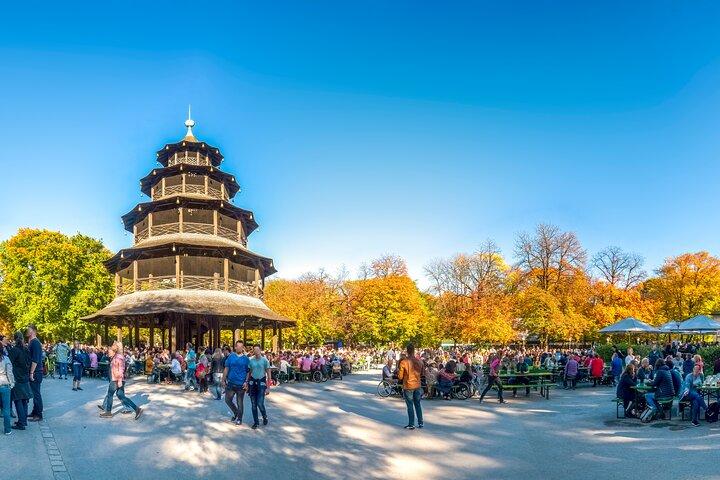
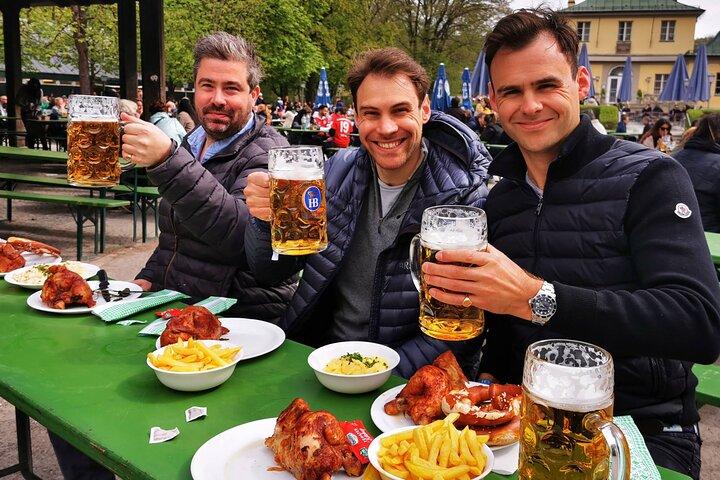
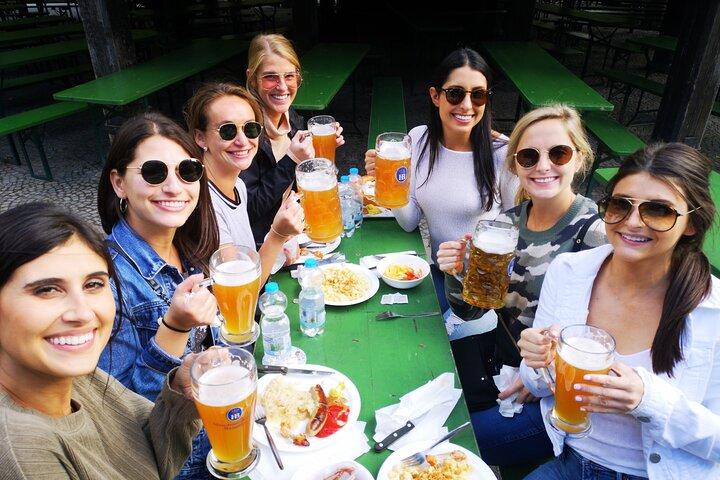
Uncover Munich's History & Hidden Gems: Pedal through Munich's past on our engaging 7-mile (10-km) bike tour, led by an expert guide who brings the city's story to life. Cycle along bike-friendly paths, tracing pivotal historical moments & discovering intriguing attractions. Witness the exterior of the Hofbräuhaus, where Hitler addressed the nascent Nazi Party, and visit Odeonsplatz, where the imposing Feldherrnhalle serves as a powerful reminder of a turning point in history. Beyond the historical landmarks, immerse yourself in Munich's vibrant present. We'll cycle through the sprawling English Garden, making a stop for lunch @ the Chinese Tower Beer Garden, a true Munich institution. Prepare to be amazed by the River Surfers carving waves on the Eisbach River, a unique urban spectacle. This tour offers a dynamic and insightful perspective on Munich's evolution, seamlessly blending historical context with the joy & freedom of cycling through its beautiful cityscape & green spaces.
Tour Options
Itinerary
We start our tour at our meeting point so we can give you a broad overview of the square as cycling is not allowed here. We then walk to our bikes to start your tour.
Odeonsplatz is a historically rich square in Munich with a compelling story: Royal Construction: It was developed in the early 19th century under King Maximilian I Joseph, designed to create a grand space near the Residenz (royal palace). Architectural Highlights: The square is dominated by the Theatinerkirche (a beautiful Baroque church) and the Feldherrnhalle (a loggia inspired by the Florentine Loggia dei Lanzi). Historical Significance: It has been the site of numerous historical events, including political rallies and demonstrations. Nazi Putsch: In 1923, the failed Beer Hall Putsch, led by Adolf Hitler, resulted in a shootout at the Feldherrnhalle, leaving lasting marks on the square's history. Modern Use: Today, Odeonsplatz is a popular public space, used for events and enjoyed by locals and tourists alike, its architectural beauty and historical weight making it a key Munich landmark.
Max-Joseph-Platz in Munich is a grand and architecturally significant square, steeped in history and culture. Named after King Maximilian I Joseph of Bavaria, it was designed to be a prominent space near the Residenz (royal palace). The square is framed by impressive buildings, including: The Residenz: The former royal palace, a sprawling complex showcasing centuries of Bavarian history and opulence. The National Theatre (Bayerische Staatsoper): Home to the Bavarian State Opera, a world-renowned opera house. Cultural Hub: Due to the presence of the National Theatre, Max-Joseph-Platz is a focal point for Munich's cultural life, particularly its opera and performing arts scene. Open Space: The square provides a large, open space in the heart of the city, often used for events and gatherings. Historical Significance: It represents a key element of Munich's royal and cultural heritage.
Königsplatz in Munich is a historically significant square with a complex past: Royal Origins: It was commissioned by King Ludwig I of Bavaria in the 19th century as a grand architectural space intended to showcase classical Greek architecture. Artistic Hub: The square became a center for art and culture, with buildings like the Glyptothek (sculpture museum) and the Staatliche Antikensammlungen (State Collection of Antiquities) being erected. Nazi Era: During the Nazi regime, Königsplatz was used for Nazi rallies & propaganda events, significantly altering its historical context. The Brown House, the Nazi Party HQ, was located nearby. Post-War Transformation: After World War II, efforts were made to reclaim the square's original purpose as a cultural space, though the historical scars remain. Modern Day: Today, Königsplatz is a public space where people can admire the classical architecture. It serves as a reminder of both Munich's royal past and its darker period during the Nazi era.
Schwabing, a district in Munich, has a rich and bohemian history: Village Origins: Originally an independent village, Schwabing was incorporated into Munich in the late 19th century. Artistic Hub: It quickly became a center for artists, writers, and intellectuals, attracting figures like Wassily Kandinsky, Paul Klee, and Thomas Mann. Bohemian Lifestyle: Schwabing developed a reputation for its free-spirited and unconventional atmosphere, a place where artists and intellectuals could express themselves freely. "Schwabing Boom": In the early 20th century, it experienced a cultural boom, becoming a vibrant center for avant-garde art and literature. Post-War Era: After World War II, Schwabing retained its bohemian character, becoming a center for student life and counterculture movements. Today, Schwabing is a popular and trendy district, known for its lively nightlife, cafes, restaurants, and shops. It still retains some of its artistic flair, though it's become more gentrified.
The Englischer Garten (English Garden) in Munich is one of the world's largest urban public parks, and a true gem of the city. Vast Green Space: It's larger than New York City's Central Park, offering a massive area for recreation and relaxation. English Landscape Style: Despite its German name, it was designed in the English landscape garden style. Diverse Attractions: The Chinese Tower: A distinctive pagoda-like structure and beer garden. The Eisbach Wave: A popular spot for surfers, a unique urban phenomenon. The Monopteros: A Greek-style temple offering panoramic views. Numerous beer gardens, walking and biking paths, and open meadows. Recreational Activities: It's a popular destination for jogging, cycling, picnicking, sunbathing, and simply enjoying nature. The Englischer Garten is a central gathering place for locals and tourists alike, a place to escape the hustle and bustle of the city.
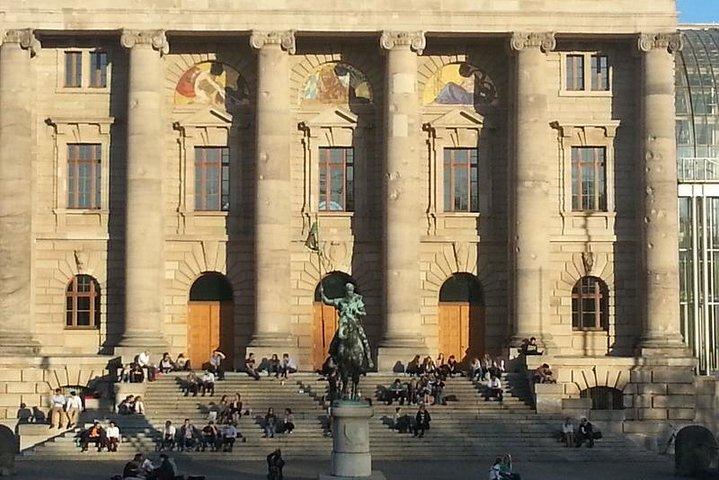
The Haus der Kunst has a very specific and loaded history: Nazi Origins: It was commissioned by Adolf Hitler and opened in 1937 as the "House of German Art," intended to showcase art deemed "acceptable" by the Nazi regime, while denouncing "degenerate art." Wartime Use: During World War II, it was used for various purposes, including storage and as an officers' club. Post-War Transformation: After the war, it was repurposed to become a museum for international contemporary art, playing a vital role in Munich's cultural revival. Contemporary Focus: Today, it's a leading museum for contemporary art, hosting major exhibitions and engaging in critical dialogue about art and its role in society, while also grappling with its complex past.
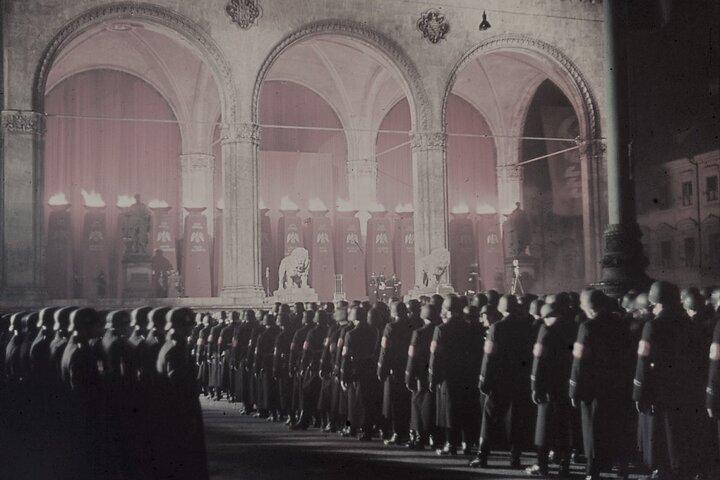
The Feldherrnhalle (Field Marshals' Hall) in Munich has a history marked by both military grandeur and Nazi infamy: Royal Origins: It was commissioned by King Ludwig I of Bavaria in the 19th century as a monument to the Bavarian army. Military Symbol: It served as a symbol of Bavarian military prowess and was used for ceremonies and commemorations. Nazi Putsch Site: In 1923, it became the site of the failed Beer Hall Putsch, led by Adolf Hitler. A confrontation between Nazi supporters and Bavarian police resulted in fatalities. Nazi Shrine: After the Nazis seized power, the Feldherrnhalle was turned into a shrine to the "martyrs" of the putsch. SS guards were stationed there, and locals were required to give a Nazi salute. Post-War: After World War II, the Nazi symbols were removed, and it was returned to its original function as a historical monument. Today, it stands as a reminder of Munich's complex past, a place where both royal history and the dark era of Nazism intersect.
We end our tour here in case you need to make plans.
Highlights
What's included
Traveller Ratings
Important Information
- Public transportation options are available nearby
- Suitable for all physical fitness levels
- Please wear comfortable clothes and shoes together with rain gear
- Sunscreen is recommended in summer
Reviews(8)
We as a family (6 people) liked the bike ride. A bit too much history told by Simon about the 2nd world war, cycling was allowed for us a bit longer (there is much more to see in Munich with what we have now seen)
Thank you so much for your wonderful review! Our guides read these every day, and your kind words mean a lot to the entire team. Knowing that we had a positive impact on your vacation is why we do what we do. We truly appreciate you taking the time to share your experience.
We had such a great experience! My boyfriend and I loved seeing the english gardens and our tour guide, Matt, was great! As were all the other guides we met that day!
Thank you so much for your wonderful 5-star review! We're thrilled to hear you had such a fantastic time on our Bike Tour and truly enjoyed exploring Munich with us. Matt will be especially delighted to read your kind words! We hope to welcome you back on another adventure soon!
Simon is a brilliant and tour guide. How often do you get a doctoral candidate to explain a thousand years of German history?...Ignore the MAGA owner
Thank you so much for your wonderful 5-star review! We're thrilled to hear you had such a fantastic time on our Bike Tour and truly enjoyed exploring Munich with us. Simon will be especially delighted to read your kind words! We hope to welcome you back on another adventure soon!
<p>A great tour and tour guide that shows step-by-step the rise of Nazism in Munich in the 1920s.</p>
<p>Great tour and I had a great time. Jack was very knowledgeable, friendly, and made the experience very enjoyable!</p>
<p>Tour was great fun very informative and the tour guide Will was a master of his craft. Great day out!</p>
<p>Chris, our Aussie guide, was awesome. He knew his history, informed us well. He was enthusiastic and managed to keep the tour very upbeat and fun, despite the seriousness of it. It's worth noting that we saw much of Munich on this tour, including everything on the Top Ten Things To Do In Munich lists found online. This tour covered resistance fighters/sights as well. It is worth noting that the company that runs these bike tours is run very well and efficiently. They were professional yet fun, and punctual! We went on three tours in Paris that were twice the price that didn't compare to this tour. The Third Reich Bike tour is perfect for anyone looking to see historical sights of all kinds while in Munich, and I will absolutely recommend family and friends to take it.</p>
<p>Will and Chris were fantastic tour guides through the streets of Munich. We learned more from this tour than any history class. It is uncanny and unnerving to walk in the plazas and see buildings that Hitler inhabited. We will be booking through the bike company again for sure!</p> <p>One recommendation: make sure that future participants sign and swear they understand 1 they are on a BIKE tour 2 that they know how to RIDE a bike and 3 understand international driving signs and signals green means go, red means stop.</p>