Cusco Half Day City Tour: Four Ruins
Description
Discover the magic and beauty of Cusco, the capital of the Incan Empire. The flawlessly built Incan roads spread to all regions from the “Plaza” which was thought of as the center of the world. Visit the four iconic archaeological sites on the outskirt of the former Inca capital - Cusco.
Tour Options
Itinerary
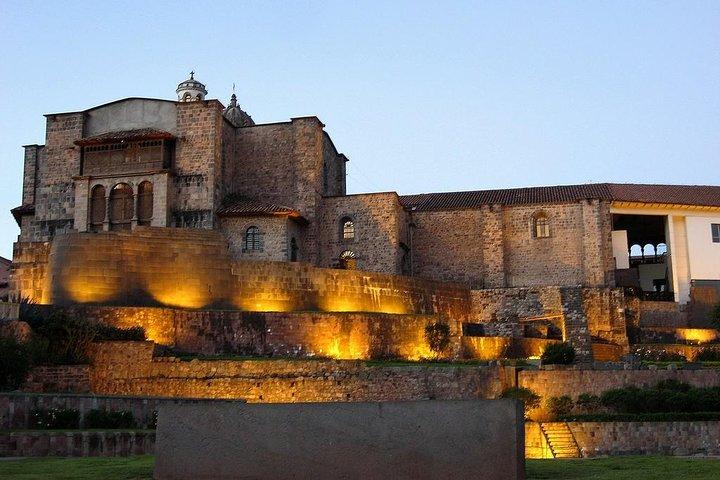
The term Sacsayhuaman means in Quechua “place where the hawk is satiated”. The name is surely due to the presence of these birds. It is presumed that it was a fortress, although it is also believed that it could be a ceremonial center. Due to its structure with a military aspect, the Spaniards, on their arrival in the 16th century, would have named it a ‘fortress’. When the Spanish attack was repulsed there during the Inca rebellion in Vilcabamba, the place served as an Inca fortress. The architecture in Sacsayhuaman has sacred buildings such as residential buildings, towers, shrines, warehouses, roads and aqueducts. That is why, the shape and harmony of the landscape is similar to other sacred Inca places such as Machu Picchu. The main wall of Sacsayhuaman is built in zigzag with giant stones up to 5 meters high and 2.5 meters wide (between 90 and 125 tons of weight). The south side is bounded by a polished wall approximately 400 meters long. The east and west are limited by other walls and platforms. According to the Peruvian chronicler Inca Garcilaso de la Vega, Sacsayhuaman was the greatest architectural work that the Incas built during its apogee. Sacsayhuaman offers an amazing view of Cusco. You can see the summits of Ausangate, Pachatusán and Cinca. These summits were considered sacred to the Incas. The archaeological complex itself has very amazing places, some of them with history and meaning.
The Incan Empire was completely destroyed by European forces in the 16th century. Many of their massive temples, fortresses and cities were left standing, but without any clues as to their purpose. Qenqo Temple, fifteen minutes from Cusco is similarly mysterious and a dark account has formed in the historical vacuum. In Quechua, Qenqo means labyrinth or zig-zag and the temple is named for the crooked canal cut out of its rock. Although it is clear the canal carried some sort of liquid, researchers have been forced to guess at its purpose, and at what liquid it transported. Hypotheses range from carrying holy water, chicha (corn beer), or blood. All three indicate that Qenqo was used for death rituals, possibly to embalm bodies or detect whether a person lived a good life by the course the liquid followed. Qenqo is a unique temple in its construction as well, having been entirely carved out of a gigantic monolith. Stretched across a hillside, the temple is carved out of rock and marries the man-made tunnels with natural chambers. One of these chambers features 19 small niches and is set up as an amphitheater. Once again, the purpose of the theater has been lost over time, but most agree the area was used for some type of sacrifice to the sun, moon and star gods who were worshipped at the site.
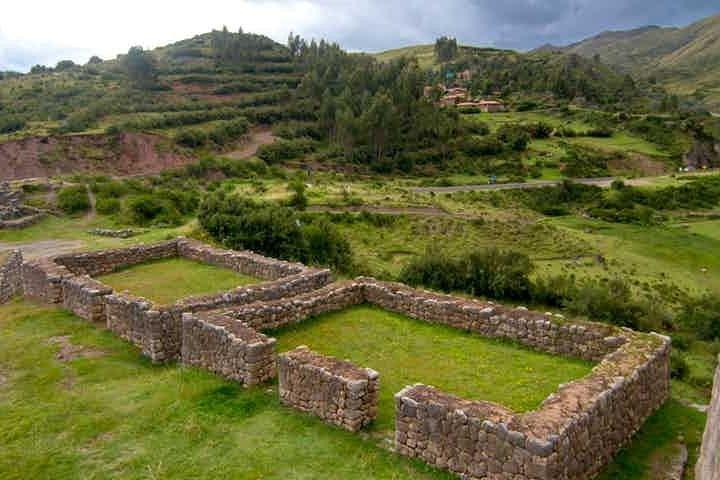
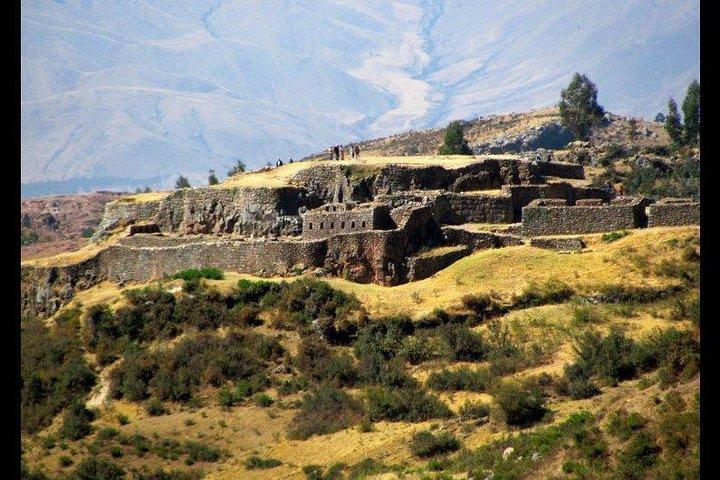
Puca Pucara houses enclosures such as inner squares, canals, aqueducts, baths and a well-known ancient road, which should have been part of the network of Inca roads known as Qhapaq Ñan; The buildings are built with rocks of different sizes (small and medium). Puca Pucara presents the surface of the rocks very uneven, compared to other archaeological sites. The name Puca Pucara means red fort , and is due to the location of the archaeological group and to the existence of some semi-circular enclosure; Red is the color of the earth. The name of this place was used from the twentieth century. The constructors of the Inca Civilization built three walls of irregular plant, that establish the three levels of the site. The first wall presents a sinuous path, which carefully avoids cutting the protruding rocks. From the north end at the back of the outer wall, you can find a total of 6 rooms of different sizes; Arranged irregularly in order to avoid touching the stones that make up the wall. To the west you will find a high place of trapezoidal form that can be entered from an outside staircase. In ancient times the square was surrounded by buildings on two sides. The 9 rooms regularly laid out in this place do not appear to have been in any way fortified enclosures. The second wall is located around the central elevation. These first two walls, have wide platforms to the east and south of the site. At the back of the second wall, it is possible to find 3 different rooms of the typical Inca architecture, since 2 of them do not have the common rectangular but trapezoidal floor. The third wall is surrounding the summit and there is no trace of the buildings that could exist in this place. The buildings were built with stones of many sizes between medium and small, the surface of the rocks is very uneven compared to other archaeological remains of the Inca civilization. The urban layout presents an adequate and functional layout. According to some chroniclers, in pre-Hispanic times, when the Inca prepared to visit the baths located in Tambomachay, his entourage composed of soldiers and dancers, they remained in Puca Pucara , which simultaneously operated as barracks and tambo(hostel). Rumors exist about a chincana (tunnel), supposed to function as a channel of communication between these 2 Inca towns.
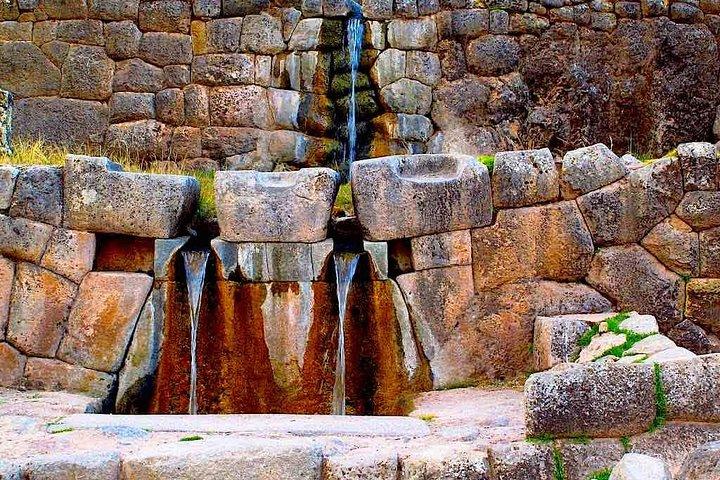
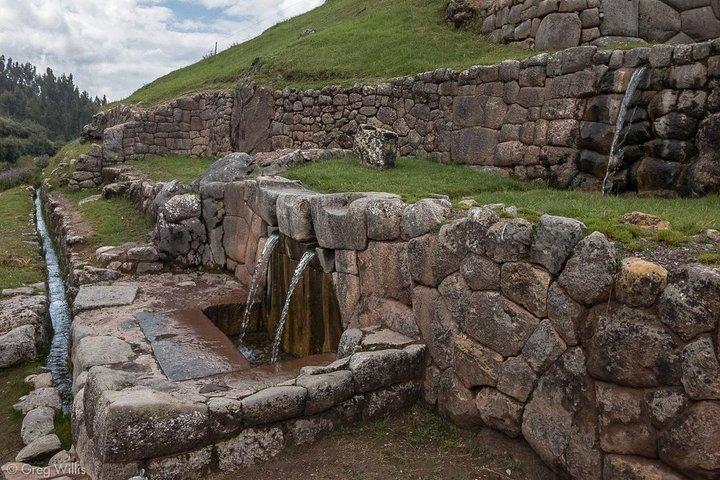
Tambomachay is an Inca archaeological site located just outside Cusco. Its precise function is unknown, but it may have served as a ceremonial site, an Inca spa, or a military outpost—or perhaps a mix of all three. Tambomachay sits on a hill about 4 miles north of Cusco, at about 12,150 feet (3,700 meters) above sea level. The structure consists of three stepped terraces of precise Inca stonework, with trapezoidal niches built into some of the retaining walls. The whole thing is built over, or into, a natural spring, which continuously feeds a series of small aqueducts, canals, and waterfalls built into the terraces. The site is also known as El Baño del Inca, or the Bath of the Inca. This refers to one of the long-held theories about the site’s function: that it was a spa of sorts for the Inca ruler, and maybe for the wider Inca nobility. It’s a secluded and tranquil spot, and the constantly flowing water would certainly have provided for all the Inca’s spa-break needs. But there was probably more going on at Tambomachay than just high-altitude bathing.
Highlights
What's included
Traveller Ratings
Important Information
- Suitable for all physical fitness levels
Reviews(31)
Great experience, very educational. Marco was very helpful and answering our questions. He even gave us a great restaurant suggestion to n Cusco.
This activity was fun and our tour guide was very personable and knowledgeable. The tour was slightly rushed and only went for 4hrs not the 6hrs stated. We were collected 35mins late and the while the van was nice they had every seat full so we were thankful the trips between the plaza to the sites were short. We had an additional stop to an alpaca wool shop to have the different materials explained which was a pleasant surprise as it was not listed on the tour itinerary. I would recommend this tour however there is some walking up to the sites which was not hard but if you have not gotten used to the altitude it can leave you breathless. The tour guide however did not push people to walk faster or go up the stairs if they felt they could not go up them.
The "Half Day in Cusco Four Ruins" tour was an absolutely fantastic experience! It's the perfect way to see some of the most impressive Inca sites around Cusco in a short amount of time. The tour took us to Sacsayhuaman, Qenqo, Puca Pucara, and Tambomachay, each one more breathtaking than the last. Our guide was incredibly knowledgeable and passionate, sharing fascinating insights into the history and significance of each site. The transportation was comfortable, and the timing was perfectly managed, allowing us to see everything without feeling rushed. I was particularly impressed with how well the tour was organized by the agency. Everything ran smoothly, from the pick-up to the drop-off, and the staff were friendly and helpful throughout. If you're looking for a top-quality tour that covers the best of Cusco's Inca ruins, I highly recommend this one!
All the ruins visited are interesting and worth a visit. The only thing is that there is not enough time given to explore them.
Visiting and learning about the ruins and Incas. The tour guide was Edith and very knowledgable and considerate. Both English and Spanish speaking were spoken to clearly. We loved every part of this tour.
The tour guide is good and everything is great , please tell us the entry cost before order not after purchase.
Great tour of some archeological sites while saving some time to enjoy the rest of the day. Transportation was arranged to and from the airport which made our travel plans much easier. We would definitely book again.
I recently booked this day trip through Viator and wanted to share my experience. The day started with a bit of confusion as we had to wait for 30-40 minutes before the tour began. It seemed as though we were added to a different tour group, which was not what we expected. Despite our attempts to get information, the language barrier made communication difficult, and we felt left in the dark about the day's plan. However, I must commend our tour guide, Freddy. He was the highlight of the trip. Freddy made sure to communicate in English, which was a relief given the language challenges we faced earlier. Not only did he provide clear guidance throughout the tour, but he also shared his personal recommendations on activities and sights to see, which added a nice touch to our experience. While Freddy's efforts were outstanding, the initial disorganization and lack of communication from the company were significant drawbacks. For these reasons, I would hesitate to recommend booking through this service. It's essential for tour operators to ensure that guests are well-informed and feel comfortable, especially when language barriers are involved.
Good information about the origins. Our tour guide gave great details about the history of each sites.
Gracias Dios por el trabajo que me das, eres lo mejor que tengo, por los pasajeros que me envias, lo haga con mucho amor y pasion gracias por elegir viajar con Heidi Travel.
It was awesome to see the ruins and the guide was very knowledable. I knocked off one star only because it felt a little rushed sometimes and I would have liked a little more time to explore. I recommend taking this tour to get the history and then going back later to do exploring on your own if you're into that.