Mobiles Ticket oder Ticket in Papierform akzeptiert
Anbieter
Citywalkers
Treffpunkt
Bitte gehen Sie in das Milan Visitor Center, um den Check-in durchzuführen.
Beschreibung
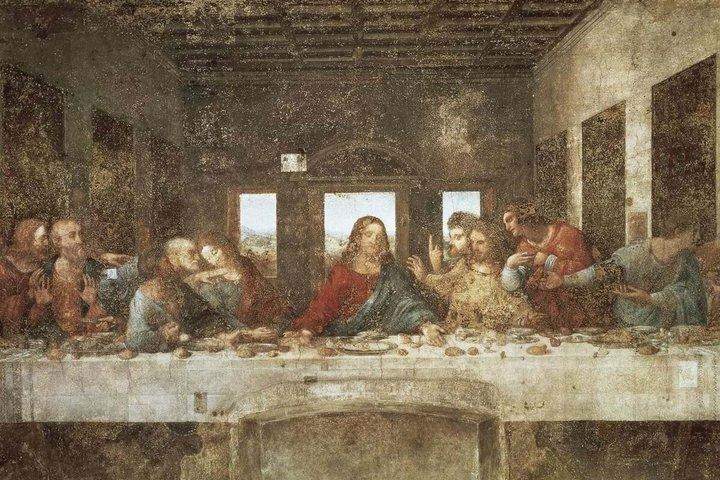
Folgen Sie den Spuren von Leonardo da Vinci mit bevorzugtem Einlass zum Abendmahl, einem der berühmtesten Meisterwerke Mailands.
Wählen Sie aus einer breiten Palette an geführten Erlebnissen, vom klassischen 1-stündigen Besuch bis hin zu umfassenderen Touren mit einer Dauer von bis zu 6 Stunden.
Je nach gewählter Option kann Ihr Erlebnis auch die Kirche Santa Maria delle Grazie, das Castello Sforzesco und Michelangelos Pietà Rondanini, das Museo Teatrale alla Scala, den Mailänder Dom oder einen ausführlichen Rundgang zu den wichtigsten Sehenswürdigkeiten Mailands beinhalten.
Jede Option beinhaltet das Abendmahl, aber die Routen, die Dauer und die enthaltenen Attraktionen variieren erheblich.
Einige Optionen konzentrieren sich ausschließlich auf Leonardos Meisterwerk, während andere eine halbtägige oder ganztägige Erkundung Mailands bieten.
Bitte prüfen Sie den Titel der Option, die Dauer und die Inklusivleistungen sorgfältig vor der Buchung, um das Erlebnis auszuwählen, das Ihren Interessen und Ihrer verfügbaren Zeit am besten entspricht.
Tour-Optionen
Letzte Abendmahl 1 - Stunden Tour
RIV
Dauer: 1 Stunde
Besuchen Sie das Gemälde Das letzte Abendmahl: Diese Option beinhaltet nicht den Besuch der Kirche. Sie werden die Kirche weiterhin sehen können, wenn sie wieder öffnet.
Ausgangspunkt:
Via Fratelli Ruffini, 1, 20123 Milano MI, Italien
Letztes Abendmahl - 1 Std. (max. 9 Personen)
Tour für maximal 9 Personen: Diese Tour ist für kleine Gruppen gedacht, damit Sie dieses Erlebnis in vollen Zügen genießen und Zeit haben, Ihrem Reiseleiter Fragen zu stellen
RIV
Dauer: 1 Stunde
Ausgangspunkt:
Via Fratelli Ruffini, 1, 20123 Milano MI, Italien
„Das letzte Abendmahl“-Führung
CW
Ausgangspunkt:
Piazza di Santa Maria delle Grazie, 20123 Milano MI, Italien
Das Abendmahl, der Dom und eine Stadtrundfahrt durch Mailand
VED
Dauer: 6 Stunden:Entdecken Sie die Highlights von Mailand an einem Tag mit einem ortskundigen Reiseführer. Entdecken Sie verborgene Geschichten und genießen Sie einen lebhaften Spaziergang durch die Stadt.
Highlights: Besuchen Sie das Abendmahl, Santa Maria delle Grazie, den Dom, das Castello Sforzesco (von außen), San Maurizio al Monastero Maggiore und vieles mehr
Treffpunkt: Treffen Sie unseren Reiseleiter am Piazzale Luigi Cadorna 14 (auf der rechten Seite des Eingangs zum Bahnhof Cadorna, in der Nähe der Bar MARINONI)
Ausgangspunkt:
Piazzale Luigi Cadorna, 14, 20123 Milano MI, Italien
Das Abendmahl + Michelangelos Pietà
AUT
Dauer: 3 Stunden:Bewundern Sie Leonardos „Das Abendmahl“ und Michelangelos „Pietà“ auf einer großartigen Führung, die auch die Kirche Santa Maria delle Grazie und das Castello Sforzesco umfasst.
Highlights:: Sforza-Schloss (Innenhöfe) – Michelangelos Pietà – Kirche Santa Maria delle Grazie – Leonardos „Das Abendmahl“
Treffpunkt: Treffen Sie unseren Reiseleiter auf der Piazza Castello 1
Ausgangspunkt:
Autostradale Viaggi, Piazza Castello, 1, 20121 Milano MI, Italien
Klassische „Das letzte Abendmahl“-Führung
TOI
Dauer: 1 Stunde
Ausgangspunkt:
Piazza di Santa Maria delle Grazie, 20123 Milano MI, Italien
Das Abendmahl, La Scala & Dom
ZAN
Dauer: 3 Stunden 30 Minuten
Reiseplan: Besichtigen Sie das Abendmahl, besuchen Sie den Mailänder Dom, bewundern Sie die Galleria Vittorio Emanuele II und entdecken Sie die Scala auf einer geführten Halbtagestour.
Bus: Sie nehmen einen Bus vom Dom zum Museum des Abendmahls.
Ausgangspunkt:
Largo Cairoli, 18, 20121 Milano MI, Italien
DAS ABENDMAHL-ERLEBNIS
CRW
Dauer: 1 Stunde:Genießen Sie den Zugang ohne Anstehen zu Leonardo da Vincis „Das Abendmahl“ – mit garantierter Eintrittsberechtigung und fachkundigen Erläuterungen eines erfahrenen Führers
Ausgangspunkt:
Piazza di Santa Maria delle Grazie, 20123 Milano MI, Italien
Das Abendmahl – Klassische Führung
BOL-WY
Dauer: 1 Stunde
Ausgangspunkt:
Via Fratelli Ruffini, 1, 20123 Milano MI, Italien
Das Abendmahl + Stadtrundgang durch Mailand
MilGUI
Dauer: 3 Stunden:Sehen Sie sich Leonardo da Vincis „Das Abendmahl“ an und entdecken Sie die Highlights von Mailand auf diesem dreistündigen Rundgang
Ausgangspunkt:
Piazza di Santa Maria delle Grazie, 20123 Milano MI, Italien
Stadtrundfahrt + Das letzte Abendmahl (3 Std.)
VED
Dauer: 3 Stunden
Highlights: Genießen Sie das Abendmahl (im Inneren) und eine Stadtrundfahrt mit Besichtigung des Castello Sforzesco, der Galleria Vittorio Emanuele II und des Doms (von außen).
Ausgangspunkte:
P.za del Duomo, 4, 20122 Milano MI, Italien
Piazza di Santa Maria delle Grazie, 20123 Milano MI, Italien
VIP-Führung „Das letzte Abendmahl“ + Dom
WA
Dauer: 2 Stunden 30 Minuten
Exklusive Tour: Eine luxuriöse Tour mit exklusivem Zugang ohne Anstehen zum „Abendmahl“ und zum Dom – für ein wahrhaft exklusives Mailänder Erlebnis
Kleingruppe: Maximal 8 Personen
Ausgangspunkt:
Piazza di Santa Maria delle Grazie, 20123 Milano MI, Italien
Das Abendmahl, der Dom + Stadtrundfahrt
WA
Dauer: 6 Stunden:Umgehen Sie die Warteschlangen und entdecken Sie Mailands Top-Sehenswürdigkeiten, darunter das Abendmahl und den Dom, mit erfahrenen Reiseleitern in einer kleinen Gruppe
Highlights: Das Abendmahl – Dom – Castello Sforzesco (Michelangelos Pietà) – Kirche Santa Maria delle Grazie – Stadtrundfahrt
Meeint Point: Treffen Sie den Reiseleiter neben dem großen „Nadel und Faden“-Denkmal in der Mitte der Piazza Luigi Cadorna
Ausgangspunkt:
Piazzale Luigi Cadorna, 8/1, 20123 Milano MI, Italien
Komplette Tour Abendmahl + Kirche
Reiseplan :: Entdecken Sie Leonardo da Vincis Abendmahl und erkunden Sie die historische Kirche Santa Maria delle Grazie mit einem fachkundigen Reiseleiter.
RIV
Dauer: 1 Stunde 30 Minuten
Das letzte Abendmahl + Stadtrundfahrt
WA
Dauer: 3 Stunden
Highlights: Genießen Sie das Abendmahl (im Inneren) und eine Stadtrundfahrt mit Besichtigung des Castello Sforzesco, der Galleria Vittorio Emanuele II und des Doms (von außen).
Treffpunkt: Treffen Sie Ihren Reiseleiter vor dem Eingang zu „Das Abendmahl“, um die Führung zu beginnen
Ausgangspunkt:
Piazza di Santa Maria delle Grazie, 20123 Milano MI, Italien
Kleingruppe Abendmahl + Kirche
RIV
Dauer: 1 Stunde 30 Minuten
Exklusive Kleingruppentour: Genießen Sie eine 1,5-stündige geführte Tour durch Leonardo da Vincis Das letzte Abendmahl und die Kirche Santa Maria delle Grazie mit maximal 9 Gästen.
Ausgangspunkt:
Via Fratelli Ruffini, 1, 20123 Milano MI, Italien
Das letzte Abendmahl – Kleine Gruppe
CRW
Dauer: 1 Stunde
VIP-FÜHRUNG: Schließen Sie sich einer kleinen Gruppe an – mit Zugang ohne Anstehen, garantierter Eintrittsberechtigung und fachkundiger Führung.
Ausgangspunkt:
Piazza di Santa Maria delle Grazie, 20123 Milano MI, Italien
Reiseverlauf
Il Cenacolo
Eintritt inklusive15 Min
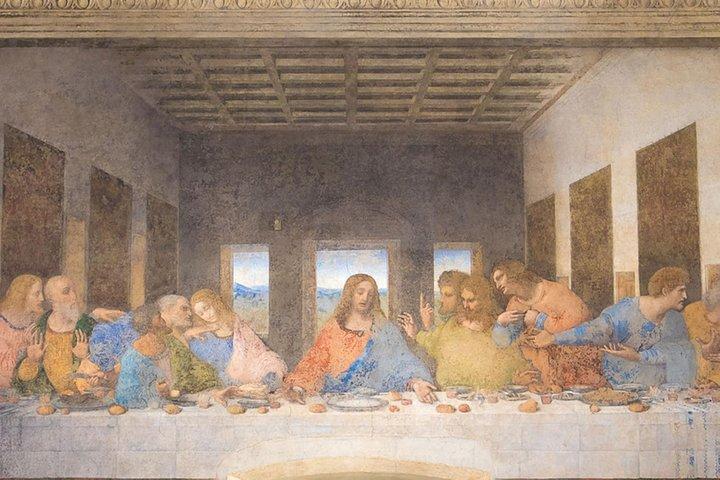
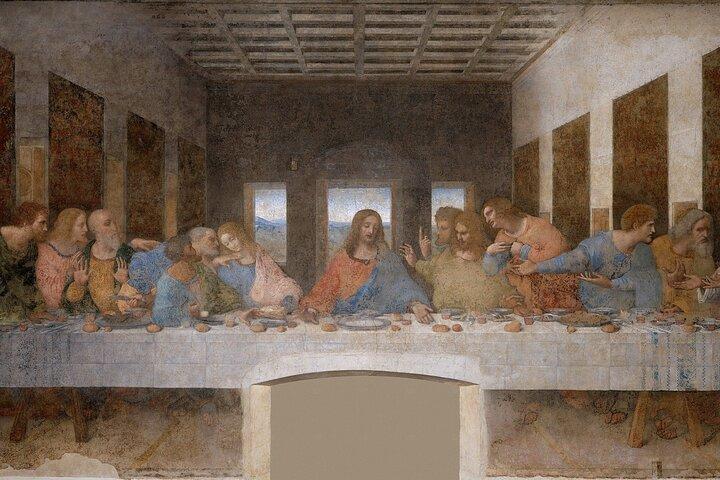
Mailands berühmtestes Wandgemälde, Leonardo da Vincis „Das Abendmahl“, befindet sich versteckt an einer Wand des Refektoriums, das an die Basilika Santa Maria delle Grazie angrenzt. Das Gemälde zeigt Jesus und seine Jünger in dem dramatischen Moment, in dem er offenbart, dass er vom Verrat weiß; es ist eine meisterhafte psychologische Studie und eines der bekanntesten Bilder der Welt.
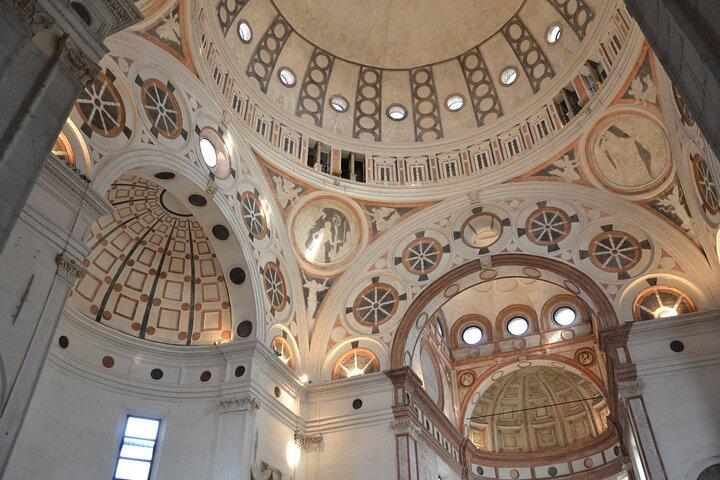
Santa Maria delle Grazie
30 Min
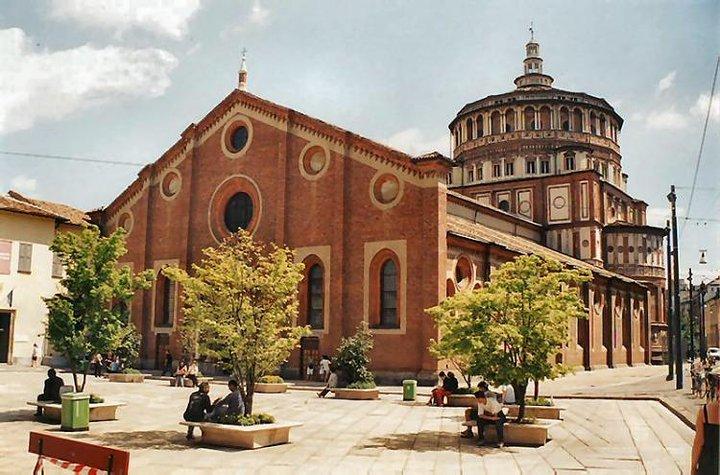
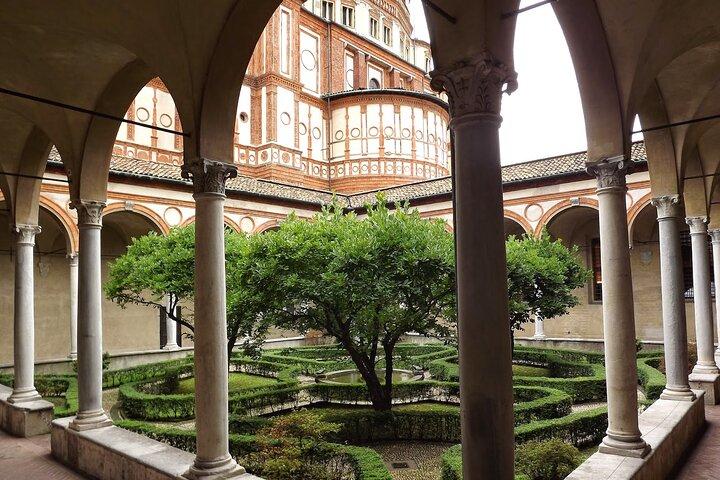
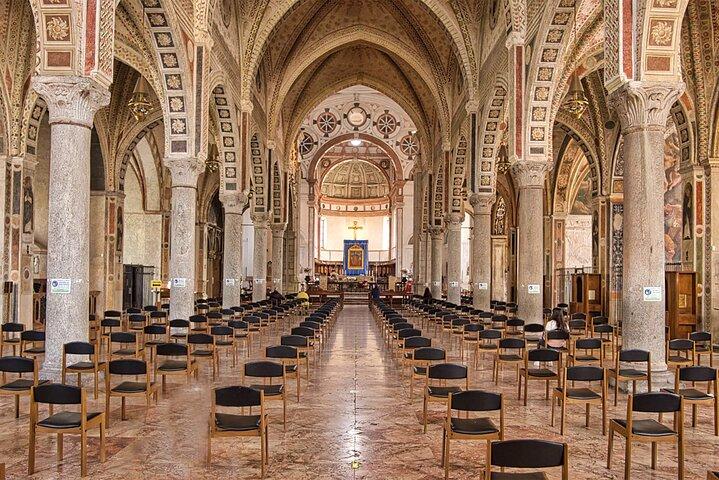
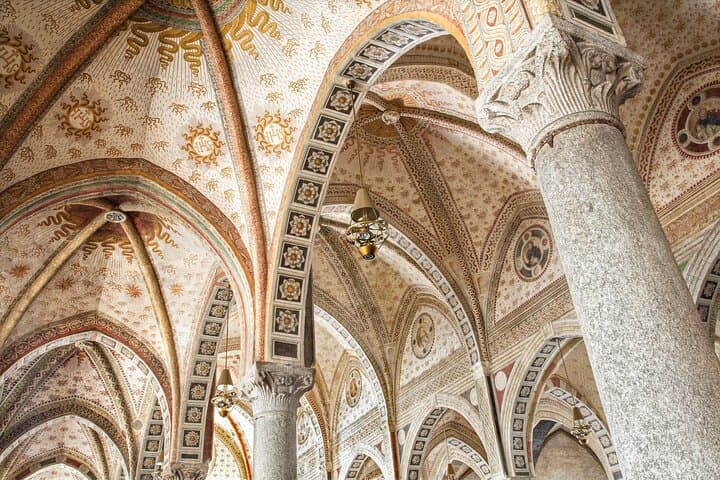
Santa Maria delle Grazie, ein UNESCO-Welterbe und ein außergewöhnliches Zeugnis der Renaissance-Architektur in Mailand. Diese atemberaubende lombardische Kirche wurde 1463 von Guiniforte Solari entworfen und später von Bramante erweitert; sie verkörpert die Pracht des Mailänder Hofes von Ludovico Sforza und Beatrice d’Este. Die Kirche kann nur von außen besichtigt werden, wenn sie geschlossen ist. Die Kirche ist zwischen 12:50 Uhr und 15:00 Uhr geschlossen.
Was ist inklusive
Inklusive
Alle Steuern und Gebühren
Stadtrundfahrt durch Mailand (sofern Sie diese Option gewählt haben)
Michelangelos Pietà (falls Sie diese Option gewählt haben)
Zertifizierter Reiseleiter und Kopfhörer, damit Sie den Reiseleiter gut verstehen können
Ticket ohne Anstehen
Besichtigung des Kircheninneren (sofern die Kirche geöffnet ist und in Ihrem Paket enthalten ist)
Nicht inklusive
Speisen und Getränke
Privater Transport
Besichtigung des Kircheninneren (wenn die Kirche geschlossen ist oder nicht in Ihrem Ticket enthalten ist)
Bewertungen der Reisenden
4.4
333 Bewertungen
5
246
4
34
3
19
2
8
1
26
Wichtige Informationen
In der Umgebung sind öffentliche Verkehrsmittel verfügbar.
Für alle Fitnesslevel geeignet
Die Verfügbarkeit für Vorstellungen kann nicht überprüft werden, ohne eine Buchung vorzunehmen.
Die Kreditkarte wird erst nach Bestätigung der Verfügbarkeit der Vorstellung belastet
Findet bei jedem Wetter statt, bitte kleiden Sie sich entsprechend
Für den Zutritt zu Gotteshäusern und bestimmten Museen gilt eine Kleiderordnung. Shorts und ärmellose Oberteile sind nicht erlaubt. Knie und Schultern MÜSSEN sowohl bei Männern als auch bei Frauen bedeckt sein. Wenn Sie diese Kleiderordnung nicht einhalten, besteht die Gefahr, dass Ihnen der Zutritt verweigert wird
Bitte bringen Sie für jede an der Führung teilnehmende Person einen Ausweis mit
Sie müssen das Ticket nicht vor Beginn der Tour einlösen
Die Führung am Mittwoch um 16:30 Uhr und am Freitag um 12:00 Uhr ist zweisprachig (Englisch und Italienisch)
Stornierung
Alle Buchungen sind verbindlich. Bei Stornierungen erfolgt keine Rückerstattung.
0+ Tage vorher0% Rückerstattung
Bewertungen(333)
M
Mark_M
September 26, 2026
I was *very* unsure what...
I was *very* unsure what I was buying online via Viator, other than seeing The Last Supper. I am so happy to leave this review to let others know, 1) this can be trusted, 2) the tour we had (Palace, history, walking, Last Supper) was very good (3 hrs).
K
Kathryn_V
September 24, 2026
Disappointed
It was a disaster. I booked on line for a 3:00 pm tour then the tour guide contacted me and changed it to 4:30 pm. Which was fine. I contacted the guide to confirm the night before and he confirmed the time, date and location. We showed up 30 minutes before the tour and waited. There was another Viator tour at the same time but we were not on the list. I tried contacting the guide without success. Finally had to contact the toll free number and talk to an agent for 20 minutes. They said there was some confusion. There was no communication to us at all about any of this. The stress of figuring out our next steps was exhausting. We had to explain to the ticket office and show them our voucher, which said 3:00 ( the guide was suppose to bring our new voucher and tickets for 4:30) Fortunately they honored our voucher and gave us two tickets which was an hour later then hour planned tour-5:30pm. NO SHOW, NO COMMUNICATION and not a guarantee to see the Last Supper. Very disappointed.
Antwort des Anbieters
We sincerely apologise for the scheduling error and the stress and inconvenience it caused.
Our team did everything possible to resolve the situation. Our main priority was to ensure that you could still see The Last Supper, and we ultimately secured your admission. We also immediately issued a full refund, so you were able to visit at no cost.
We remained in communication during the process, although we recognise that the assistance you received did not meet your expectations. Ensuring your admission and refunding your booking were our efforts to put things right, but we understand that they do not erase the disappointment of missing the guided experience you had booked.
We take responsibility for the error and sincerely apologise for letting you down.
T
tmdelmar
September 22, 2026
So happy to see Davinci’s Last Supper! We learned so much from our guide and felt we she explained in depth everything s
Excellent guide who was well informed and very friendly and knowledgeable. This site has problems it is not transmitted
T
tmitch09
September 21, 2026
Great trip
great experience. booked last minute glad was able to get worked out
H
hanyid2018
September 20, 2026
Poor experience
The operator is unreachable; too much stress for a supposedly relaxing trip
Q
Q8155MIpaule
September 20, 2026
Da Vinci's Last Supper was a highlight of our time in Milan
our guide was Arabella, she took good care of our group ensuring we were all together explaining what was needed to comply with the entrance requirements. Her love of the subject was apparent in her detailed talk. You only get 15 minutes to view the painting but it was worth it, I found the experience emotional.
M
MaryAnn_S
September 20, 2026
Amazing to see in person!...
Amazing to see in person! Great tour of area. Super guide, very knowledgable with great insights!! A must see in Milan!
J
Jill_B
September 19, 2026
Don’t miss this one!
this was well worth the money. Our tour guide was so informative and spoke perfect English.
we also got hearing devices which made it easy to hear our guide and block out the others.
3
304kennethg
September 19, 2026
Bad
Would never book with Trip Advisor again. United cancelled our flight and rescheduled us for the next day. We missed the tour by two hours. Trip Advisor would not reschedule us or give us a refund. Very unfair since none of this was our fault. Will not book again and I have previously used Trip Advisor for about 20 trips in many countries!
W
Wynelover
September 18, 2026
Best of Milan!
After not being able to purchase single tickets to see the Last Supper I researched for a walking tour of Milan with included viewing ofThe Last Supper. Our tour guide Danniela was so knowledgeable and taught us so much of the history of Milan. He was kind and engaging with the group. I recommend this tour!
Ähnliche Touren in Milan vergleichen
Am günstigsten: Leonardo Da Vinci's Last Supper Guided Tour in Milan — $69
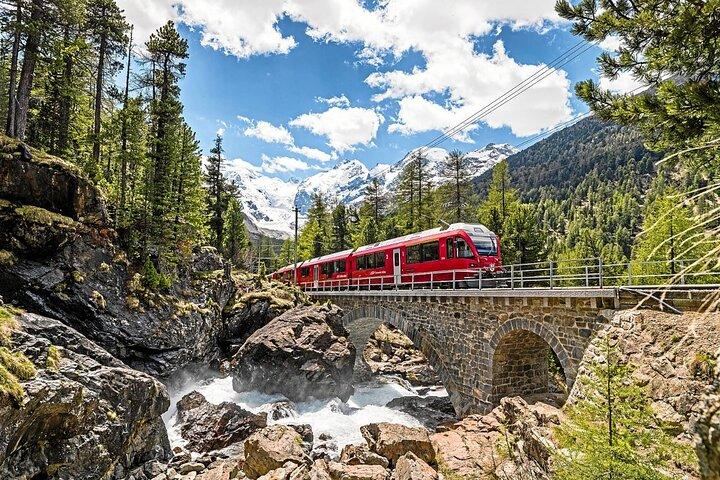
Am besten bewertet: Bernina Red Train, Swiss Alps & St Moritz From Milan — 4.8 (3,805 Bewertungen)
Am kürzesten: Milan: Da Vinci Last Supper Skip-the-Line Guided Tour — 1 Stunde