Privat dagstur till Rabat från Casablanca
Beskrivning
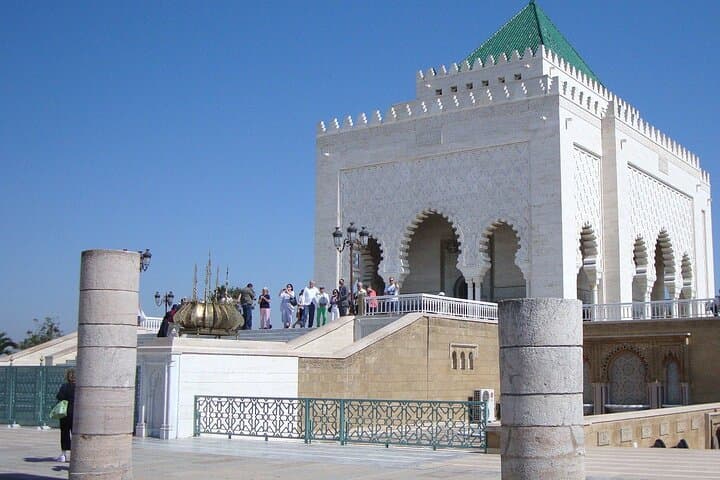
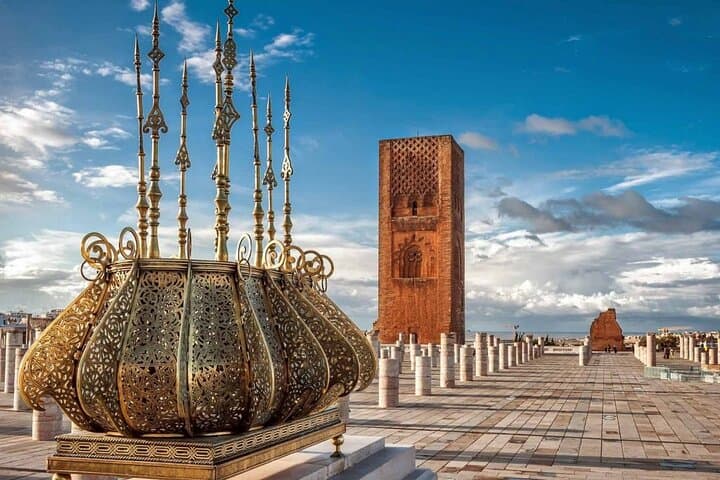
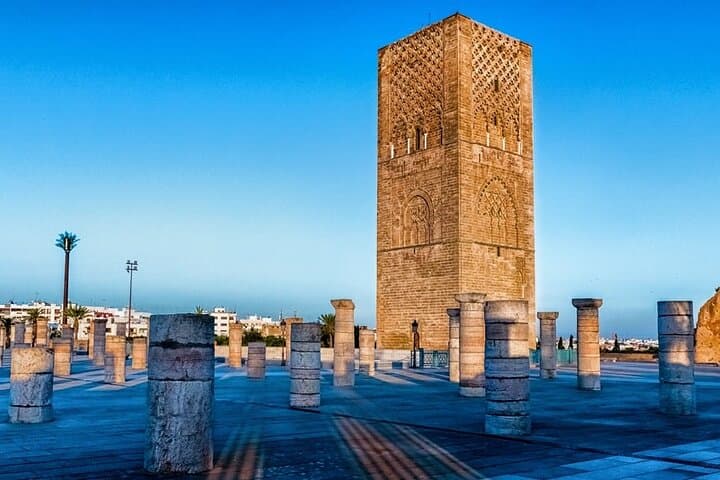
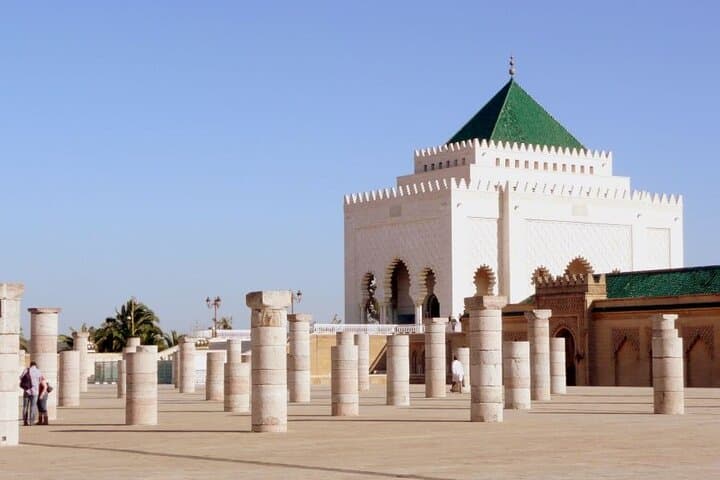
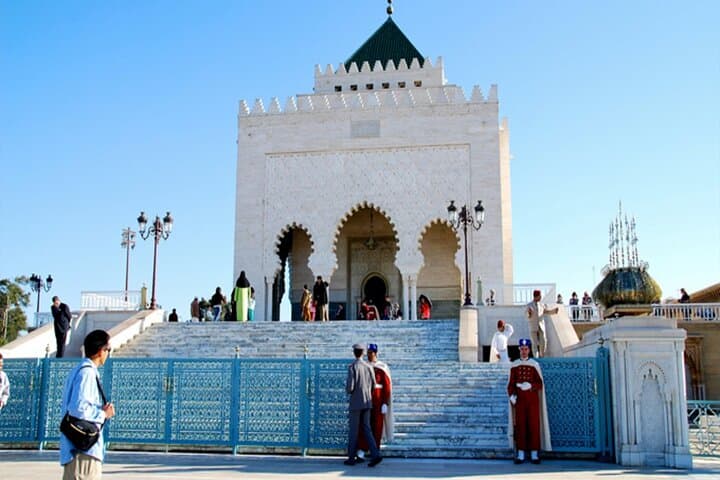
Upptäck staden Rabat på en dag med denna privata rundtur tillsammans med en förare/guide. Höjdpunkter inkluderar stopp vid Mohammed V:s mausoleum i Rabat, Hassan Tower och Kasbah des Oudaias, Chellah Forest, Royal Palace och Corniche
Turalternativ
Resplan
Hassan Tower är ett emblematiskt torn i Rabat, Marockos huvudstad, som utgör minareten i en oavslutad 1100-talsmoské
Kasbah of Oudaya(s), eller Oudaïa(s), är ett före detta befäst militärläger beläget i Rabat och byggt på 1100-talet. Sedan 2012 har kasbahen funnits med på UNESCO:s världsarvslista [1]. Där finner vi särskilt ett av de första palatsen som byggdes av den kungliga dynastin Alaouites, som fortfarande regerar.
Vi tar dig med för att upptäcka fästningen Challa, en UNESCO: s världsarvslista 2012 och en av de största turistattraktionerna i Rabat. Den innehåller romerska lämningar samt en medeltida muslimsk begravningsplats.
Det kungliga palatset (tidigare kejserliga palatset eller "dar el-makhzen") i Rabat, Marockos huvudstad, är det främsta kungliga palatset i landet och den marockanska kungafamiljens officiella residens. Ursprungligen palatset för alawiternas sultaner, det är idag ett av de många palatsen eller kungliga residensen i de "kejserliga städerna" (dars el makhzen). Detta är fallet med Skhiratpalatset, där ett försök till statskupp ägde rum under kung Hassan II:s tid. Nuförtiden anses det kungliga palatset i Rabat mer vara en administrativ byggnad, i själva verket bor inte kung Mohammed VI (son till Hassan II) där[1]. Det är i detta palats som regeringssätet ligger.
flik taklist
Höjdpunkter
Vad som ingår
Upphämtningsplatser och tider
Vi hämtar dig från ditt hotell eller tågstation. För hotell, vänligen ange namn och adress och var redo i lobbyn vid angiven tid. För stationer, ange din ankomsttid och tågnummer, föraren välkomnar dig på perrongen.
Resenärers betyg
Viktig information
- Spädbarn och små barn kan åka i barnvagn eller sittvagn
- Särskilda barnstolar finns tillgängliga
- Lämplig för alla fysiska konditionsnivåer
Recensioner(281)
Casablanca tour was awesome! 🙌 Our driver Mohamed and guide Arafa were fantastic. Driver was chill, super safe, and always on time. Our guide really knew his stuff — took us to the Hassan II Mosque of course, but also some cool spots off the beaten path that most tourists miss. Great vibes the whole time, lots of fun stories and tips. Everything ran smoothly, zero stress. Would 100% recommend if you’re heading to Casablanca and want a good local to show you around!
My husband and I spent one day exploring Casablanca and another day visiting Rabat with a guide. We had a wonderful time, and it was money very well spent. Thank you, Arafa, for sharing your knowledge and making our sightseeing experience so interesting, and thank you, Mohamed, for taking such good care of our comfort and making our journeys so pleasant. We truly appreciate your time, professionalism, and hospitality!
Very nice experience, the guide was very friendly and explained everything. The typical food was very tasty and cheap. Rabat is a very beautiful city and worth to visit
I highly recommend Mr. Mohcim, who is helpful, welcoming, and patient.
Rabat: Where Morocco’s Past Meets the Atlantic I recently had an opportunity to attend a Conference in Rabat, Morocco. I got a chance to visit the city. The name Rabat originates from the Arabic word “Ribat” which means a fortified monastery, military camp or frontier fortress. Historically this term was used describe fortified areas in the Islamic world. People from religious world, soldiers, and scholars lived here to defend the territories. Historically Morocco had four “capital cities” at various times and traditionally it is associated with Rabat is the capital city of Morocco, but historically Morocco has had multiple “capital cities” at different times. Traditionally, Morocco is connected with four Imperial Cities and hence it is popular dictum to say that Morocco has four capitals-Fez, Marrakesh, Meknes and Rabat. Rabat officially became the modern administrative capital in 1912 during the French Protectorate Kasbah of the Udayas overlooks the mouth of the Bouregreg River and the Atlantic Ocean and represents history and known for its cultural landmarks. Its origins dates back to the 15th century when Abu Yusuf Yaqub al-Mansur the ruler from Almohad Caliphate built it as a fortified city to not only protect the city but also to access the Bouregreg River. The Kasbah not only signifies a representation of Islamic and military architecture but it also houses residential quarters, fortified walls and gates which shows and speaks of a well-designed urban planning and artistically built structures by Moroccan dynasties. The panoramic view is breathtaking and is recognised by the UNESCO World Heritage Centre as part of the city’s World Heritage landscape. The Bab Oudaia is a monumental gate and includes intricate carvings, patterns which are geometric and huge arches which typically represents the artistic intricacy of the period. History reveals that during the 17th century Kasbah became the haven for the Moriscos who were the Muslims expelled from Spain after the Reconquista. The refugees brought with them their unique architectural styles, crafts, music, gardens and urban traditions which intensely affected the presence of Rabat. The white-and-blue painted houses and narrow streets seen today reflect this Andalusian heritage. The name Salé originates from the old settlements known as Sala during the Roman and pre-Islamic periods. The name Salé has ancient origins and is believed to derive from the old settlement known as “Sala” during the Roman and pre-Islamic periods. Primarily it is interpreted as a rocky or elevated place, fortified location and a settlement near water. The significance of Salé’s coastal position made it a key maritime city involved in trade, defense, and naval activity. It also came be known as a strong Atlantic port during the pirate era. Today it signifies a connection between old and new Morocco by showcasing its importance as a trade centre and maritime activities along the Atlantic coast. The elaborate and magnificent architecture includes the medina which has souks (markets), hammams (bathhouses), madrasas (schools) and mosques. The twin cities of Sale and medina reflect Morocco’s layered blend of Islamic, Andalusian, African, and modern influences. As a metropolitan area it focusses on increasing the economy of the country through trade, commerce, housing, education and tourism. Due to its proximity to Rabat it represents both as a historic city and modern urban centre. As a historic centre of religion, culture, maritime heritage Salé is an important city and bears the Moroccan identity. The Medina which reflects centuries of Moroccan, Islamic, Andalusian, and coastal heritage is located near the Atlantic coast and close to the Kasbah of the Udayas. History comments that the word “Medina” originated from the Arabic word “Madīnah” which identifies city or town. As a matter of fact it is associated with ideas of social order, governance, community life and civilization. The word Medina not only found its connection Saudi Arabia but also became known for its urban settlement representing Islamic civilization. The difference between other Medinas in Fez or Marrakesh was that the Medina in Rabat was represented as a unique blend of cultural and strategic importance through its military and cultural centres. The cute and clean winding lanes are dotted with little shops which exhibits crafts, like tiles, bowls, vases which are etched with traditional and geometric designs which includes floral Islamic designs. One can see carpets of different sizes with beautiful designs and patterns with the weaving styles reflecting Berber and Andalusian influences. Most of the shops are drapes with traditional clothing, wool that is woven and embroidered. Furniture like doors, screens, window panels and decorative boxes are displayed in cute shops with embedded carvings. Fine floral and geometric carvings are important features of Moroccan architecture and interior decoration. Leather items are also an important product and this craftsmanship and tanning goes way back to many centuries. Traditional tanning techniques are used to produce belts, slippers (babouches), wallets, jackets, bags to name a few. The Zellige tile work is very famous and has mosaic tile art which is very intricate and colourful. These tiles have geometric patterns and are hand-cut into small coloured tiles by skilled craftsmen. They are used in mosques, palaces, homes, walls on street and fountains. Another important craft is usage of straws from palm leafs and reeds. They are woven as hats, baskets, baskets using Moroccan traditions and knowledge. Some shops produced traditional perfumes and herbal products which included perfumes, oils spices, henna and cosmetics. The crafts continue to remain symbols of Moroccan identity and link modern society with centuries-old traditions of creativity and craftsmanship. It also supports livelihood and attracts tourism. Today the craftsmanship includes the economy with several artisan guilds. Dr. Annapoorna Ravichander An avid traveller, blogger and an Independent Consultant based in Bengaluru
So we had a smooth ride with the driver Maud. He was friendly and extremely polite and patient. I will always recommend Shuttle Layover And Tour.
Thank you for your wonderful review! We’re delighted to hear that you had a smooth and enjoyable journey with Maud. His friendliness, patience, and professionalism are qualities we truly value, and we’ll be sure to share your kind words with him. Thank you for your recommendation, and we look forward to welcoming you again for another exceptional experience in Morocco.
Excellent service. Drive observed and applied all curtesies. True professional and will recommend him anytime.
Thank you for your kind review! We’re delighted to hear that you appreciated the professionalism, courtesy, and high standard of service provided by your driver. Your recommendation means a great deal to us, and we truly look forward to welcoming you back for another smooth and enjoyable experience in Morocco.
Excellent tour and really great guide/driver Ayoub. He was very knowledgeable all along the drive itself explaining the history of the places we saw. We were able to spend as much time at each stop as we wanted, he was happy for us to go at our own pace.
Thank you for your wonderful review! We’re delighted to hear that Ayoub made your tour such an enjoyable experience. His knowledge of Morocco’s history and his passion for sharing it with our guests are truly appreciated. We’re especially pleased that you enjoyed exploring at your own pace, as creating a relaxed and personalized experience is one of our top priorities. Thank you for your recommendation, and we look forward to welcoming you back to Morocco for another unforgettable journey.
Rabat is a very nice city. I really appreciate the Marina place and the tour on the sea. all the place i visited there was very nice. I was also impressed by the new bulded Burj
Thank you for your wonderful review! We’re delighted to hear that you enjoyed discovering Rabat and its beautiful highlights. The Marina, the waterfront, and the city's blend of modern architecture and rich heritage truly make it a unique destination. We’re glad you had the opportunity to experience it all, and we hope to welcome you back soon for another memorable journey in Morocco.
Mohammed. L is a very good guide and driver.
Thank you so much for your kind review. We’re delighted to hear that Mohammed L was both a very good guide and driver. We truly appreciate your feedback and hope to welcome you again soon.